The 8 Best Video Projectors
Updated by · How we research

Brightness, input lag and lamp life decide this comparison of eight home theater, 4K, short-throw and budget projectors. The Epson Home Cinema 2350 ranks first. When users buy our independently chosen editorial selections, we may earn commissions to help fund the Wiki.
Most affordable 4K projectors build the image by shifting pixels, and cheap ones often just accept a 4K signal, so a 4K claim on the box tells you little. A video projector throws a picture of 100 inches or more onto a wall or screen. Families use them at home for movie nights, sports and gaming.


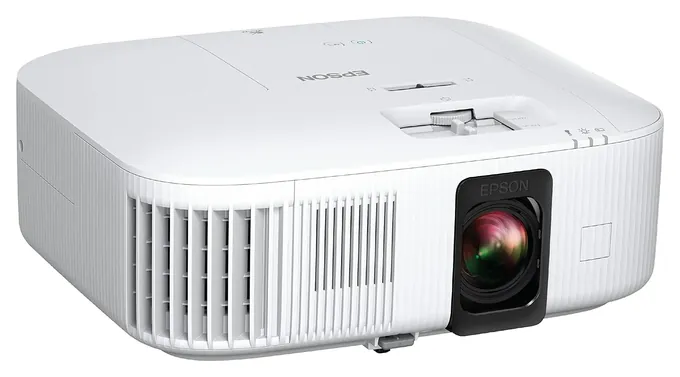
From the manual
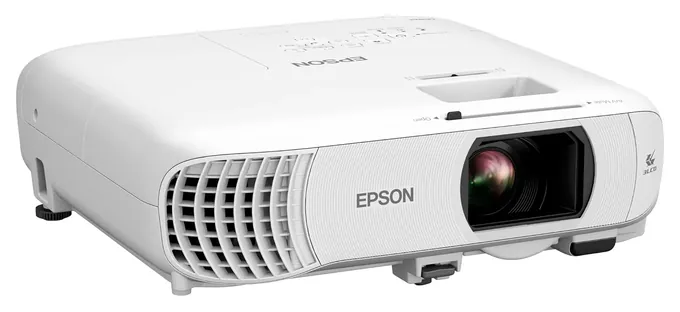
- Android TV setup runs at first power-on; some features need a Google account, and some apps need paid subscriptions. p. 36
- The lamp is rated about 4,500 hours, or 7,500 in the low power mode; let it cool for an hour before swapping it. pp. 101, 129
- Damage caused by a non-genuine replacement lamp may not be covered by Epson's warranty. p. 100
Why the Epson Home Cinema 2350 is our top pick
Our pick wins on picture design and placement freedom, while the runner-up wins on gaming speed and warranty. The 2350 builds its image from three LCD panels, so it rates the same 2,800 lumens for color as for white1 and can't show the rainbow flashes a single-chip DLP projector can.2 Our runner-up, the ViewSonic PX701-4K, uses one DLP chip.4 Both reach 4K by pixel shifting;1,3 the 2350's panels are 1080p.
Placement is where the gap is widest. The 2350 has a 1.62x zoom and a vertical lens shift dial,1 and its guide says to use the shift rather than keystone correction when the projector can't sit centered, for a cleaner picture.1 The runner-up has a 1.1x zoom4 and only a digital shift of 50 pixels that works once the image is zoomed down.3 Android TV is built into our pick,1 while the runner-up offers two HDMI inputs and a USB port that only powers a stick.3
Gamers may prefer the runner-up. ProjectorCentral lists 16.9 milliseconds of lag at 4K/60 against 19 for our pick,4,2 ViewSonic rates its 240 Hz mode at 4.2 milliseconds, at 1080p only,5 and its warranty runs three years against two, though the lamp is covered for one.3,2 For a living room where several people watch movies and sports, equal color brightness, no rainbow flashes and easier setup carry the 2350.
| Epson Home Cinema 2350 | ViewSonic PX701-4K | |
|---|---|---|
| Imaging | 3LCD, pixel shift | 1 DLP chip, pixel shift |
| Lens shift and zoom | Vertical, 1.62x zoom | Digital only, 1.1x zoom |
| Built-in streaming | Android TV | None |
| Input lag, 4K/60 | 19 ms | 16.9 ms |
| Warranty | 2 years | 3 years, lamp 1 year |
Sources
- Epson Home Cinema 2350 1User's guide (PDF), pp. 10, 24, 127, 128 2ProjectorCentral specs and input lag
- ViewSonic PX701-4K 3User guide (PDF), pp. 10, 44, 47, 82 4ProjectorCentral specs and input lag 5Product page
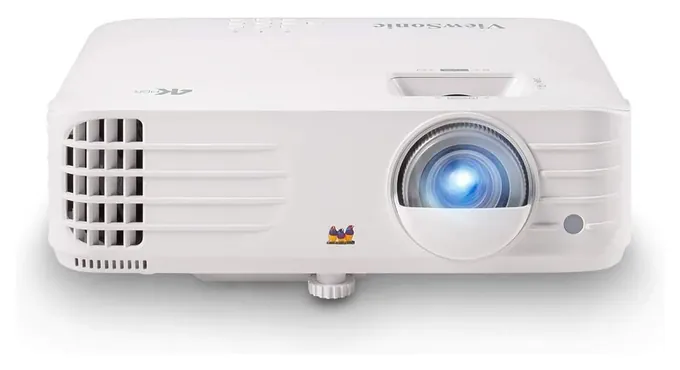
From the manual
- The three-year warranty covers the original lamp for only one year, and falls to one year if use averages over 14 hours daily. p. 82
- The lamp-hours counter weighs modes: each hour in Normal mode counts as 3.34 hours, against one in SuperEco+. p. 59
- Turning on Ultra Fast Input, the low-lag gaming mode, resets keystone, corner, zoom and digital lens shift to factory values. p. 57
- There are two HDMI inputs, and the USB port only supplies power, which suits a streaming stick. p. 10
Compare the specs
Swipe the table sideways to see every column.
| Product | Brightness (lumens) | Light source (rated hours) | Imaging | Lens shift | Optical zoom (x) | Warranty (years) |
|---|---|---|---|---|---|---|
| 1. Epson Home Cinema 2350 | 2,800 ISO | Lamp, 4,500 | 3LCD | Vertical | 1.62 | 2 |
| 2. ViewSonic PX701-4K | 3,200 ANSI | Lamp, 6,000 | 1 DLP chip | Digital only | 1.1 | 3, lamp 1 |
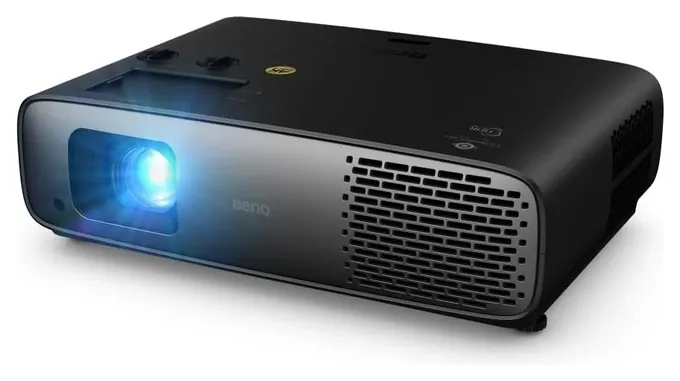
| 3. BenQ W4100i | 3,200 ANSI | LED, 20,000 | 1 DLP chip | Vertical and horizontal | 1.3 | 3 |
| 4. Epson Home Cinema 980 | 4,000 ISO | Lamp, 6,000 | 3LCD | None | 1.2 | 2 |
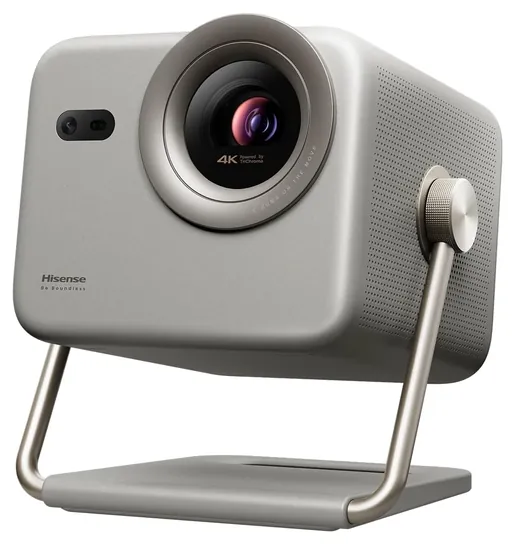
| 5. Hisense M2 Pro | 1,300 ANSI | Laser, 25,000 | 1 DLP chip | None | 1.3 | 1 |
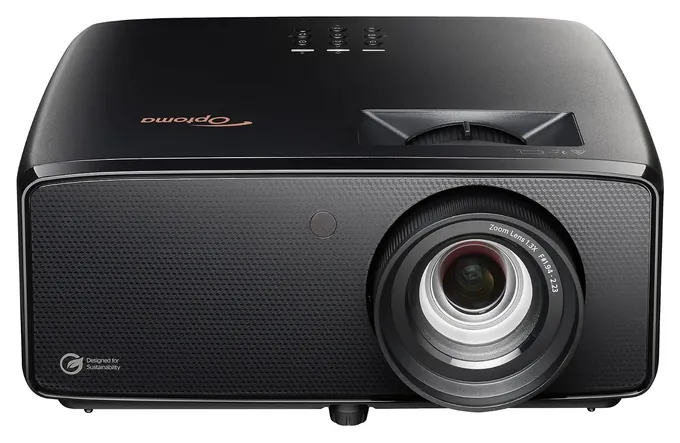
| 6. Optoma UHZ36 | 3,500 ISO | Laser, 20,000 | 1 DLP chip | None | 1.3 | — |
| 7. BenQ TK710STi | 3,200 ANSI | Laser, 20,000 | 1 DLP chip | None | 1.2 | 3 |
| 8. Aurzen Roku TV D1R | 280 ANSI | LED, not stated | LCD | — | — | 1+1 |
Brightness is the maker's rating; ISO and ANSI lumens are comparable. Light-source hours are for normal or full-power mode. The ViewSonic's lens shift is digital and works only on a shrunk image. Warranties are as listed by ProjectorCentral or the maker; Aurzen lists "1+1 year" without saying what the second year covers. For the Optoma, ProjectorCentral lists one year and PCMag three, so it shows a dash. A dash elsewhere means the maker doesn't publish it.
Sources
- Epson Home Cinema 2350 user's guide (PDF) Home Cinema 980 user's guide
- ViewSonic PX701-4K user guide (PDF)
- BenQ W4100i specifications TK710STi specifications
- Hisense M2 Pro specifications
- Optoma UHZ36 product page
- Aurzen EAZZE D1R user manual (PDF) EAZZE D1R product page
- ProjectorCentral Epson Home Cinema 2350 specs ViewSonic PX701-4K specs BenQ W4100i specs Epson Home Cinema 980 specs Hisense M2 Pro specs Optoma UHZ36 specs BenQ TK710STi specs
- PCMag: Optoma UHZ36 review
From the manual
- A streaming stick plugs into HDMI and can draw power from the USB-A port, so it needs no wall adapter. Streaming player topic
- Setting USB Power to Always On keeps the stick running while the projector is off, at a higher standby draw. Extended menu topic
- The lamp is rated up to 6,000 hours, or 12,000 in ECO mode, and the speaker is a single 2-watt unit. Specifications topic
- A replace-lamp warning appears 100 hours before expected end of life, and frequent on-off cycling can shorten the lamp's life. Lamp maintenance topic
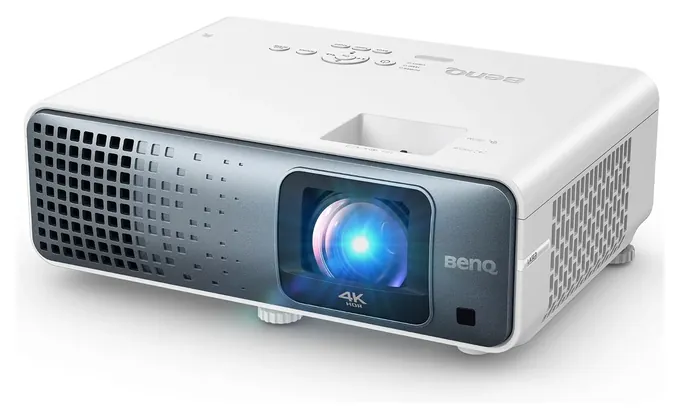
From the manual
- Streaming runs on the supplied QS02 Android TV stick, which installs in an internal HDMI port; setup needs Wi-Fi and a Google account. pp. 9, 25
- The USB media player also runs through that stick, so playing files from a flash drive depends on it. p. 31
- Two external HDMI 2.0b inputs stay free for a console or player; the third HDMI port is reserved for the stick. p. 54
- Don't run it tilted more than 10 degrees side to side or 15 degrees front to back. p. 5
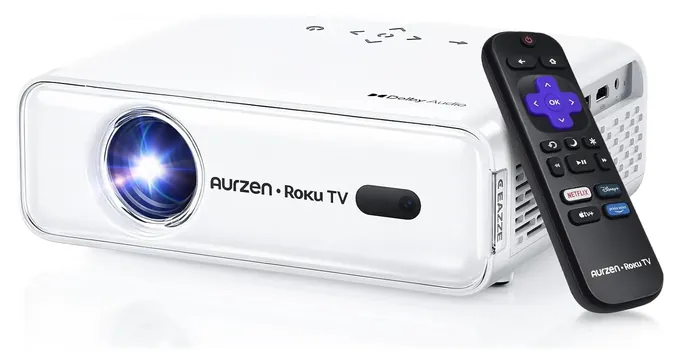
From the manual
- Activation needs a Roku account and an internet connection; Roku doesn't charge for it. p. 6
- Hulu, Disney+ and similar apps can't be mirrored or cast from a phone; install them from the Roku store instead. p. 12
- For the sharpest image, Aurzen recommends an 80-inch picture from about 7.5 feet away. p. 19
- Slightly softer edges are normal on this LCD design; set it square to the wall so auto focus and keystone work best. p. 2
Editor's Notes
November 17, 2026, by Ezvid Wiki Editors:
Our November check found all eight picks still sold new in the US; some overseas distributors call the ViewSonic PX701-4K discontinued, and BenQ's July GV31 battery recall doesn't touch the BenQ picks. We weighed ViewSonic's LS740HD, an office laser, and TCL's A1s portable, and kept all eight. We also read the Epson, ViewSonic, BenQ and Aurzen manuals, added a spec table and manual notes, dropped an unsourced claim of early Epson failures, and fixed the FAQ's short-throw definition.
November 16, 2026, by Ezvid Wiki Editors:
Some overseas ViewSonic distributors now list the ViewSonic PX701-4K as discontinued, but it is still sold new in the US, so it holds #2 for now. The July recall of BenQ's GV31 portable projector over battery fires does not touch the BenQ W4100i or BenQ TK710STi on this list. We also weighed ViewSonic's LS740HD laser and TCL's new A1s, but the first is built for offices and the second is too new to judge, so all eight picks stay.
October 18, 2026, by Ezvid Wiki Editors:
The Epson Home Cinema 2350 takes over from the discontinued Home Cinema 2250 and now ranks first, with the same three-chip LCD design and Android TV, plus pixel shifting for a 4K-class picture. Every projector on the old list has left the market or slipped behind. The Optoma UHD50X, Optoma UHD30, Optoma GT1090HDR and Epson Home Cinema 2250 are discontinued, the Epson EpiqVision LS500 is unavailable, and the Optoma HD146X drew too many complaints from owners. The Anker Nebula Solar, Optoma HD28HDR and Vankyo V600 are older designs with better options now.
The ViewSonic PX701-4K is the value pick for gamers, and the BenQ W4100i is the one for a dark, dedicated room. We also added a short-throw model, a laser cube and an inexpensive Roku projector for kids' rooms and backyards.
A word on 4K: most affordable 4K projectors build the image by shifting pixels, and cheap ones often just accept a 4K signal. Each entry says which it is. For more, see our 4K projectors and portable projectors pages.
Earlier notes
January 27, 2021, by Christopher Thomas:
There are more high-quality projectors to choose from than ever, but a couple brands definitely stand out above the rest right now. The Optoma UHD50X is one of the top options for the money, but the Optoma UHD30 is so much less expensive that it's just about neck and neck in terms of price to performance ratio. The Epson EpiqVision LS500 is widely viewed as one of the best on the market, but it's not very economical for most people. Meanwhile, the Epson Home Cinema 2250 is relatively well priced, although it's limited to a 1080p output. The Anker Nebula Solar is our favorite portable model at the moment, and the Vankyo V600 comes in as one of the best options for those who really don't want to spend much.
December 23, 2019, by Daniel Imperiale:
In a fast-moving category like this one, it's no surprise to see that 100 percent of the models included on our last list have either been upgraded by new versions from their companies, or have had other products come out that beat them out in specifications. We're seeing a few more 4K models available this time around, for example, and by that we mean true 4K, not just models with 4K inputs. A lot of cheap projectors out there will put "4K" in their titles knowing full well that it only means they can process a 4K input fast enough to project it in whatever resolution (usually 1080p) the projector actually offers.
The BenQ HT3550 Home Theater is a great example of a model that's been upgraded to include true 4K performance. [2026 update: the HT3550 puts its 4K image on screen by pixel shifting a single 0.47-inch DLP chip, not with a native 4K panel, the same method most 4K projectors on today's list use.] Ultimately, though, it was hard to deny the supremacy of the Optoma CinemaX P1 4K, which probably has the best built-in speaker system of any projector I've ever reviewed, along with some of the deepest blacks and most naturalistic images I've encountered.
A little farther down the list you'll find some very capable options for a bit less money, one of the coolest of which is the ViewSonic M1+, which boasts a battery that can outlast the average seen in most portable projectors to the tune of several hours. That can make a big difference on a camping trip that encounters any kind of delays that could leave the kids feeling restless.
Special Honors
Sony Home Theater Projectors Sony builds native 4K home theater projectors on its own SXRD panels, with laser light in its current models, and they cost several times more than anything on this list. They suit a dedicated theater room, usually with a dealer handling installation and calibration. sony.com
XGIMI XGIMI makes compact laser and LED projectors for living rooms, from the small Elfin models to the Horizon 20 series with optical zoom and lens shift, and RTINGS has reviewed several of them. Check the maker's site for current models. us.xgimi.com
Brightness, Room Light And Screen Size
In practice, 1,500 to 2,000 lumens covers a 100- to 120-inch screen in a dark room, while a family room with lamps or daylight calls for 2,500 to 3,000 or more.
Brightness decides more than any other spec. Compare only ISO or ANSI lumens, the standardized measures, since many low-cost projectors quote much larger "lumens" figures that no lab would confirm. The ProjectorCentral buying guide cites the SMPTE target of 16 foot-lamberts on screen for a dark theater, with 20 to 25 preferred, and about 40 for a room with some light. In practice, 1,500 to 2,000 lumens covers a 100- to 120-inch screen in a dark room, while a family room with lamps or daylight calls for 2,500 to 3,000 or more.
The screen matters too. A matte white screen suits a dark room. An ambient-light-rejecting screen helps in a bright one, though higher-gain screens narrow the viewing angle. A small LED projector rated at a few hundred ANSI lumens, such as the Aurzen EAZZE D1R at 280, is a dark-room or after-sunset device at any screen size.
What 4K Means On A Projector
Native 4K chips are expensive, so most 4K projectors below the luxury tier draw their image by shifting pixels. Epson's 4K PRO-UHD models, like the Home Cinema 2350, use 1080p LCD panels and shift each pixel to add detail. Most 4K DLP models use a 0.47-inch Texas Instruments chip that flashes about 8.3 million pixels on screen per frame through fast shifting. Both look sharper than plain 1080p from a normal seat. Budget projectors that say "4K supported" usually just accept a 4K signal and show it at 1080p or lower.
Resolution isn't the whole story. Contrast and black level separate a good home theater picture from a washed-out one, and no projector matches a TV's HDR brightness, so HDR relies on tone mapping and a dark room. Single-chip DLP projectors can show brief rainbow flashes to sensitive viewers; three-chip LCD projectors don't. Gamers should check input lag, which ProjectorCentral measures on many models.
Lamp, LED Or Laser, And Where It Sits
Lamp projectors cost less up front, but the lamp dims over time and needs replacing every 4,000 to 6,000 hours in normal mode. LED and laser light sources are rated for 20,000 hours or more. The ProjectorCentral buying guide puts a laser's 20,000 hours at about 10 years of 8 hours a day, five days a week, and notes that a laser holds its brightness while a lamp dims as it ages.
Placement comes down to throw ratio: the distance from lens to screen divided by the image width. A 100-inch 16:9 screen is about 87 inches wide, so a 1.34 throw ratio puts the projector about 9.7 feet back, and a 0.69 short-throw ratio about 5 feet. A zoom range gives you a window rather than one spot. Lens shift moves the image up, down or sideways without tilting the projector, which keeps the picture rectangular and sharp; digital keystone correction does the same job but softens detail. Ceiling mounts must be rated for the projector's weight, and vents need open air around them.
How we researched this
We compared 18 projectors, including the nine from the previous version of this list. For the eight picks we read Epson's Home Cinema 2350 and Home Cinema 980 user's guides, ViewSonic's PX701-4K user guide, BenQ's TK710STi manual and Aurzen's EAZZE D1R manual, plus BenQ, Hisense and Optoma spec pages, ProjectorCentral's spec sheets and input-lag figures, and PCMag's lab review of the Optoma UHZ36. A search of CPSC recalls found BenQ's July 2026 recall of its GV31 battery-powered portable and none for any of these eight models. The 3D models are built from published dimensions and listing photos.
Sources (22)
- ProjectorCentral: projector buying guide
- ProjectorCentral: Epson Home Cinema 2350
- ProjectorCentral: ViewSonic PX701-4K
- ProjectorCentral: BenQ W4100i
- ProjectorCentral: Epson Home Cinema 980
- ProjectorCentral: Hisense M2 Pro
- ProjectorCentral: Optoma UHZ36
- ProjectorCentral: BenQ TK710STi
- Aurzen: EAZZE D1R Roku TV projector
- RTINGS: best home theater projectors
- CPSC: BenQ GV31 portable projector recall
- Epson: Home Cinema 2350 user's guide (PDF)
- Epson: Home Cinema 980 user's guide
- ViewSonic: PX701-4K user guide (PDF)
- BenQ TK710STi user manual (ManualsLib copy)
- BenQ: W4100i specifications
- BenQ: TK710STi specifications
- Hisense: M2 Pro specifications
- Optoma: UHZ36 product page
- Aurzen: EAZZE D1R user manual (PDF)
- PCMag: Optoma UHZ36 review
- Christie: short-throw and ultra-short-throw projectors
Frequently asked questions
How many lumens does a home projector need?
For a 100- to 120-inch screen in a dark room, about 1,500 to 2,000 ISO or ANSI lumens is enough. With lamps on or daylight around the curtains, aim for 2,500 to 3,000 or more. Ignore lumens figures that aren't ISO or ANSI rated.
Is a 4K projector really 4K?
Usually not natively. Most affordable 4K projectors shift pixels on a 1080p-class chip to put a 4K-class image on screen, which still looks sharper than plain 1080p. Cheap models that say "4K supported" often just accept a 4K signal.
Lamp or laser: how long do they last?
Lamps are typically rated for 4,000 to 6,000 hours in normal mode, more in Eco mode, and then need replacing. LED and laser light sources are rated for 20,000 hours or more and don't need replacing in normal home use.
Do I need a projector screen?
A smooth, matte white wall works, but a proper screen improves contrast and uniformity. In rooms with light, an ambient-light-rejecting screen helps the picture hold up.
Can a projector replace a TV?
For movies and sports in a room you can darken, yes, and the picture is far bigger for the money. In a bright room or for HDR punch, a TV still does better.
What is a short-throw projector?
A short-throw projector has a throw ratio between about 0.5 and 1, so it sits a few feet from the screen instead of across the room; the BenQ TK710STi on this list fills a 100-inch screen from about 5 feet. It suits small rooms and keeps people from walking through the beam.