The 7 Best Nano Drones
Updated by · How we research

Seven palm-size quadcopters compared on flight time, spare batteries, guards and ease of control. The Holy Stone HS210 leads for its three-battery kit. When users buy our independently chosen editorial recommendations, we may earn commissions to help fund the Wiki.
Most nano drones fly for four to seven minutes per battery, so the number of batteries in the box matters more than any feature on the label. These palm-size quadcopters are built for living rooms and still air, not wind. They suit kids learning to fly and adults who want a desk toy, and each stays under the FAA's registration weight.


Editor's Notes
October 23, 2026, by Ezvid Wiki Admin:
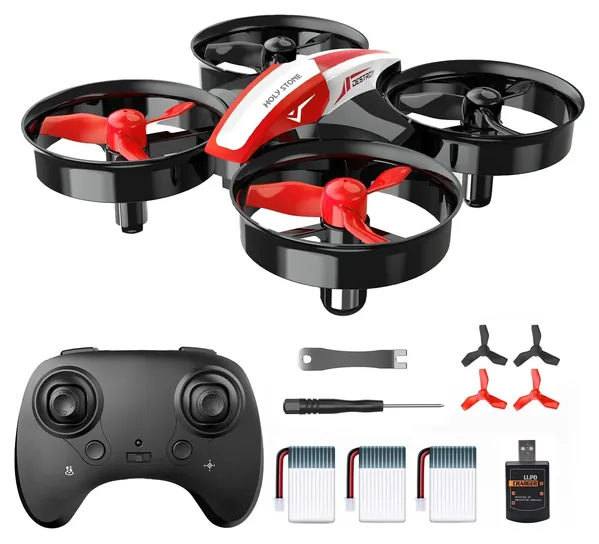
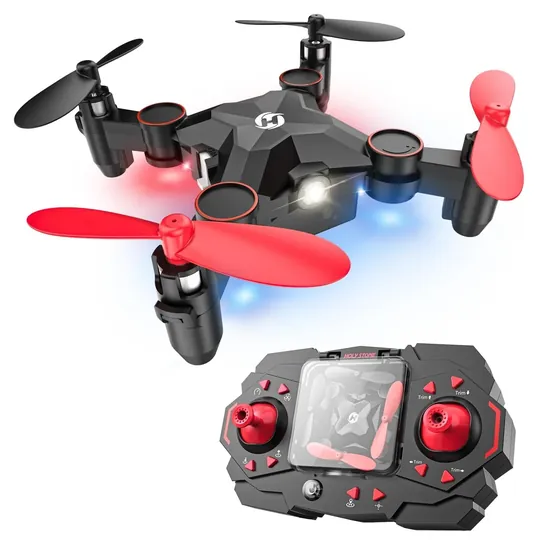
The Holy Stone HS210 takes the top spot because it ships with three batteries, and when a flight lasts a few minutes, spare batteries decide how long the fun goes on. Six of the ten old picks are gone. The Blade Inductrix and Blade QX have been discontinued, and the Snaptain SP300, Snaptain SP350, Hubsan H111 and GiloBaby STEM can no longer be bought new.
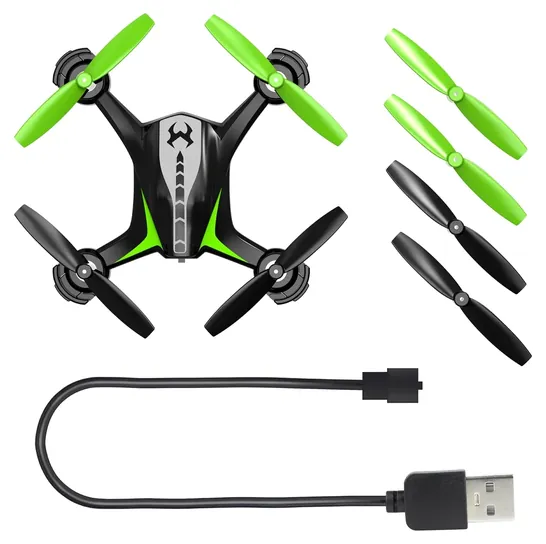
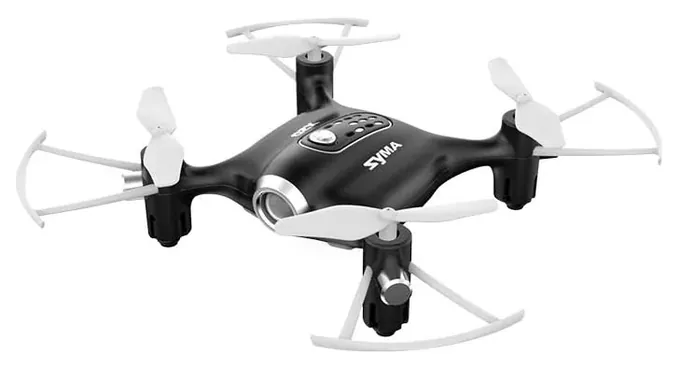
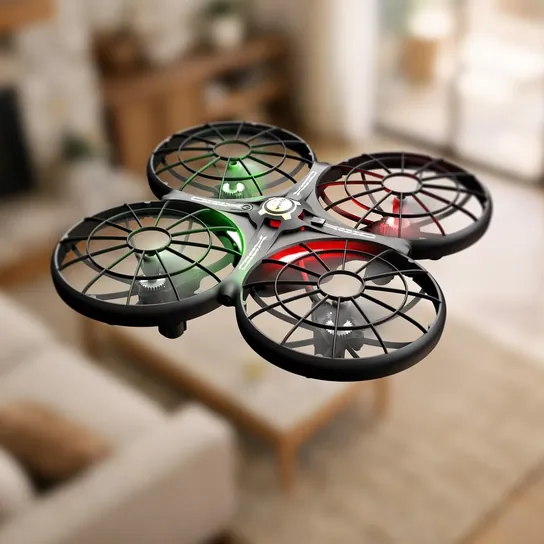
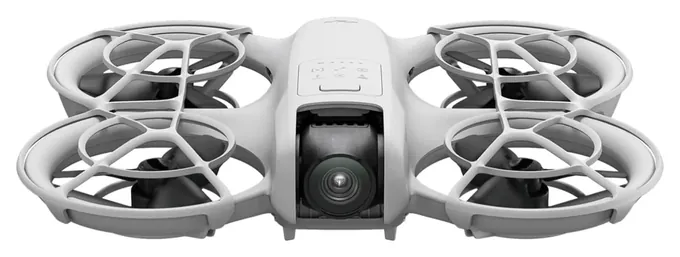
The Holy Stone HS190, Sky Viper Dash Nano and Syma X20 stay. New picks add the caged Syma X100 for small kids, the hand-steered Force1 Scoot, and the DJI Neo for anyone who wants real video from something light.
Toy drones get almost no lab attention, so we leaned on what the makers publish about batteries and flight modes, two hobbyist reviews of the HS210, the federal 250-gram registration rule and a recall search that came up empty for every brand here.
January 26, 2021:
Unlike with full sized drones, there aren't a lot of breakthrough features added to nano models from year to year. This means that we aren't constantly seeing longer and longer flight times or better and better video recording capabilities. Instead, these are simply affordable little toys designed to entertain pilots for a short period of time. After researching the models available in the market, we didn't find any of particularly noteworthy interest that deserved to dethrone or current recommendations, and, as such, there were no changes needed to be made at this time.
January 10, 2020:
There's no solid consensus on exactly what constitutes a nano-class drone, but generally speaking, the smallest effective and readily available options get as small as 2-3 inches across, and their simplicity makes them ideal for beginners of all ages. Of course, their compact size means their battery life will be somewhat limited (because they just aren't strong enough to carry huge power sources), but some, such as the Snaptain SP300, Snaptain SP350, and Holy Stone HS210, come with multiple batteries that you can swap out to increase the time between charges. Furthermore, all three of those also have circular rotor guards that prevent damage in the case of collisions. And speaking of rotor protectors, the Syma X20, Blade QX, and Blade Inductrix have partial guards and are essentially highly miniaturized versions of full-size drones. The Blades are widely considered as some of the highest-quality options in the category, and the only reason the QX didn't place more highly on our list is the the controller included with the RTF version isn't very well regarded. So, we highlighted the BNF version, which is still a very good choice, although you will have to supply and pair your own remote.
The GiloBaby STEM is one of the few that requires assembly, but not only is that process not very difficult, it can be both fun and enlightening for budding engineers and pilots. And in a category filled with small devices, the Sky Viper Dash and Hubsan H111 both stand out as even more compact than many others. They lack most advanced features such as automatic stabilization and flight sensors, but their light weight actually helps provide a slightly longer flight time than larger options.
It's also important to note that due to their small size and relatively low power levels, most drones in this category lack cameras and are susceptible to the elements, but as long as you're careful, they should offer reasonably long lifespans.
Special Honors
BETAFPV Cetus Kits For a teen or adult who outgrows toy quads, BETAFPV sells ready-to-fly kits built around its small Cetus whoop drones. Each kit bundles the drone with a hobby-style radio and video goggles, so the pilot flies from the drone's point of view. It's the modern path into the kind of hobby flying the Blade Inductrix once covered. Expect a steeper learning curve and a higher price than a toy. betafpv.com
What Counts As A Nano Drone
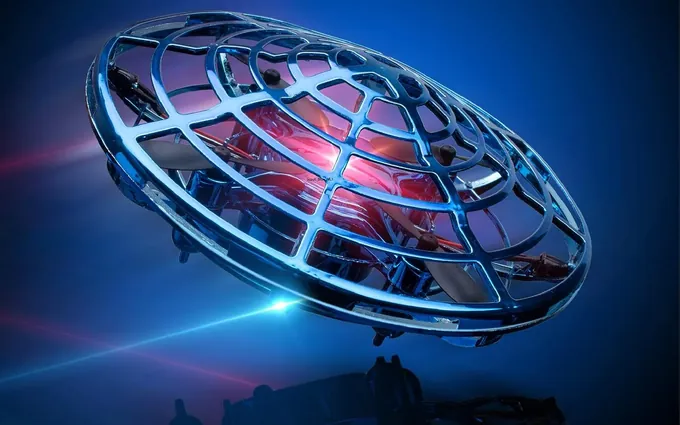
In practice, a nano drone fits in one hand, wears guards around its propellers and is meant for indoor flying in still air.
There's no official definition. The term took hold around tiny hobby quads such as the Blade Nano QX, which weighed under an ounce, and today sellers use it for almost any palm-size quadcopter. In practice, a nano drone fits in one hand, wears guards around its propellers and is meant for indoor flying in still air.
Most are toys with a 2.4 GHz controller and no camera. Their main beginner aids are altitude hold, which keeps the drone at a steady height so a new pilot only steers, and headless mode, which keeps the controls matching the pilot's view no matter which way the nose points. Flips and one-button take-off are standard.
Cameras on cheap nano drones are weak, and reviewers of indoor drones tend to point video buyers to larger models (Popular Photography). If video matters, a light camera drone such as the DJI Neo is a different class of machine. It's well under the federal registration weight but far from nano size.
Batteries, Flight Time And Spares
Flight time is the weak spot of every small quad. The Holy Stone HS210 runs about seven minutes on each of its three 250 mAh batteries, and each takes 40 to 60 minutes to charge (Moon and Back). The Sky Viper Dash Nano's sealed battery gives about four minutes. Magazine reviewers of a similar nano, the Potensic A20, found five to six minutes per battery and called it too light for outdoor use (Digital Camera World).
That makes the battery count more important than any feature. A drone with three swappable packs gives a 20-minute session; a drone with one sealed cell gives a few minutes, then a long wait. Look for spare batteries sold by the same maker before buying.
These are lithium-polymer cells. Charge them on a hard surface where you can see them, don't leave them charging overnight, and stop using any pack that swells. Crashes bend propellers, so keep the spares that come in the box; a bent prop makes the drone drift or wobble.
Registration, Rules And Kid Safety
In the U.S., a drone flown purely for fun doesn't need FAA registration if it weighs 250 grams (0.55 pound) or less (eCFR, 14 CFR 48.15). Every pick here is under that line. Lawyers and drone schools note that Remote ID broadcasting also applies to recreational flyers only above that weight, and that any commercial use needs registration regardless (UAV Coach). Rules change, so confirm on the FAA's recreational flyer page before flying outside.
Indoors, the risks are fingers and small parts. Guards cut the risk of a propeller nick but don't remove it, so teach kids to grab the drone from below or let it land. Spare propellers and screws are choking hazards for toddlers. Follow the maker's age label: the Sky Viper Dash Nano is rated for 6 and up, and the Syma X100 and Force1 Scoot for 8 and up.
We searched the U.S. Consumer Product Safety Commission recall database for every brand on this list and found no recalls of their drones.
How we researched this
We compared 18 nano and mini drones, including every pick from the old list, read makers' specs, box contents and age labels for the 7 finalists, two hobbyist reviews of the Holy Stone HS210 and magazine reviews of a comparable nano, checked the federal registration rule, and searched the U.S. Consumer Product Safety Commission recall database for every brand.
Sources (10)
- eCFR: 14 CFR 48.15, registration requirement
- FAA: Recreational flyers
- UAV Coach: Drone registration
- Moon and Back: Holy Stone HS210 review
- Drones Gator: Holy Stone HS210
- Digital Camera World: Potensic A20 review
- T3: Potensic A20 review
- Popular Photography: Best indoor drones
- DJI: Neo
- U.S. Consumer Product Safety Commission: Recalls
Frequently asked questions
What is a nano drone?
A palm-size quadcopter with guarded propellers, built to fly indoors in still air. There's no official size limit; most weigh a few tens of grams and have no camera.
Do I need to register a nano drone with the FAA?
Not for recreational flying in the U.S. if it weighs 250 grams or less, which covers every drone here. Commercial use needs registration at any weight. Check faa.gov for current rules.
How long does a nano drone fly?
Usually four to seven minutes per battery. Kits with several swappable batteries, like the Holy Stone HS210, give longer sessions.
Can a nano drone fly outside?
Only on a calm day. They're so light that a light breeze carries them off, so most owners keep them indoors.
Do nano drones have cameras?
A few do, but the cameras on cheap models are poor. For usable video, a light camera drone like the DJI Neo is the better choice.