The 8 Best Wireless Backup Camera Kits
Updated by · How we research

Eight camera-and-monitor kits compared on power, mounting and real range. The AUTO-VOX Solar 5-Inch leads for cars and pickups; magnet kits cover trailers. When users buy our independently chosen editorial recommendations, we may earn commissions to help fund the Wiki.
In most of these kits, only the video is wireless. The camera still needs power from a tail light or its own rechargeable battery, and the range printed on the box is measured in open air, not along a trailer. They suit older cars, pickups, vans and RVs that never had a rear camera, for owners who'd rather not run cable inside.


Editor's Notes
November 16, 2026, by Ezvid Wiki Editors:
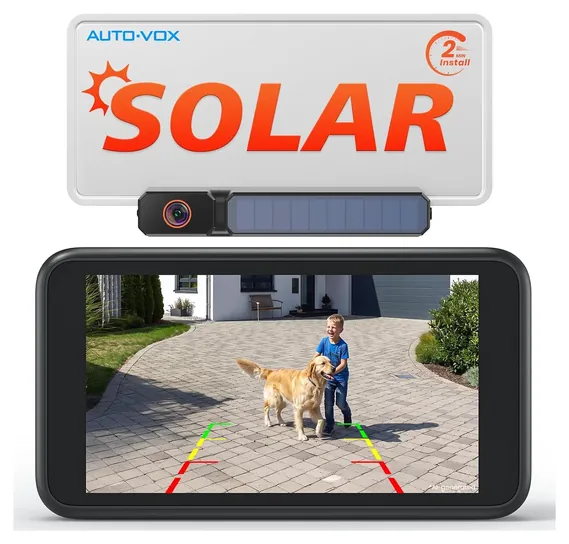
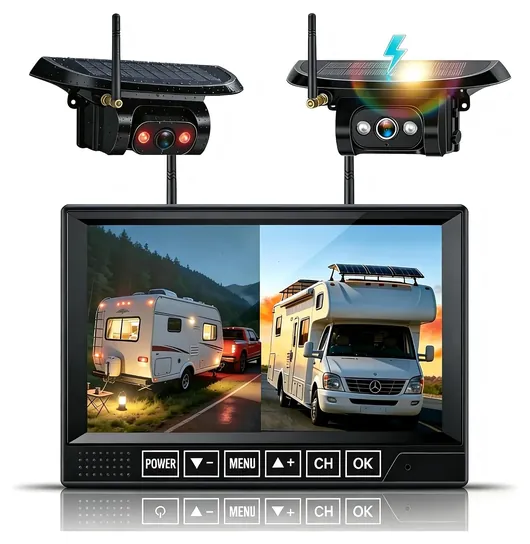
The AUTO-VOX Solar 5-Inch tops this restored list because AUTO-VOX is the one brand here whose earlier wireless kits independent reviewers have bolted onto real cars and trucks. Everything on the page is a complete kit, a camera and a monitor in one box.
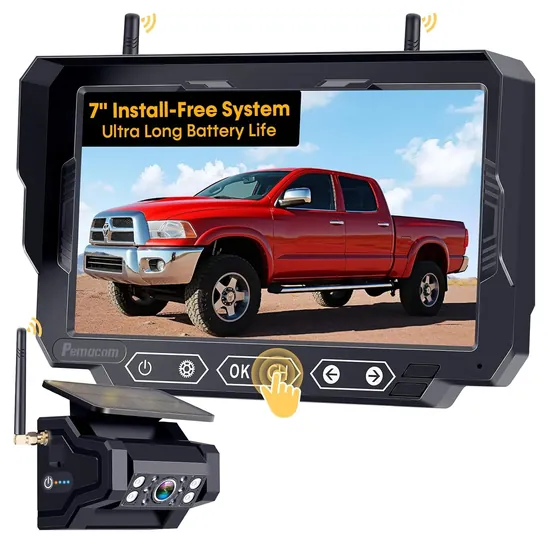
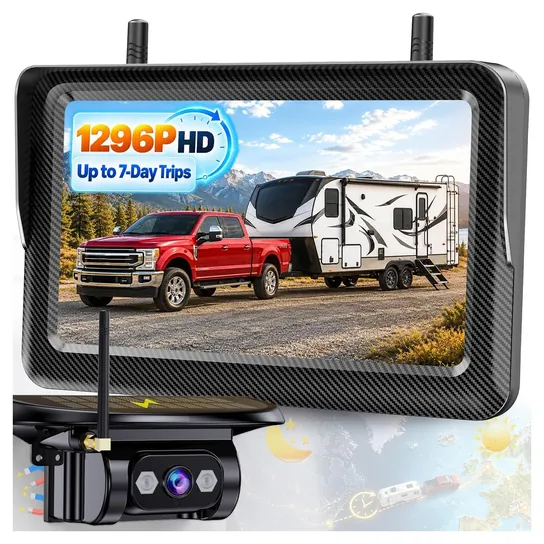
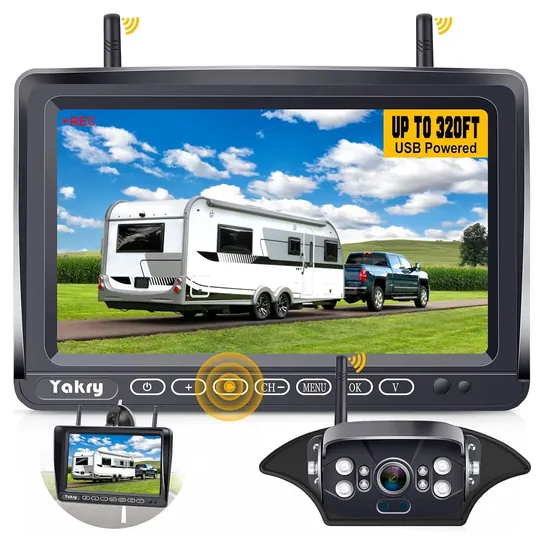
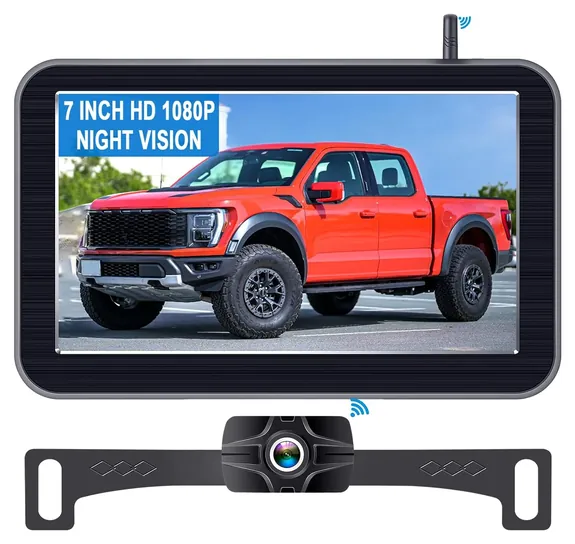
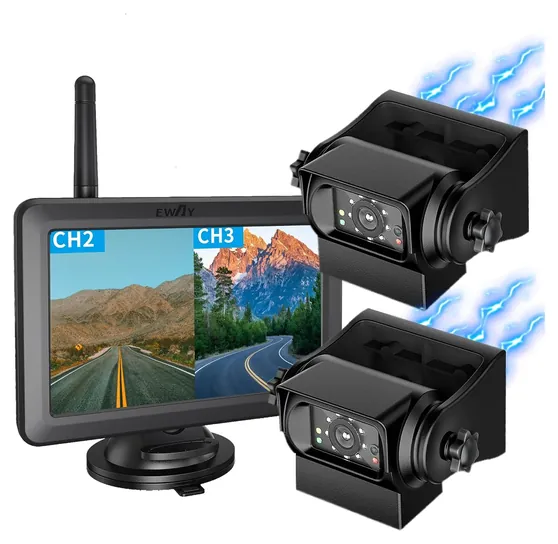
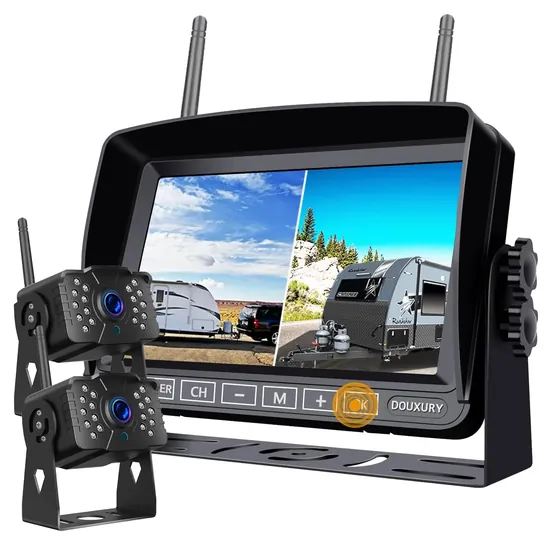
The rest of the field is crowded with look-alike kits. Some share a factory, and some share one pool of owner ratings across different models, so we kept eight that each solve a different problem. The pemacom P15 and Yakry Y33 stick to a trailer with magnets, the Yakry Y27 drops into a Furrion-prepped RV, the pemacom M1 and EWAY 2-Camera Magnetic bring a second camera, the LeeKooLuu 7-Inch keeps the cost down and the DOUXURY 4-Channel shows four views. Two kits with good independent install reviews, the AMTIFO A8 and DoHonest V25, were out of stock when we checked.
The deciding evidence was range. We read each seller's on-vehicle figure against its open-air claim, and checked both against three install write-ups and a camera maker's own case for wired systems.
Special Honors
Furrion Vision S Furrion designs the camera mounts many RV builders install at the factory, and its Vision S wireless system is the matching original-equipment kit, with a larger monitor and cameras made for that prep. It costs several times as much as the kits above, which is why it isn't on the main list. furrion.com
Rear View Safety For a long motorhome, a bus or a work truck where a wireless link would be stretched, Rear View Safety sells wired camera systems along with wireless ones, and publishes a plain guide to choosing between them. rearviewsafety.com
Range On The Box Versus Range On The Vehicle
Measure your rig from the rear bumper to the driver's seat.
The biggest number on a wireless kit's box is its open-air range, measured with nothing between the camera and the screen. On a vehicle, metal walls, a camper's body and other radio traffic cut it sharply. Rear View Safety, which sells both types, recommends wired cameras for most uses because a radio link can pick up interference and lose range on long RVs, big trucks and trailers (Rear View Safety). Digital links that hop between frequencies cut that noise but don't remove it.
Use the seller's on-vehicle figure if it gives one. The battery kits on this page quote roughly 50 to 65 feet on a vehicle, against hundreds of feet in open air, and DOUXURY quotes 180 feet in a vehicle against 320 in the open. CarAudioNow notes that owners of one system sold for 75 feet commonly got about 40 (CarAudioNow). Measure your rig from the rear bumper to the driver's seat. A 40-foot motorhome towing a car is past what most of these kits promise, and a wired system is the safer choice there.
A Battery Magnet Camera Or A Powered One
There are two ways to feed the camera. A powered camera, on a license-plate bar or a bracket, takes 12 volts from a reverse, running or tail light, while the monitor plugs into the dash socket. The video is wireless but the camera never needs charging, and installs run from 15 to 30 minutes. Plate-bar cameras can block a tailgate or door that opens at the plate, so check yours first. Many RVs come prewired for a Furrion camera, and kits with a matching bracket plug straight into that prep.
A battery camera carries its own pack, often with a small solar panel, and sticks to steel with magnets. Nothing gets wired, and it moves from one trailer to the next in seconds. Magnets won't hold on aluminum, fiberglass or plastic, so some makers supply an iron plate to glue on. Solar only trickles in power: Trekkn's install of an AUTO-VOX solar kit needed up to 6.5 hours for the first full charge, and the adhesive pad wanted 2 hours to cure before driving (Trekkn). Automoblog put several wireless kits on a wagon and a truck and found the better ones held their link with only occasional lag (Automoblog).
Installing One Safely, And What The Law Covers
Since May 2018, new U.S. vehicles under 10,000 pounds have had to show a 10-by-20-foot zone behind them on a screen, under federal rear-visibility standard 111 (Federal Register). That rule covers new vehicles as built. An aftermarket kit carries no federal certification, so its picture quality and reliability are up to the maker, and an older car doesn't need one by law.
If you tap a light circuit for power, use a proper connector and an inline fuse; a loose splice can short. Battery cameras hold a lithium pack that sits in the sun on a roof or bumper, so check the rated temperature range against where you camp, and charge it fully before the first mount. Wipe the lens often, since road grime blurs the view fastest at night, when the camera switches to infrared and shows black and white. A camera only sees what's in its frame. Walk around a trailer before backing up, because a child or a post just outside the view won't appear on the screen.
How we researched this
We compared 18 wireless backup camera kits, read the sellers' specifications and installation notes for the eight finalists, read install write-ups from Automoblog, CarAudioNow and Trekkn, Rear View Safety's guide to wired and wireless cameras and the federal rear-visibility rule, and checked every brand on the list for recalls with the U.S. Consumer Product Safety Commission. We found no independent lab tests of these exact kits, so range and battery figures are the sellers' own claims.
Frequently asked questions
Do wireless backup cameras work?
Yes, at car and pickup length most hold a steady picture. On long RVs and trailers they can lag or drop out, so check the seller's on-vehicle range against your rig's length.
Are wired backup cameras better than wireless ones?
Wired cameras are more reliable because there's no radio link to interfere with. Wireless kits are far quicker to fit, especially on a trailer you unhook often.
Does a wireless backup camera need any wiring?
Powered cameras on a plate bar or bracket still need 12 volts from a light circuit, and the monitor plugs into the dash socket. Battery cameras with magnets need no wiring at all, only recharging.
Will a magnetic camera stick to a fiberglass RV?
No. Magnets hold only on steel. Use the iron plate some makers supply, or choose a kit with a bracket mount.
Is a backup camera required on an older car?
No. The U.S. rule applies to new vehicles under 10,000 pounds built from May 2018 on. Adding one to an older vehicle is optional.