The 7 Best A23 Batteries
Updated by · How we research

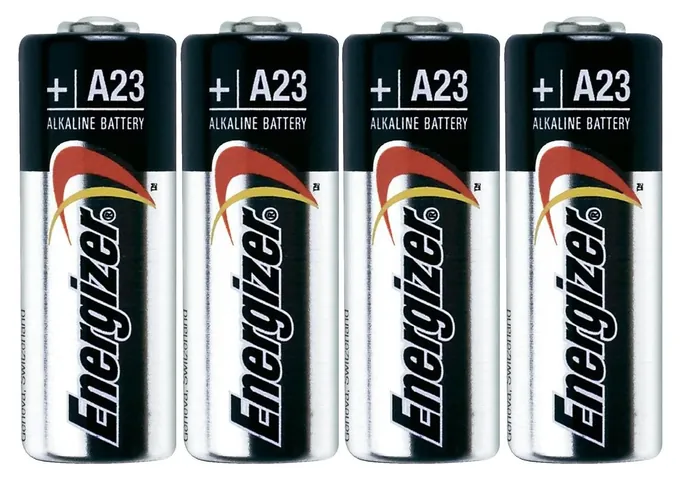
A23, 23A and MN21 name one 12-volt cell, so the maker and freshness decide. The Energizer A23 leads seven packs compared on data sheets, shelf life and cost. When users buy our independently chosen editorial choices, we may earn commissions to help fund the Wiki.
An A23 is eight tiny button cells stacked in one wrapper, which is how something smaller than a AAA delivers 12 volts. It holds very little energy, so it suits gadgets that wake up for a moment: garage-door remotes, key fobs, car alarms and wireless doorbell buttons. It is not an N cell or an A27, though both look similar.


Editor's Notes
October 23, 2026, by Ezvid Wiki Admin:
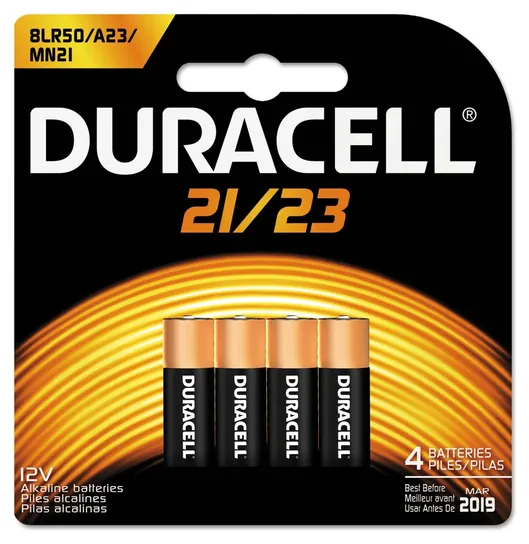
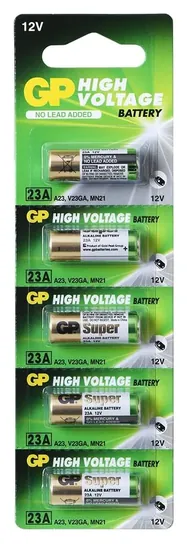
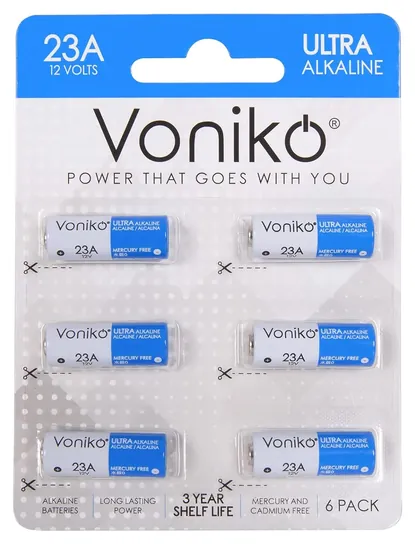
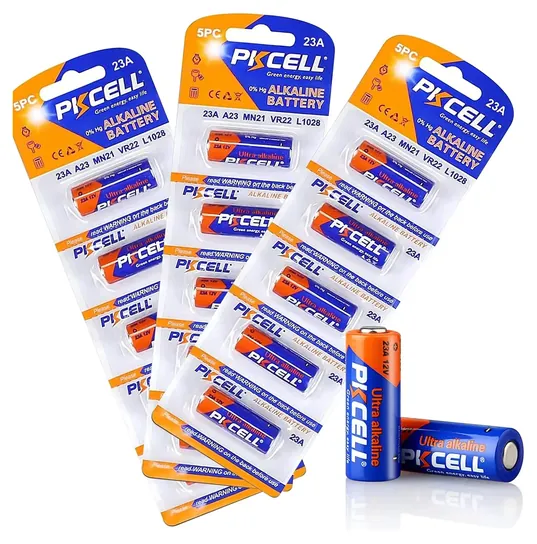
The Energizer A23 now leads. Energizer publishes a full data sheet for this cell, and its four-pack costs less per cell than most name-brand packs. The Duracell 21/23 follows for its five-year storage guarantee. Three earlier picks, the Energizer 50 Pack, Keyko Japan High Tech and Celewell 6 Pack, have disappeared from sale, and the old Energizer and Duracell picks now come in new packs. We dropped the ACDelco Super Alkaline because its seller page gives the wrong voltage and names a different company as the maker. The GP pick shrinks from twenty cells to five, since few homes use twenty before they age.
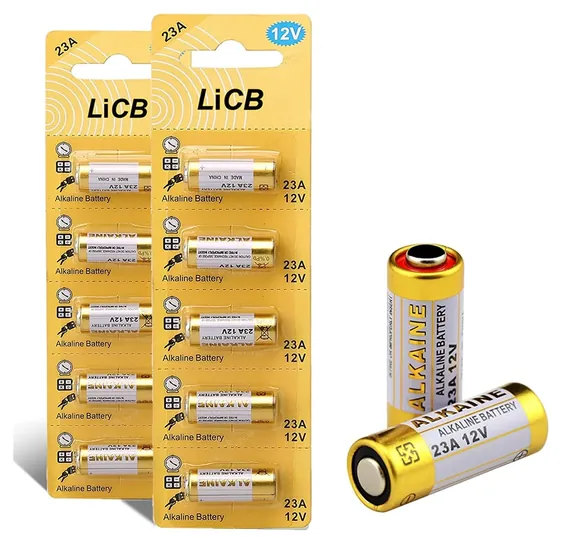
This size has almost no lab coverage. We found no discharge test of A23 cells, so we leaned on Energizer's and Duracell's data sheets, a 2023 Pocket-lint roundup, recall records and the pattern in buyer complaints, which mostly concern old stock arriving weak. The LiCB A23 stays, lower down, after LiCB's lithium coin cells were recalled in 2026 for packaging that wasn't child-resistant.
January 19, 2020:
Purely in terms of lifespan, I’d lean on brand-name options like the Duracell Duralock MN21and Energizer 12V – it isn’t an accident that certain battery brands tend to be more coveted than others – they usually offer a better lifespan than cheaper options. There are countless examples of battery discharge curves on the internet where you can see this behavior: brand-name batteries will have lower degradation rates (and therefore last longer) than the generic, dollar-store-type cells they’re being tested against, often because a lower-quality battery design can lead to a more rapid resistance build-up in the battery which dampens the voltage.
The difference between the life of two individual batteries is minute; but that difference can start to add up over 100’s of batteries. Ideally, we would plot a graph of cost-per-unit over lifespan; however, this is an over-simplified way of looking at real-world performance and there are a lot of other variables and features that can complicate this curve. Also, remember that generic batteries are also cheaper per model, and, secondly, you always get cheaper when you buy bulk – however, if you really want to benefit from this cost-performance-basis model without having to go through the heavy data-analysis, then I would recommend the Energizer 50 Pack as well as the GP 20-pack.
However, if you only need a few batteries, and you’re not into the habit of ‘stocking up for the future’, then sticking with smaller packs of the brand-name batteries should do you just fine. The other low-volume options on this list may degrade more quickly, but they compensate by being cheaper on a cost-per-unit basis - so they’re all, quite frankly, viable options too. However, I’m quite impressed with the LiCB 10-Pack and the Keyko Japan High Tech. The LiCB is a more ‘budget-friendly’ option (on a per-unit basis) and the company makes great budget-friendly batteries of multiple types.
A23, 23A, MN21: One Battery, Many Names
Check the old cell's print before you buy, not the device's manual alone, since some remotes changed cells between model years.
An A23 is a 12-volt alkaline cell built from eight tiny LR932 button cells stacked inside one wrapper, about 10 millimeters across and 28 millimeters long (Wikipedia). Makers and regions sell it under a pile of labels: 23A, 23AE, A23S, MN21, 21/23, GP23A, V23GA, L1028, LRV08 and 8LR932 all mean the same size and voltage. Energizer's data sheet also gives the standard numbers ANSI-1181A and IEC 8LR932, and Duracell's distributor listing gives NEDA 1811A. If your old cell has any of these names printed on it, any pick here fits.
Two look-alikes catch people out. An N cell is about the same length but only 1.5 volts, so it won't run a 12-volt remote. An A27 is also 12 volts and nearly as long, but it's about 20 percent slimmer, so it can rattle loose or fail to touch the contacts in an A23 holder (Ventron). Check the old cell's print before you buy, not the device's manual alone, since some remotes changed cells between model years.
Capacity Claims, Freshness And How Many To Buy
Spec sheets won't rank these cells for you. Energizer rates its A23 at 55 milliamp-hours, measured down to 6 volts at a light 20,000-ohm load, while Duracell listings quote anywhere from 33 to 60 depending on the test. The numbers come from different methods, so they don't compare. What they share is a tiny energy store: an A23 holds a small fraction of a AAA's energy, which is fine for a garage remote that wakes for a second at a time and useless for anything that runs continuously.
Freshness matters more than brand. Duracell guarantees its 21/23 for five years in storage and suggests keeping cells between about 41 and 86 degrees Fahrenheit (Duracell data sheet). Several budget brands promise three years. The most common complaint about cheap multi-packs is cells that arrive weak, which usually means old stock. A fresh A23 reads a little over 12 volts on a multimeter; one well below that won't last.
Buy for the devices you have. One garage remote or key fob needs a single cell and a spare, so a small name-brand pack makes sense. A house full of remotes, wireless doorbell buttons and car alarms can use a six- or ten-pack before it ages. Pocket-lint's 2023 roundup reached a similar view: name brands for consistency, packs from GP and store brands for value.
Fitting, Storing And Disposing Of Them Safely
Fit the cell with the raised button, the positive end, matching the plus mark in the holder. If a remote has two cells, replace both at once with the same brand, and take cells out of devices you won't use for months, since a dead alkaline cell can leak a corrosive paste onto the contacts. Keep spares in their card or a closed box, never loose in a pocket with keys or coins, which can short them. These cells can't be recharged; don't try.
An A23 is small enough to swallow. It is not a lithium coin cell, but any swallowed battery is an emergency. The National Capital Poison Center runs the National Battery Ingestion Hotline at 800-498-8666, around the clock, and lists remote controls among the common sources. Keep battery doors on remotes and key fobs shut.
When a cell is done, the EPA says single-use alkaline batteries can go in household trash in most communities, though recycling is better where it's offered. Some states and cities require recycling, so check local rules before you toss one.
How we researched this
We compared 17 current A23 packs from 10 brands, read Energizer's and Duracell's data sheets for the cell, checked the one independent roundup we found (Pocket-lint, 2023), analyzed owner feedback for dead or weak cells, and checked every brand against the CPSC recall database. Updated October 23, 2026 by Ezvid Wiki Admin.
Sources (8)
Frequently asked questions
Are A23 and 23A batteries the same?
Yes. A23, 23A, 23AE, MN21, 21/23, L1028, V23GA and 8LR932 all name the same 12-volt alkaline cell, about 10 millimeters across and 28 long. Any of them fits a device that calls for another.
Can I use an A27 or an N battery instead of an A23?
No. An N cell is only 1.5 volts. An A27 has the right voltage but is slimmer, so it can lose contact in an A23 holder. Use an A23 or one of its equivalent names.
How long does an A23 last in a garage door remote?
It depends on how often you press the button. Remotes draw power only for a moment, so a fresh cell usually lasts a long time. Replace it when the range starts to shrink or the light dims.
Can A23 batteries be recharged?
No. They are single-use alkaline cells. Trying to charge one can make it leak or burst.
Where can I buy A23 batteries?
Hardware stores, drugstores and supermarkets often carry two-packs from Energizer or Duracell near the checkout or the key-cutting counter. Wherever you buy, check the expiration date on the card.
How do I know if an A23 is still good?
Set a multimeter to DC volts. A fresh A23 reads a little over 12 volts; one that reads well below that is near the end of its life.