The 9 Best AA & AAA Battery Chargers
Updated by · How we research

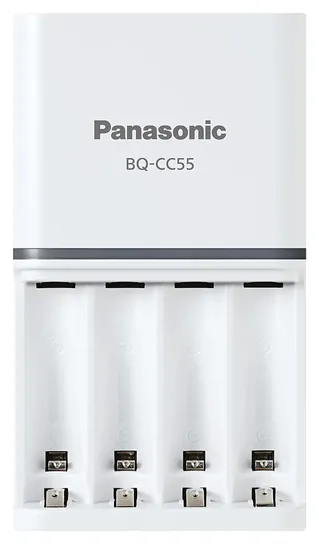
Nine AA and AAA chargers compared on per-slot charging, speed, USB power and bulk trays. The Panasonic eneloop BQ-CC55 is the best pick for most homes. When users buy our independently chosen editorial choices, we may earn commissions to help fund the Wiki.
Nearly every AA and AAA charger for home use is built for nickel-metal hydride cells, the 1.2-volt rechargeables such as eneloop, and none should ever hold an alkaline battery. The detail that matters most is whether each slot charges on its own, because pair chargers can shortchange a mixed set. This guide suits anyone tired of buying disposables.


Editor's Notes
October 23, 2026, by Ezvid Wiki Editors:
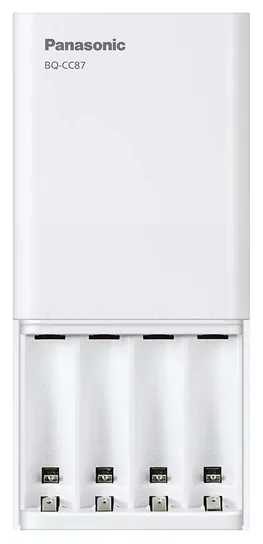
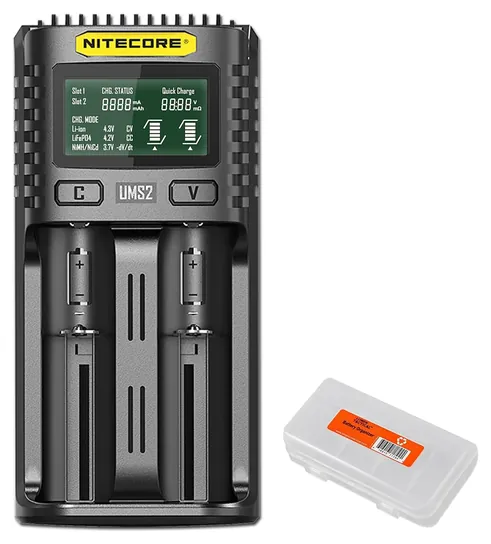
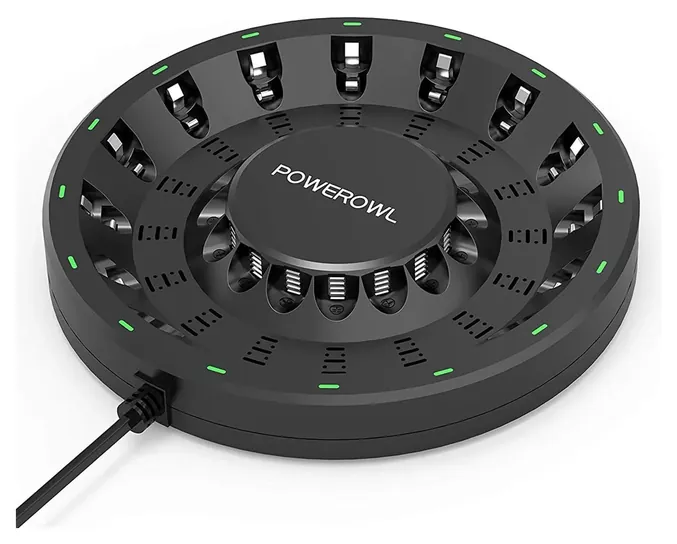
The Panasonic eneloop BQ-CC55 is the new pick to beat. It charges and stops each cell on its own, fills a set of eneloop AA in about three hours and costs little. Its USB sibling, the Panasonic eneloop BQ-CC87, stays on for travelers, and the Nitecore UMS2 and POWEROWL 16-Bay stay for lithium-ion owners and big households.
Seven of the ten earlier picks are gone. The La Crosse BC-1000 and EBL 6201 are unavailable, the Powerex MH-C9000 Pro and Bonai ZN825E are no longer sold where we link, and the RayHom listing now sells batteries. The Energizer Universal and the V-3299 both charge in pairs, which treats a mixed set poorly, so they gave way to chargers with independent slots. We left out a popular Energizer kit for the same reason.
To sort the field we leaned on Battery University's notes on how a nickel-metal hydride charge should end, Michael Bluejay's long-running charger comparisons, an Expert Reviews test and each maker's charge-time chart. No charger brand here has a CPSC recall.
Earlier notes
October 29, 2020, by Chris Gillespie:
Due to their chemistry, rechargeable batteries have certain weaknesses when it comes to their ability to hold a charge, especially when they are not used regularly or are repeatedly fully discharged. Choosing a suitable charger will depend on the number of batteries you use and how often you need to recharge them. For occasional use, a simple model that, at a minimum, keeps the power levels topped up and checks for defects should be sufficient, however, if you rely on fully functioning cells to carry out your job, then a professional-quality charger will analyze, discharge, refresh or even restore them.
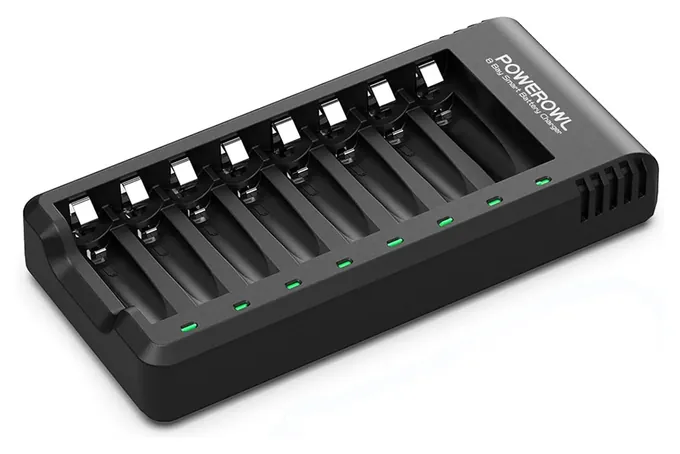
We have updated this ranking to reflect the most recent upgrades in battery technology, with choices available to suit most household and professional needs. The RayHom RM-33 is no longer in production and has been replaced with the RayHom 8-bay, which has similar functions, but uses LEDs rather than an LCD to indicate the battery's status. Nitecore has recently released the Nitecore UMS2 Intelligent, an improved version of their popular charger that can now accept a wider range, including nickel and manganese cells. The Titanium Innovations Genius MD-1600L was our original choice for charging in bulk, however, we decided to switch it for the Powerowl High Speed, as this model has better ventilation and cooling, and is almost half the price.
Energizer has launched the Energizer Universal range of chargers that are simple to use and a good choice for families with children, as there are no settings to adjust and the auto shut-off prevents damage by overcharging. On a more professional level, the popular Powerex MH-C9000 WizardOne has been updated with a backlit screen and a useful memory function in the Powerex MH-C9000 Pro. This option not only charges in one hour, but can also restore dead cells by repeatedly discharging and recharging them. The Panasonic BQ-CC55 has proved itself to be a reliable charger over the years, therefore we chose to replace it with the Panasonic BQ-CC87, which is essentially the same model, but with the ability to charge mobile devices using the stored batteries via its 5-volt USB output.
November 29, 2019, by Christopher Thomas:
There are two main concerns when it comes to charging batteries. The first is safety, so it's important to choose a charger with capable protection circuits to avoid disaster. In fact, we had to remove an earlier Powerex model after finding evidence that it may not have shut off automatically in the event of a failed cell. We've replaced it with the technologically advanced Powerex MH-C9000 WizardOne, which lets you intricately fine-tune the rate at which your batteries are charged and discharged. Both it and the La Crosse BC-1000 Alpha Power are intended for users who want the utmost control over the process. The La Crosse offers 4 selectable speeds, so it's not quite as tunable as the Powerex, but it's almost there.
If you're not concerned with custom charging speeds, the Panasonic BQ-CC55 is an excellent choice that performs quickly and reliably in real-world testing. The Energizer Recharge, meanwhile, affords you the ability to refuel various types of cells including Cs and Ds and its dust cover means you can use it in some environments where there's a risk of a little bit of foreign material in the air. The Bonai ZN825E and RayHom RM-33 both accommodate up to 8 batteries; the first uses USB power and the second a standard AC outlet. The EBL 6201 is another USB-powered model, this time one with 4 bays, and because it's so light and inexpensive it's a reasonable choice for travelers. Similarly lightweight and affordable is the Nitecore New i2 Intellicharge, which also accommodates large and powerful 18650 lithium-ion batteries. The AmazonBasics V-3299 is interesting because not only does it do away with the need for a power cord, it also features an integrated USB port for charging electronics that don't have removable batteries.
We also want to take a second to mention that, no matter how frugal and convenient of an idea it sounds, don't ever try to recharge disposable batteries, alkaline or otherwise. While it might work decently a couple times, the risk of failure, explosion, and acid sprays is simply too great. With that out of the way, check out our rundown of good AA batteries as well as this interesting roundup of cells with built-in USB chargers.
Special Honors
Powerex MH-C9000PRO The Powerex MH-C9000PRO is a charger-analyzer for people who want to see what their cells can really hold. It charges four AA or AAA cells at a chosen rate, runs discharge and break-in cycles and reports each cell's measured capacity. Maha, its maker, sells it directly. mahaenergy.com
SkyRC MC3000 The SkyRC MC3000 is a four-slot hobbyist charger and analyzer that handles nickel-metal hydride and many lithium-ion sizes. It can test capacity and internal resistance and can be set up from a phone app, which suits people who track large battery collections. skyrc.com
Independent Slots Beat Pair Charging
Bulk trays with eight or 16 slots are handy for households that swap a lot of cells, but they share one power supply.
Most cheap chargers used to charge cells in pairs: two cells sit in series and share one circuit, so the charger can only judge them together. If one cell is weaker or emptier than its partner, one ends up undercharged or the other overcharged. Michael Bluejay, who has compared consumer chargers for years, flags pair charging as the main thing to avoid (Michael Bluejay).
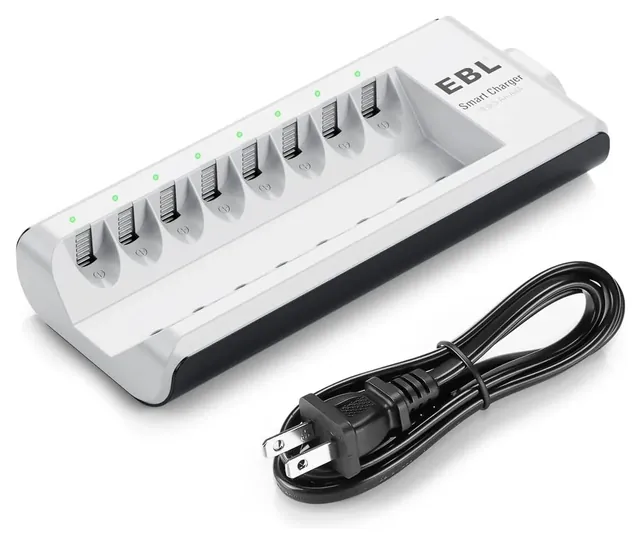
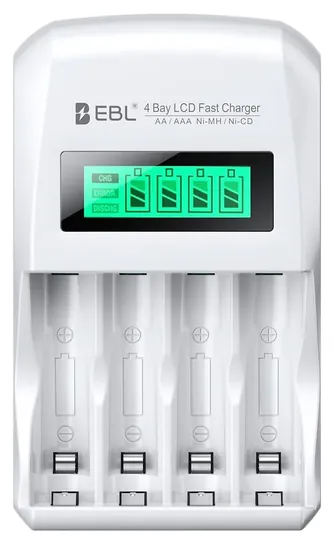
A charger with individual slots watches each cell on its own, so you can charge one, three or four cells in any mix of AA and AAA. Every charger on this list works that way. Box copy can be vague, so look for wording such as "individual" or "independent" slots and a separate light for each slot. Some models changed over time: EBL's older eight-slot charger paired its cells, while the current C9042W version doesn't.
Bulk trays with eight or 16 slots are handy for households that swap a lot of cells, but they share one power supply. With every slot full, each cell gets less current and charging takes longer. Hobbyists who want to measure capacity or revive tired cells usually step up to an analyzer charger (eneloop101), which costs several times as much.
How A Good Charger Knows When To Stop
Nickel-metal hydride cells give a small voltage dip when they're full. A smart charger watches for that dip, called negative delta-V, and backs it up with a temperature cutoff and a timer (Battery University). Chargers that rely on a timer alone can overcharge a cell that started half full, which wears it out sooner.
It's normal for cells to feel warm near the end of a charge, because the reaction turns more energy into heat once the cell is nearly full. A cell that gets hot to the touch, or one the charger keeps rejecting, should be retired. Charge at room temperature, away from bedding or paper.
Many chargers switch to a tiny trickle current after the main charge so cells stay topped up. Battery University advises keeping that current very low, because a nickel-metal hydride cell can't absorb overcharge without slowly wearing (Battery University). Leaving cells in the charger for weeks gains nothing. Take cells out once the light turns green.
Which Cells Belong In Which Charger
Every charger here is made for nickel-metal hydride, and most also take older nickel-cadmium cells. Never put alkaline or other single-use batteries in one: they aren't built to take a charge and can leak or rupture. Good chargers detect and refuse them, but don't count on it.
Low self-discharge cells such as eneloop, sold since 2005, keep most of their charge for a year on the shelf, while older nickel-metal hydride cells can lose a noticeable share in the first day (Wikipedia). They charge in any of these chargers, though Panasonic tunes its own chargers for its cells.
Rechargeable lithium AA and AAA cells that hold a steady 1.5 volts are a different design: a 3.7-volt lithium-ion cell with a built-in converter (Wikipedia). Most charge through their own USB port or a matching charger. Don't put them in a nickel-metal hydride charger. The Nitecore UMS2 handles both nickel-metal hydride and larger lithium-ion cells, but it isn't meant for these 1.5-volt AA cells either.
How we researched this
We compared 18 AA and AAA chargers, read the makers' charge-time charts and spec pages for the nine finalists, used Battery University's charging notes, Michael Bluejay's charger comparisons and an Expert Reviews test, analyzed owner feedback, and checked every brand against the CPSC recall database. Updated October 23, 2026 by Ezvid Wiki Editors.
Frequently asked questions
What is the difference between AA and AAA batteries?
Both give the same voltage. A AA cell is wider and longer, so it stores more energy: a typical rechargeable AA holds roughly 2,000 to 2,800 mAh, a AAA about 800 to 1,100 mAh. Every charger on this list takes both sizes.
Can I recharge alkaline batteries?
No. Alkaline cells aren't designed to be recharged and can leak or rupture in a charger. Use nickel-metal hydride rechargeables such as eneloop instead.
How long does it take to charge AA batteries?
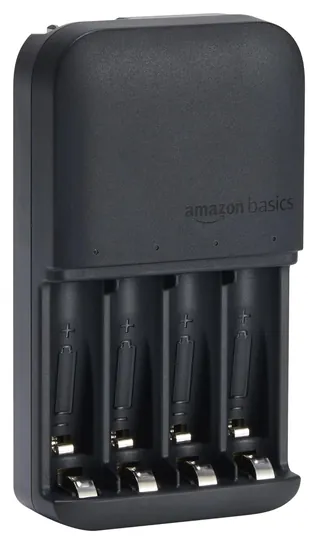
It depends on the charger and how many cells you load. Panasonic quotes about three hours for four eneloop AA in the BQ-CC55, while the Amazon Basics Smart 4-Bay takes about seven hours for four AA.
Do I need a charger with individual slots?
It's the best choice. Individual slots let you charge any number of cells and judge each one separately, while pair chargers treat two cells as one and can undercharge or overcharge a mismatched pair.
Can I charge 1.5-volt lithium AA batteries in a NiMH charger?
No. Those cells contain a lithium-ion cell and a voltage converter and need their own USB port or a charger made for them.
Is it normal for batteries to get warm while charging?
Some warmth near the end of a charge is normal. A cell that gets hot, swells or leaks should be removed and recycled.