The 9 Best Air Conditioner Covers
Updated by · How we research

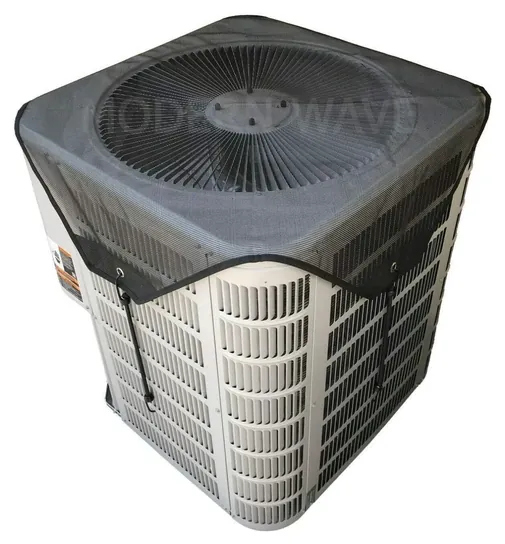
Top-only, full and window AC covers compared on airflow, fit and winter protection. The Modern Wave Mesh Top leads because it can stay on a running unit. When users buy our independently chosen editorial picks, we may earn commissions to help fund the Wiki.
A cover can hurt an air conditioner as well as help it. A solid cover on a unit that switches on blocks the airflow it needs, and a sealed one can trap damp air that rusts the coil. This list sorts top-only, full and window covers for homeowners who want leaves, snow and drafts kept out without those risks.


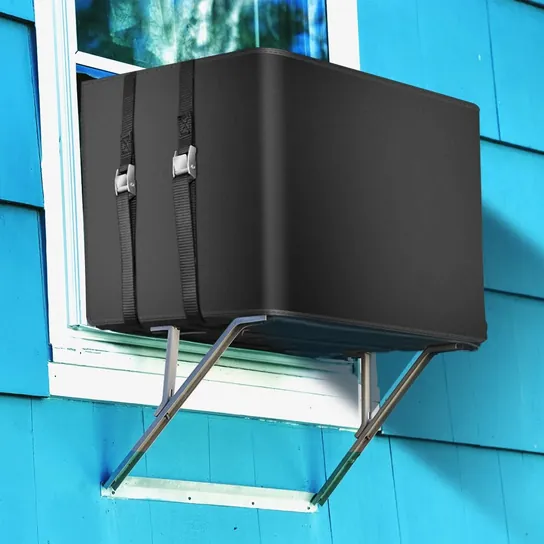
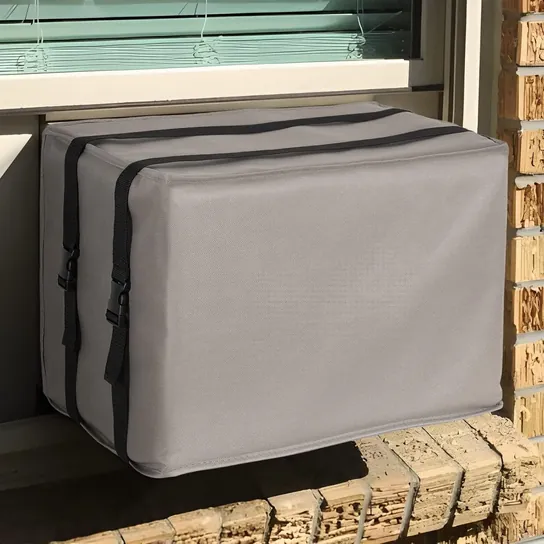
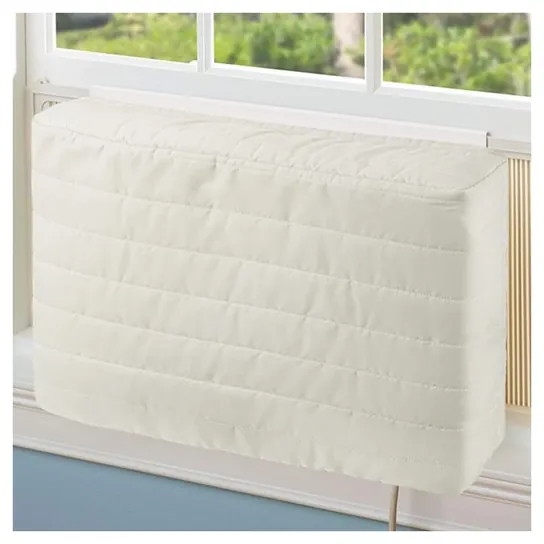
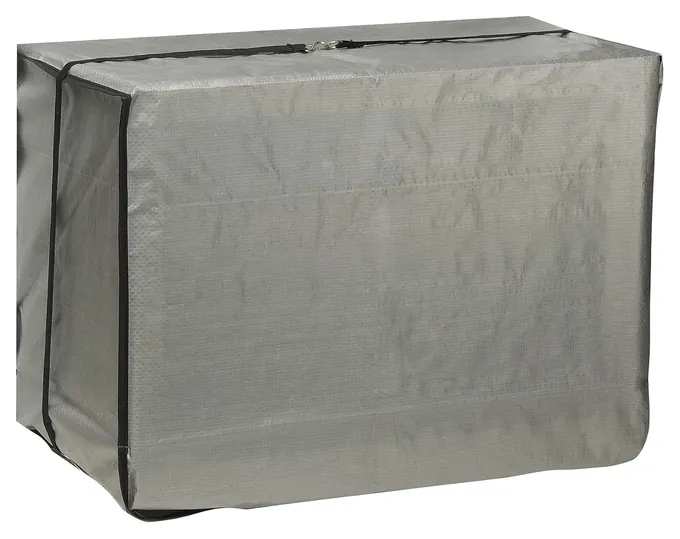
Editor's Notes
November 1, 2026, by Ezvid Wiki Editors:
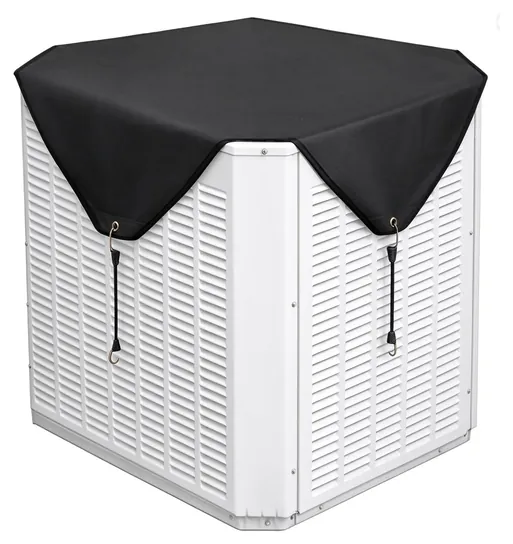
Top-only covers lead this list now. The heating and cooling pros we read agree that a cover should never seal up a unit that might switch on, and that open sides let moisture escape. So the Modern Wave Mesh Top moves to first place: leaves and fluff stay out while air still moves. The Jeacent Winter Top stays from the old list as the waterproof take on the same idea, for months when the unit sits idle.
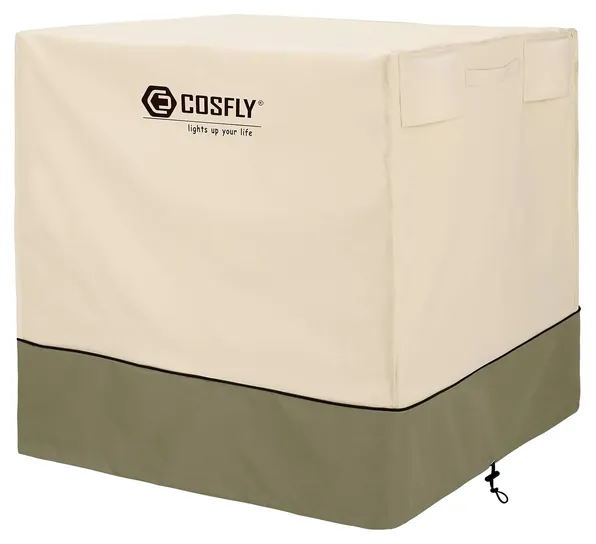
Most of the old picks are gone. The Fineably Outdoor AC, all three Sturdy Covers and the Custom All-Season have vanished from sale, while the Classic Accessories Ravenna Square and Duck Brand Standard have no current offer. We dropped the KylinLucky Outside because the COSFLY Full Cover does the same job, and the Adco 3023 because it fits one RV rooftop unit, not a home.
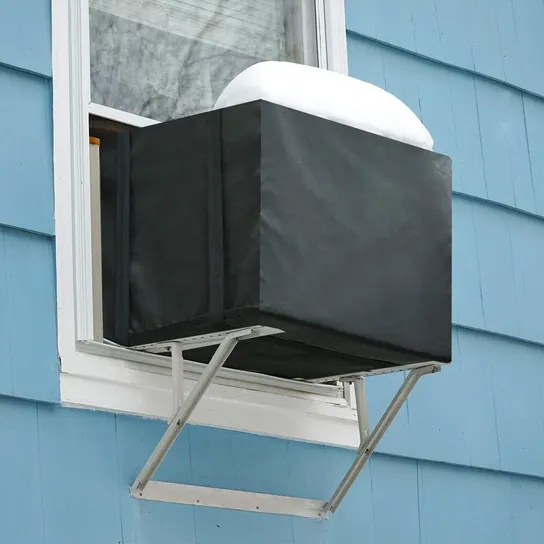
Window units get more room this time: outside covers for small, large and drafty units, the COSFLY Indoor Cover for the room side, and the plastic Frost King AC2H for the tightest budget. No lab we know of tests these covers, so the order rests on fabric and fit details, owner reports of how they fare after a winter, and service-company advice from Aire Serv and Journeyman HQ on when a cover traps moisture. Shopping for the cooler itself? See our portable air conditioners. Protecting a patio screen? Try outdoor TV covers.
Earlier notes
March 15, 2021, by Will Rhoda:
It was a straightforward round of updates for us, with the lion’s share of our previous picks continuing to be smart choices. The only major change we made was removing the AmazonBasics Square, since it didn’t appear to be available.
We were, however, able to find a replacement with a very similar design – down to the colorway – and it was offered for quite a similar price – even a bit more affordable, in fact – but anybody considering the Fineably Outdoor AC in lieu of our former AmazonBasics pick should know that it sports a 34-inch square footprint, which is a tad smaller than the 36-inch square footprint of its predecessor, which might make it incompatible or less well suited to use with big central air units.
Needless to say, in isolation, these covers won’t do a lot to help your home’s climate-control cause, so make sure they’ve got some cold-blowing equipment to protect. In pursuit of that interest, we maintain rankings for window air conditioners, wall air conditioners and even portable air conditioners — which live indoors. Don't be afraid to take a look!
November 26, 2019, by Melissa Harr:
Although an air conditioner cover can be a great tool during autumn and heavy winter blizzards, many experts agree that you should take the cover off from time to time so that moisture does not continue to build up inside the unit. This is especially true of some of the heavy-duty choices, including the Classic Accessories Ravenna Square and KylinLucky Outside. These do have vents, though, which will help stop moisture problems in the first place. You can also sidestep the issue altogether with a mesh model, such as the Jeacent Innovations Top or Custom All-Season. They keep sticks and debris out while allowing for plenty of ventillation.
As for window air conditioners, the Sturdy Covers Insulated and the Sturdy Covers Defender are good choices, designed for the inside and outside of the home, respectively. And, finally, we opted to add one cover for RV air conditioners, the Adco 3023. It is simple but effective, although it may not last for season after season after season of use when subjected to very harsh conditions.
Special Honors
HVAC Covers HVAC Covers makes central air conditioner covers to order, cut to fit a specific condenser, and also sells pool heater covers. A made-to-fit cover sits tighter than a universal box, so it flaps less in wind and leaves fewer gaps for leaves. Have your unit's brand and model number handy when ordering. hvaccovers.com
The Cover Store The Cover Store sorts its air conditioner covers by unit brand, from Carrier and Rheem to Lennox and Trane, in full, armor top and mesh top styles, plus indoor covers. Its custom covers cost more than universal ones, the trade-off for a closer fit. coverstore.com
Do You Need A Cover At All?
Before covering a unit for the season, switch off the outdoor disconnect so a warm day can't start it.
Often, no. Outdoor condensers are built to sit in rain and snow, and the service company Aire Serv says a cover mostly earns its keep where leaves, cottonwood fluff or dust clog the coil, or while a storm is on the way. It also warns that solid vinyl or plastic holds moisture against the metal, which invites rust and mildew, so a breathable fabric with vents is the better choice.
The bigger risk is running the unit under a cover. Journeyman HQ explains that a solid cover chokes the airflow the condenser needs, so pressure climbs and the compressor can overheat or trip its safety switch. Before covering a unit for the season, switch off the outdoor disconnect so a warm day can't start it. Heat pumps and ductless mini splits heat the house in winter, so Bob Vila's guide advises against covering them at all.
Full covers that reach the ground can also give mice and rats a dry, sheltered home. Journeyman HQ suggests covering only the top half to two-thirds of the unit, or lifting a full cover now and then to check for nests.
Top-Only, Full Or Window: Which Kind Fits Your Unit
Cover makers such as The Cover Store sort covers into full, top and mesh styles plus indoor covers. Top-only covers come in two kinds. A mesh top keeps leaves and debris out of the fan but lets air through, so it can stay on through mild weather. A solid waterproof top keeps rain, ice and branches off the fan blades while the sides stay open to breathe; it's for a unit that's switched off. Both hold on with bungee cords hooked under the case.
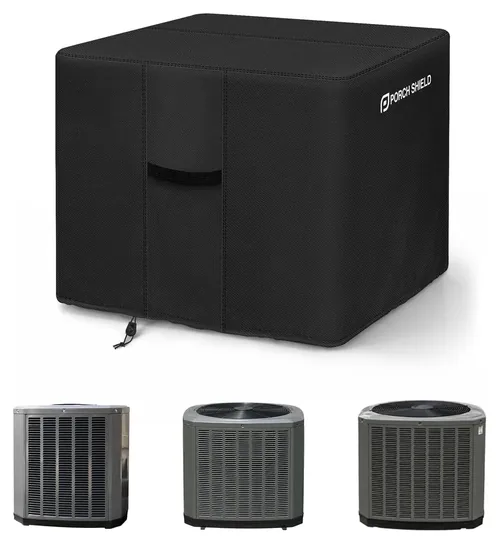
Full covers wrap the top and all four sides. They make sense for a long shutdown in snowy places. Look for heavy coated fabric (600 denier is common), vents high on the sides, a drawstring or elastic hem, and a slit or flap for the refrigerant lines. Taped seams keep water from wicking through the stitching. Pull a full cover off on dry, mild days so trapped damp can dry out.
Window units leak cold air two ways: through the outside half and through the vents inside. An outside cover keeps snow out and slows the draft; an indoor cover is a padded panel that wraps the front grille. Close the unit's vent lever too. If you can lift the unit out of the window for winter, that seals the gap best.
How To Measure For A Good Fit
Measure the unit, not the old cover. For a condenser, take the width and depth across the case at its widest point and the height from the pad to the top of the fan guard, then pick the cover size just above those numbers. A cover's printed size is the cover, not the unit it fits. A square top cover should match or slightly beat the top's width so the corners reach the bungee hooks.
For a window unit, measure only the part that sticks out past the wall: width, height and depth. Many covers are also sold by BTU rating, which is printed on the unit's label. Frost King sizes its plastic outdoor covers that way, for example up to 10,000 BTU for the AC2H and 15,000 BTU or more for the AC5H, and it notes that the plastic won't stretch, so buy the next size up if you're between two.
Universal covers fit many units loosely. If yours is an odd shape or you want a snug look, custom makers build covers to the brand and model number. Write that number down from the unit's data plate before you order.
How we researched this
We compared 24 air conditioner covers, including every pick from the old list, read the makers' fabric, size and fastening details and Frost King's sizing chart, studied owner feedback for fit and winter wear, read service-company advice from Aire Serv and Journeyman HQ on covering condensers, and checked every brand against the U.S. Consumer Product Safety Commission's recall database. We found no independent lab tests of air conditioner covers.
Sources (8)
- Aire Serv: Should I cover my air conditioner in the winter?
- Journeyman HQ: Mesh vs. solid AC covers
- Bob Vila: Best air conditioner covers
- Frost King: Outside window air conditioner covers
- The Cover Store: AC covers by brand
- HVAC Covers
- The Cover Store: The best air conditioner cover
- CPSC SaferProducts.gov
Frequently asked questions
Is it safe to cover an outdoor air conditioner?
Yes, if the unit is switched off at its outdoor disconnect and the cover breathes. Never run a unit under a solid cover. A mesh top is the only kind meant to stay on a unit that might run.
Should I cover my heat pump or mini split?
No, not while it may run. A heat pump or ductless mini split heats the house in winter and needs open airflow. At most, use a small top shield that leaves the coil and fan clear.
Do air conditioner covers attract mice?
Full covers that reach the ground can shelter mice and rats. A top-only cover avoids that, and a full cover should be lifted now and then to check for nests.
How do I measure my AC unit for a cover?
Measure the width, depth and height of the unit itself, then pick the cover size just above it. For window units, measure only the part outside the wall, or match the BTU rating.
Should a window air conditioner be covered inside or outside?
Both help. An outside cover keeps snow and rain out, and an indoor cover blocks the draft through the vents. Removing the unit for the winter seals the window best.
When should I take the cover off?
Before the unit runs again, and on dry, mild days during a long winter so trapped moisture can dry out.