The 10 Best Astronomy Binoculars
Updated by · How we research

Ten stargazing binoculars compared, from handheld 10x50s to 25x100 giants. The Celestron SkyMaster Pro 15x70 best balances light, sharpness and weatherproofing. When users buy our independently chosen editorial selections, we may earn commissions to help fund the Wiki.
For stargazing, the size of the front lenses matters more than magnification. A pair with 70 mm lenses gathers about twice the light of a 50 mm pair, but much past 10x the view shakes in your hands. Beginners and seasoned observers face the same choice: a light handheld pair for quick looks, or a big tripod pair for faint clusters and galaxies.
At a Glance
-
1
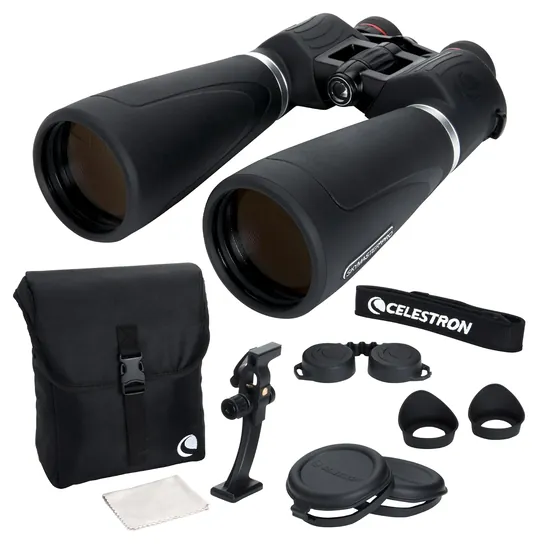
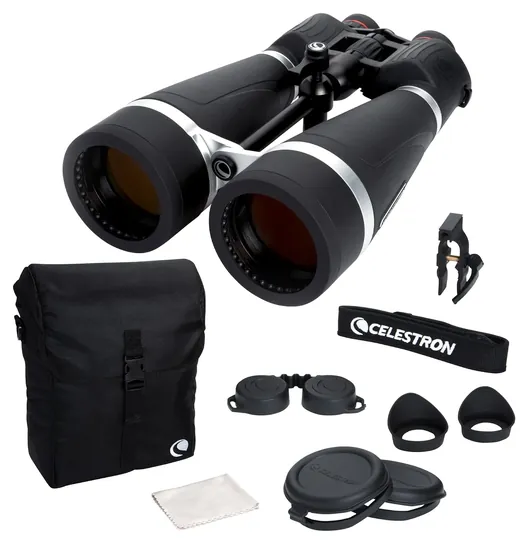
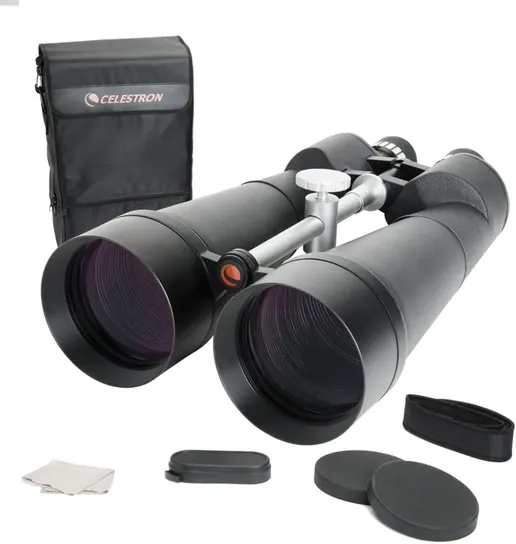
 Celestron SkyMaster Pro 15x70
$279
-
2
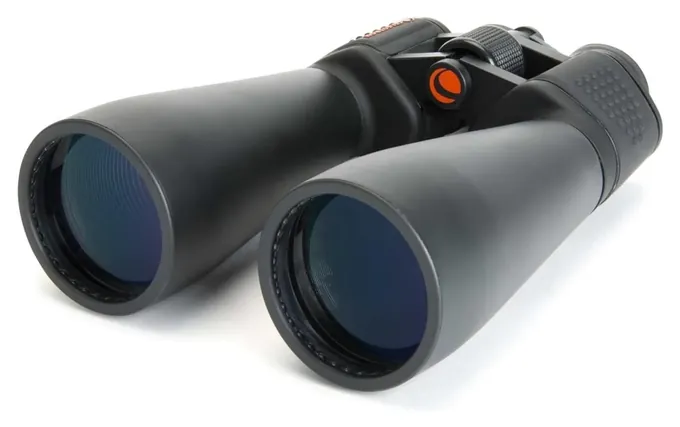
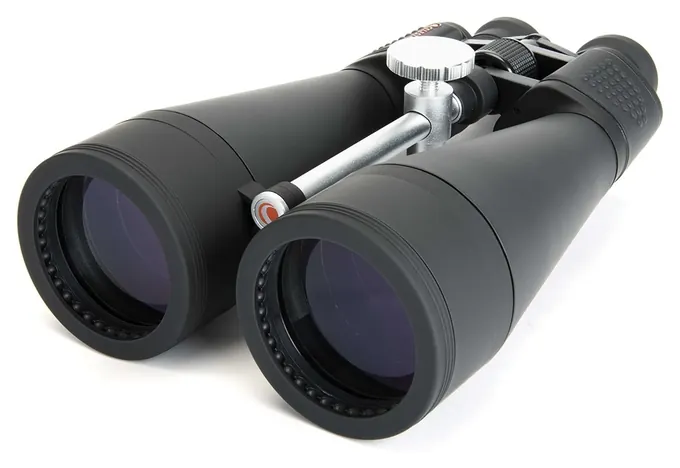
 Celestron SkyMaster 15x70
$89
-
3
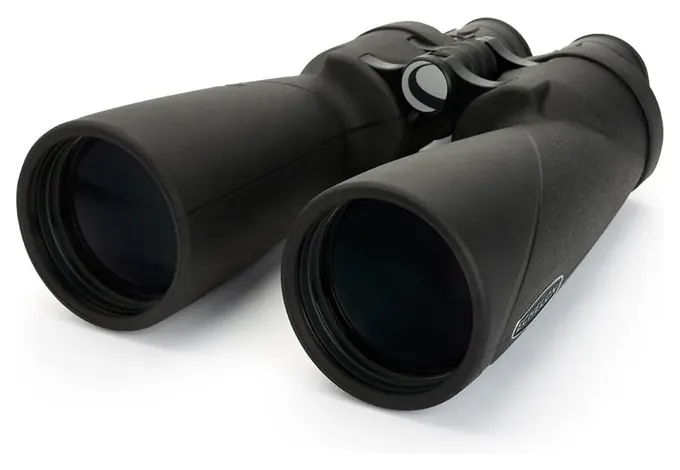
 Celestron Echelon 20x70
$871
-
4
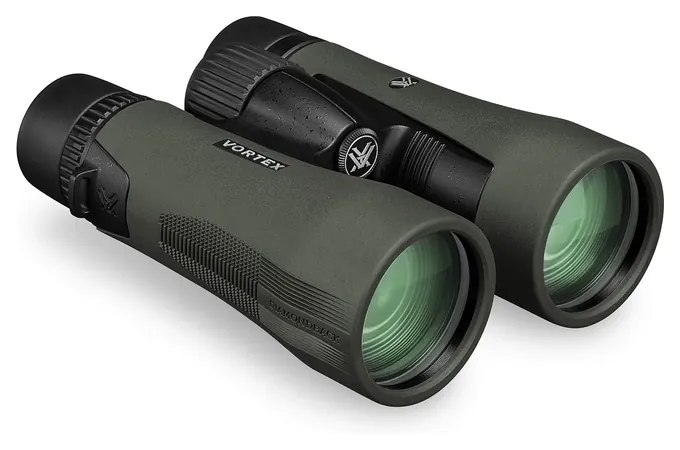
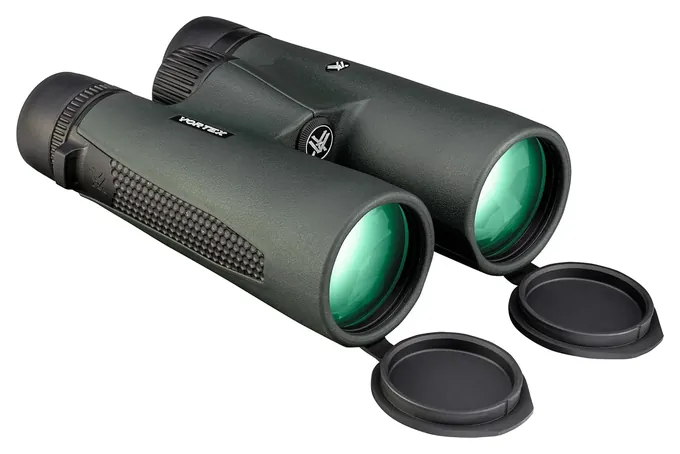
 Vortex Diamondback HD 10x50
$269
-
5
 Celestron SkyMaster 20x80
$179
-
6
 Celestron SkyMaster Pro 20x80
$299
-
7
 Celestron SkyMaster 25x100
$459
-
8
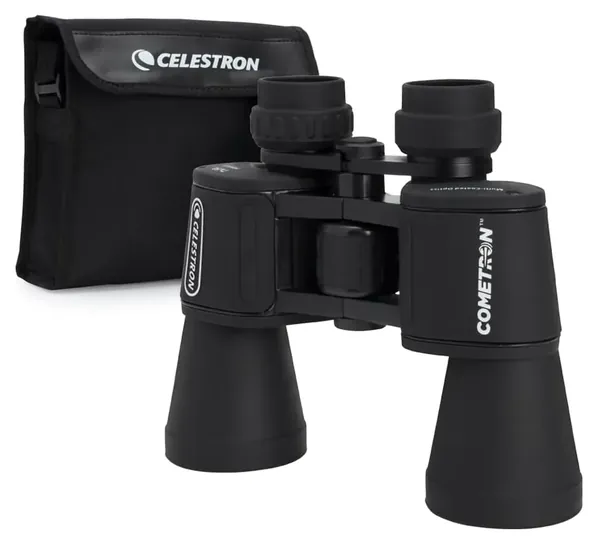
 Celestron Cometron 7x50
$39
-
9
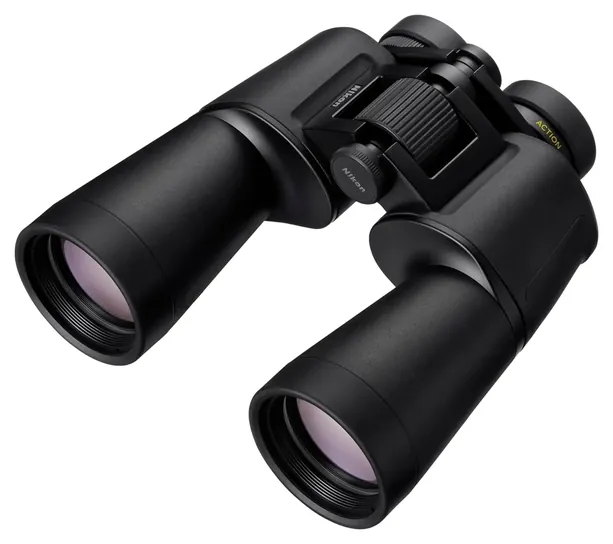
 Nikon ACTION 10x50
$127
-
10
 Vortex Triumph HD 12x50
$119
Editor's Notes
October 23, 2026, by Ezvid Wiki Editors:
The Celestron SkyMaster Pro 15x70 now leads this list. It keeps the big lenses that made the standard Celestron SkyMaster 15x70 so popular, adds a sealed body and better coatings, and two binocular review sites rate it a clear step up in sharpness.
Most of the old list had disappeared. The Orion Explorer Giant View 9326, Orion Resolux 9546, Orion Giant 15 x 70 and Barska Cosmos are no longer sold, so they're gone, and our old Celestron Skymaster Pro entry now points to the current Celestron SkyMaster Pro 20x80. We added two handheld pairs from Vortex, the Nikon ACTION 10x50, the Celestron SkyMaster 20x80 and, for tight budgets, the Celestron Cometron 7x50.
The evidence here was Celestron's, Vortex's and Nikon's specs, star tests from two binocular review sites, Sky at Night's buying advice and owner reports about prisms drifting out of line on budget giants. Oberwerk stays in our special honors, since it sells its big binoculars direct.
Earlier notes
July 22, 2020, by Daniel Imperiale:
Due to limitations in availability, we've relegated the Oberwerk brand to our special honors section, but that by no means is a knock on their quality. We also sent off the Celestron Cometrons for limitations in both their magnification (7x) and their light gathering area (50mm), neither of which quite cross into the minimums we'd like to see in a astronomical binocular. We flirted with the idea or replacing them with a pair of zoomable binoculars from Nikon that could tackle a range between 8x and 22x, but the sacrifices in sharpness you get when you introduce a zoom make them untenable for committed stargazing.
Those two factors — magnification and light gathering — should be paramount in anyone's decision, but with so many offerings coming in at around 15x and 70mm, there are other aspects worth examining, as well. Construction quality is a big one, especially waterproofing. You might not be going out to look at the stars when it's overcast, but if a storm should move in quickly, or if dew were to settle on them in those pre-dawn hours when so many comets are at their most visible, you could risk damage if you don't have water resistance. Many models are at least nitrogen-purged, so if ambient moisture were to threaten the inside of the barrels, they would resist it that way.
June 25, 2019, by Daniel Imperiale:
While time hasn't seen fit to remove any of our old items from this new ranking, we have included a few additional products that we believe warrant serious consideration by stargazers. In the number one spot, you'll find the Celestron Echelon 20 x 70, which are not only hand-assembled in the USA, but that are extremely rugged and waterproof, making them ideal for anyone who travels into the wilderness to escape light pollution. It's also decidedly cool that they come with a smartphone adapter, so you can record your images of the heavens. We also added a great pair from Oberwerk that doesn't quite boast the magnification of the Celestrons at number one, but whose excellent coatings do a great job to minimize light scattering so you get less of that halo effect when viewing particularly bright objects, especially the moon. Quite possibly the biggest loser on this round of rankings is the Cometron, also by Celestron. Thet're a fine pair, to be sure, but their focusing difficulties and relatively paltry 50mm objectives made them less than ideal for all but those astronomers who find themselves on particularly tight budgets.
Special Honors
Oberwerk 25x100 Deluxe Oberwerk, a binocular maker that sells direct, builds this 25x100 with either center focus or individual eyepiece focus. Its prisms sit on floating plates that the company says hold alignment better than the usual tilt adjusters, and the body is all metal, rubber-armored, waterproof and nitrogen-filled, with a built-in mount. Amateur astronomers on forums often point to Oberwerk when budget giants disappoint. oberwerk.com
Aperture, Exit Pupil And Field Of View
Light grasp grows with the lens area, so a 70 mm pair collects about twice the light of a 50 mm pair, and an 80 or 100 mm pair reaches fainter galaxies and nebulae still.
Binoculars are named by two numbers. In 15x70, the 15 is the magnification and the 70 is the width of each front lens in millimeters. For the night sky the second number matters more. Light grasp grows with the lens area, so a 70 mm pair collects about twice the light of a 50 mm pair, and an 80 or 100 mm pair reaches fainter galaxies and nebulae still. Sky at Night calls 10x50 the popular handheld compromise for this reason.
Divide the lens size by the magnification and you get the exit pupil, the width of the beam that reaches your eye. A 10x50 gives 5 mm, a 15x70 about 4.7 mm and a 7x50 about 7 mm. Somewhere around 4 to 6 mm suits most adults at a dark site, since the eye's own pupil shrinks with age and a wider beam is partly wasted.
Field of view is the other number to check. A wide field, like the 6.6 degrees of the Celestron Cometron 7x50, makes it easy to find your way around, while a narrow 3-degree field shows more detail but takes practice to aim. If you wear glasses, look for eye relief of about 17 mm or more so you can see the whole field. Telescopic Watch also warns against zoom binoculars for astronomy: the extra lenses dim the view and the high settings shake too much to use.
Handheld Or Tripod: Picking A Size
The steadiness of your hands sets a hard limit. Most people can hold 7x to 10x for a long session, and 12x with something to lean on. Telescopic Watch puts the handheld ceiling around 10x to 12x and about 63 mm of lens; a 15x70 can be braced on a wall or car roof for a quick look, but anything bigger belongs on a mount.
That gives three practical sizes. A 7x50 or 10x50 is the grab-and-go choice for the Milky Way, the Pleiades and the Andromeda Galaxy, and it doubles as a daytime pair. A 15x70 or 20x70 on a photo tripod shows much fainter clusters and is the size most observers settle on. A 20x80 or 25x100 behaves like a small wide-field telescope with two eyes, and it needs a heavy tripod; on an astronomy.com forum thread, owners of big binoculars recommend a parallelogram mount, which keeps the view steady and lets you look up near the zenith without craning your neck.
Binoculars don't replace a telescope. Sky at Night points out that they win on wide targets like the Pleiades, the Beehive Cluster and long Milky Way star fields, and on set-up time, while a telescope wins on planets, double stars and globular clusters. Image-stabilized binoculars from Canon and others are a pricey middle path for people who can't use a tripod.
Mounting, Alignment And Care
Budget giant binoculars often come with a plastic tripod adapter that flexes and lets the view wobble. Telescopic Watch found the plastic adapter on the standard SkyMaster nearly useless, so a metal L-bracket adapter is worth the small extra cost. Big pairs such as the Celestron Echelon 20x70 take a standard 1/4-inch tripod screw under a dust cap at the hinge (BestBinocularsReviews).
Check the alignment, or collimation, as soon as a pair arrives. Focus on a bright star or a distant light: you should see one sharp point. If you see two images, or your eyes strain to merge them, the prisms are out of line. Exchange the pair while you can, since realigning prisms takes tools and patience. Bumps in the car are the usual cause later on, so carry big binoculars in their case.
Dew forms on cold lenses on clear nights. A homemade dew shield, a lens hood or a hand warmer near the eyepieces helps, and caps should go back on before you bring the pair indoors. Never point binoculars at the Sun, even briefly, unless both front lenses are covered with certified solar filters; NASA's eclipse safety page explains why ordinary sunglasses and eclipse glasses are not enough behind optics.
How we researched this
We compared about 20 astronomy and general-purpose binoculars, read Celestron's and Vortex's spec sheets and retailers' published specs for the 10 finalists, weighed star tests from Telescopic Watch and BestBinocularsReviews and Sky at Night's buying advice, analyzed owner feedback on alignment and build, and checked every brand against U.S. Consumer Product Safety Commission recall records.
Sources (13)
- Celestron: SkyMaster Pro 15x70
- Celestron: SkyMaster 15x70
- Celestron: Echelon 20x70
- Vortex: Diamondback HD 10x50
- Vortex: Triumph HD 12x50
- Telescopic Watch: Best binoculars for astronomy
- Telescopic Watch: Nikon Aculon A211 10x50 review
- BestBinocularsReviews: Best astronomy binoculars
- Sky at Night: Best binoculars for astronomy
- Astronomy.com forum: Best binoculars for stargazing
- Oberwerk: 25x100 Deluxe
- NASA: Eclipse safety
- U.S. Consumer Product Safety Commission: SaferProducts.gov
Frequently asked questions
How much magnification can I hold by hand?
Most people can hold 7x to 10x steadily and 12x with something to lean on. A 15x70 works braced on a wall or car roof for a short look, and anything above that needs a tripod or mount.
Are binoculars or a telescope better for stargazing?
Binoculars are better for wide targets like the Milky Way, the Pleiades and big clusters, and they're ready in seconds. A telescope is better for planets, double stars and small, bright objects.
Can I see planets with binoculars?
You can see Jupiter's four big moons as points of light in a steady 10x50, and the Moon's craters look sharp. Saturn's rings need high power and usually show only as an oval shape in big binoculars.
What are good astronomy binoculars under $100?
The Celestron Cometron 7x50 is the low-cost wide-field choice, and the Celestron SkyMaster 15x70 is the classic big pair at that price. Budget the cost of a metal tripod adapter for the SkyMaster.
What kind of mount do big binoculars need?
A sturdy photo tripod with a metal L-bracket adapter works for 15x70 and 20x70 pairs. For 20x80 and 25x100 pairs, a heavy tripod or a parallelogram mount keeps the view steady and makes looking straight up comfortable.
Can I look at the Sun with binoculars?
Only with certified solar filters fitted securely over both front lenses. Without them, binoculars focus sunlight into your eyes and can cause permanent damage in a moment.