The 5 Best Baby Loungers
Updated by · How we research

Five baby loungers whose makers say they meet the 2025 federal rule, compared on sides, covers, washing and age range. The Snuggle Me Lounger Curve leads. When users buy our independently chosen editorial choices, we may earn commissions to help fund the Wiki.
Any baby lounger made since May 2025 for sale in the U.S. must be firm, close to flat and low-sided, with no straps, under a federal rule that followed dozens of infant deaths. Older, deeper nests are still sold. These picks are for parents who want a washable spot on the floor for tummy time and awake play, never for sleep.


Editor's Notes
November 16, 2026, by Ezvid Wiki Editors:
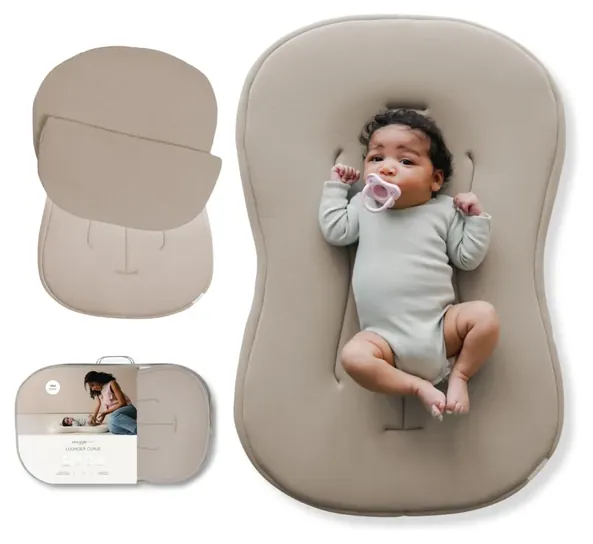
The Snuggle Me Lounger Curve leads this list. Snuggle Me has made loungers for years, it says plainly that the Curve meets the federal rule for infant support cushions, and it pairs low sides with an organic cotton cover that comes off for the wash. The company's owner went to court to stop that rule and lost in 2026, but the Curve was built to it anyway.
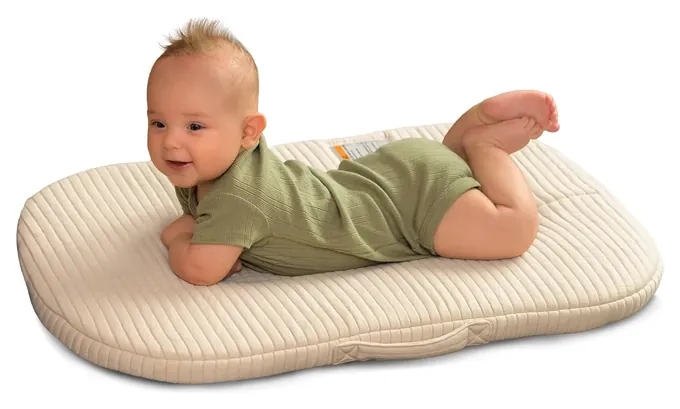
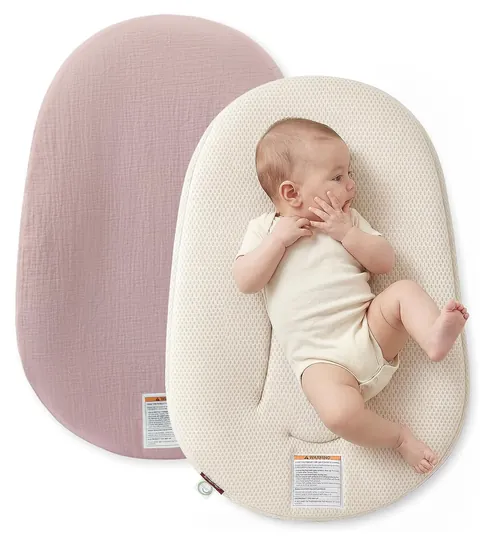
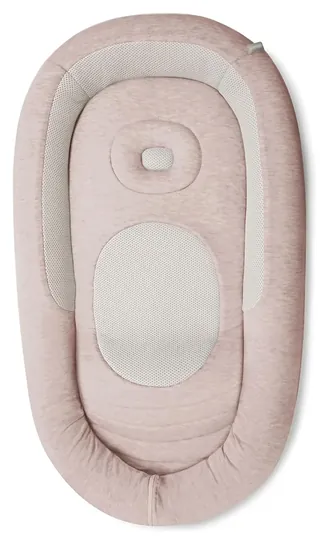
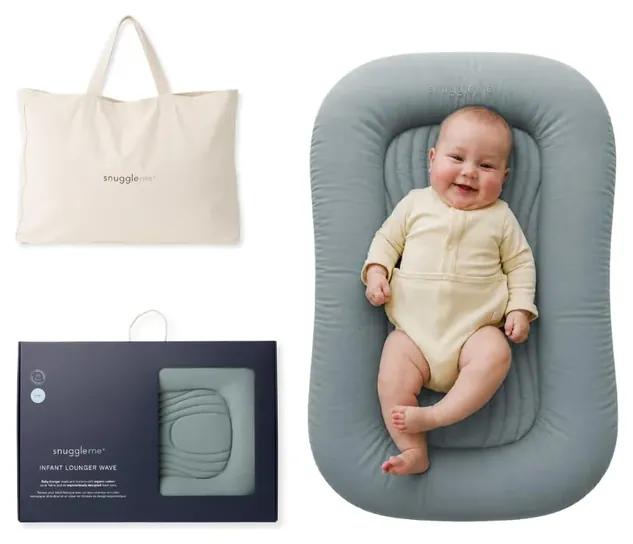
The other picks pass the same test. The Boppy Playtime Lounger is a new low-rim design from the company whose Newborn Lounger was recalled in 2021, the Momcozy Baby Lounger adds a breathable inner layer, the Inglesina Welcome Pod lasts a few months longer, and the Snuggle Me Wave suits babies who settle better with a raised edge. We left out dozens of best-selling ribbed nests with tall bumpers whose sellers cite only general children's product testing, the style regulators have recalled again and again since 2025. The DockATot Deluxe+ is gone too.
What decided this list was the rule's own text, each maker's compliance and care pages, a Consumer Reports investigation into loungers still sold a year after the deadline, and a recall search for every brand. Whatever you buy, a lounger is for awake time on the floor with you close by, never for sleep.
What The 2025 Lounger Rule Changed
Baby loungers used to be soft, pillowy nests, until regulators tied them to a long run of infant deaths.
Baby loungers used to be soft, pillowy nests, until regulators tied them to a long run of infant deaths. The Consumer Product Safety Commission counted 79 deaths linked to infant support cushions from 2010 through 2022, more than 80 percent of them in babies 3 months or younger, before it adopted a mandatory standard (Federal Register). That rule, 16 CFR part 1243, covers every infant support cushion made after May 5, 2025.
It bans straps and harnesses, caps the incline at 10 degrees, and sets firmness tests for the lying surface and for any sidewalls, which must slope outward instead of rising straight up or curling in. It also requires a permanent warning label and testing by an outside lab. In practice, compliant loungers look flatter, firmer and less nestlike than the old ones, which is why some parents find them thin.
Snuggle Me's parent company challenged the rule, and a federal appeals court turned the challenge down in August 2026 (NCLA case page). One gap remains: loungers made before the deadline can still be sold. Consumer Reports found older and noncompliant designs still circulating a year later, online and secondhand.
How To Tell A Compliant Lounger From An Old-Style Nest
No agency publishes a list of approved loungers, so the checking falls to you. Start with the maker's own wording. A clear statement that the lounger meets 16 CFR 1243 is the best sign; a vague nod to safety standards, or to lead and small-parts testing, is not the same thing. Many low-priced nests with tall ribbed bumpers cite only those general children's product tests and claim to fit babies up to 24 months.
Then look at the design. A compliant lounger has no straps or buckles, sits close to flat and has low, firm sides or none. A permanent warning label should be sewn or printed on the lounger itself, and the age range should end somewhere between 5 and 8 months. Consumer Reports flags marketing words such as "sleep nest," "co-sleeper" and "overnight comfort" as warning signs, since no lounger is a sleep product.
Finally, search the brand at CPSC recalls before you buy or accept a hand-me-down. The agency has recalled more than a dozen lounger brands sold online since mid-2025, and the 2021 Boppy Newborn Lounger recall still covers every used one. Fill in the registration card that comes with a new lounger so the maker can reach you about a recall.
Using And Washing A Lounger Safely
Every maker on this list gives the same core rules. Use the lounger on the floor, never on a bed, sofa or table, and stay within reach. Keep blankets, pillows and toys out of it. Boppy's safe-use page adds that putting a lounger inside a crib, bassinet or play yard makes that sleep space unsafe. If your baby dozes off, move them on their back to a firm, flat crib or bassinet.
Stop once your baby starts to roll or push up. Boppy rates its lounger to 5 months, Snuggle Me and Momcozy to about 6, and Inglesina's adjustable pod to 8. After that, a tummy time mat on the floor does the same job with no sides at all.
Covers wash; cores don't. Snuggle Me asks for a gentle, dye-free detergent and air drying for the Lounger Curve cover, and its foam ring should never go in the machine. Boppy's cover can be machine washed and tumble dried on low, while the foam insert is spot-clean only. Momcozy's mesh inner cover should dry flat to keep its shape, and Inglesina calls for a delicate, cold cycle. A spare cover helps on spit-up days.
How we researched this
We compared about 20 baby loungers on sale now, read the federal infant support cushion rule and the Federal Register notice behind it, went through each finalist maker's compliance, care and warranty pages, read Consumer Reports' 2026 investigation and a parent panel's notes on the Boppy, studied owner feedback patterns, and searched U.S. Consumer Product Safety Commission recalls for every brand. No lab has published tests of these loungers and no official list of compliant models exists, so every compliance claim here is the maker's own.
Sources (13)
- eCFR: 16 CFR part 1243, Safety Standard for Infant Support Cushions
- Federal Register 89 FR 87467 (2024-11-04)
- Consumer Reports: Despite Updated Safety Rules, Baby Loungers Are Still Putting Babies at Risk (2026-06-01)
- NCLA: Heroes Technology (Snuggle Me Organic) v. CPSC
- CPSC: Boppy Newborn Lounger recall (2021)
- CPSC: DockATot Deluxe+ notice of violation statement (2022)
- CPSC recalls
- Snuggle Me Organic: Lounger Curve
- Boppy: Playtime Lounger
- Boppy: Playtime Lounger safe use and product care
- Momcozy: Baby Lounger
- Inglesina: Welcome Pod
- Babylist: Boppy Playtime Lounger reviews
Frequently asked questions
Can a baby sleep in a lounger?
No. Loungers are for supervised awake time only. If your baby falls asleep, move them on their back to a crib, bassinet or play yard with a firm, flat mattress and nothing else in it.
Are baby loungers banned?
No. Since May 5, 2025, new ones must meet a federal safety standard: no straps, close to flat, firm, with a permanent warning label. Loungers made before that date can still be sold, so look for the maker's statement that it meets 16 CFR 1243.
What happened to the Boppy Newborn Lounger and the DockATot?
Boppy recalled more than 3 million Newborn Loungers in 2021 after infant deaths. In 2022 the CPSC issued a notice of violation saying the DockATot Deluxe+ was unsafe for infant sleep. Don't use either one secondhand.
How long can a baby use a lounger?
Until your baby starts to roll or push up, usually around 5 or 6 months. Inglesina rates its Welcome Pod to 8 months. Nests claiming to fit babies up to 24 months don't match how loungers are meant to be used.
Can you wash a baby lounger?
The covers, yes. The foam cores of all five picks are spot-clean only or not washable at all, so follow the care tag and let everything dry fully before you put it back together.
Is a used baby lounger safe?
Only if you can identify the exact model, confirm it isn't recalled on the CPSC site and know it was made after May 2025. Consumer Reports found many older, noncompliant loungers still passed along secondhand.