The 10 Best Balance Stepping Stones For Kids
Updated by · How we research

Ten rubber, plastic and foam sets compared on grip, age labels, load ratings and play value. The Tiny Land Stepping Stones are the best first set for most kids. When users buy our independently chosen editorial choices, we may earn commissions to help fund the Wiki.
The rubber under a stepping stone matters more than its shape: a ring or full rubber base stops a stone skating on carpet and grass, though any stone can slide on polished wood, so use a rug. These are play sets for kids of about 2 to 6, not garden pavers, and their weight ratings sit far above any child's.
At a Glance
-
1
 Tiny Land Stepping Stones
$35
-
2
 National Geographic Stepping Stones
$39
-
3
 Special Supplies Stepping Stones
$23
-
4
 Gentle Monster Stepping Stones
$39
-
5
 Joyin Turtle Stones
$29
-
6
 Lehoo Castle Stepping Stones
$34
-
7
 JumpOff Jo Rocksteady
$69
-
8
 B. toys Balance & Build
$49
-
9
 Edx Education Step-a-Trail
$69
-
10
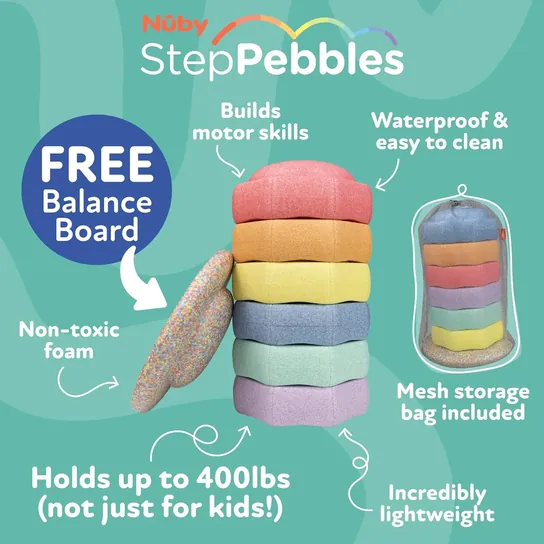
 Nuby StepPebbles
$124
Editor's Notes
November 1, 2026, by Ezvid Wiki Admin:
The Tiny Land Stepping Stones now lead this page: five graded stones with bumpy tops and a rubber ring underneath, from a maker that also sells them on its own site. The page covers play stepping stones for kids, not garden pavers, and seven of the ten old picks had to go. The Milliard Six Pack, the Playzone-Fit Obstacle PLZ.605 and the soft National Geographic Obstacle Course can't be bought anymore, so the newer National Geographic Stepping Stones take that brand's place. The Yes4All Stability Pods turned into inflatable exercise pods for adults, the Sportime Step-N-Stones are small numbered pods, and the Gonge River Stone Set had too little owner feedback to judge. The Hapinest Turtle Game gave way to the Joyin Turtle Stones.
Three old picks stay: the Special Supplies Stepping Stones, now in the five-stone set, the JumpOff Jo Rocksteady and the Edx Education Step-a-Trail. No magazine or lab has tested stepping stones as far as we could find, so the order rests on what each seller states about grip, age and load, on recurring owner complaints such as stones sliding on bare wood, and on the federal small-parts rule for toddler toys. None of these brands has a recall for its stepping stones.
August 26, 2020:
Before we go into details about specific models here, we should point out that all of the toys mentioned in our list are for ages three years and above, and should only be used under the supervision of an adult. As with any climbing, jumping, or balancing equipment, there is always some degree of danger regarding falling or slipping, and therefore a responsible adult should set up and check all apparatus before allowing children to use it, ensuring there is no danger of them falling on something hard or sharp, and stay with the youngsters as they play. Many of our suggestions, such as the JumpOff Jo Rocksteady, the EdX Education Step-A-Trail, and the Yes4All Stability Pods are actually strong enough for use by adults, so you may choose to play along with your little ones.
Stepping stones are a fabulous way to encourage imaginative play in children. Whether the floor is lava or shark-infested water, or there's just a giant canyon where the ground once was, there are countless ways for young ones to entertain themselves with only their imagination to limit them. If you're looking for a choice that will suit a range of age groups, the Gonge River Stone Set and the Special Supplies Coordination Blocks are great selections as their sides have varying gradients, so young ones can hop across the gradual slopes and older ones can challenge themselves with a steeper rise. The latter is a bit more expensive, however, we ranked it higher as it has double the number of bricks compared to the former.
For those who want to encourage learning through play, the Sportime Step-N-Stones kit is ideal for math and number games as the pods have the figures one to six printed on them. This set isn't as useful for balance and strength activities though, as the air-filled domes are designed to flatten when stood on. On the other hand, the Hapinest Turtle Game has fun educational value through its turtle facts and promotes physical activity via its action cards. It also includes a handy travel bag, so it's a convenient toy to take to a friend's house or to the beach.
Grip Comes From The Base
Wipe the tops when they get dusty, because dust turns into a slick film.
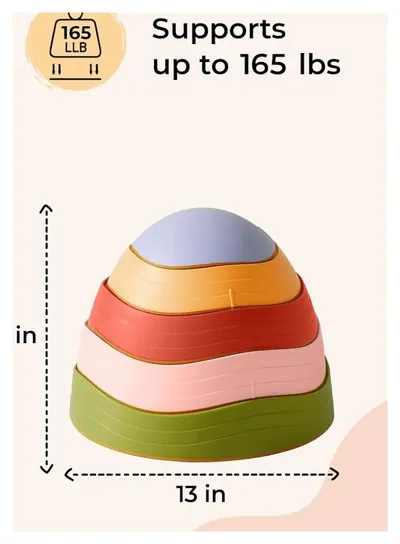
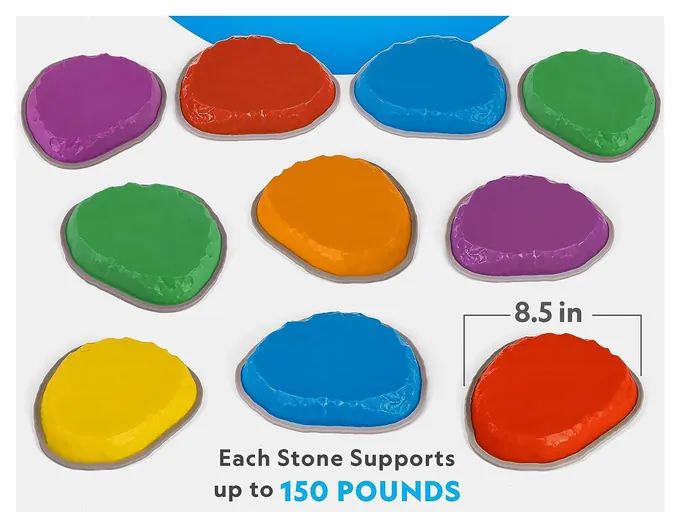
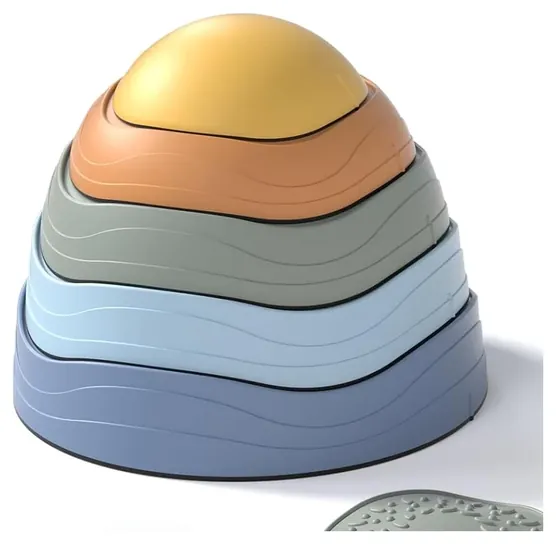
A stepping stone is only as steady as what touches the floor. Most plastic sets, such as the Tiny Land stones, put a rubber ring around the bottom edge, and that ring does the gripping on carpet, rugs and grass. Solid rubber stones grip all over, and soft foam pebbles grip by weight and friction.
Bare wood, laminate and tile are the hard case. Under a running jump, a light plastic stone can slide even with a rubber ring, and the recurring complaint about these sets is exactly that. Lay them on a rug or a play mat indoors, and save bare floors for slow stepping.
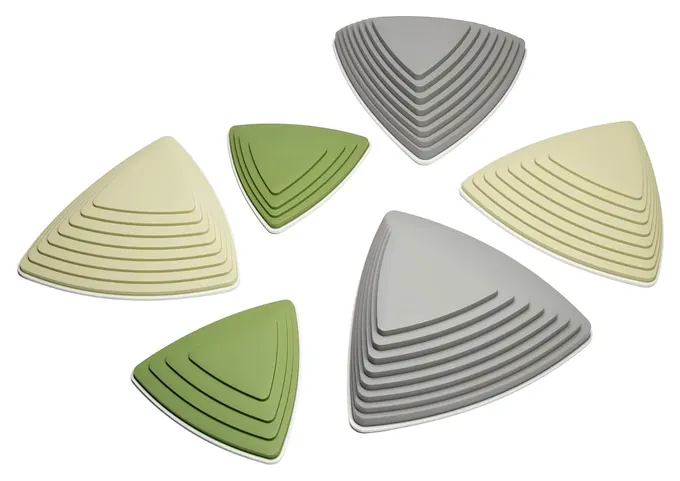
The top matters too. Bumps, ridges or a dotted pattern give bare feet and socks something to hold, and a flat top on a tall stone is easier to stand on than a pointed one. Wipe the tops when they get dusty, because dust turns into a slick film.
Age Labels, Small Parts And Weight Ratings
Sellers put very different ages on similar sets, from 18 months to 6 years. Toys made for children under 3 can't contain small parts under the U.S. small-parts rule, and toys for ages 3 to 6 that do contain them need a choking warning (CPSC: small parts). The stones themselves are large, but spinners, cards and sock packs are extras, so read the warning on the box before a toddler gets the whole kit.
Toys sold in the U.S. must meet the ASTM F963 toy safety standard (CPSC: toy safety). A few sellers say an outside lab has tested their stones; most just say the set meets U.S. rules.
Weight ratings run from about 150 to 400 pounds. They are the sellers' own figures, and every one is far above a preschooler's weight. The rating matters only if older siblings or adults will jump on the stones too. Before you buy, search the brand on SaferProducts.gov, the federal recall and incident database.
A Set That Grows With A Child
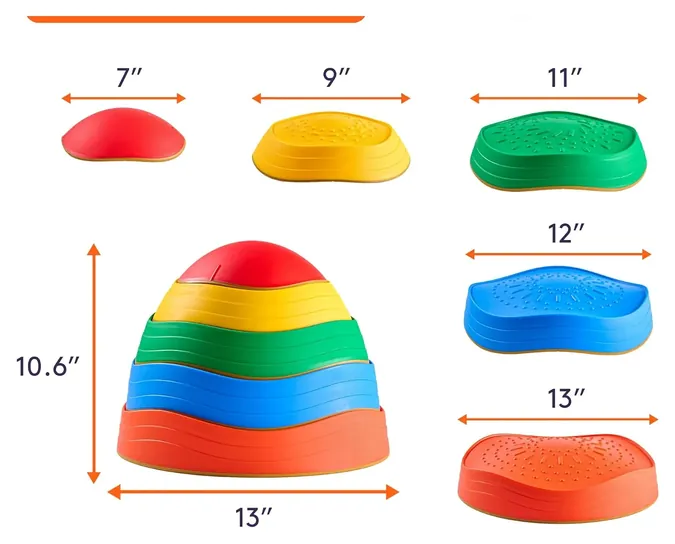
Five stones make a short path across a room. Ten or more let kids build a loop, a zigzag or a 'floor is lava' course, and a few heights in one set give a child something to work toward: low stones first, tall ones once the balance comes.
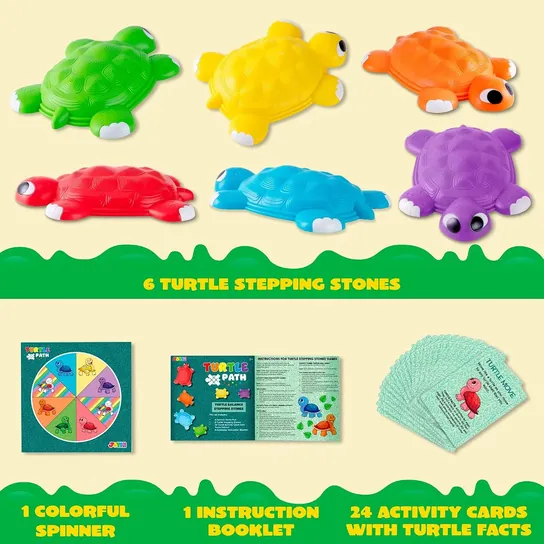
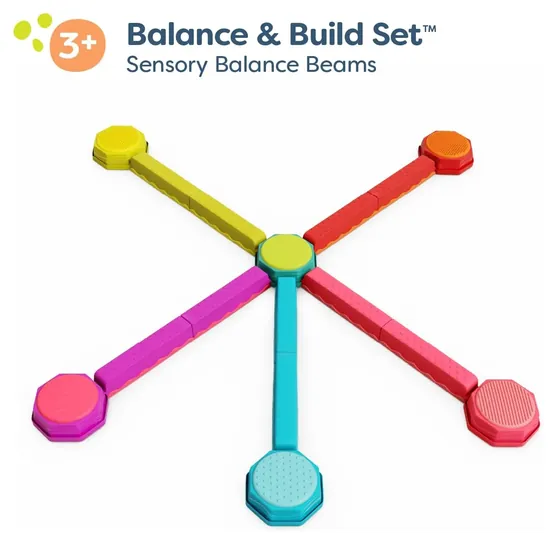
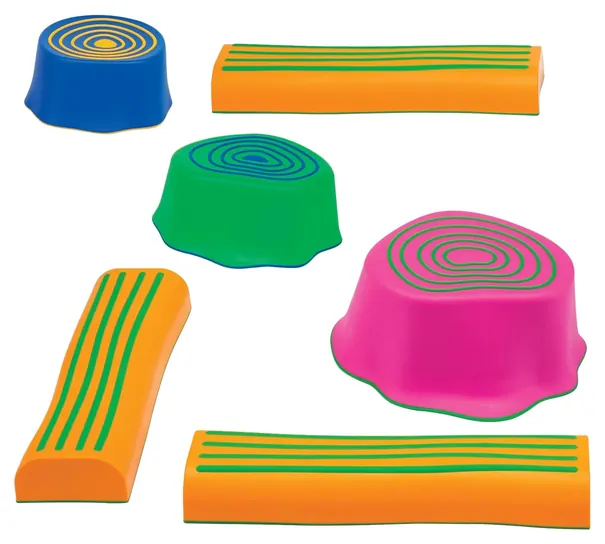
Some sets go past stones. Beams turn a path into a balance walk, and stumps and logs, such as the edxeducation Step-a-Trail, mix climbing with narrow-footed balance work. Themed sets like Joyin's turtles add spinners and cards that turn practice into a game, which helps kids who lose interest in plain stepping.
Soft foam pebbles suit the youngest and wet play, but foam gives underfoot. Hard plastic and rubber feel firmer and suit kids who jump. Most sets nest into a short tower for storage, so even a large set takes little closet space.
How we researched this
We compared 22 stepping-stone sets and related balance toys, read the sellers' specifications, age lines and load ratings for the 10 picks, looked for independent tests and found none, analyzed patterns in owner feedback, and checked every brand against U.S. Consumer Product Safety Commission recalls and SaferProducts.gov reports.
Frequently asked questions
What age are balance stepping stones for?
Most sets are sold for ages 3 and up, and a few are rated from 18 months or 2 years. Toddlers under 3 should use them with an adult close by, starting on the lowest stones.
Are stepping stones safe on hardwood floors?
They can slide on bare wood or tile under a hard jump, even with a rubber base. Put them on a rug or play mat for jumping games, and keep bare floors for slow stepping.
How much weight can kids' stepping stones hold?
Sellers rate them from about 150 to 400 pounds. Every rating is far above a young child's weight; check it only if older kids or adults will use the stones too.
Can stepping stones be used outside?
Yes. Plastic and rubber sets work on grass and patios and wipe clean, and foam pebbles are waterproof. Bring them in after use, since long sun exposure can fade plastic.
How many stepping stones do I need?
Five make a short path. Ten or more let kids build loops and obstacle courses, and sets with several heights give them room to progress.
Are these the same as garden stepping stones?
No. Balance stepping stones are toys for play and motor skills. Garden stepping stones are concrete or stone pavers for a yard path.