The 10 Best Bluetooth Receivers
Updated by · How we research

Ten Bluetooth receivers for stereos, speakers and cars, compared by outputs, range and sound formats. The Audioengine B1 leads with published audio specs. When users buy our independently chosen editorial selections, we may earn commissions to help fund the Wiki.
The fancy sound formats printed on a Bluetooth receiver only work if your phone speaks them too, and iPhones don't speak the sharpest ones. That matters far more than the chip version on the box. These adapters suit anyone with a good wired stereo, powered speakers, a car aux jack or wired headphones who wants to stream from a phone without replacing gear.


Editor's Notes
November 1, 2026, by Ezvid Wiki Admin:
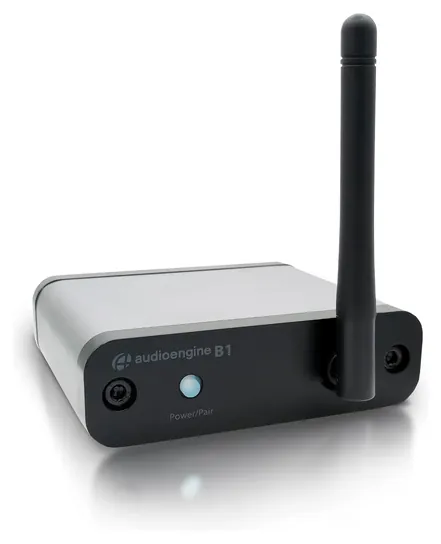
The Audioengine B1 stays on top, now in an updated version with a newer radio, because it's the one receiver here whose maker publishes measured noise and distortion figures. For the rest we read Audioengine's spec sheet, Sony's and Qualcomm's format pages and Guiding Tech's roundup, and leaned on long sales histories for the budget boxes, since no lab has measured them.
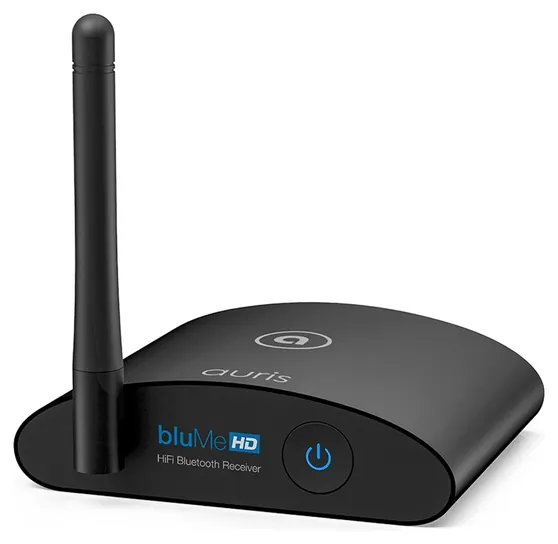
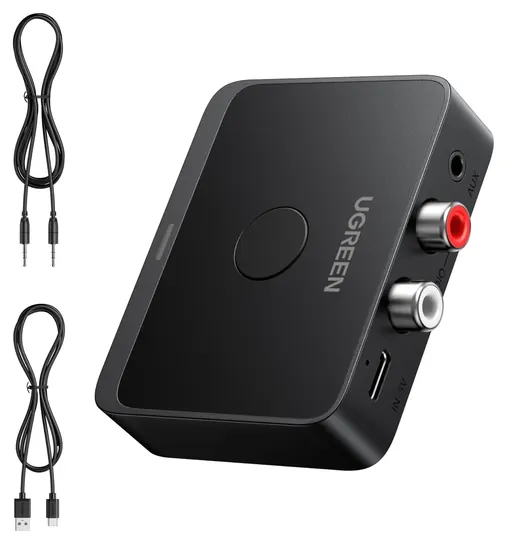
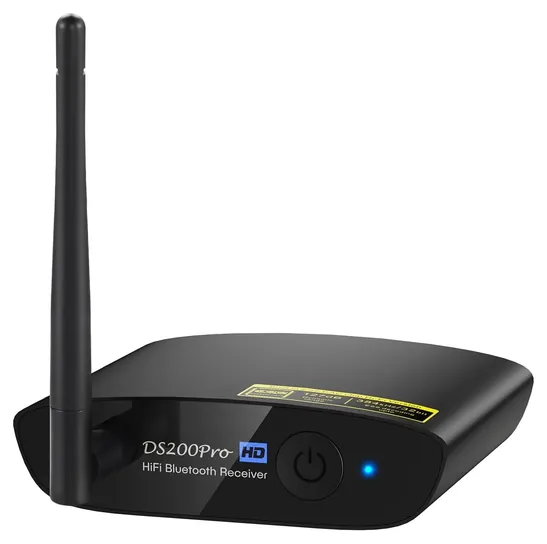
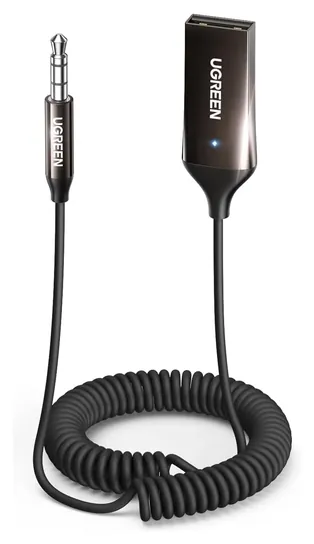
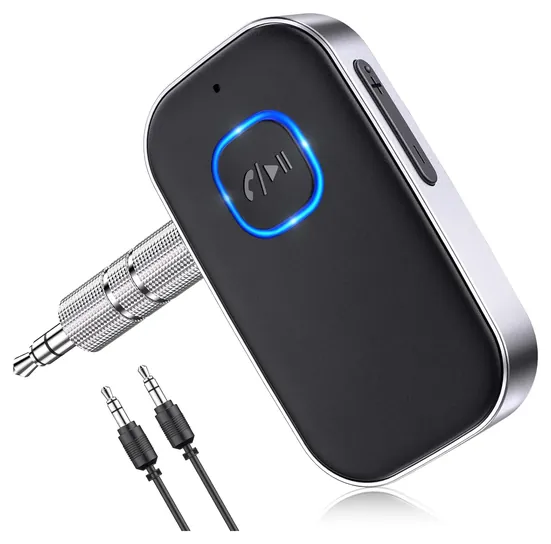
The list now covers home stereo boxes plus car and headphone adapters. New arrivals include the Auris bluMe HD and 1Mii DS200Pro for Android owners with good systems, the battery-powered UGREEN LDAC Receiver, the UGREEN 70601 and COMSOON J22 for cars, the Esinkin Audio Adapter and the KAIY C37. The 1Mii B06Pro and Avantree Oasis Plus stay.
The FiiO BTR3K, Fosi Audio BT05, Anker Soundsync A3352 and EarStudio ES100 MK2 are out of stock with no sign of a return, and neither the BluDento BLT-HD nor the Visoud Long Range turned up for sale. The Avantree DG45 now sells as a computer dongle, so it's out too.
November 24, 2020:
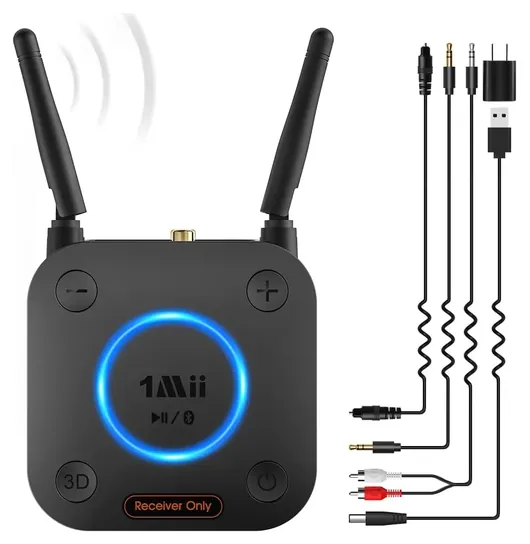
Broadly speaking, Bluetooth receivers fall into one of two categories. Portable options like the EarStudio ES100 MK2 and FiiO BTR3K are great choices for turning wired headphones wireless, and the Anker Soundsync A3352 is good for adding Bluetooth streaming to vehicles with only an auxiliary input.
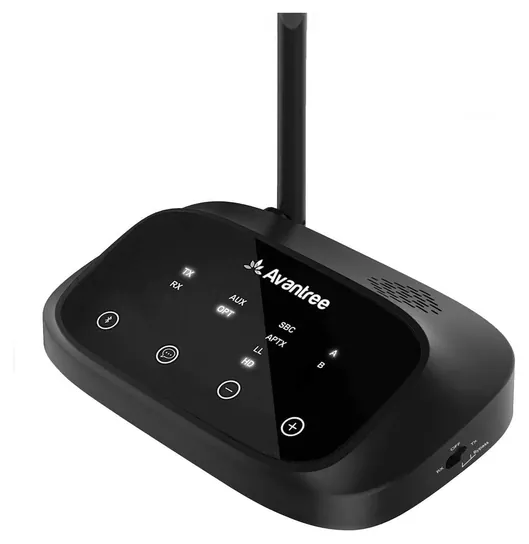
In terms of stationary units, the 1Mii B06 Pro, Avantree Oasis Plus, and Fosi Audio BT05 are generally used as Bluetooth sinks for sending audio from a TV to a pair of active speakers. The key with these is to make sure that every link in the chain supports the aptX Low Latency codec, which keeps the lip sync delay to a minimum.
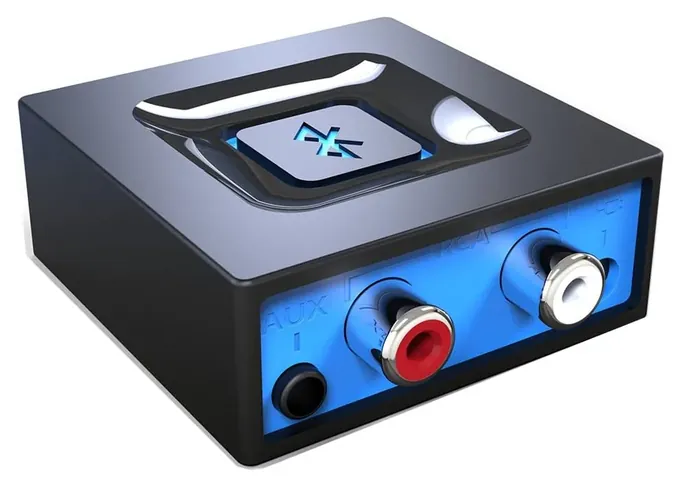
There are also some that can take a Bluetooth signal and process it to sound as good as possible, which isn't terribly important for TV, but is much more relevant if you're setting up a mid-range home stereo. Models like the Audioengine B1 Premium and BluDento BLT-HD make it easy to stream music from smartphones, laptops, and tablets without sacrificing quality.
We also want to highlight the Avantree DG45, which is specifically not very good for streaming audio, because it only supports the mediocre SBC codec and doesn't offer low-latency performance, but it's possibly the most dependable Bluetooth 5.0 dongle on the market right now.
November 08, 2019:
There are two common types of Bluetooth receivers. One is geared toward home entertainment; this type is perfect for routing into any self-powered speaker to create a straightforward in-home streaming setup. The Visoud Long Range is one of the most versatile of these, with selectable transmit and receive modes as well as an optional bypass setting. It also has separate connectors for both the inputs and outputs so you shouldn't ever have to switch any plugs around. The Avantree Oasis Plus is just about as flexible, though it only has one set of output connectors. The Audioengine B1 Premium and BlueDento BLT-HD are worthy of consideration if you're especially concerned with high-fidelity sound. Meanwhile, the 1Mii B06 Plus is a decent and very inexpensive in-home unit, and the Anker Soundsync A3352 is suitable for anyone who wants an easy way to listen to Spotify in their car.
On the other hand, if you want to turn a good set of wired headphones into a wireless pair, there are a handful of highly convenient DACs with baked-in Bluetooth support. The EarStudio ES100 and FiiO BTR3 are both of comparably high quality, with support for some of the high-end codecs that make the most difference when it comes to wireless audio transmission. The Fiio BTR1K offers much of the same audio fidelity overall, however it doesn't have all the same high-end codecs as the other two.
Sound Formats: Why Your Phone Decides
Every Bluetooth receiver and phone shares one basic format, SBC.
Every Bluetooth receiver and phone shares one basic format, SBC. The better formats are optional, and they only work when the phone and the receiver both support the same one. iPhones send SBC and Apple's AAC. Many Android phones also send Qualcomm's aptX family or Sony's LDAC, which Sony rates at up to 990 kbps, about three times the rate it lists for standard SBC. So an LDAC box gives an iPhone owner nothing extra, and a basic box holds back an Android phone that could send more.
The Bluetooth version printed on the box (5.0, 5.3, 6.0) is mostly about connection range, stability and power use, not sound; the Bluetooth SIG overview covers what the radio does. After the format, what you hear depends on the receiver's digital-to-analog converter. Audioengine is one of few makers that publishes measured figures for its B1, including a 104 dB signal-to-noise ratio. Most budget boxes name a chip or a sample rate and stop there. Keep in mind that every Bluetooth format is compressed, so a wired connection still wins for critical listening.
Matching Outputs And Power To Your Gear
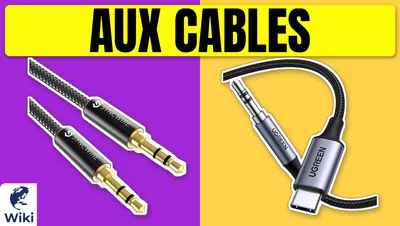
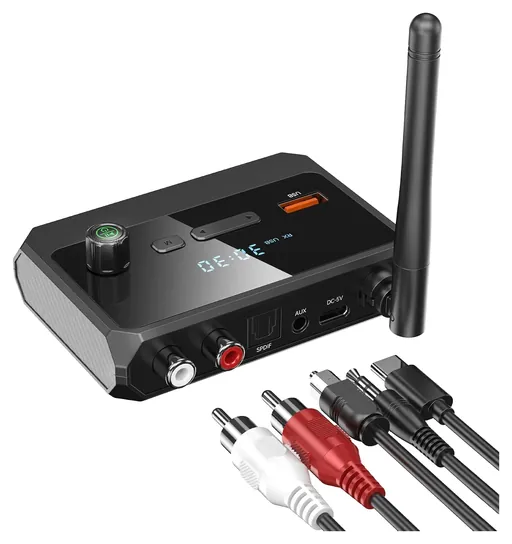
Look at the back of the gear you want to feed before you pick a receiver. A stereo amplifier or AV receiver usually takes red-and-white RCA jacks. Powered desk speakers and car stereos usually take a 3.5 mm aux plug. If your amp or soundbar has an optical (Toslink) or coaxial digital input, a receiver with that output hands the signal over in digital form, and the amp's own converter does the work, which makes the receiver's chip matter less. Most boxes include one cable; extra RCA or 3.5 mm leads are cheap (see our aux cables list).
Home receivers run from a USB charger, so plan for a free outlet or USB port. One that stays on all the time, like the Esinkin, can go on a switched outlet that powers up with the stereo. In a car, a USB-powered adapter turns on and off with the ignition, while a battery clip works in cars with no USB port but needs charging. If a faint hum or buzz appears when an adapter runs from a car or computer USB port, it is usually a ground loop; a different charger or a ground-loop isolator on the aux cable usually fixes it.
Range, Lag And Safety
Range claims of 100 feet or more describe open air. Walls, floors, a busy Wi-Fi router and nearby equipment cut that a lot, and some makers say so in their own notes. An external antenna helps most when the phone is in another room. If the music keeps cutting out, move the receiver out from behind the equipment before you blame the box.
For music, delay doesn't matter. For video it can: Audioengine rates its B1 at about 80 milliseconds, and the basic formats often lag more. aptX Low Latency fixes lip sync only when both ends support it, as Avantree notes for its Oasis Plus, and few phones and TVs do.
We found no recalls for any brand on this list in the CPSC database. Battery models use small lithium cells, so stop using one that swells or gets hot. In a car, set up the music before you drive and leave the phone alone; NHTSA explains the risks of handling a phone behind the wheel.
How we researched this
We compared 20 Bluetooth receivers and adapters, read Audioengine's published specifications for the B1 and the makers' details for the other finalists, checked the codec information from Sony and Qualcomm, analyzed owner feedback patterns, and checked every brand against the CPSC recall database. No independent lab measurements were available for the budget models. Updated November 1, 2026 by Ezvid Wiki Admin.
Frequently asked questions
What does a Bluetooth receiver do?
It pairs with a phone, tablet or computer like a wireless speaker would, then passes the sound to wired gear through an RCA, 3.5 mm or digital output. It adds Bluetooth to a stereo, powered speakers or a car that has none.
Does aux sound better than Bluetooth?
A wired connection is lossless, and every Bluetooth format is compressed. On a normal stereo the gap is small with a good format such as AAC, aptX HD or LDAC, but a cable still wins for critical listening.
Will an LDAC or aptX HD receiver improve sound from an iPhone?
No. iPhones send only SBC and AAC, so those formats go unused. Pick a receiver that supports AAC and has a decent converter, or one with an optical output into a good amp.
Does a newer Bluetooth version mean better sound?
Not really. The version mostly affects range, stability and power use. Sound depends on the format both ends share and on the receiver's converter.
How far can a Bluetooth receiver be from my phone?
Most basic boxes work within one room, about 30 feet. Models with an external antenna claim 100 feet or more in open air, but walls and Wi-Fi traffic shorten that.
Is a Bluetooth GPS receiver the same thing?
No. A Bluetooth GPS receiver sends location data to a phone or tablet, not sound. We cover those in our Bluetooth GPS receivers list.