The 10 Best Car Audio Equalizers
Updated by · How we research

Ten car audio equalizers compared on inputs, output voltage and subwoofer control. The Clarion EQS755 leads because it suits factory and aftermarket radios. When users buy our independently chosen editorial choices, we may earn commissions to help fund the Wiki.
An outboard equalizer can't fix speakers aimed at your knees or an amp gain set too high, so sort those out first. Where it earns its place is taming a boomy or harsh car after aftermarket amps go in, or adding tone control a bare factory radio lacks. Start every knob flat, cut the loudest peaks first and boost sparingly.


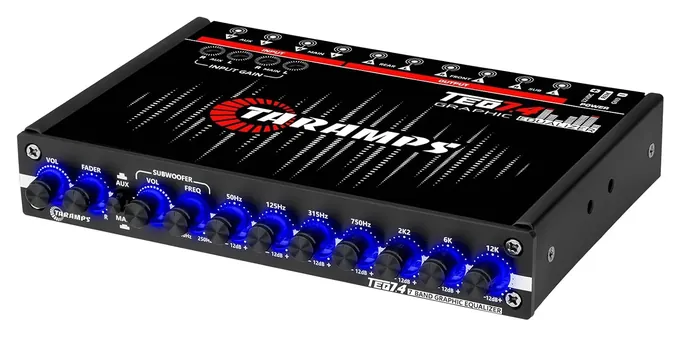
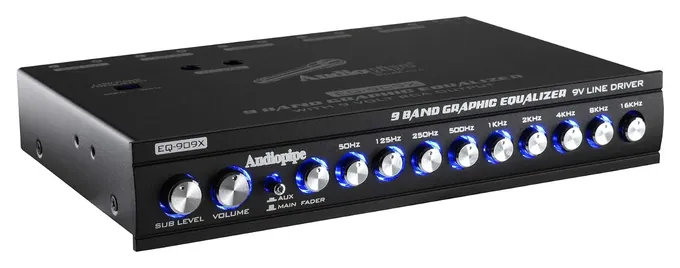
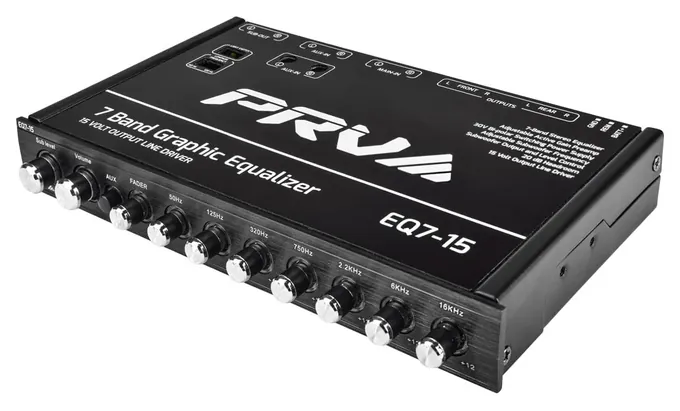
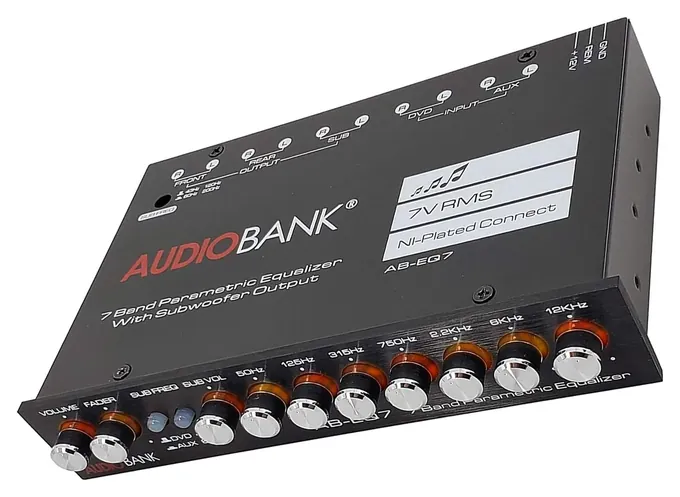
Editor's Notes
October 23, 2026, by Ezvid Wiki Admin:
The Clarion EQS755 stays first, now under a fresh listing, since it still does what most readers need: it takes speaker wires from a factory radio as well as RCA cables, and it has the longest track record here. Seven of the ten earlier picks are gone. The AudioControl Three.2 and Massive Audio EQ-7X have disappeared from sale, and we couldn't find current listings for the Earthquake Sound EQ7000Pxi, NVX 7-Band, Soundstream MPQ-90, Boss Audio Systems AVA1210 or Sound Storm Labs S4EQ.
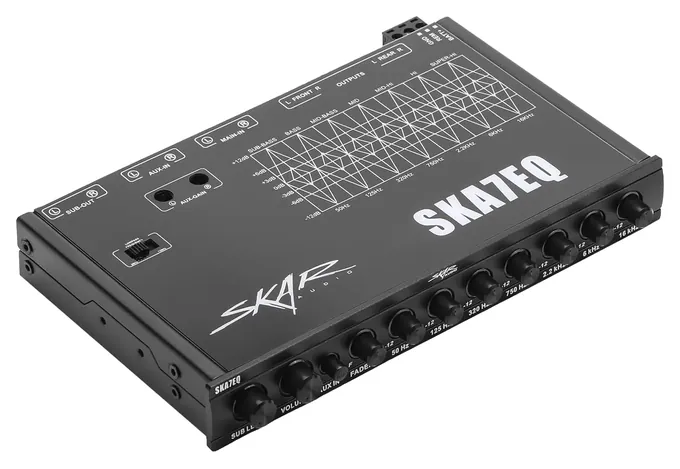
The American Bass High End and Audiobank EQ7 stay. New picks bring a budget option with a two-year warranty in the Skar SKA7EQ, two Brazilian units with stronger outputs, extra midrange bands from Audiopipe and a slim Timpano that reads speaker wires directly.
Nobody seems to publish bench tests of these boxes, so we lined up each maker's frequency chart, input and output ratings, noise figures and warranty, read Audiopipe's and Orion's own spec pages, and weighed how widely each one is installed.
May 25, 2020:
Factory fitted car stereos are known for having limitations when it comes to enhancing their sound quality, with most tonal adjustments confined to basic bass and treble controls, or preset equalizer settings for various genres of music. A car audio equalizer enables the user to expand the tonal possibilities of their in-car sound system and shape the sound to suit their taste. It also allows them to “tune out” ambient noise associated with engines, wind, and road vibration in the interior of the cabin.
The audio equalizers in this ranking are all made to DIN standard, meaning they conform to international aperture sizes for stereos, navigation consoles, DVD players, etcetera. When choosing an audio equalizer, consider your power requirements. Most console-based systems, including the Sound Storm Labs S4EQ, Massive Audio EQ-7X, and the Earthquake Sound EQ7000Pxi, are passive, meaning that they run from the stereo’s amplifier and do not amplify the signal. Others, such as the Audio Control Three.2 feature a built-in preamp that boosts the signal, giving an impressive thirteen volts of peak power output. A higher output results in a crisper signal being sent to your subwoofer and speakers.
When it comes to equalization configurations, most models, including the Clarion EQS755 and American Bass High End, have seven-band parametric EQs that give the user a wide range of tone-shaping possibilities, ranging from 50hz to 16khz. One exception is the Soundstream MPQ‐90, with its nine-band equalizer that offers even more precise flexibility and control over the source signal.
When installing your car audio equalizer, it’s a good idea to refer to the manual and make adjustments incrementally, as you run the risk of damaging your vehicle’s audio system, if performed incorrectly. Once installed, and you are happy with your settings, it is recommended that you leave the EQ as it is, only making minor tweaks if you are not satisfied with the sound as a whole, as an equalizer is primarily intended to shape the overall sound of your car’s system, not to adjust it from track to track.
Special Honors
AudioControl DM-810 AudioControl builds digital signal processors and line-output converters for people who want more than a row of knobs. Its DM-810 handles equalization, crossovers and speaker time delay, tuned from a computer, and its LC2i PRO turns factory speaker wires into amp-ready RCA signals. Both cost far more than a graphic equalizer, so they suit multi-amp installs where precise tuning is the goal. audiocontrol.com
Graphic Equalizer, Radio Settings Or A Digital Processor
If it is decent and you have no outboard amps, an extra box adds little.
Every pick here is a graphic equalizer: a row of knobs, each one raising or lowering a fixed slice of the sound, from deep bass to treble. You only choose how much. A parametric equalizer also lets you move each band's center and width, which is more precise and slower to set (Wikipedia: Equalization). Most car units have seven bands, with knobs centered near 50 Hz at the bottom and 12 to 16 kHz at the top.
Try the radio's own tone or EQ menu first. If it is decent and you have no outboard amps, an extra box adds little. These half-DIN units make sense when aftermarket amplifiers are in and the sound is boomy or harsh, or when a factory radio offers only bass and treble.
A digital signal processor goes further, with time delay for each speaker, adjustable crossovers and fine equalization set from a laptop or phone. AudioControl sells its DM-810 processor for several times the price of a graphic unit. If a processor is already in the system, an extra equalizer is redundant.
Inputs And Output Voltage Decide What Fits
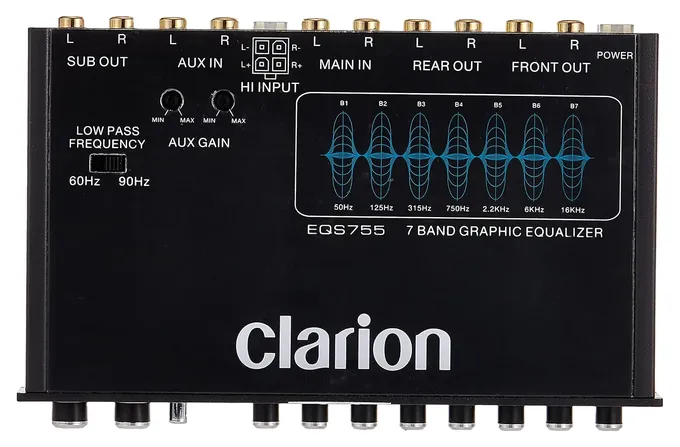
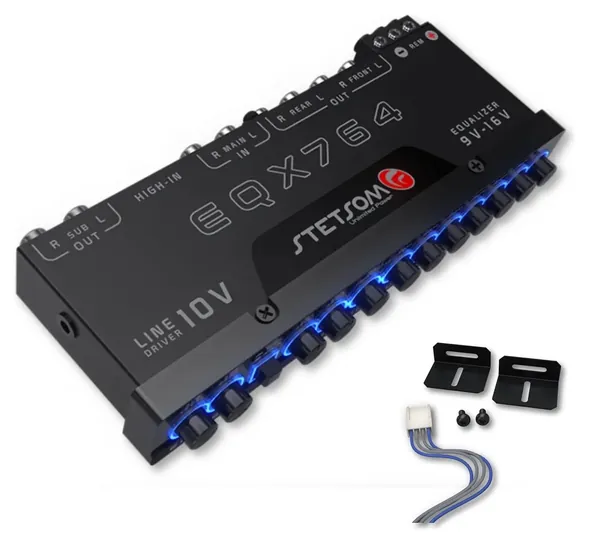
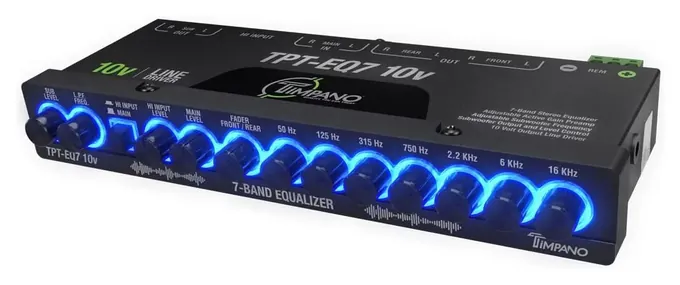
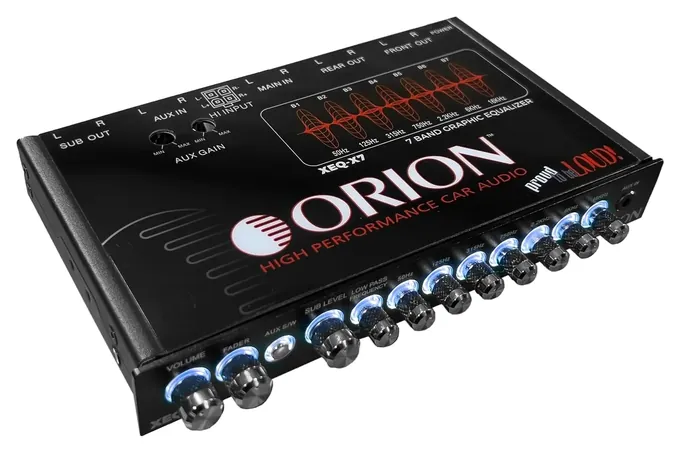
Check the inputs before anything else. A factory radio usually has no RCA outputs, so the equalizer needs a speaker-level (high-level) input that accepts speaker wires. The Clarion EQS755, Stetsom EQX764, Timpano TPT-EQ7 10V and Orion XEQ-X7 have one. The Skar, Taramps, Audiobank and American Bass units take RCA cables only, which suits an aftermarket head unit or a separate line-output converter.
Output voltage is the next number to read. Car equalizers here run from 7 volts up to 15 volts at the RCA outputs. A stronger signal stays further above the noise a long cable picks up on the way to a trunk-mounted amp, and lets the amp's gain sit lower (Wikipedia: Line level). It does not make the system louder by itself, and a very hot signal can overload an amp built for weak sources, so check the amp's input range.
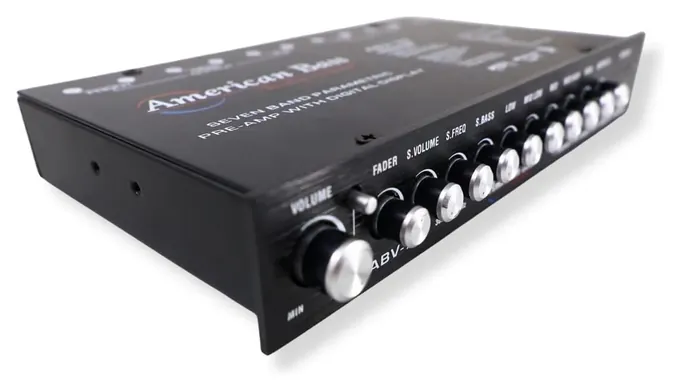
Last, look at subwoofer control. Most units send the sub output through a low-pass filter with two fixed settings; the Orion and American Bass let you sweep it. A separate sub level knob within reach of the driver's seat is handy for songs with heavy bass. Audiopipe's spec page shows how one maker lists its centers, sub filter and output.
How To Set It Without Making Things Worse
Start with every band at zero and the master level low. Play music you know well, and change one band at a time. Cutting a peak that sounds boomy or shrill usually works better than boosting the bands around it, because big boosts raise noise and can push an amplifier into clipping. If you have a measurement microphone and a real-time analyzer app, use it to find the peaks, then trust your ears for the final pass (Wikipedia: Spectrum analyzer).
A whine that rises with engine speed is usually a ground loop, not something an equalizer can tune out. Ground the unit and the amps at a clean bare-metal point, and keep RCA cables away from power wires (Wikipedia: Ground loop). Some units, like the Clarion, include ground-loop isolation.
These are 12-volt, negative-ground devices. Feed them from a fused power lead, and mount them where they get air, away from speaker vibration and direct sun. Keep the volume sensible on long drives: the National Institute on Deafness and Other Communication Disorders says long or repeated exposure to sound at or above 85 decibels can cause hearing loss (NIDCD).
How we researched this
We compared 18 car audio equalizers, including every model still traceable from the old list, and ranked 10. We read each maker's published frequency charts, input and output ratings, noise figures and warranty terms, including Audiopipe's and Orion's own spec pages, weighed how widely each model is installed, and checked every brand for recalls with the U.S. Consumer Product Safety Commission. We found no independent lab tests of car equalizers.
Frequently asked questions
Do I need a car audio equalizer?
Not always. Fix speaker placement, amp gain and the radio's own tone settings first. An outboard equalizer helps when aftermarket amps leave the sound boomy or harsh, or when a factory radio has little tone control.
How do I equalize car audio?
Set every band flat and the volume low, play a song you know, and adjust one band at a time. Cut peaks before boosting anything. A measurement microphone with a real-time analyzer app makes the peaks easier to find.
Does an equalizer make my system louder?
No. It changes the balance between bass, midrange and treble. A higher output voltage helps the signal reach the amps cleanly, but loudness still comes from the amplifiers and speakers.
Can I use one with a factory radio?
Yes, if the equalizer has a speaker-level input that accepts speaker wires, as the Clarion EQS755, Stetsom EQX764, Timpano TPT-EQ7 10V and Orion XEQ-X7 do. RCA-only units need a separate line-output converter.
What does line driver mean on an equalizer?
It means the RCA outputs run at a higher voltage, from 7 to 15 volts on these units. That keeps the signal well above noise on long cable runs and lets the amps' gain sit lower.
Graphic or parametric equalizer?
A graphic equalizer has fixed bands and a knob for each, which is quick to set. A parametric one lets you move each band's center and width for precise fixes, at the cost of more time and know-how.