The 10 Best Car Speakers
Updated by · How we research

Coaxial, component and 6x9 car speakers compared on fit, sensitivity and power. The Pioneer TS-A1681F leads as the best drop-in upgrade for a factory radio. When users buy our independently chosen editorial choices, we may earn commissions to help fund the Wiki.
The big watt number on a car speaker box is a peak figure that tells you little. Sensitivity decides how loud a speaker plays on a factory radio's small power, and mounting depth decides whether it fits the door at all. These picks are for drivers replacing tired factory speakers, from drop-in pairs to component sets built for an amplifier.


Editor's Notes
October 27, 2026, by Ezvid Wiki Editors:
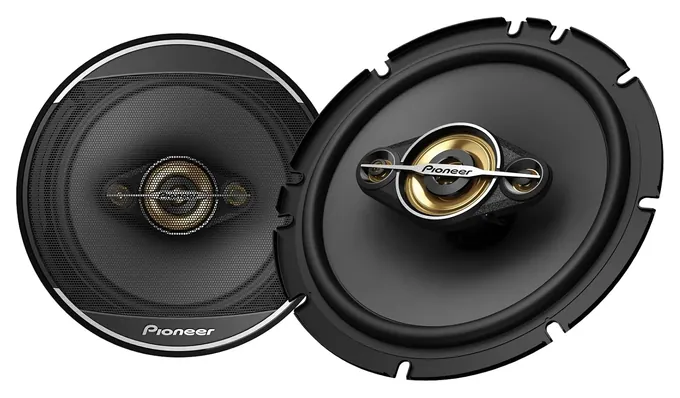
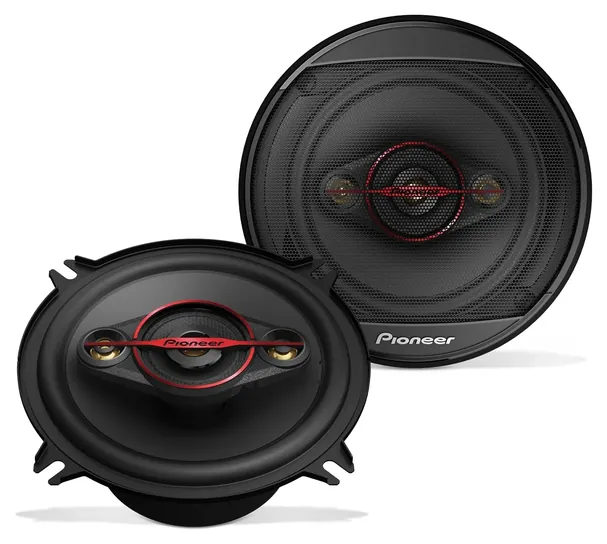
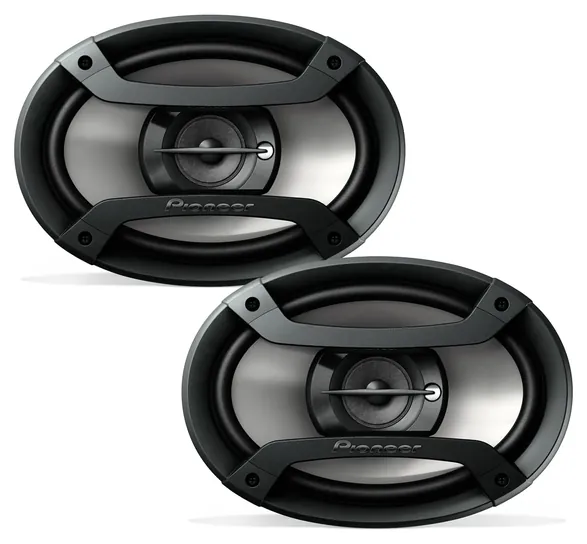
The Pioneer TS-A1681F takes the top spot. It plays loud on a stock radio's small power, takes far more if you add an amplifier later, and comes with adapters for many cars, all at a fair price.
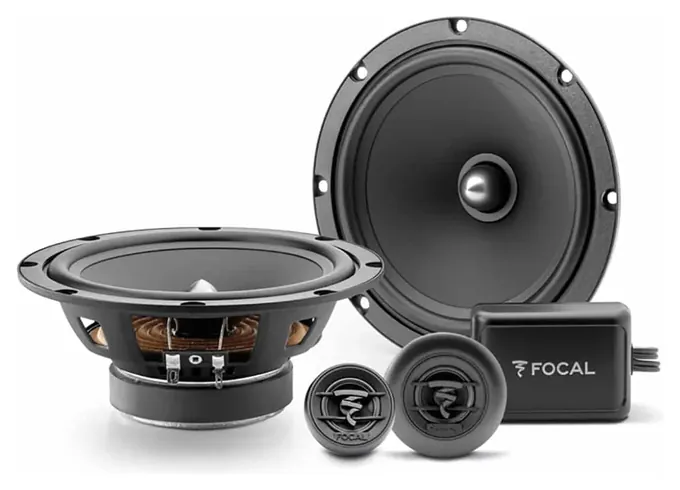
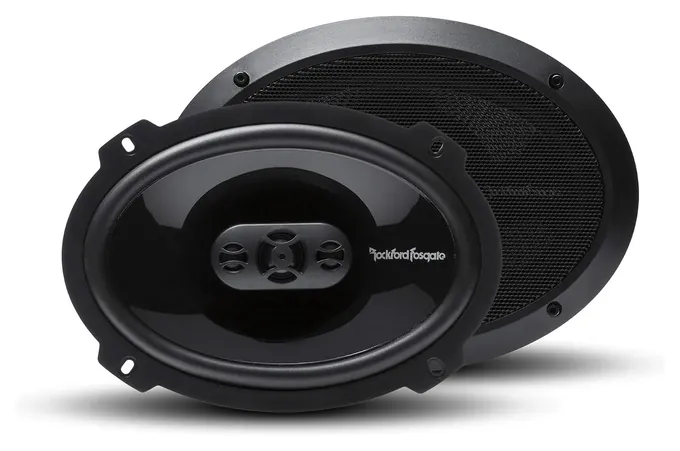
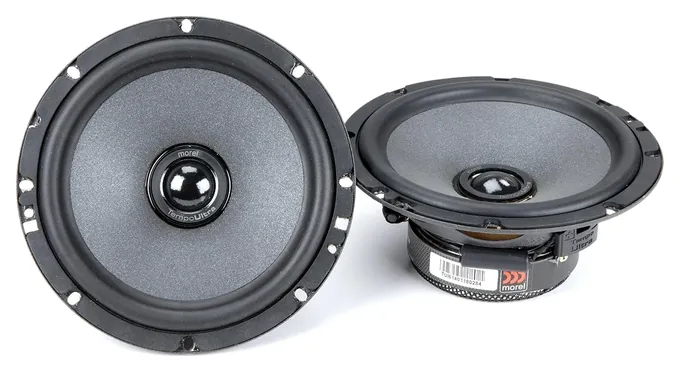
Four old picks are gone. The Alpine S-S69, Infinity Reference X and Image Dynamics iDQ have vanished from sale. The JBL GTO drew too many reports of speakers dying within months. The Morel Tempo Ultra 602 stays as the premium coaxial. The Rockford Fosgate Punch line is now represented by the Rockford Fosgate Punch P1694, a 6x9, and Focal's Access line returns as the Focal 165AS3 three-way set.
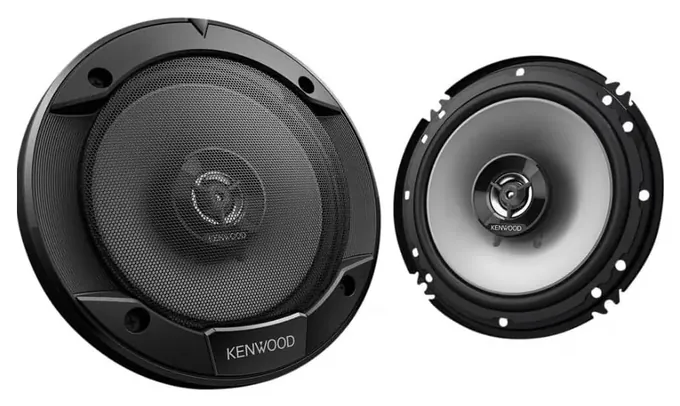
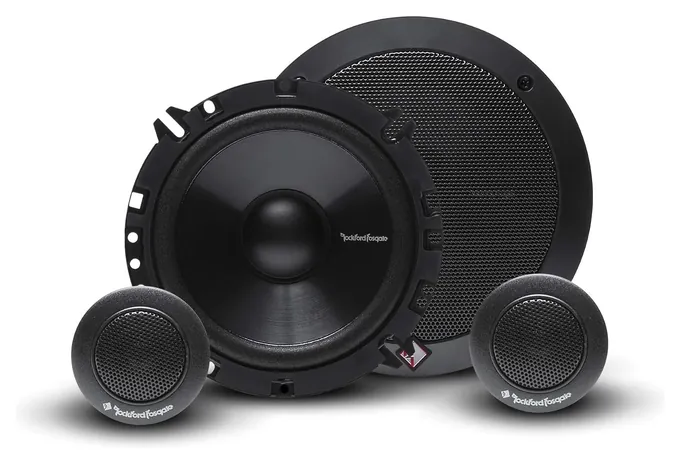
Readers kept asking about component sets, door sizes and cheap upgrades, so the new picks cover all three, from the Focal ASE-165 and Rockford Fosgate Prime R165-S to the Kenwood KFC-1666S and a 5.25-inch Pioneer. The evidence was each maker's sensitivity, power and depth ratings, 2026 buying guides from a car audio magazine and two dealers, owner reports on fit and failures, and a federal recall search that found nothing for car speakers.
Earlier notes
February 18, 2021, by Christopher Thomas:
Removed from this iteration were a pair from Morel and Pioneer that have been discontinued, as well as the JL Audio C2-650X, which no longer perform as well as newer, less expensive options. Don't worry, though, there are still a lot of worthwhile options out there. The Morel Tempo Ultra 602 would make a fine choice for anyone who's also upgrading their amplifier and subwoofer, as would the Focal Access. Meanwhile, both the Alpine S-S69 and Rockford Fosgate Punch offer better-than-average output at reasonable prices. The Infinity Reference X is another that's well known for accurate mid-range and high-end output, although it's substandard at bass levels, so it really works best alongside a solid sub. We also really like the Image Dynamics iDQ for their high-end sound and articulate component design.
Of course, sizing is of prime importance in choosing car speakers, so it's imperative that you keep in mind not just the height and width your car requires, but also the door depth. Some speakers, particularly the Alpine S-S69, are designed to fit well in even the slimmest spaces.
May 17, 2019, by Daniel Goldstein:
Though a good amp goes a long way in improving your car's sound system, you're doing yourself a disservice if you don't match them with a pair of capable speakers. It doesn't take much money to do so, either. If your budget is tight, you can get away with a pair like the Infinity Reference X, which are well-made and relatively easy to install on your own.
Once you look to the other end of the price spectrum, you'll enter audiophile territory. For a minimal investment, you can have a pair of coaxial speakers that approaches studio-monitor level sound reproduction. Our #1 and #2 picks, the JL Audio C2-650X Evolution and Morel Tempo Ultra 602, respectively, do just this. The latter will better serve somebody who already has an aftermarket amp and wants to push it to its upper limits, whereas the former can deliver exquisite, high-fidelity audio even when connected to a factory setup amp/radio.
Special Honors
Dynaudio Car Audio The Danish speaker maker builds high-end car speakers in three aftermarket lines, Esotec, Esotar2 and Esotan MKII, using drivers developed alongside its home and studio monitors. They're sold through car audio dealers, and they need a good amplifier and careful installation to show what they can do. dynaudio.com
Audison This Italian company makes audiophile car speakers in its Prima, Voce and Thesis lines, along with amplifiers that have built-in sound processors to tune a system to the car. It suits buyers planning a full system through a dealer rather than a simple speaker swap. audison.eu
Size, Depth And Fit
Car speakers come in size classes, and the class is only a starting point.
Car speakers come in size classes, and the class is only a starting point. Most front doors take 6.5-inch round speakers, many rear decks and truck doors take 6x9 ovals, and some smaller cars use 5.25-inch or even smaller openings in the doors or dash. Coaxial speakers, with the tweeter mounted on the woofer, are the type most cars carry from the factory (Wikipedia: Vehicle audio), so a coaxial pair is the simplest swap.
The size on the box doesn't promise a fit. A car audio dealer's 2026 guide points out that the label alone won't confirm a speaker fits your vehicle (Performance Auto Group). Check three things for your exact year, model and trim: mounting depth (the magnet must clear the window glass when it rolls down), the screw pattern, and the plug on the factory wiring.
Adapters solve most of this. Pioneer ships multi-fit adapters with its A-Series Plus coaxials (Pioneer car speakers), and Rockford Fosgate's Punch 6x9 uses a slotted basket that can shift to meet factory holes. Vehicle-specific brackets and wiring harnesses cost little and save cutting or splicing.
Watts, Sensitivity And Whether You Need An Amp
The biggest number on the box is usually peak or maximum power, which a speaker can survive only in short bursts. The figure to compare is RMS, or continuous, power. A factory radio sends roughly 15 to 22 watts per channel (Performance Auto Group), so a speaker rated for 80 watts RMS has plenty of headroom on stock power.
On a factory radio, sensitivity matters more. It's measured in decibels at a set voltage, and each step of about 3 dB is roughly a doubling of the power you'd need for the same volume. Speakers at 91 to 93 dB play loudly on a head unit, while ones around 87 dB need an amplifier to sound full. Watch the impedance too: 3-ohm and 2-ohm speakers pull more power from a radio, but any amplifier you add must be rated for that load (Audio Intensity).
Speakers are only part of the upgrade. InCar magazine's 2026 guide notes that sound deadening in the doors, careful installation and an outboard amplifier can unlock much more from the same pair (InCar). A speaker that blows out is more often fed a distorted, clipped signal from an overdriven radio or amp than simply too much power.
Coaxial Or Component, And Installing Safely
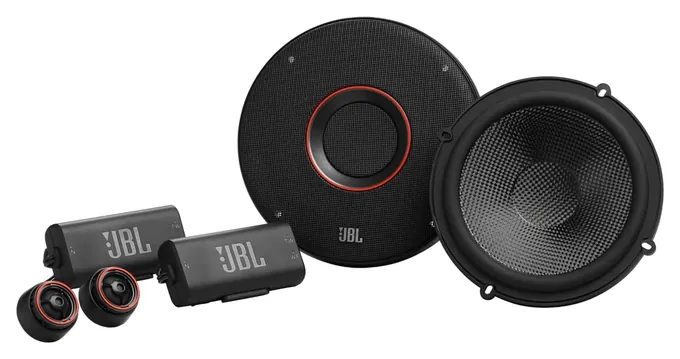
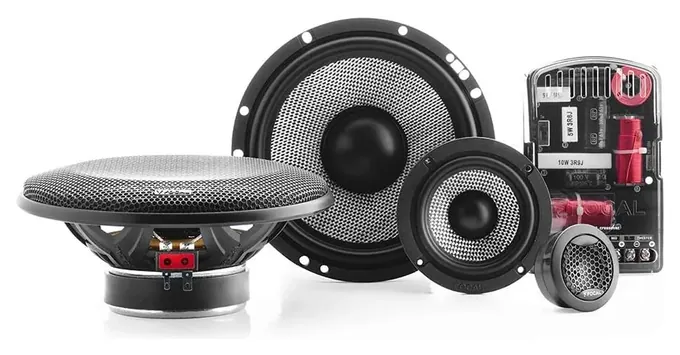
A coaxial speaker is one unit that drops into the factory hole. A component set splits the woofer, tweeter and crossover, so the tweeter can sit high on the door, the sail panel or the dash. That puts voices and cymbals closer to ear level and gives a clearer sense of where each sound sits. The trade-off is time: each tweeter needs a spot, a mount and its own wire, and the crossovers have to be tucked away. Three-way sets add a separate midrange driver and need even more room.
Disconnect the battery before you pull door panels. Many doors hide side-impact airbag sensors and wiring, so never cut or splice those wires, and route speaker wire clear of window regulators and lock rods. If a panel feels stuck, look up the clip locations for your car instead of prying.
Once it's done, mind the volume in traffic. Many states limit how far car audio may carry. Florida, for example, bars sound that is plainly audible 25 feet or more from the vehicle (Florida Statutes 316.3045).
How we researched this
We compared 21 car speakers from 10 brands, read the makers' power, sensitivity and depth ratings for the 10 picks, and read 2026 buying guides from InCar magazine, Audio Intensity and a car audio dealer. We analyzed owner feedback on fit, sound and failures, and checked every brand against the U.S. Consumer Product Safety Commission's recall database. We found no independent lab measurements for these models.
Frequently asked questions
Do I need an amplifier for new car speakers?
Not for most coaxial pairs. Speakers with a sensitivity around 90 dB or higher play loudly on a factory radio. An amplifier adds clean volume and bass, and it's worth it for component sets and low-sensitivity speakers.
Should I buy coaxial or component speakers?
Coaxial speakers drop into factory holes and are the quicker upgrade. Component sets sound more focused because the tweeters sit higher, but they take more time and planning to install.
How do I know which speaker size fits my car?
Look up your exact year, model and trim in a fit guide, then check the mounting depth and screw pattern. The size class alone doesn't guarantee a fit, and many cars use different sizes front and rear.
What do the watt ratings mean?
Peak or max watts is a short burst the speaker can survive. RMS, or continuous, watts is what it handles all the time. Compare RMS to your radio or amplifier output.
Can I use 3-ohm or 2-ohm speakers?
Yes. They draw more power from a factory radio, which makes them louder. If you add an amplifier, make sure it's rated for that lower impedance.