The 8 Best Ergonomic Keyboards
Updated by · How we research

Wave, split and contoured ergonomic keyboards compared by shape, tilt, wireless pairing and learning curve. The Logitech Wave Keys is our pick for most people. When users buy our independently chosen editorial picks, we may earn commissions to help fund the Wiki.
No keyboard has been shown to cure wrist pain, but a shape that keeps your wrists straight and your forearms less twisted can make long desk days easier. A gentle wave is the smallest change from a flat board, while split and tented designs can take weeks to learn. This list is for office workers, writers and coders.


Editor's Notes
October 23, 2026, by Ezvid Wiki Admin:
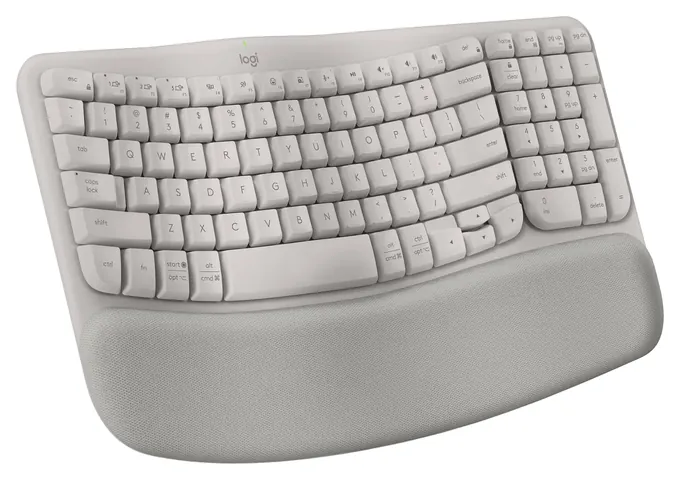
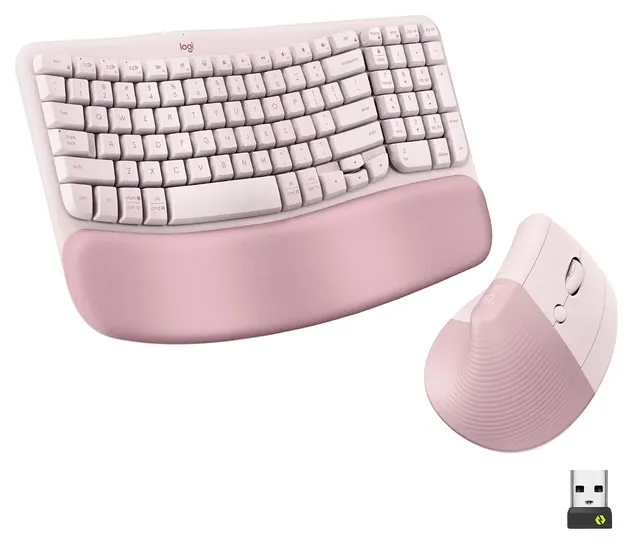
The Logitech Wave Keys takes the top spot. It's the smallest step away from a flat keyboard, it runs for years on two AAA batteries, and it carries on the wave shape of the old Logitech Wave MK570, which is no longer sold.
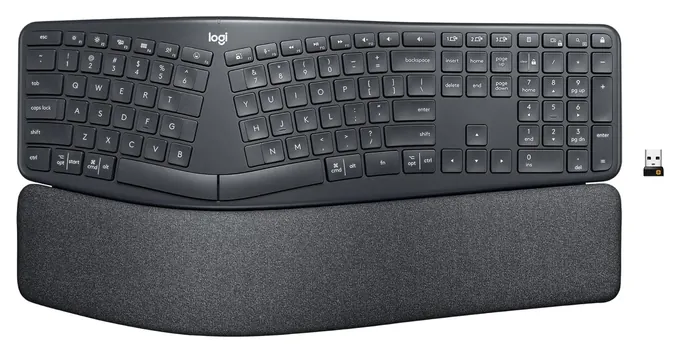
Four more old picks are gone. The Microsoft Sculpt was discontinued, and the Kinesis Freestyle Edge, Mistel Barocco MD770 and iClever BK06 have dropped out of stock where we link, with no sign of a return. The Logitech Ergo K860, Kinesis Freestyle2 and Kinesis Advantage2 stay.
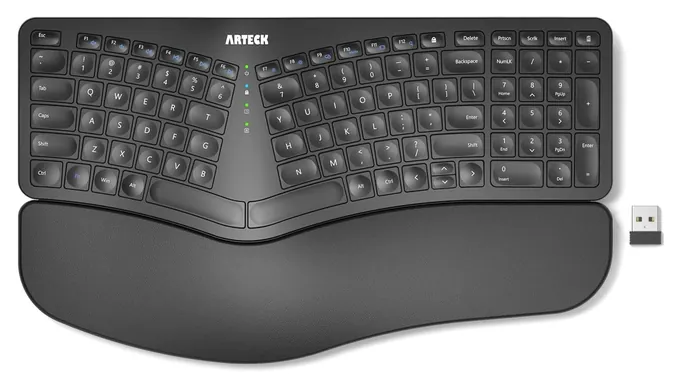
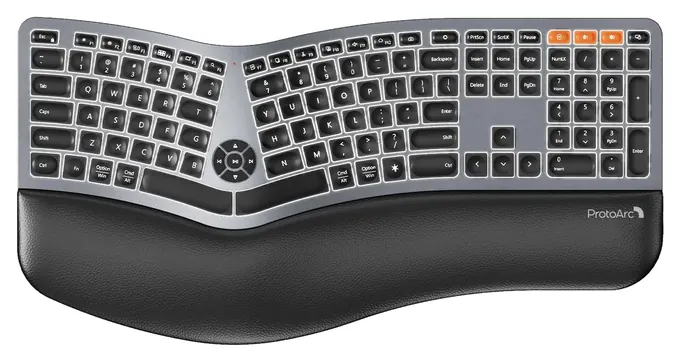
New are the Perixx PERIBOARD-512B for a cheap wired start, the Arteck HW315 and ProtoArc EK01 Plus as low-cost wireless splits, and the Logitech Wave Keys & Lift, which adds a matching upright mouse.
The evidence this time was Logitech's and Kinesis' spec pages, the Kinesis chart that sorts its boards by split, tenting and connection, the Canadian Centre for Occupational Health and Safety's keyboard advice, and repeated owner reports of dropped Bluetooth links and snapped feet. The special honors now point to three split boards sold only by their makers: the MoErgo Glove80, ZSA's line and the UHK.
December 17, 2020:
We decided to remove our recommendations for a couple seemingly promising options, the Perixx Periduo 606 and Kinesis Freestyle2 Blue, because as good as they could have been, too many users had long-term reliability issues for us to be confident in the products.
Of the remaining options, the Kinesis Freestyle2 Original and Kinesis Freestyle Edge are especially popular, as is the Microsoft Sculpt. The Logitech Ergo K860 is a good one for anyone already using a wireless mouse, and comes with the build quality expected from the peripheral giant.
December 17, 2019:
Ergonomic keyboards are a bit of a strange breed. The typing experience on a standard keyboard can be less than comfortable, and many modern ergonomic keyboards aren't necessarily all that comfortable for everyone. So you'll see a lot of split keyboards making their way into this category. Chief among them is the Kinesis Freestyle Edge, an incredibly well-made devices with all the features that you'd expect from a high-end peripheral meant to satisfy demanding gamers. The Kinesis Freestyle2 Original is its older and less-expensive version, and the Kinesis Freestyle2 Blue its wireless relative. They're all pretty reliable and can accommodate many different body types. The Mistel MD770 is another high-quality split model, and its manufacturer actually has somewhat of a cult following from mechanical keyboard enthusiasts (who are an extremely discerning bunch, I might add).
If you prefer a more traditional, fixed design, the Logitech Wireless Wave is a decent place to start looking. It's relatively inexpensive and comes with a mouse, but it has an attached keypad, which tends to push the mouse hand into a less-than-ideal position. The Microsoft Sculpt has no such issue, and despite its age is a great option for most users. Plus, it actually looks great sitting on a nice desk. If you travel a lot, check out the iClever BK06, one of the few mobile options that's built with an ergonomic angle. The Perixx Periduo 606, meanwhile, is one of the newest releases, and promises to be one of the best available. Not only is it manufactured to exacting standards, it's impressively well priced.
If you're looking for something non-traditional built to maximize comfort, the Kinesis Advantage2 may be worth a look. It's remarkably unconventional but many ergonomics enthusiasts insist that it's the best out there. Even more extreme, the SafeType V902 basically doesn't look anything like a normal keyboard, and has a truly massive learning curve, but there are users out there who will really appreciate its split vertical design.
And keep in mind that the keyboard isn't the only thing that can help save your wrists, back, and shoulders. A good adjustable desk, standing desk converter, and vertical mouse can all contribute to joint health in the long term.
Special Honors
MoErgo Glove80 The Glove80 is a split keyboard with keys set into concave wells, a design that ergonomic reviewers often rank near the top. Its halves link to each other and to your computer wirelessly or by cable, the tenting angle adjusts freely, and MoErgo covers it for 18 months. It's sold only through the maker, and it costs far more than a typical office keyboard. moergo.com
ZSA Keyboards ZSA, the company behind the ErgoDox EZ, still sells that board alongside the Moonlander and the low-profile Voyager, whose tenting legs snap on with magnets. Every key can be moved in Oryx, ZSA's free layout editor that runs in a web browser, and the settings live on the keyboard itself, so they work on Mac, Windows and Linux. ZSA gives the Voyager a two-year warranty. zsa.io
Ultimate Hacking Keyboard The Ultimate Hacking Keyboard comes in two split mechanical models from a small European maker. The UHK 60 is a compact wired board with an optional palm rest, while the UHK 80 adds wireless pairing, a built-in palm rest and a small screen. Both are fully programmable, which suits coders who want shortcuts under their fingers. uhk.io
Wave, Split Or Key Well: Pick A Shape
A compact board lets your mouse sit closer to your body, which Logitech says keeps the shoulder on your mouse side in a more natural position.
Ergonomic keyboards come in roughly four shapes, and the right one depends on how big a change you'll put up with. A wave keyboard keeps the keys in one block but curves the rows and raises the middle. The Logitech Wave Keys is the common example, and most typists switch to it without much retraining.
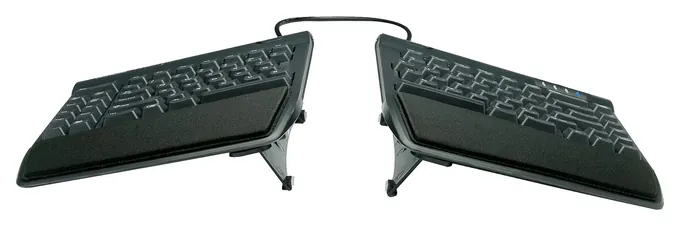
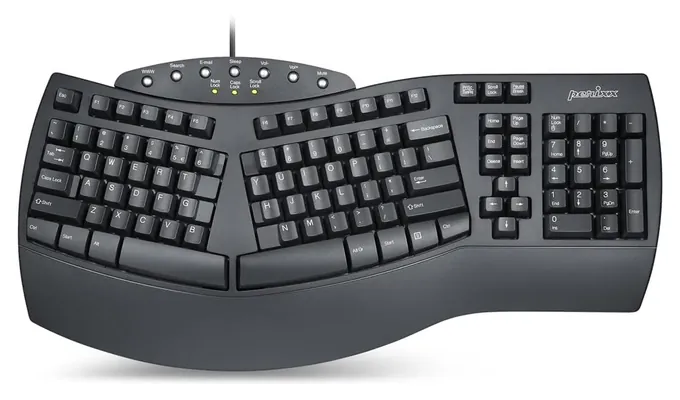
A one-piece split board breaks the keys into left and right groups and angles them apart, which is meant to cut the outward bend at the wrist. The Logitech Ergo K860 and the Perixx PERIBOARD-512B work this way. A fully separate split, such as the Kinesis Freestyle2, lets you set the gap and the angle of each half to your shoulders.
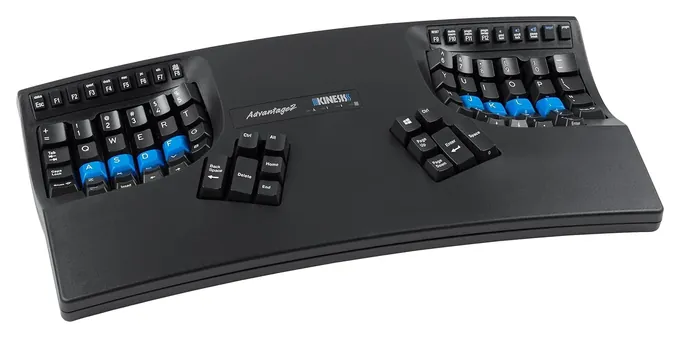
A contoured board sinks the keys into two bowls and moves Enter, Space and Backspace to the thumbs. Kinesis says its Advantage2 places the hands at shoulder width and tents them at 20 degrees. It's the biggest change and the slowest to learn. Kinesis also sells an adjustable, wireless successor, the Advantage360, on its own site.
The specialist store ErgoDirect groups its keyboards the same way: split, contoured and compact. A compact board lets your mouse sit closer to your body, which Logitech says keeps the shoulder on your mouse side in a more natural position.
Tilt, Tenting And The Palm Rest
Two angles matter beyond the split. Tenting raises the thumb side of each hand, so your palms turn partly toward each other instead of lying flat. Kinesis sells lifts for the Freestyle2 at 5, 10 or 15 degrees, and builds 20 degrees into the Advantage2. Start low and go up only if your forearms still feel twisted.
The second angle runs front to back. Most keyboards have flip-out feet at the back, which tip the keys toward you and bend your wrists up. The Canadian Centre for Occupational Health and Safety (CCOHS) suggests raising either the back or the front, whichever keeps your wrist straight in line with your forearm. Logitech's K860 has legs at the front edge that tip the board away from you by up to 7 degrees, which is called negative tilt.
Palm rests are for the pauses. Rest the heel of your hand on one between bursts, and let your hands float while you type, since pressing down on a rest puts weight on the underside of your wrist. CCOHS also notes there is no single best keyboard design and suggests trying models to see what suits you. Your desk height, chair and mouse matter too: forearms level with the floor and elbows relaxed at your sides.
Getting Used To It, And What It Won't Fix
Expect a slow start. Perixx says most people adapt to its curved split board within a week or two, and owners of contoured key-well boards often describe several weeks of slower typing while their fingers relearn where the keys are. Switch for a few hours a day at first if you have deadlines.
Check your computer before you buy. Bluetooth boards like the Logitech Wave Keys, Logitech Ergo K860 and ProtoArc EK01 Plus work with Mac and Windows. The Arteck HW315 needs a free USB port for its receiver, and the Kinesis Freestyle2 sold here is the Windows version; Kinesis sells a separate Mac model.
No keyboard is a medical treatment. Makers say their designs reduce awkward postures, not that they cure carpal tunnel syndrome or tendinitis. If you have numbness, tingling or pain that lasts, see a doctor or physical therapist, and take short breaks to stretch, as CCOHS advises. A good keyboard helps most when the rest of the desk is set up well.
How we researched this
We compared 17 ergonomic keyboards and keyboard-and-mouse sets from two searches, read the makers' spec pages and Kinesis' model chart for the eight finalists, checked the keyboard advice of the Canadian Centre for Occupational Health and Safety, read published reviewer picks where they were available, analyzed owner feedback for patterns such as dropped connections and broken feet, and checked every brand for recalls with the U.S. Consumer Product Safety Commission.
Frequently asked questions
What is an ergonomic keyboard?
It's a keyboard shaped to keep your wrists straighter and your forearms less twisted than a flat one does. Common designs curve the keys in a wave, split them into left and right halves, tent the halves upward, or sink the keys into two bowls, and most add a padded palm rest.
Can an ergonomic keyboard help with carpal tunnel or wrist pain?
It may make typing more comfortable, but no keyboard is proven to cure carpal tunnel syndrome or tendinitis, and makers only claim to reduce awkward postures. Anyone with lasting numbness, tingling or pain should see a doctor or physical therapist.
How long does it take to get used to one?
A wave keyboard is the smallest change, so it usually takes the least time. Perixx says its curved split board takes a week or two, and contoured key-well boards like the Kinesis Advantage2 can mean several weeks of slower typing.
Which ergonomic keyboards work with a Mac?
The Logitech Wave Keys, Logitech Ergo K860 and ProtoArc EK01 Plus pair with a Mac by Bluetooth, and the Kinesis Advantage2 has a Mac mode. The Kinesis Freestyle2 has a separate Mac model.
Do I need a palm rest?
It helps for the pauses between typing. Rest the heel of your hand on it when you stop, and let your hands float while you type so the rest doesn't press on the underside of your wrist.
Is a wired or wireless ergonomic keyboard better?
Wired boards never need batteries or pairing and don't drop out. Wireless boards clear the desk and can switch among a laptop, tablet and phone. Logitech rates the Wave Keys at up to three years on AAA batteries, while rechargeable boards need a cable now and then.