The 6 Best Flexible Solar Panels
Updated by · How we research

Six bendable solar panels for RV, van and boat roofs compared by voltage, warranty and shade tolerance. The Renogy 100W Flexible leads for 12-volt systems. When users buy our independently chosen editorial recommendations, we may earn commissions to help fund the Wiki.
A flexible solar panel weighs about a third as much as a glass one and bends to fit a curved roof, but it is meant to be shaped once and stuck down, not rolled up. Heat is what wears them out, so mounting matters. These suit van, RV and boat owners whose roofs can't carry rigid frames or take screws.


Editor's Notes
November 16, 2026, by Ezvid Wiki Editors:
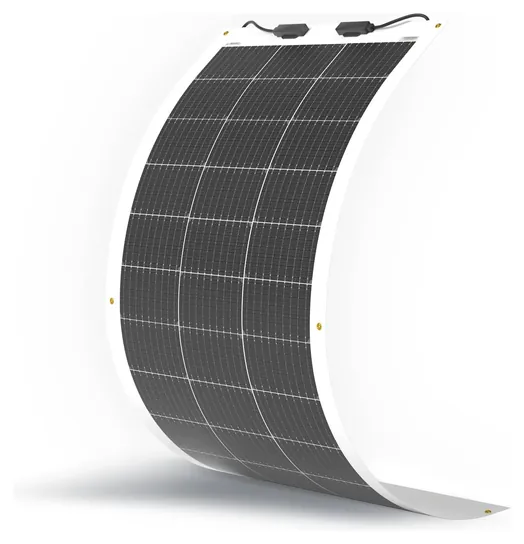
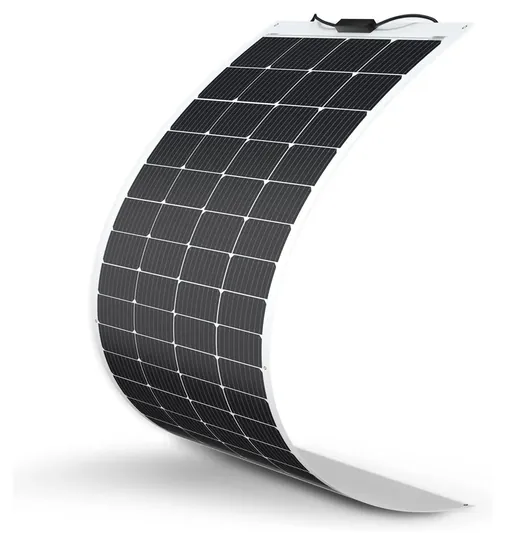
The Renogy 100W Flexible now leads because its voltage works with the simple charge controllers most first van and boat setups use, and Renogy warrants both its materials and its output for five years. Most of the old list is gone. Uni-Solar closed in 2012, and the SunPower, Newpowa, HQST and Eco-Worthy panels are no longer sold, along with Renogy's own 160-watt model. The TP-Solar, Xinpuguang, RavPower and Dokio picks were dropped too, for thin evidence or because newer versions replaced them.
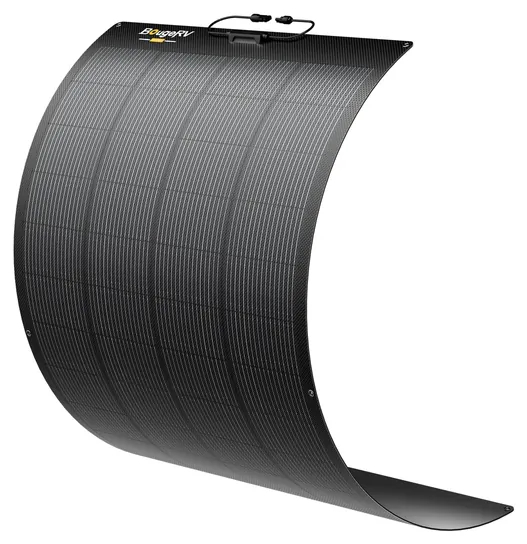
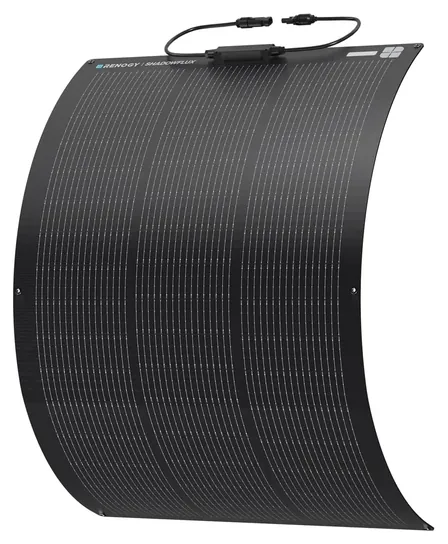
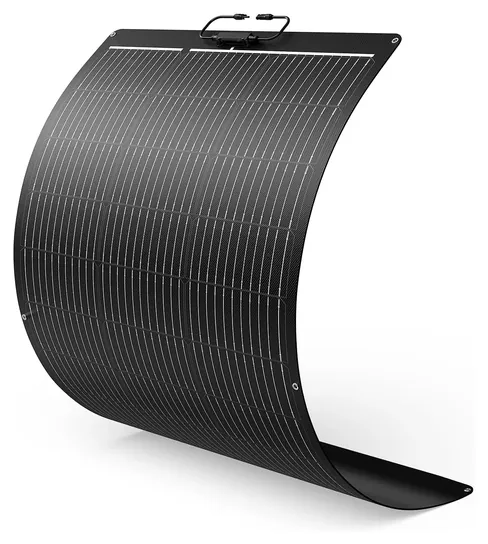
The big change in this category is shade handling. The BougeRV Arch Pro and Renogy ShadowFlux 100W use many bypass diodes and run at a higher voltage, so they cope better with a partly shaded roof but need an MPPT controller or a power station. We matched every pick's operating voltage to the controller it needs, read the warranty terms on the makers' sites and leaned on a long-term van test of the earlier BougeRV Arch. One bit of history: Renogy recalled an earlier bendable 100-watt panel in 2016 for overheating, and the current model is a different version.
Earlier notes
December 7, 2020, by Luke Perrotta:
Due to availability concerns, we had to remove the Genssi 400W, the Suaoki 150W, the Unlimited Solar UFLX-100, the Uni-Solar PVL-144, the BougeRV Ultra Thin, the Eco-Worthy Monocrystalline, and the Lensun LS-100FX2.
We added the Xinpuguang Kit, the HQST 12-Volt, the Dokio Thin Film, the Newpowa Lightweight, the TP-Solar Monocrystalline, and the SunPower 110-Watt. We also added the Eco-Worthy Waterproof, which is the only option on this list that lacks a grid (besides the Uni-Solar PVL-136 PowerBond). Its cells are connected by conductive glue rather than soldering tape, which is often the reason that some panels suffer from the notorious "hot spot" effect that can seriously damage them.
These flexible solar panels are great for a variety of applications, including powering vehicles. If outfitting your vehicle with solar is what you're specifically looking to do, though, you should check out our lists of the best solar panels for RVs or solar panels for boats. If, on the other hand, you want panels you can install in a single location that don't need to be flexible, have a look at the best 100-watt solar panels or 300-watt solar panels.
October 30, 2018, by Brett Dvoretz:
We wanted to include solar panels suitable for a variety of uses. We recognize that the majority of people use solar panels on boats and RVs. For this reason we made sure to find some reputable models that are built to stand up to marine conditions, as well as those than can withstand lot of wind, since many people will leave them permanently installed on their recreation vehicles as they barrel down the highway.
Match The Panel's Voltage To Your Controller
That suits a cheap PWM charge controller, which simply connects the panel to the battery and throws away the extra voltage.
Most buying mistakes with flexible panels come down to voltage, not watts. A classic 12-volt-class panel runs at about 18 to 21 volts in full sun: the Renogy 100W is rated at 20.7 volts and the Renogy 200W at 20.1. That suits a cheap PWM charge controller, which simply connects the panel to the battery and throws away the extra voltage.
The newer shade-tolerant panels run much higher. The Renogy ShadowFlux 100W works at 28.8 volts and the BougeRV Arch Pro at 31.1, with open-circuit voltages of 33.6 and 36.4. The ALLPOWERS SF100 sits in between at 25.5 volts, sized for power stations. These need an MPPT controller, which converts the extra voltage into charging current, or a power station whose solar input accepts that range. Check the station's input limits before you buy.
Cold raises a panel's voltage. BougeRV lists open-circuit voltage rising about 0.3 percent per degree Celsius below 25 C (BougeRV spec table), so two panels wired in series on a freezing morning can top a controller's limit. Leave margin, and fuse the line between panel and controller with a DC-rated fuse sized from the panel's current, as the National Electrical Code's solar article (690) describes.
Heat Is What Wears Them Out
A flexible panel uses the same kind of monocrystalline cells as a rigid one, but it has no glass and no aluminum frame, and that is the trade. It weighs roughly a third as much and bends to a curved roof, but it sheds heat poorly when it lies flat against an insulated roof. Hot cells make less power, and years of heat can blister or peel the top film. Owners on RV and van forums report that kind of failure within a few summers on panels glued flat with no air gap.
The top layer matters. ETFE film stays clear and resists UV, and the Renogy 200W uses it. Cheaper PET faces tend to yellow and age faster. Renogy chose TPO for the ShadowFlux and says in its ShadowFlux FAQ that it resists moisture and delamination better than ETFE. Warranties tell the story: rigid panels often carry 25-year output warranties, while the flexible panels here carry two to five years on materials.
Expect less than the label. OutdoorGearLab measured 166 watts from the 200-watt BougeRV Arch, about 83 percent, which is normal for real sun and heat. Size your system on about four-fifths of the rated output.
Mounting On A Van, RV Or Boat
Flexible means you shape it once to fit the roof, not that you can roll it up or flex it every day. Repeated bending cracks the cells. There are four common ways to mount one, and Renogy's RV roof install guide walks through each: high-bond VHB tape, a roof-safe adhesive, a raised mount that leaves an air gap, or screws through the metal-ringed holes. Tape and adhesive avoid holes in the roof. A raised mount runs cooler and usually lasts longer.
Match the tape or adhesive to the roof. Fiberglass, aluminum, TPO and EPDM roofs each need a compatible product, and the surface must be clean, dry and free of wax. Let the bond cure before you drive. On a boat, a bimini or hard top is the usual spot. Don't step on a panel unless the maker says it can take it: OutdoorGearLab's tester walked on the fiberglass-backed BougeRV Arch, but thinner panels can crack.
Safety: in 2016 the U.S. Consumer Product Safety Commission announced a recall of about 1,500 earlier Renogy bendable 100-watt panels for overheating (CPSC). The current model is a newer version, and we found no recalls for the other brands here. Use matching connectors from one series and keep cable runs short and protected where they cross the roof.
How we researched this
We compared 16 flexible solar panels, including the 10 from the earlier version of this list, read the makers' spec sheets and warranty terms for the six finalists, used OutdoorGearLab's measured output from its long-term van test, read owner reports on RV, van and sailing forums, and checked every brand against U.S. Consumer Product Safety Commission recalls.
Sources (10)
- Renogy: 100W 12V flexible solar panel
- Renogy: 200W 12V flexible solar panel
- Renogy: Flex ShadowFlux 100W/200W
- Renogy: How to install flexible solar panels on an RV roof
- BougeRV: Arch Pro 200W flexible solar panel
- BougeRV: Arch Pro kit spec table
- BougeRV: Arch 200W curved solar panel
- ALLPOWERS: SF100 flexible solar panel
- OutdoorGearLab: Best Portable Solar Panels
- CPSC: RNG recalls bendable solar panels (2016)
Frequently asked questions
How long do flexible solar panels last?
Plan on several years rather than decades. Makers warrant the ones here for two to five years on materials, and panels glued flat to a hot roof can blister or lose output within a few summers. An ETFE or TPO face and an air gap underneath help them last longer.
Are flexible solar panels less efficient than rigid ones?
The cells are similar, but flexible panels run hotter because they lie against the roof, and heat cuts output. Expect roughly four-fifths of the rated watts in real sun.
Can I stick a flexible solar panel to my RV roof?
Yes. High-bond tape or a roof-safe adhesive works if it suits your roof material and the surface is clean. Read the panel maker's mounting rules first, since some warranties depend on them, and leave an air gap if you can.
Will a flexible solar panel charge my power station?
Usually, if the panel's voltage fits the station's solar input range and you have the right cable. Panels around 25 to 36 volts, such as the ALLPOWERS SF100, are aimed at power stations.
Are flexible solar panels good for boats?
They are popular on biminis and curved decks because they are light and low. Pick one with good shade handling if a mast or rigging shades it, and don't walk on it unless the maker allows it.