The 7 Best Frameless Monitors
Updated by · How we research

Almost every monitor has thin borders now. Seven 24- and 27-inch frameless models compared on resolution, refresh rate, ports and stand; Dell S2725QS 4K leads. When users buy our independently chosen editorial selections, we may earn commissions to help fund the Wiki.
On some monitors, a 1-millisecond spec is an MPRT figure; gray-to-gray is 8 milliseconds. A frameless monitor, also sold as borderless or bezel-less, has a very thin border on three sides, so the picture runs nearly to the edge and paired screens meet at a narrow seam. Office workers, gamers and people building multi-screen desks buy them.



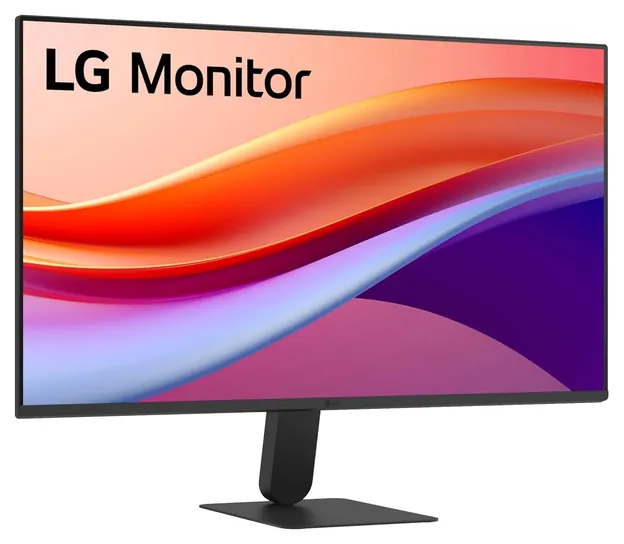
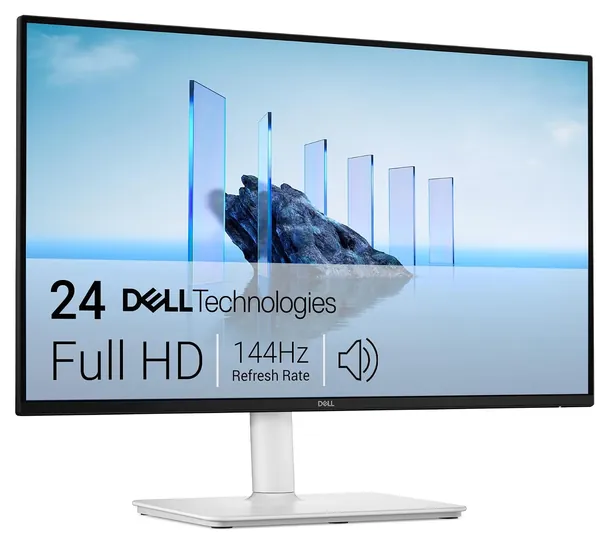
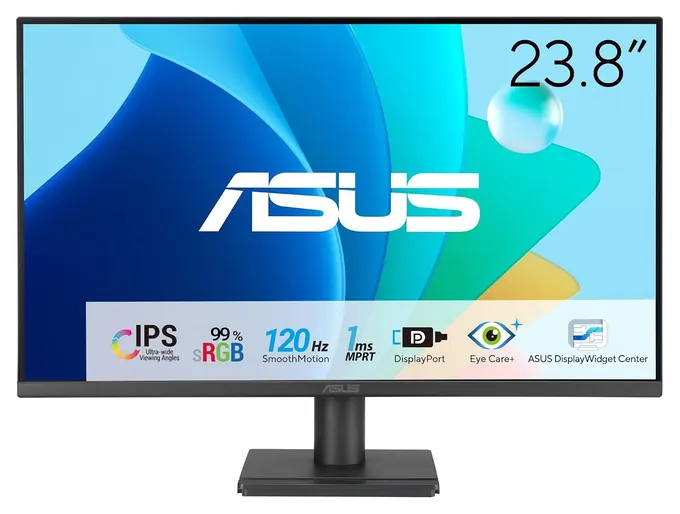
Editor's Notes
October 18, 2026, by Ezvid Wiki Admin:
We picked the Dell S2725QS as the new leader for its sharp 4K text. None of the old picks made it through this update. The Dell U2720QM and Sceptre C355W are no longer sold, the AOC CQ27G2 shows no price or stock, and the ViewSonic Elite XG270QC, Dell S3220DGF, AOC C24G1A, Gigabyte Aorus FI27Q and ViewSonic VP2785 are 2019-2020 models that newer screens have replaced. The HP 24mh is still around, but it tops out at 75 Hz and costs more than faster 24-inch models. The old BenQ GW2480T listing now sells its successor, the BenQ GW2486TC, which joins as a new pick.
Thin borders come on almost every monitor now, so this list ranks on what still differs: resolution for the size, refresh rate, inputs, stand and warranty. The Dell S2725DSM is the value pick. We left out a 34-inch ultrawide this time because of owner reports of failing pixels, and we kept just one of Dell's two near-identical 4K models.
Independent reviews exist only for the Dell 4K panel. For the rest, the evidence is makers' spec pages and rear-panel diagrams, retailer spec sheets, owner reports of early failures and recall checks, and the write-ups say where sources disagree.
October 23, 2020:
Slowly but surely, display technology is marching forward. We're fortunate now to have a much wider selection of slim-bezel, nearly frameless monitors to choose from, and while all monitors will have at least a small border, we've been careful to stick with those with bezels in the range of about .3" or less.
Of course, it's no surprise that the Dell U2720QM and Dell S3220DGF make an appearance, as Dell appears to be applying their once-heralded "InfinityEdge" technology to a number of their recent releases. On the other hand, both the AOC CQ27G2 and AOC C24G1A are great choices for gamers, from a company that hasn't exactly been on the forefront of ergonomics throughout the past.
Like AOC, the manufacturers of the ViewSonic Elite XG270QC and Aorus FI27Q sometimes dip into gaming displays, and that's where both of these really shine. The ViewSonic is reasonably priced, as many of their are, and the Gigabyte Aorus FI27Q boasts a variety of impressive features, which, again, is generally expected from the performance-oriented brand. A monitor that you might not normally expect to get such a good mention is the Sceptre C355W, and while the brand has been maligned as cheap in the past, its quality is consistently increasing, and this ultrawide model is hard to beat at its price.
However, if all you want is something streamlined for simple tasks at home or work, the BenQ GW2480T is a good choice due to its crisp picture and advanced eye care features, while the HP 24mh is worthwhile because it's so inexpensive, yet doesn't skimp on quality.
June 09, 2019:
Technically, there's no such thing as a legitimately 100% frameless monitor. Even if there isn't a noticeable piece of plastic surrounding the display's edge, there will still be an ever-so-slight border that doesn't produce an image. This is simply a hardware limitation that LED screens have to deal with. But, given how advanced electronics production has become, manufacturers can come pretty close to bezel-free constructions. In the quest to find the sleekest monitors on the market, we've focused mostly on those without thick plastic borders and gravitated towards displays with bezels of just a few millimeters. One thing you will notice, though, is that there just aren't any that don't have a physical border on the bottom. Generally, that's where edge-sourced LED backlighting lives (hend the name edge-lit), and there's really nowhere else to put it.
Because of their almost non-existent bezels, frameless monitors are typically used in multi-monitor setups for a streamlined experience. As such, you'll find a lot of reasonably priced models such as the HP 27w, Acer G276HL, and Philips E9. Slightly more expensive but also considerably better looking are the AOC 27V2H and the Dell S2418HN and P2719HC. The Dells, in particular, are extremely popular choices, just like most of their monitors. They come about as close to being completely free of a bezel as anything out there. The AOC, on the other hand, is focus-built for gaming purposes, as evidenced by its 144-hertz refresh rate which supports G-Sync adaptive technology. Then there's the Asus Designo, which is one of the most finely designed options on the market that's still reasonably affordable.
The Alienware is one of the rare ultrawide frameless models, and its 3440 by 1440 resolution is just about perfect for many games, especially considering it's far more common today than it used to be for titles to have native 21:9 support. It used to take hours of fiddling around with settings to get games to run in the ultrawide format without cropping the screen, but the industry is starting to turn now, because the 21:9 gaming experience can really be something else. Finally, if you need something for professional video or photo editing, the ViewSonic is the one to consider. It has great color accuracy, a 4K resolution, and very good HDR support, which checks a lot of boxes needed by commercial users.
What Frameless Really Means
Today almost every office and gaming monitor has thin borders on three sides, so the label alone tells you little.
No LCD monitor is truly frameless. Every panel has a physical edge and a thin black band around the picture that never lights up. "Frameless," "borderless," "bezel-less," "edgeless" and "zero-frame" are marketing names for the same thing, a very thin visible border, and Lenovo notes that makers use the terms interchangeably and that modern borders can be about 2 millimeters or less (Lenovo). The bottom edge, or chin, stays thicker on nearly every model because it holds the logo, the controls and often the backlight.
Today almost every office and gaming monitor has thin borders on three sides, so the label alone tells you little. Border width is not a picture-quality feature. Choose on size, resolution, panel type, refresh rate, inputs and stand first, then check the photos to confirm the borders are slim.
The real payoff comes with two or three screens. Thin borders shrink the seam, but the gap is still two borders plus whatever space the stands leave, roughly a centimeter or more, so a picture spread across two screens will always have a line through it.
Size, Resolution And Panel Type
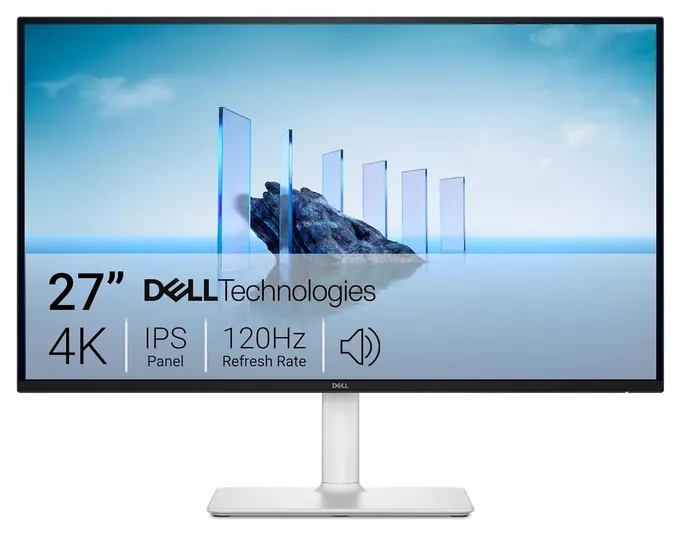
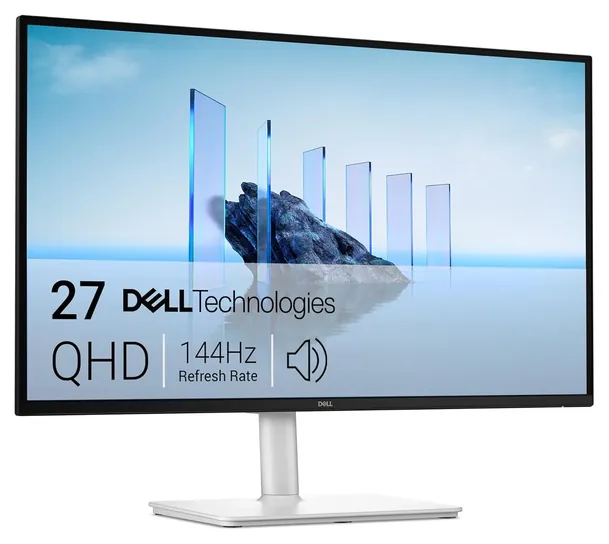
Pixel density decides how sharp text looks. A 24-inch 1080p screen has about 92 pixels per inch. At 27 inches, 1080p drops to about 82, which looks soft up close, while 1440p gives about 109 and 4K about 163. For most people, 1440p is the best value at 27 inches. 4K is worth it if you read and edit text all day: RTINGS singles out the sharp text on the Dell S2725QS for office work. On 4K, Windows scaling at 150% keeps menus readable.
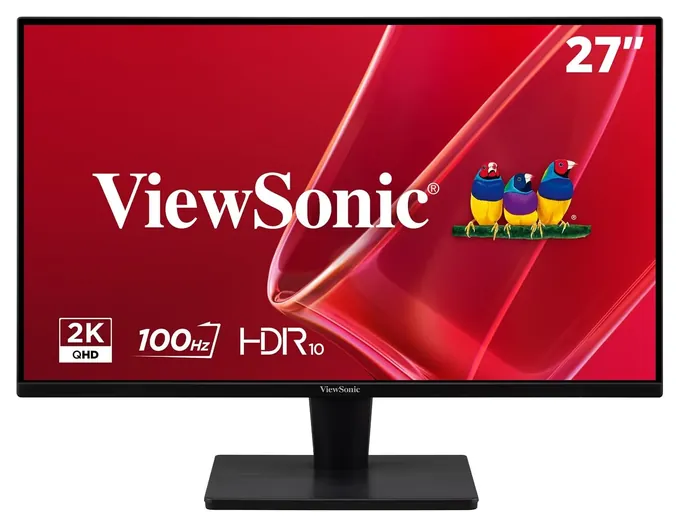
IPS panels keep colors steady when you look from the side, which matters on a wide desk or with two screens angled in. VA panels offer more contrast, but colors and brightness shift off-axis; Display Ninja flags exactly that on a VA ultrawide it reviewed (Display Ninja). Every pick here is IPS except the ViewSonic, where sources disagree.
Refresh rate matters less than ads suggest for office work. A jump from 60 Hz to 100-144 Hz makes scrolling and the mouse pointer look smoother, and it helps casual gaming. Fast-paced competitive players should look at dedicated gaming monitors, since RTINGS finds visible motion blur on Dell's 120 Hz 4K panel.
Ports, Stands And Multi-Screen Desks
Check the inputs before you buy. QHD at 100 Hz or more wants DisplayPort or a newer HDMI port; older HDMI 1.4 inputs have limited bandwidth. Some budget screens have only HDMI and VGA, which is fine for an office PC but not for a gaming card that outputs over DisplayPort. A USB-C port with power delivery lets a laptop use one cable for video, data and charging; RTINGS confirms 65 watts on Dell's S2725QC, and the BenQ GW2486TC offers the same idea at 24 inches. A DisplayPort output lets you chain a second monitor, but only if the computer's graphics support it.
Stands matter more than borders for comfort. Tilt-only stands are common on the cheapest models. A stand that raises, swivels and pivots lets you line two screens up at the same height, which makes the seam less noticeable. If a monitor has a 100 by 100 millimeter VESA pattern, a desk arm can fix a low stand and free up desk space; the Dell S2425HSM has one, according to a retailer spec sheet (Villman).
Warranties differ. The U.S. listings show one year for the Dell and LG picks and three years for the ViewSonic, BenQ and ASUS ones. We found no monitor recalls for any of these brands in the U.S. Consumer Product Safety Commission database (CPSC). Use the power cable or adapter that comes in the box, and clean the screen with a dry microfiber cloth.
How we researched this
We compared 20 frameless monitors, including every model on the old list, read makers' spec sheets, listing diagrams and port photos for the 9 finalists, read independent reviews from RTINGS, MonitorNerds, PC Monitors and Display Ninja where they exist, analyzed owner feedback patterns, and checked every brand for recalls with the U.S. Consumer Product Safety Commission. Only the Dell 4K panel has independent reviews; the other picks rest on makers' specs.
Frequently asked questions
What is a frameless monitor?
It's a monitor with a very thin border on three sides, usually a few millimeters, so the picture reaches almost to the edge. Makers also call it borderless, bezel-less or zero-frame. The bottom edge stays thicker.
Is any monitor truly frameless?
No. Every LCD has a physical edge and a thin black band that never shows an image. Frameless is a marketing term for a border thin enough that you stop noticing it.
Are frameless monitors better for two screens?
Yes, the seam is much narrower, but it doesn't disappear: you still see two borders and a small gap. A stand that adjusts for height, or VESA arms, helps line the screens up.
Should I get 1080p, 1440p or 4K at 27 inches?
1440p is the best value for most people. 4K makes text noticeably sharper for all-day office work, and 1080p at 27 inches looks soft up close but costs the least.
Do I need USB-C on a monitor?
Only if you use a laptop that charges over USB-C. Then one cable carries video, data and power, which makes docking simple. Desktop PCs don't need it.
Is a frameless monitor better for gaming?
The thin border doesn't change the picture. For gaming, look at refresh rate, response time and adaptive sync instead. The thin border mostly helps if you run two or three screens side by side.