The 9 Best Headphone Splitters
Updated by · How we research

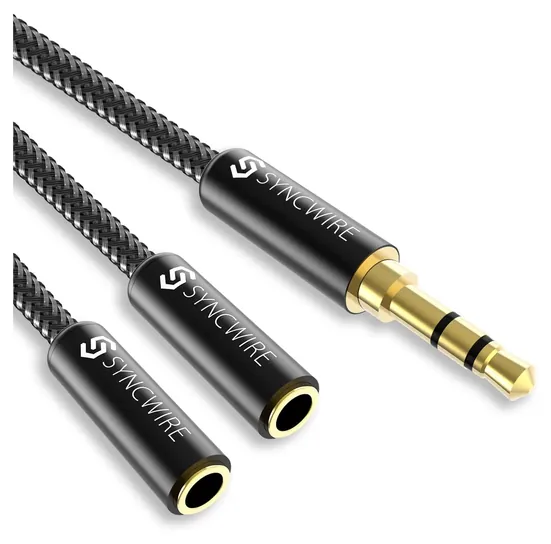
Nine headphone splitters compared, from Y cables to USB-C adapters, a five-way hub and a powered amp. The braided Syncwire SWSC024 leads for sharing one phone. When users buy our independently chosen editorial choices, we may earn commissions to help fund the Wiki.
Every headphone splitter sends one signal to every pair plugged in, so all listeners share a single volume and no microphone gets through. For travel partners, siblings in a back seat or a classroom, that's usually fine. Phones without a headphone jack need a version with its own sound chip, and a powered amp gives each listener a knob.


Editor's Notes
October 26, 2026, by Ezvid Wiki Admin:
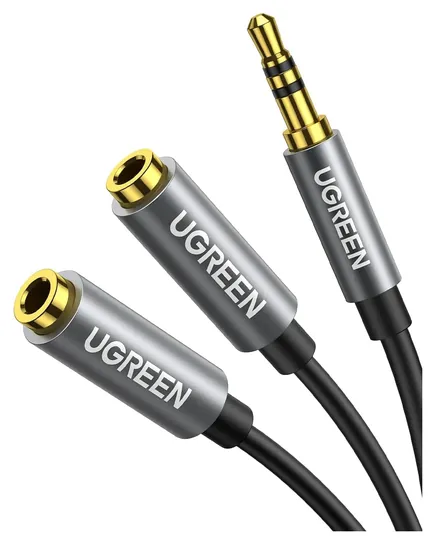
The Syncwire SWSC024 keeps the top spot, but almost everything around it changed. Four of the old picks are no longer sold: the Onxe Black 5-Way, the UGreen 70102, the Avantree TR302 and the Belkin Rockstar 5-Jack. The Honesun 5-Way has vanished, and the UWeCan 3 in 1 and Onxe Black 4-Way gave way to splitters with clearer documentation.
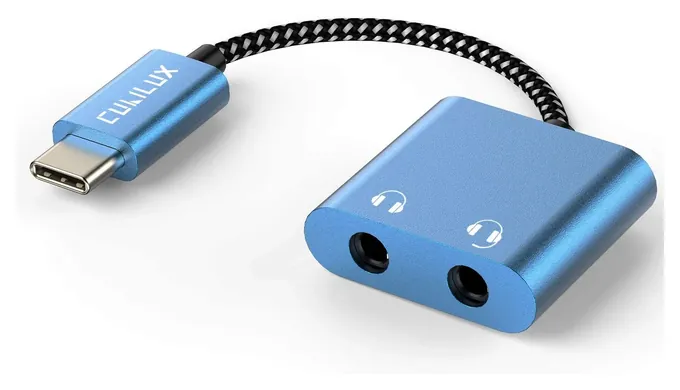
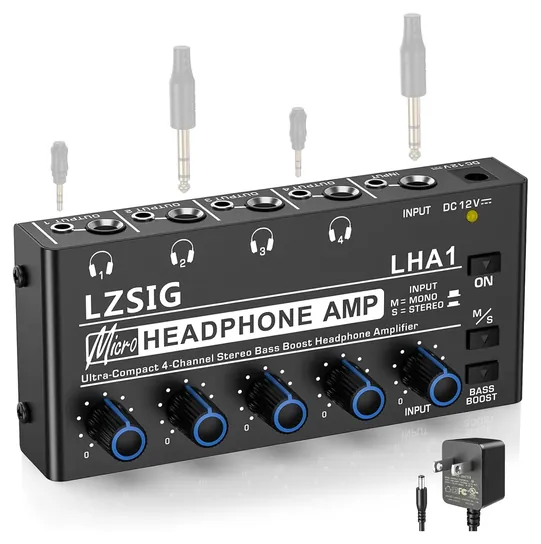
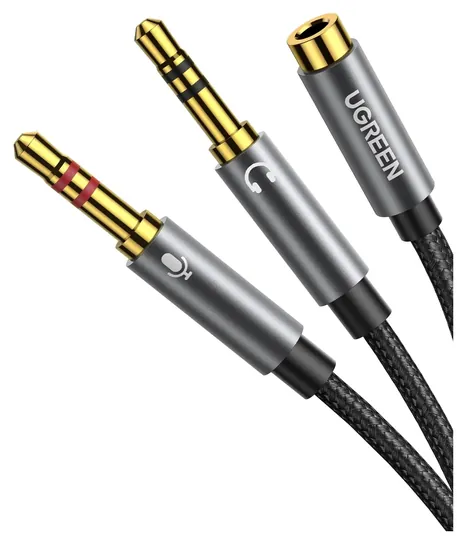
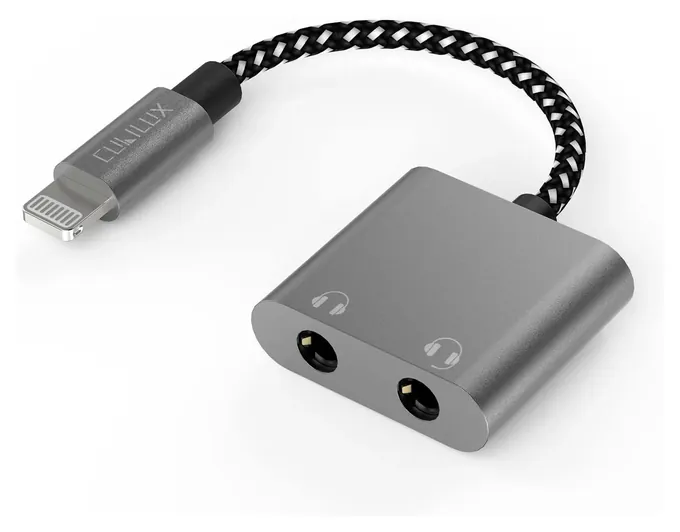
The bigger shift is in what people plug into. Many phones have no headphone jack now, so the Cubilux USB-C Dual stays and the Cubilux Lightning Dual joins it for older iPhones. The LZSIG 4-Channel Amp is here for anyone who wants separate volume knobs, and the Ugreen 20899 covers the job many searchers really mean: getting a headset mic to work on a PC.
Nobody publishes lab measurements of passive splitters. We leaned on makers' wiring notes (stereo only or mic-capable), an explainer on why a second pair of headphones lowers volume, and the faults owners keep reporting, mainly loose sockets and a confused mic.
January 19, 2021:
One of our main goals during this update was to introduce a little more variety to our recommendations. With that in mind, we eliminated the NuclearAV Atom 5Star and AmazonBasics 5-Jack, because we already have two very similar models, the Onxe Black 5-Way and Belkin Rockstar 5-Jack, and we didn't see the need to keep all of them. Taking their places are the Cubilux USB-C Two-Way and UWeCan 3 in 1. Both of these are ideal for phones and other gadgets that don't have a headphones jack. The former, as the name suggests, plugs into a USB-C port, and the latter into a lightening jack. The latter also boasts a charging slot, which can come in handy on long flights when you don't want to interrupt your movie viewing. Another new addition is the UGreen 70102, which we like for its premium components and step-down plug that can be used with thick cases.
November 02, 2019:
Unlike with other product categories, I see no point to differentiating or meriting certain models in this market based on price alone, since most headphone splitters here (and indeed on the wider market) are sold at a similar price point.
However, you will get a surprisingly good mix of products with regards to quality, with many of the best products completely outperforming average products on performance and durability measures. Indeed, many of the best headphone splitters don’t seem to have built-in obsolescence, so you’ll get more than your money’s worth with some of these products and they may last for years to come if handled with care.
With splitters, you have cable-based models, where the ports are essentially at the ends of cables, (which are especially common for 2-way splitters), and if your intention is to share with only one other person, I would highly recommend the DuKabel 2-Way, as you’ll get a long cable plus the added extension of the split-cable. Conversely, multi-jack models tend to look more aesthetically appealing and you’ve got some great options if you intend to share audio with more than one person, or if you want to mix audio sources.
Do note that there is inevitably a drop-off with volume as more people share the volume source, since the same voltage is now being split multiple times. This is less noticeable with some models and more noticeable with others – just don’t be disappointed if this occurs, since there is no external ‘amplifying’ voltage being fed into the splitter. Both the Honesun 5-Way with UV Coating and Onxe Black 5-Way are models that tend to deal with voltage drops quite well, where the issue is definitely less noticeable. To compound this issue, additional volume loss can occur as a result of low-quality headphones, so its wise to ensure that you have an optimal set of headphones, especially when using a splitter.
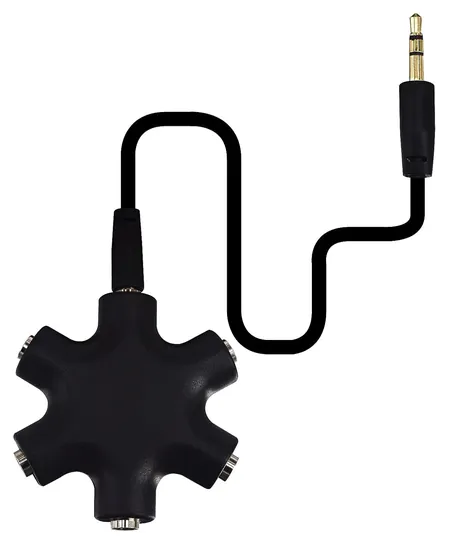
Also, just to clarify that multi-port models (>2 ports embedded in the body of the device) allow for ports to function as both inputs and outputs. Output devices are earphones (that 'output' sound or audio), and input devices are audio inputs, like PC's, televisions, MP3 players and iPod's, and any other devices with an auxiliary (3.5 mm) port. This feature allows multi-port models the ability to mix sounds from various devices, however some devices may not allow for this function, as one user observed that his television audio output always switched off when he connected his laptop to the splitter.
Splitter, Headset Adapter Or Amp?
The plugs on these are usually three-contact TRS, which carries left, right and ground.
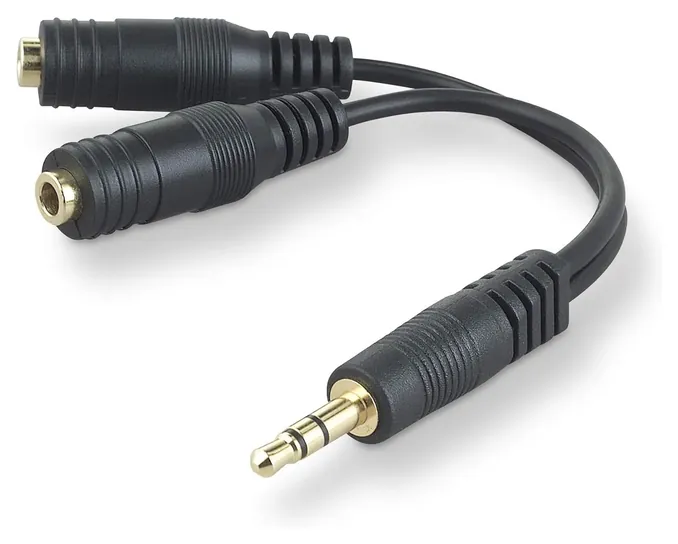
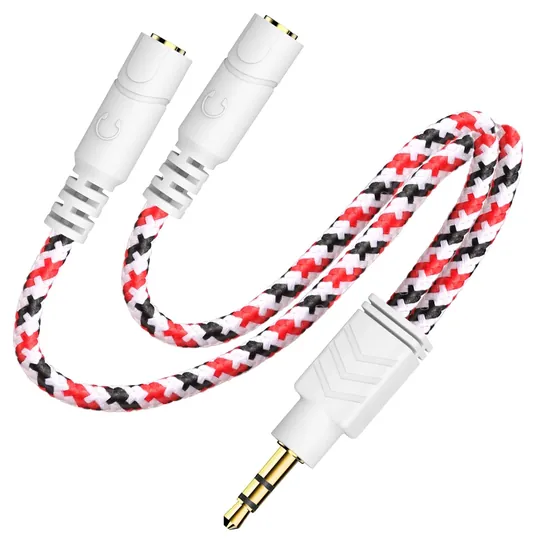
A plain headphone splitter takes one 3.5 mm plug and copies the same stereo signal to two or more jacks. The plugs on these are usually three-contact TRS, which carries left, right and ground. A headset plug adds a fourth contact for the microphone, called TRRS (Wikipedia: phone connector). Put a headset through a stereo-only splitter and the sound works but the mic goes dead, a complaint that comes up again and again on help forums (Tom's Guide forum).
If your real problem is a gaming headset with one plug and a desktop PC with separate pink and green jacks, you need the reverse adapter: one TRRS jack in, two plugs out. Check the wiring standard too. Most current headsets use the CTIA layout, while some older phones used OMTP, which swaps the mic and ground contacts, so the wrong pairing gives a muffled or silent mic (Fauxpourri).
A powered headphone amp is the third option. It costs more and needs a wall outlet, but each listener gets a volume knob, and it can drive studio headphones that a phone can't.
Phones And Tablets Without A Headphone Jack
A 3.5 mm splitter only works where there is a 3.5 mm jack. Most USB-C phones send digital audio out of the port, so a USB-C splitter has to carry its own digital-to-analog converter, the small chip that turns the data back into a signal headphones can play. The Cubilux USB-C Dual lists a 24-bit, 96 kHz converter, which is more than enough for streaming music and video.
Apple moved the iPhone to USB-C with the iPhone 15 (Apple Newsroom), so a Lightning splitter only suits an iPhone 14 or earlier and older Lightning iPads. Look for Apple's MFi certification on a Lightning adapter, since uncertified ones can stop working after an iOS update.
None of these help with Bluetooth earbuds. To share wireless audio, you need a Bluetooth transmitter that can pair with two headsets at once (Avantree), or a phone with a built-in audio-sharing feature.
Volume, Impedance And Safe Listening
A second pair of headphones changes the load your phone has to drive. Two sets wired side by side present a lower combined impedance, and a weak source can respond with less volume, some distortion or a thinner sound (SlashGear). With two ordinary earbuds on a phone, most people notice only a small drop. With five on a hub, or with high-impedance studio headphones, a powered amp is the better tool.
Matching headphones helps. If one listener has sensitive earbuds and the other has big over-ears, the earbuds will sound much louder at the same setting, and there's no way to balance them on a passive cable.
Keep the shared volume moderate. Sound at or below 70 dBA is unlikely to harm hearing, while long or repeated exposure at 85 dBA or more can cause hearing loss, and headphones at full volume can reach 94 to 110 dBA (NIDCD). Set the level for the person with the more sensitive pair.
How we researched this
We compared 17 splitters, headset adapters and amps and screened nine in depth. We read each maker's wiring and compatibility notes, warranty terms and published specs, a technical explainer on how extra headphones change the load on a source, owner discussions on help forums and patterns in owner feedback, and we checked every brand for recalls with the U.S. Consumer Product Safety Commission. We found no independent lab tests of headphone splitters. Updated October 26, 2026 by Ezvid Wiki Admin.
Sources (13)
- Syncwire: maker site
- Ugreen: maker site
- Cubilux: maker site
- Belkin: maker site
- DuKabel: maker site
- Wikipedia: Phone connector (audio)
- Fauxpourri: Splitters and adapters
- Tom's Guide forum: splitting an inline microphone
- SlashGear: Do headphone splitters hurt audio quality?
- Apple Newsroom: iPhone 15 and iPhone 15 Plus
- Avantree: What is a Bluetooth transmitter used for
- NIDCD: Noise-induced hearing loss
- U.S. CPSC recalls
Frequently asked questions
Does a headphone splitter lower sound quality?
A passive splitter doesn't change the signal much, but two pairs of headphones lower the load on your phone, so volume can drop a little. With five pairs or studio headphones, the drop is bigger, and a powered amp fixes it.
Will a headphone splitter work with a headset microphone?
Usually not. Most splitters are stereo only, so the mic goes silent. Use a splitter with a mic-capable jack, or a headset adapter that separates the mic and headphone plugs for a PC.
Can I use a splitter with Bluetooth earbuds?
No. These cables need wired headphones. For two Bluetooth headsets, use a transmitter that pairs with two at once, or a phone with its own audio-sharing feature.
How many headphones can I connect at once?
Two is the norm on a phone. A five-jack hub works for groups at moderate volume, and a powered amp handles four pairs at full strength, each with its own knob.
Can each person control their own volume?
Not on a passive splitter. Everyone shares one volume unless a headset has its own in-line control. A powered headphone amp gives each listener a separate knob.
What is the best headphone splitter for an iPhone?
For iPhone 15 and later, use a USB-C splitter with a built-in converter. For iPhone 14 and earlier, use an Apple-certified Lightning splitter.