The 10 Best High Temperature Paints
Updated by · How we research

Ten high temperature paints for exhausts, grills, wood stoves and brake calipers, compared on heat rating and cure. Rust-Oleum Automotive High Heat leads. When users buy our independently chosen editorial choices, we may earn commissions to help fund the Wiki.
The heat number on a can of paint can be misleading. Many makers print a peak the coating survives only in short bursts, while its steady rating can be half that. Exhaust headers run far hotter than a grill lid or a stove body, so match the rating to the part. This list covers sprays and brush-on coatings for cars, grills and stoves.
At a Glance


Editor's Notes
October 27, 2026, by Ezvid Wiki Admin:
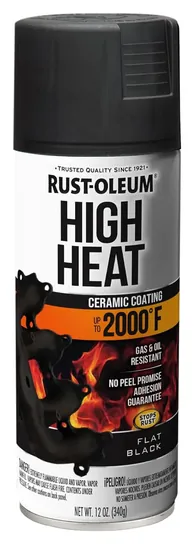
Rust-Oleum Automotive High Heat now leads this list. Its can is rated to 2,000 degrees in short bursts, it handles gas and oil, and it costs no more than an ordinary spray can, so it covers the exhaust and engine jobs most readers have in mind.
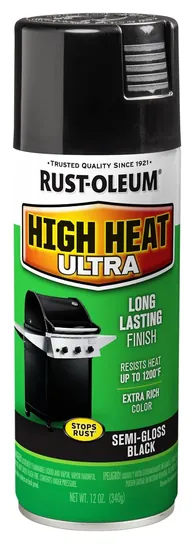
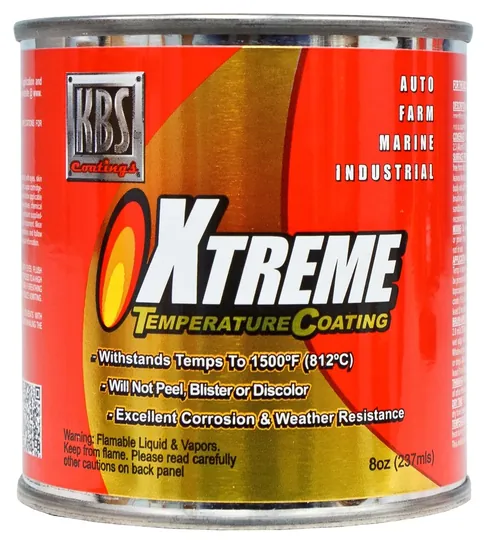
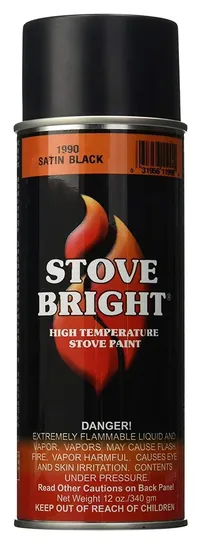
The old list still held up better than most. POR-15 High Temp stays, now as its spray can rather than the quart tin, KBS Coatings XTC stays in its smaller tin, and Stove Bright Satin Black replaces the metallic Stove Bright shade. Rust-Oleum High Heat Ultra and VHT Flameproof Coating are new. We dropped the Helix Racing 165-1020, which had too little track record to rank, and the Thermo-Tec Cool It, a wrap coating with no published heat rating.
The most useful thing we learned is that heat ratings aren't measured the same way. Krylon's own page splits its rating into a short-burst peak and a much lower steady figure, and Forrest Paint's guide explained why ordinary pigments and finishes give out near 1,200 degrees. We read each can's directions for prep and curing, checked car and stove forums for what fails, and searched recall records for every brand.
November 11, 2020:
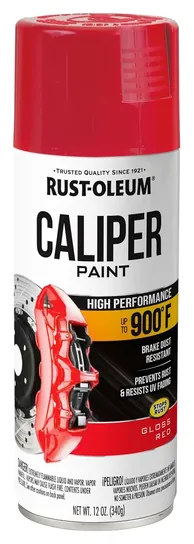
In this update, we added the Rust-Oleum 251591 to the list, which is a reliable, protective coating for a vehicle’s brake calipers, drums, rotors, and springs. It’s available in black or red, and you can adjust the spray angle, as needed. It resists dust and rust, and can handle temperatures up to 900 degrees Fahrenheit. It’s made in the United States by a leading name in rust protection and joins the quick-drying, satiny Rust-Oleum Enamel and the long-lasting matte Rust-Oleum Automotive on the list. We’re still partial to the POR-15 44000 Series, which stands up to harsh weather and salt, making it a good choice for outdoor grills. It’s also commonly used on fireplaces as well as engine manifolds. You can choose from among black, gray, or aluminum colors, and sizes that include 8 ounces, 1 quart, and 1 gallon. To make room from the new addition, we say goodbye for the Corr-Paint 3015, which is relatively pricey for its small quantity of just 1 pint.
If you’re into restoring hot rods, chances are you’re no stranger to KBS Xtreme, which is specially formulated to protect metal surfaces and can withstand temperatures of up to 1,500 degrees Fahrenheit. It’s available in eye-catching colors like Rocket Red, Flame Blue, Jet Black, Pure White, and more. As you might have guessed from its name, Stove Bright is designed for coating wood burners. It features attractive metal flakes and will hold up for the long haul. As stated in our last update, for safety’s sake, be sure to apply these paints in a well-ventilated area such as an open garage. Safety glasses or a face mask will protect your eyes and minimize the inhalation of fumes.
October 05, 2019:
High temperature paints are a simple, budget-friendly way to rejuvenate items that are often subjected to high temperatures, including engine systems, machinery, outdoor grills, chimney caps, and more. Here we provide you with a range of options that will help to prevent rusting, pitting, and other forms of damage.
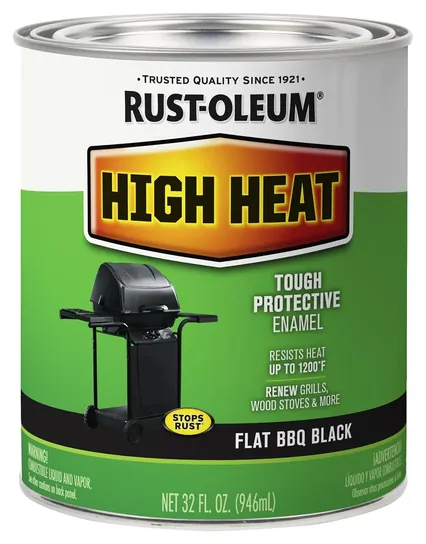
Coming on board in this update is Rust-Oleum Enamel High Heat, which comes from one of the best-known brands in protective coverings. This versatile selection works well on grills, wood-burning stoves, and other metal items and comes in a variety of sizes, including quarts, pints, gallons, and a convenient 12-ounce spray bottle. It features a rich, satin finish and can withstand temperatures of up to 1200 degrees Fahrenheit. It dries quickly and can be used either indoors or out.
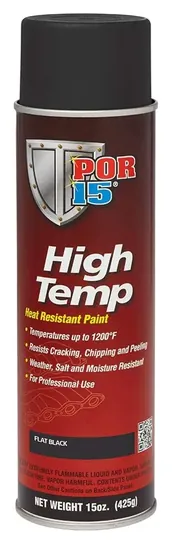
Remaining in the top spot is the POR-15 44000 Series, which can be used on manifolds, headers, exhausts, and stacks and resists cracking, chipping, and peeling like a champ. It’s resistant to salt and moisture, as well as mild industrial films.
Leaving the list today is the Cerakote C-Series, due to issues with availability.
For safety's sake, always paint in an open, well-ventilated area, and follow all safety guidelines carefully that are included with your product.
Special Honors
Cerakote High Temperature Coatings For headers and exhaust parts that need more than an aerosol can deliver, Cerakote makes ceramic coatings that trained applicators spray and oven cure. They aren't sold for home use from a can, so you'd send parts to a shop, but they're the step up when aerosol header paint keeps burning off. cerakote.com
Read The Heat Rating, Then Match It To The Part
Brake calipers call for a dedicated caliper paint, such as Rust-Oleum's 900-degree can.
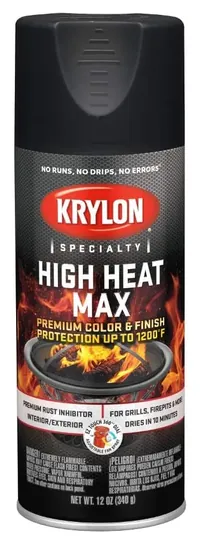
Every can of heat paint prints a big number on the front, but that number can mean two different things. Some makers give a peak that the coating survives in short bursts, while the heat it can take hour after hour is lower. Krylon is unusually clear about it: its High Heat line is rated for 1,200 degrees Fahrenheit intermittent and 600 degrees continuous (Krylon). KBS Coatings rates its XTC at 1,500 degrees continuous, which is why header builders use it.
Match that number to the part. Ordinary paints such as alkyds, acrylics and epoxies start to break down around 250 to 300 degrees, according to coatings maker Forrest Paint, which sorts heat coatings into medium (400 to 600 degrees), high (600 to 800) and extreme (800 to 1,200) tiers. The outside of a grill or a wood stove body sits comfortably inside a 1,200-degree rating. Brake calipers call for a dedicated caliper paint, such as Rust-Oleum's 900-degree can. Exhaust manifolds and headers are the hardest job, and that's where 1,500- and 2,000-degree coatings like KBS XTC, VHT Flameproof Coating and Rust-Oleum Automotive High Heat earn their place.
Color is part of the same trade. Forrest Paint notes that most pigments fade once metal passes about 800 degrees, which is why black and black metallics dominate the hottest ratings, and a gloss finish is hard to keep at the top of the range. If you want white or a bright color, expect a lower rating, or look to ceramic header coatings.
Spray, Brush-On Or Ceramic
Aerosol enamels are the quick choice. Rust-Oleum and Krylon sell 12-ounce cans for grills, fire pits and engines that dry to the touch in 10 to 30 minutes. Each can covers a small area, often 8 to 20 square feet, so a whole grill or stove can take several.
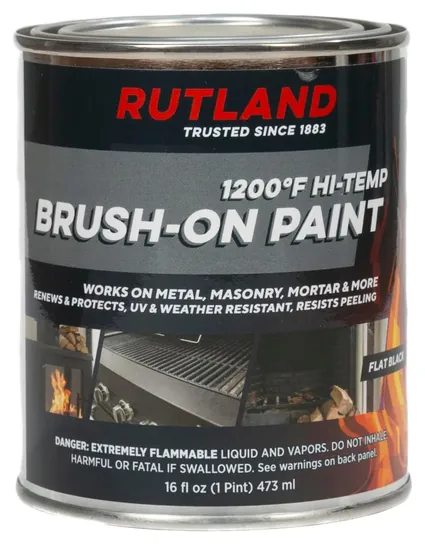
Brush-on paints lay down a thicker film and go much further. Rutland sells a 1,200-degree brush-on stove paint and a 1,400-degree premium version, and its label says it works on steel, cast iron, aluminum and brick without primer. Rust-Oleum's quart of High Heat Enamel brushes on as an oil-based finish and is the cheapest way to cover a barrel smoker or a large stove. KBS XTC can be brushed, rolled or sprayed from the tin.
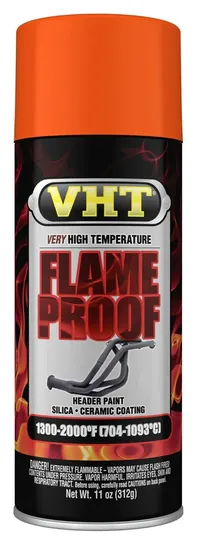
Silicone-ceramic header paints, like VHT Flameproof Coating, reach 2,000 degrees but need a staged heat cure to harden. Above about 1,200 degrees, Forrest Paint says only ceramic and refractory coatings hold up, and they're brittle and hard to touch up. Two-part ceramic coatings such as Cerakote's high-heat lines go further still, but they're sprayed and baked by trained shops, not from a can. Kimball Midwest sells shop-grade heat coatings with their own cure schedules, a reminder that every system has its own directions.
Prep, Curing And Safety
Prep decides whether any of these paints lasts. Owners on IH8MUD agree that strip-to-bare-metal prep matters more than the brand: remove rust and loose paint, degrease with a solvent such as acetone, and spray thin coats. A can rated for 2,000 degrees still peels off oily or rusty metal.
Cure it the way the maker says. VHT's header paint must be heat cured in stages, KBS XTC needs a bake at 350 degrees after an overnight dry, and POR-15 asks for a full day before the part runs hot. Stove paints cure on the first fires, and Rutland warns of smoke and odor while they do, so ventilate the room. Don't bake painted parts in a kitchen oven: one Garage Journal member fouled the oven door glass that way.
Spray outdoors or with strong airflow. Aerosol heat paints are extremely flammable, so keep them away from pilot lights and flames, and the EPA notes that paints release volatile organic compounds that can cause headaches and irritation indoors. None of these coatings is for grill grates, griddles or any surface that touches food; Krylon says so outright for its High Heat line. We found no recalls of these paints in CPSC records.
How we researched this
We compared 18 high-heat paints and coatings, read the can labels, directions and maker pages for the 10 finalists, weighed owner reports from car, grill and stove forums, and checked every brand against CPSC recall records.
Frequently asked questions
What is the best heat resistant paint?
For most jobs, Rust-Oleum Automotive High Heat: it's rated to 2,000 F in short bursts, resists gas and oil, and is cheap. For a wood stove, a stove paint such as Stove Bright or Rutland is the better fit; for headers held at steady high heat, KBS Coatings XTC.
Will high temperature paint work on an exhaust?
Yes, if the rating fits. Exhaust manifolds and headers need a coating rated well above 1,000 F, such as VHT Flameproof Coating, KBS Coatings XTC or Rust-Oleum Automotive High Heat. Grill paints rated 600 F for steady heat will burn off. Strip to bare metal and cure it as directed.
Can you paint a wood stove?
Yes. Use a stove paint rated to 1,200 F, applied to a cold, clean, rust-free stove. Expect smoke and an odor during the first few fires as it cures, so open windows.
Is Krylon or Rust-Oleum better for high heat?
They do the same job on grills and stoves, both rated to 1,200 F at peak. Krylon states a 600 F continuous rating; Rust-Oleum's automotive can goes to 2,000 F, so it's the pick for exhaust work. We found no head-to-head test.
Can you get high heat paint in white or other colors?
Yes, but colored heat paints usually carry lower ratings, because pigments fade above about 800 F. Krylon High Heat comes in white, aluminum and brown; VHT Flameproof Coating and KBS Coatings XTC offer colors at header temperatures.
Can I use high heat paint on a grill grate?
No. These paints are for the outside of grills, smokers and fire pits only. Krylon says its High Heat paints are not for cooking surfaces.