The 10 Best History of Mathematics Books
Updated by · How we research

Ten books on how mathematics grew, from broad surveys to single-problem stories, compared by depth and math level. A History of Mathematics leads. When users buy our independently chosen editorial choices, we may earn commissions to help fund the Wiki.
Books on the history of mathematics split into two kinds: broad surveys that run from Babylon to the modern era, and narratives that chase one problem, number or person. The surveys also range from almost no math to college calculus. This list is for curious adults, students and teachers, and most readers will want one of each kind.


Editor's Notes
October 27, 2026, by Ezvid Wiki Admin:
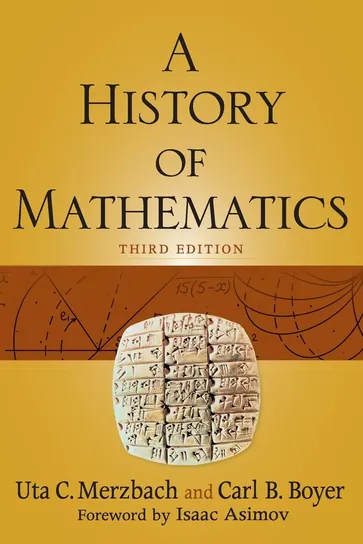
A History of Mathematics, the survey Carl Boyer started and Uta Merzbach revised, now leads. It covers more ground than anything else a general reader can afford, and it's the book reading lists and course syllabi keep naming. Journey Through Genius, Fermat's Enigma, Zero and Prime Obsession stay, Infinite Powers now points to the paperback, and The Math Book stays in its current hardcover.
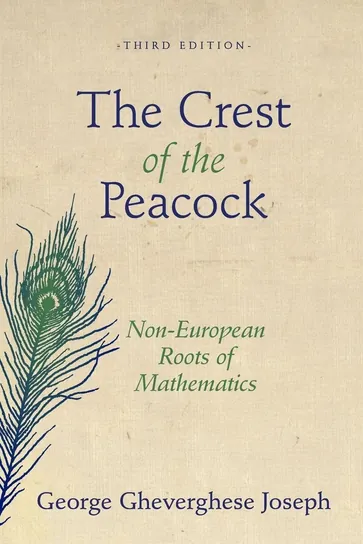
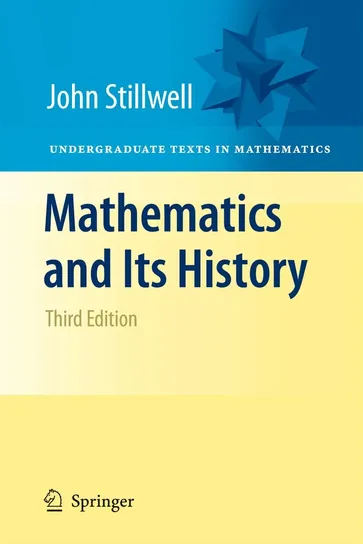
We added The Crest of the Peacock for the story outside Europe, A Concise History of Mathematics as a cheap, short survey, and Mathematics and Its History for readers who want exercises. Three books are gone. DK's Big Ideas Simply Explained volume and Mathematics for the Nonmathematician teach concepts more than history, and God Created the Integers is a giant anthology of original papers that's hard to find new.
For books, the evidence is the book itself and what scholars said about it, so we leaned on publishers' edition records, journal reviews, prize lists and long-running reader recommendations. We left out Men of Mathematics, a beloved classic, because historians have shown that many of its best stories are embellished.
March 25, 2020:
Math can be an intimidating subject, but that shouldn't stop the layperson from learning more about its history and the people who have worked to build our knowledge of the subject over the last few thousand years. Thankfully, many mathematicians not only realize this desire exists in non-mathematically minded people, but also happen to be gifted writers as well. That has allowed us to curate selections that are appropriate for everyone from high-level number crunchers to teenagers to history buffs and more. Many of the titles here were penned to instill a sense of awe and wonder at the beauty of math, as well as explain just how closely related it is to non-STEM subjects like art, politics, and philosophy.
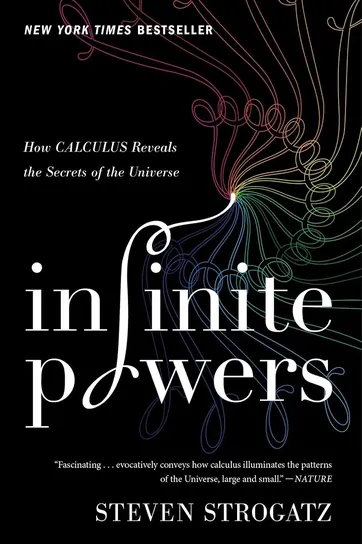
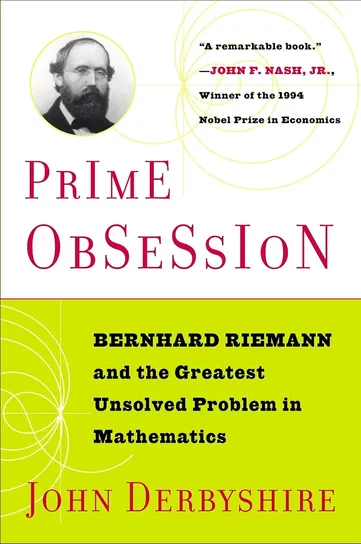
For example, Prime Obsession was written for "the intelligent and curious but non-mathematical reader". The author attempted to sidestep calculus completely, but upon realizing that was too ambitious, settled for alternating chapters between history and biography and math exposition. The result is a volume that is challenging without being too inaccessible. God Created the Integers and the newly-added Infinite Powers were also written at around this level. Infinite Powers has the added benefit of being a great resource for filling in the gaps of a typical calculus textbook. To make room for it, we sadly said goodbye to A Concise History, although we still think it a worthwhile reference to pick up alongside a more comprehensive choice.
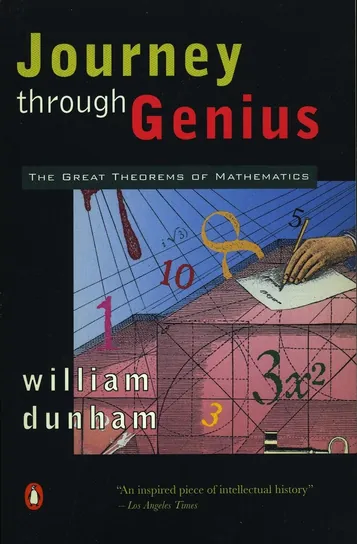
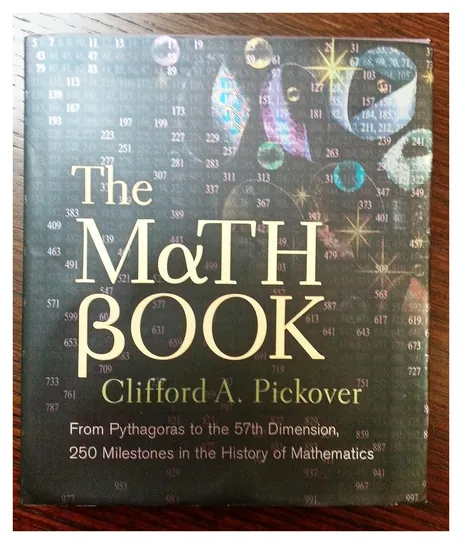
If you appreciate a coffee table-style book with plenty of visuals, then the similarly titled, yet very different, The Math Book and The Math Book: Big Ideas Simply Explained are ideal. Each pairs vibrant graphics, diagrams, and photos with authoritative text to provide coverage on complex ideas without overwhelming the reader. And for those looking for something extremely comprehensive, you can't go wrong with either A History of Mathematics or Journey Through Genius: The Great Theorems.
Special Honors
MacTutor History of Mathematics Archive Run by the University of St Andrews, MacTutor is a free website with biographies of more than 3,200 mathematicians and some 2,000 essays on topics and periods. It's the quickest way to check a name or a date while reading any of the books here. mathshistory.st-andrews.ac.uk
Dover Publications Dover keeps many classic math and math-history books in print as low-cost paperbacks, including Struik's A Concise History of Mathematics. Its own store is a good place to browse older titles before paying collector prices elsewhere. store.doverpublications.com
Surveys Or Stories: Start With One Of Each
Pair a survey with one of these and the survey's names start to feel like people.
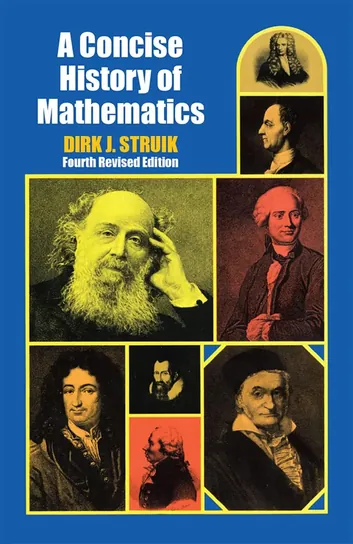
A survey gives you the whole map. Carl Boyer's A History of Mathematics first came out in 1968, and Uta Merzbach, a Smithsonian curator, revised it after his death, with the third edition in 2011. Dirk Struik's A Concise History of Mathematics is the short alternative: first published in 1948, revised four times and translated into 18 languages, and Dover still sells it at a low price. If you want more technical depth than Boyer, Victor Katz's A History of Mathematics is the other standard college text, though new copies cost several times as much.
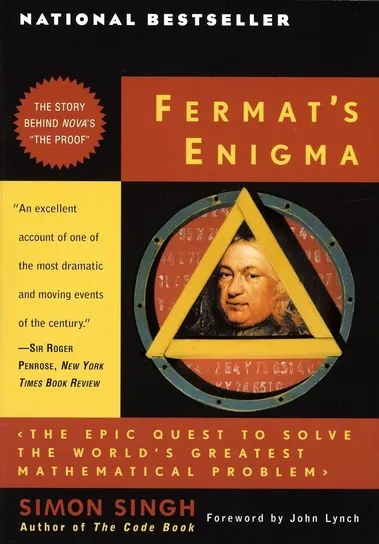
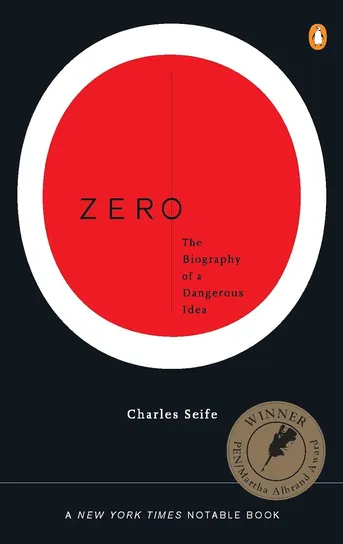
A story gives you a reason to care. Fermat's Enigma follows one problem from 1637 to Andrew Wiles's 1995 proof, and Zero follows one number. Pair a survey with one of these and the survey's names start to feel like people.
A newer option arrived in 2025: Yale's A Little History of Mathematics by Snezana Lawrence, a short tour from Egypt and Babylon to codebreakers that includes Japanese temple geometry and women such as Emmy Noether and Maryam Mirzakhani. It has had few reviews so far, so we're watching it rather than ranking it.
How Much Math Do You Need?
Less than you might fear, for most of these books. Fermat's Enigma, Zero, Infinite Powers and The Math Book explain ideas in words and pictures, with almost no equations. Boyer and Struik use some notation but can be read without working the problems.
William Dunham asks more. Journey Through Genius walks through each proof line by line, and high school algebra and geometry are enough if you go slowly. Prime Obsession alternates history chapters with math chapters, and reviewers noted that the math chapters vary in difficulty and get hard for readers without a background. Skipping them still leaves a good biography of Riemann.
John Stillwell's Mathematics and Its History sits in a series of undergraduate textbooks, and it reads like one. It expects calculus and some algebra, and it includes exercises. It's the right pick for a math major or a teacher, and the wrong one for a first look.
Beyond Europe, And Stories To Doubt
Older surveys tend to start the story in Greece and move straight to Europe. The Crest of the Peacock was written partly against that view, with long sections on Egypt, Mesopotamia, China, India and the Islamic world. Some historians have questioned how far its claims about ideas traveling to Europe can be proven, so read it as an argument, not the last word. The Math Book has been faulted for leaving Chinese mathematics out.
Be careful with the most famous popular history of all. E. T. Bell's Men of Mathematics inspired generations of mathematicians, but historians have shown that many of its anecdotes, including its romantic account of Galois's last night, are embellished or invented. Enjoy it as storytelling and check the facts elsewhere.
Prizes are a decent signal for popular titles. The Mathematical Association of America's Euler Book Prize went to Prime Obsession in its first year, and Zero won a PEN award for a first nonfiction book.
How we researched this
We compared 18 books and editions on the history of mathematics, checked publishers' edition details and page counts for the 10 picks, read published reviews and prize records for each, and used reader averages only as a cross-check. Updated October 27, 2026 by Ezvid Wiki Admin.
Sources (16)
- Wikipedia: Carl Benjamin Boyer
- Wikipedia: William Dunham (mathematician)
- Wikipedia: Steven Strogatz
- Wikipedia: Fermat's Last Theorem (book)
- Wikipedia: Zero: The Biography of a Dangerous Idea
- Wikipedia: Prime Obsession
- Wikipedia: Euler Book Prize
- Wikipedia: The Crest of the Peacock
- Wikipedia: John Stillwell
- Wikipedia: Dirk Jan Struik
- Dover Publications: A Concise History of Mathematics
- Wikipedia: The Math Book
- Wikipedia: Eric Temple Bell
- Wikipedia: Victor J. Katz
- Yale University Press: A Little History of Mathematics
- MacTutor History of Mathematics Archive
Frequently asked questions
What is the best history of mathematics book for a beginner?
For a full overview, A History of Mathematics by Boyer and Merzbach needs little math. For an easy story, Fermat's Enigma or Zero needs none.
Is Fermat's Enigma the same book as Fermat's Last Theorem?
Yes. Simon Singh's book came out in Britain in 1997 as Fermat's Last Theorem and in the U.S. in 1998 as Fermat's Enigma.
Which edition of Boyer's A History of Mathematics should I buy?
The third edition from 2011, revised by Uta Merzbach. Older editions are cheap used, but they stop earlier and lack her updates.
Is Men of Mathematics accurate?
Not fully. E. T. Bell's book is lively, but historians have shown that many of its stories, including the one about Galois, are embellished.
How much math do I need for Journey Through Genius?
High school algebra and geometry. William Dunham walks through each proof, so a pencil and patience matter more than training.