The 6 Best Hotwire Anemometers
Updated by · How we research

Six hot-wire anemometers for duct airflow, compared by probe reach, accuracy spec and display. The Testo 405i leads for its folding probe and phone app. When users buy our independently chosen editorial recommendations, we may earn commissions to help fund the Wiki.
A hot-wire anemometer reads air speed from how fast moving air cools a heated bead at the tip of a thin probe. That makes it the tool for slow air inside ducts and at registers, where vane meters stall and pitot tubes lose accuracy. HVAC technicians, balancers and careful homeowners use one to find weak rooms and check fans.



Editor's Notes
November 1, 2026, by Ezvid Wiki Admin:
The Testo 405i now leads this list. It costs a fraction of a pro meter, its probe folds to get into tight ducts, and its phone app turns readings into airflow and a report. The Fieldpiece STA2 stays the choice for technicians who traverse big trunk lines.
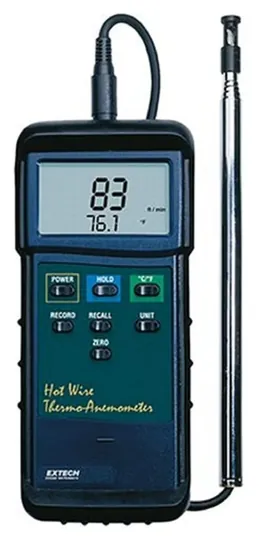
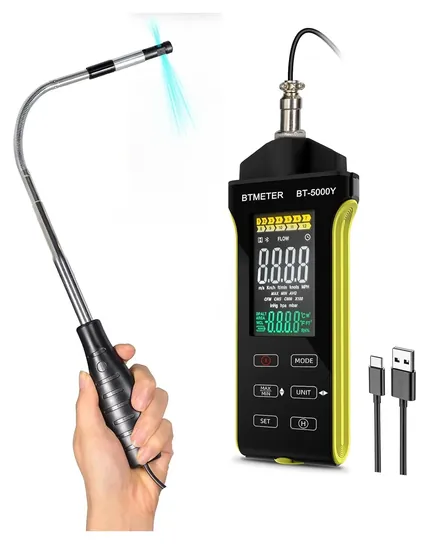
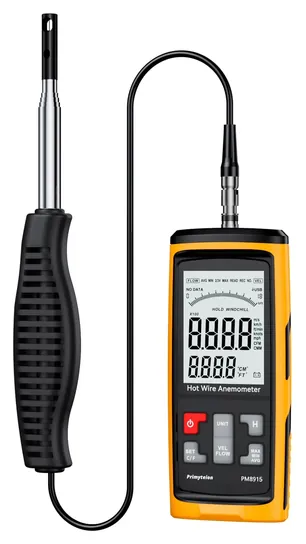
Several older picks are gone. Both TPI meters, the TPI 575C1 and TPI 565C1, have left the market, the Dwyer 471B has no current source, and the wired Testo 405 has given way to the 405i. The Amprobe TMA-21HW costs a lot and draws too many complaints, and the PerfectPrime WD9829 link now leads to a small fan-type meter. We added the BTMETER BT-5000Y and the Primyteion PM8915 for smaller budgets.
No lab has compared these meters side by side, so we worked from makers' accuracy ratings and manuals, an HVAC trade magazine's review of the STA2, and one technician's check of a budget meter against a pro one. Plenty of cheap meters sold as CFM anemometers use a spinning fan, not a heated sensor, and we left those out.
April 15, 2019:
A hotwire anemometer is a useful tool when you're carrying out surveys of HVAC systems, as well as for environmental monitoring and other projects involving the measurement of air flow velocity. The telescoping probe is convenient for inserting into ductwork for easy, quick readings.
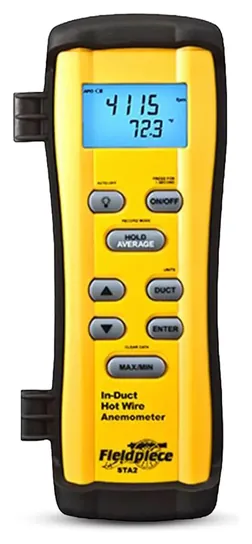
Look to the Fieldpiece STA2 as a durable choice thoughtfully designed to be hung magnetically, so you don’t need to hold the meter while you’re busy testing. The flattened edges of the probe make it easy to hold it the correct way, for accurate readings.
If you prefer to see your results on your smartphone via a downloadable app, consider the Testo 405i, which consists of just a slim handle and the probe. The rest featured here all come with built-in LCD screens, but some provide a handy port for transferring data to your PC. These include the Extech 407123, TPI 565C1, and the Amprobe TMA-21HW. No matter which you ultimately choose, all of the models here are designed to provide accurate, quick results.
Special Honors
TSI VelociCalc TSI's VelociCalc thermal anemometers are a common choice for test-and-balance contractors and lab technicians who need a calibrated, certified instrument. Models add humidity, pressure and data logging, and TSI runs its own calibration service. They sell through instrument distributors at professional prices, well beyond what a homeowner or occasional user needs. tsi.com
Hot Wire, Vane Or Pitot: Match The Tool To The Air Speed
Slow air barely cools it, so it reads gentle flows well, which is what you find in supply ducts, at return grilles and around fume hoods.
A hot-wire meter heats a tiny bead and measures how much power it takes to keep it warm as air flows past. Slow air barely cools it, so it reads gentle flows well, which is what you find in supply ducts, at return grilles and around fume hoods. A vane meter counts the turns of a small fan. It handles faster and dirtier air and doesn't mind dust, but its blades need a bit of push to spin and the head is too big for a test hole in a duct (Honeytek).
Pitot tubes are the third option for ducts, and they suit fast air. Below about 600 feet per minute their pressure signal gets too small to trust, and the ASHRAE 111 traverse standard points technicians to thermal anemometers there instead (HVAC Today). Technicians on HVAC-Talk tend to carry both kinds: hot wire inside the duct, a vane at a big grille.
Watch the labels. Many low-cost meters sold as CFM anemometers have a spinning vane head, not a heated sensor. If the photos show a fan, it isn't a hot-wire meter.
From Air Speed To CFM: Probe Reach And The Traverse
Airflow in cubic feet per minute is air speed times the duct's open area. Every meter on this list will do the multiplication once you enter the duct's width and height or diameter (ServiceTitan). The catch is that air moves faster in the middle of a duct than near the walls, so one reading at the center overstates the flow.
The fix is a traverse: drill a small hole, take readings at evenly spaced points across the duct, and average them (HVAC Today). That's where probe length matters. The Testo 405i shaft stretches to about 16 inches, fine for branch runs and most home ducts. The Fieldpiece STA2 probe reaches 38 inches and is marked along its length, so you can space points without a tape measure, and the meter can average a timed sweep for you.
For a quick check at a register, short probes are fine. For a trunk line in a commercial building, get the long probe.
Reading Accuracy Specs, Care And Calibration
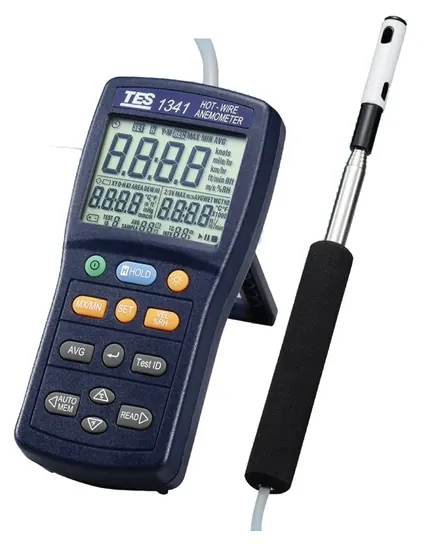
Accuracy is usually written as a percentage of the reading plus a fixed amount. The Extech 407123 manual gives 3 percent of reading plus one digit, or 1 percent of full scale, whichever is larger; TES rates the 1340 at 3 percent of reading plus 1 percent of full scale. Testo adds a fixed 0.1 meter per second to 5 percent of reading at low speed. That fixed part matters most in slow air, so compare specs at the speeds you expect.
The heated bead is fragile and sensitive to dust and oil. Keep the protective sleeve over it between readings, don't touch it, and clean it only as the maker describes. Readings also drift with air temperature and density, so give the probe a moment to settle in very hot or cold air, and keep it out of flue gas.
For diagnosing a weak room, any meter here will do. Test-and-balance contracts often require an instrument with a current calibration certificate, which means a pro meter and a yearly trip to a lab.
How we researched this
We compared 16 anemometers, read makers' specifications, datasheets and manuals for the six finalists, used an HVAC trade magazine's review and one technician's side-by-side check of a budget meter against a pro one, looked at long-term owner feedback, and checked every brand for recalls with the U.S. Consumer Product Safety Commission. No independent lab has tested these meters against each other.
Sources (11)
- Cole-Parmer: Testo 405i data sheet
- HVAC Today: Fieldpiece STA2 review
- TES: TES-1340 hot-wire anemometer
- Extech: 407123 product page
- Extech 407123 user manual (Fondriest)
- manuals.plus: BTMETER BT-5000Y manual
- Honeytek: vane vs thermal anemometer
- HVAC Today: duct traverse tools
- ServiceTitan: HVAC CFM measurement tools
- HVAC-Talk: hot wire vs mini vane anemometers
- U.S. Consumer Product Safety Commission recalls
Frequently asked questions
How accurate is a hot-wire anemometer?
Most handheld models are rated within about 3 to 5 percent of the reading, plus a small fixed amount. That's enough to find a weak supply run. Formal air balancing calls for a calibrated pro instrument or a capture hood.
What's the difference between a hot-wire and a vane anemometer?
A hot-wire meter senses how fast air cools a heated bead, so it reads slow air and fits through a small hole in a duct. A vane meter counts the turns of a small fan; it suits faster or dusty air and large grilles.
How do I measure CFM in a duct?
Enter the duct's size in the meter, take readings at evenly spaced points across the duct through a small test hole, and average them. One reading at the center usually overstates the flow.
Can I use a hot-wire anemometer to measure wind outdoors?
It will read moving air outdoors, but the sensor is fragile and dust and rain can foul it. For wind, a vane or cup anemometer is the better tool.
Does a hot-wire anemometer need calibration?
For home diagnostics, no. Contracts for test-and-balance work often require an instrument with a current calibration certificate, usually renewed once a year.