The 9 Best Insulation Knives
Updated by · How we research

Nine knives for fiberglass batts, mineral wool, foam board and duct wrap, compared by blade, edge and grip. The Morakniv Craftsmen 7350 is our first choice. When users buy our independently chosen editorial selections, we may earn commissions to help fund the Wiki.
Rockwool, which makes stone wool batts, tells installers to cut its insulation with a serrated knife, because a utility blade dulls fast and tears the fibers. A long toothed knife works the same way on fiberglass and foam board. This page is for homeowners tackling one attic and for crews who cut batts, board or duct wrap every day.



Editor's Notes
October 27, 2026, by Ezvid Wiki Editors:
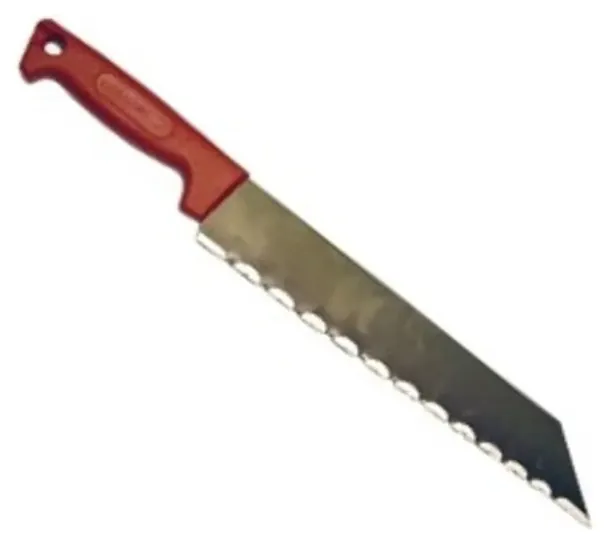
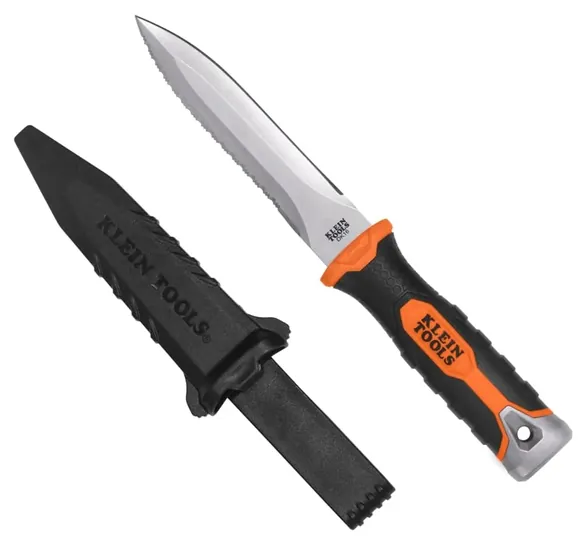
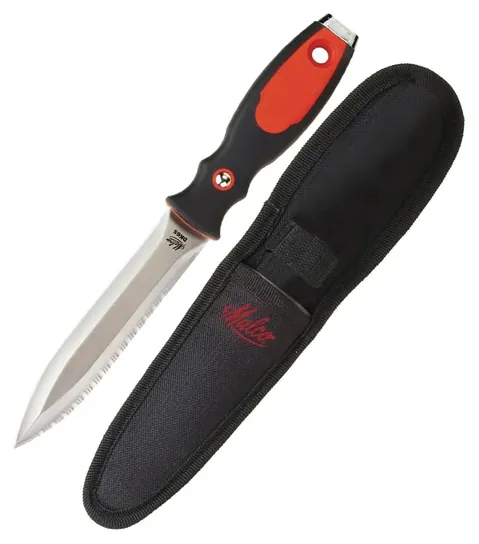
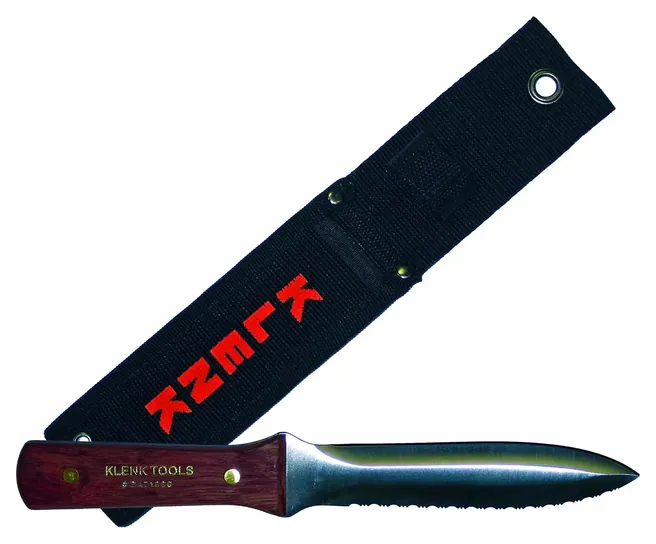
Our new lead pick is the Morakniv Craftsmen 7350. Its long serrated blade is the kind of knife Rockwool recommends for stone wool, and it still carries a lifetime warranty. Six of the nine knives from 2021 are unavailable or unpriced now. The CenterFire CK50-1110, Fuller Tool 320-0100, Stanley FMHT10327-1, Milwaukee 48-22-1920 and Slice Industrial are out, and Klein retired the Klein Tools DK06 in favor of the Klein Tools DK16. The Malco DK6S and Klenk DA71000 stay for duct work.
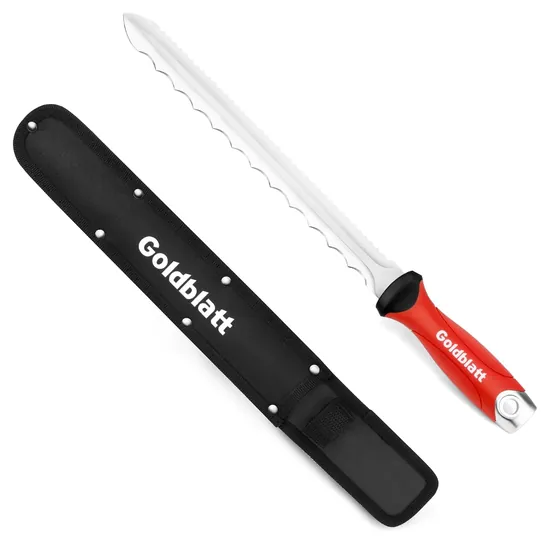
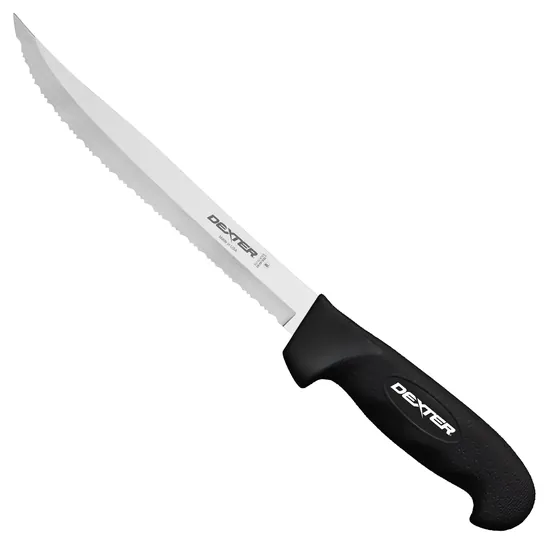
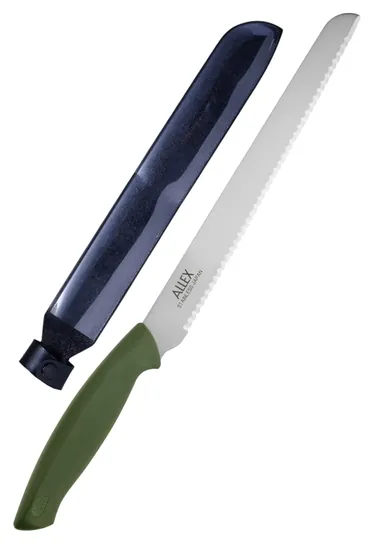
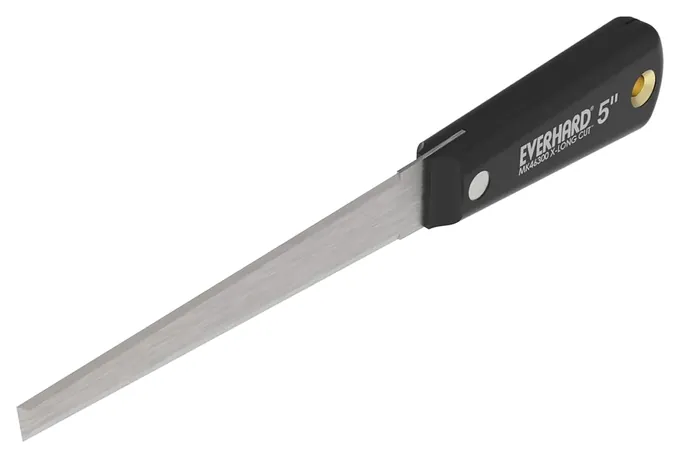
New picks fill gaps the old list left open. The Goldblatt G08232A is a long two-toothed blade at a fair price, the Dexter-Russell 24294B is made in the U.S., the ALLEX 34103 is light, the Red Devil 4609 has a plain edge you can sharpen, and the Everhard MK46300 returns for roofers cutting foam board.
Nobody appears to have lab-tested insulation knives, so we leaned on the insulation makers' own cutting advice, the Insulation Institute's handling guidance for fiberglass and mineral wool, each knife maker's blade and warranty details, patterns in owner feedback, and federal recall records, which list no recalls for any of these knives.
Earlier notes
March 11, 2021, by Will Rhoda:
We ended up retaining most of our previous picks for this list, but decided to do away with the Hultafors FGK, Vintool Insulation Knife and Everhard Long Cut, due to availability issues. We also added a couple new items to our list.
Our first fresh inclusion, the Stanley FMHT10327-1, sports a notably long 14-inch blade that, on this list, is only rivaled by the comparable length of the Morakniv Craftsmen. It’s a reasonably priced model from a trusted brand, but we can’t help but wondering if it’ll be a bit on the long side for some of our audience members — an opinion that will likely hinge on what type of material they’re cutting.
Our second new choice was the Milwaukee 48-22-1920, which, at 11 inches, is about half the length of our pick from Stanley (proportionally, its 5-1/2-inch blade is even shorter). This might make it less suitable for taking on thick materials, but it also makes it a little more practical to wear regularly. For the right person, this model might easily double as an everyday-carry utility knife, and many users report appreciating how well its plastic sheath holds it in place. Both of our new choices this time around are backed by limited lifetime warranties.
We put some serious thought into including some hot foam cutters on this list, as they would superficially appear to present a great solution for users who hate the massive mess generated when cutting foam insulation by knife, but it seemed questionable whether any of the models we researched were really built for regular use in construction. Some, for example, recommended a 15-second cool down period after every 15 seconds of use, which hardly presents a practical option for continuous operation. If, however, you think that it’s something you still might be interested in, then you might find something on our list of hot wire foam cutters.
April 16, 2019, by Gabrielle Taylor:
We included knives in a variety of sizes and styles to suit different tasks. Double-sided blades offer the versatility to work with multiple types of insulation. The Klenk Dual Duct, Malco Serrated, and Klein Tools Stainless Steel all have a serrated side and a smooth side, and the latter also has a metal cap on the end of its handle that can double as a hammer. If you need a longer blade, the 18-inch Hultafors FGK and 14-inch Morakniv Craftsmen are both good options, and the Fuller Tool Double Sided is 11 inches long with two different serrated edges. Designed for ISO board insulation, the Everhard Long Cut is sharpened on all sides, and the chisel tip is useful for opening plastic packaging, but it does not have a nonslip grip and can be rather dangerous when using a lot of pressure. The Slice Industrial has a replaceable ceramic blade that's great for foam, fiberglass batts, and other soft materials, but it is more brittle than metal and may break if dropped or used on tougher materials.
Special Honors
Insulation Tools Insulation Tools supplies hand tools to mechanical and industrial insulators: knives and sheaths, saws, sharpening devices, banders, snips and seamers. It is a useful stop for a crew that needs pipe and duct insulation gear that general hardware stores don't carry. insulationtools.com
Slice Slice sells insulation knives with zirconium oxide ceramic blades that it says are safe to touch and last up to 11 times longer than steel, with rounded or pointed replaceable blades. It suits shops that put blade safety first; the claims are the maker's own. sliceproducts.com
Match The Blade To The Insulation
The Morakniv Craftsmen 7350 has a 13.8-inch blade and the Goldblatt G08232A an 11-inch one, while duct knives stop near 5.5 inches.
Fiberglass batts, stone wool and foam board each cut best with a different edge. Rockwool, a major stone wool maker, says a serrated knife is always the best way to cut its batts and boards, and it warns that utility knives dull quickly and end up tearing the material; it adds that a bread knife works well (Rockwool FAQ). Rockwool also notes that its batts average about three times the density of fiberglass, so the teeth do the work while you saw with long strokes.
For batts, pick a blade at least as long as the insulation is thick, plus a few inches, so you can finish the cut in one pass. A batt for a 2x6 wall is about 5.5 inches thick, and attic batts run much thicker. The Morakniv Craftsmen 7350 has a 13.8-inch blade and the Goldblatt G08232A an 11-inch one, while duct knives stop near 5.5 inches.
Rigid foam board and roof insulation board are different. A plain or finely toothed edge leaves a cleaner line, and a stiff, short blade such as the Everhard MK46300 is easier to steer along a straightedge. Dexter-Russell sells its scalloped and Tiger Edge insulation knives for fiberglass, foam and mineral wool in several lengths (Dexter-Russell).
Duct Knives Or Long Insulation Knives
A duct knife is short, double-edged and pointed, with one smooth edge and one serrated edge. HVAC installers use the smooth edge to slit foil facing and duct wrap, the point to pierce flex duct, and the teeth to saw through fiberglass duct board. The Klein Tools DK16, Malco DK6S and Klenk DA71000 all follow this pattern and come with a sheath for belt carry, which makes them handy as everyday knives on a jobsite.
A long insulation knife does one job: it cuts batts and boards cleanly to width. It is too long to wear on a belt, so most people keep it in a case or toolbox. Dexter-Russell sells a separate scabbard that fits blades up to 9 inches (Dexter-Russell), while the ALLEX 34103 and Goldblatt G08232A include their own covers.
If blade safety matters more than speed, ceramic safety cutters are another option. Slice makes insulation knives with zirconium oxide blades that it says are safe to touch and last much longer than steel (Slice). Those claims are the maker's, and replacement blades cost more than a cheap steel knife.
Cutting Fiberglass And Mineral Wool Safely
The fibers, not the knife, are what bother most people. The Insulation Institute, the trade group for fiberglass and mineral wool makers, recommends loose-fitting, long-sleeved clothing, gloves and a head cover, eye protection when appropriate, and respiratory protection where the work stirs up fibers (Insulation Institute). It also advises against taping sleeves at the wrists and against rubbing or scratching fibers off your skin.
Cut on a scrap of plywood or a sheet of rigid foam, not on the subfloor or your knee. Compress a batt with a straight board, then draw the knife along its edge with long strokes and keep your free hand on the board, not in front of the blade. Sheath a long knife whenever you carry it, and store it with the teeth covered.
Serrated blades are hard to sharpen at home, so plan on replacing a cheap one when it starts to tear rather than cut. A plain edge like the one on the Red Devil 4609 can be touched up on a stone, and a smooth edge on a duct knife can be honed the same way.
How we researched this
We compared 20 insulation and duct knives and screened nine in depth. We read the makers' blade, handle and warranty details, Rockwool's cutting advice for stone wool and the Insulation Institute's handling guidance for fiberglass and mineral wool, and analyzed patterns in owner feedback. We checked every brand against the U.S. Consumer Product Safety Commission's recall records and found no knife recalls.
Frequently asked questions
Can I cut insulation with a utility knife?
For a few cuts in fiberglass or foam board, yes, with a straightedge to guide it. For stone wool, Rockwool advises against it: a utility blade dulls quickly and tears the batt. A long serrated knife cuts batts faster and cleaner.
What is the best knife for cutting Rockwool or Thermafiber?
A long, stiff serrated blade. Mineral wool is dense, so a blade longer than the batt is thick lets you saw through in one pass. Rockwool itself says a serrated knife, even a bread knife, works best.
How long should an insulation knife be?
At least as long as the thickest batt you cut, plus a few inches. Wall batts are about 3.5 to 5.5 inches thick, and attic batts can be twice that, which is why the longest knives run 11 to 14 inches.
Can you sharpen a serrated insulation knife?
Not easily. Each tooth needs a tapered rod, and most people replace a cheap serrated knife when it starts to tear. A plain edge, or the smooth side of a duct knife, sharpens on an ordinary stone.
Is an insulation knife the same as an insulated knife?
No. An insulation knife cuts insulation. An insulated knife has a handle rated to protect electricians from live voltage, usually to the 1,000-volt VDE standard. None of the knives on this page is rated for electrical work.
How do I keep fiberglass from itching while I cut it?
Wear loose, long-sleeved clothes, gloves, eye protection and a dust mask, and don't tape your sleeves shut. If fibers get on your skin, rinse them off rather than rubbing, as the Insulation Institute advises.