The 6 Best Isolation Transformers
Updated by · How we research

Six bench, shielded, heavy-duty and marine isolation transformers compared on rating, outlets and grounding. The PHC ISO-500 leads for its floating output. When users buy our independently chosen editorial choices, we may earn commissions to help fund the Wiki.
An isolation transformer cuts the direct link between the wall outlet and your gear, so touching one live wire on the output side no longer sends current through you to ground. It does not make mains wiring safe: touching both output wires at once still shocks you. These picks suit repair benches, sensitive audio and lab gear, and boats.


Editor's Notes
October 23, 2026, by Ezvid Wiki Editors:
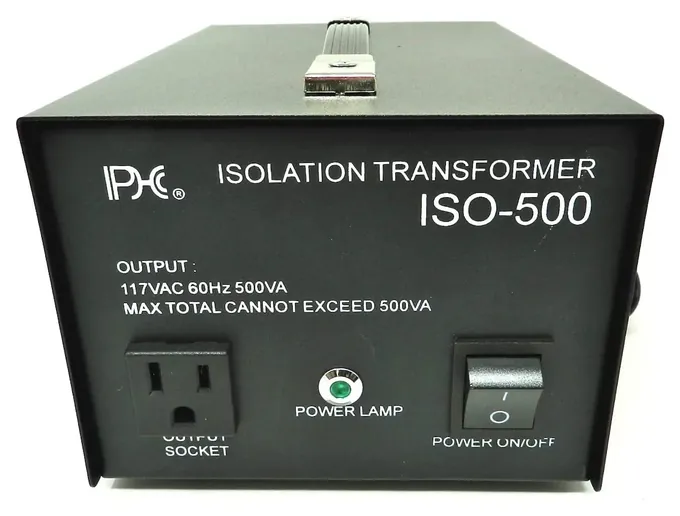
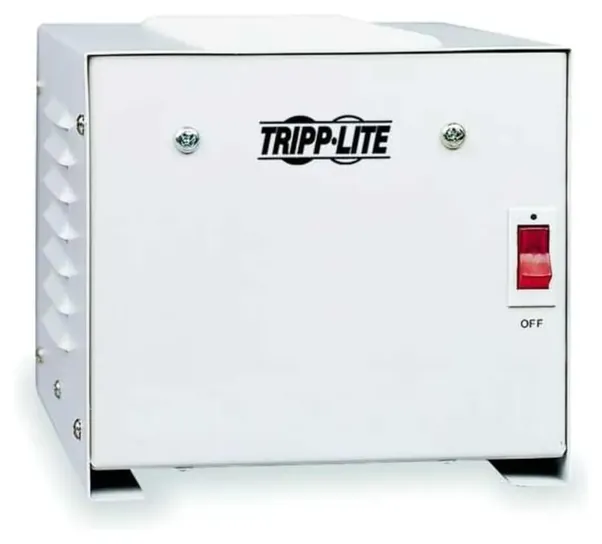
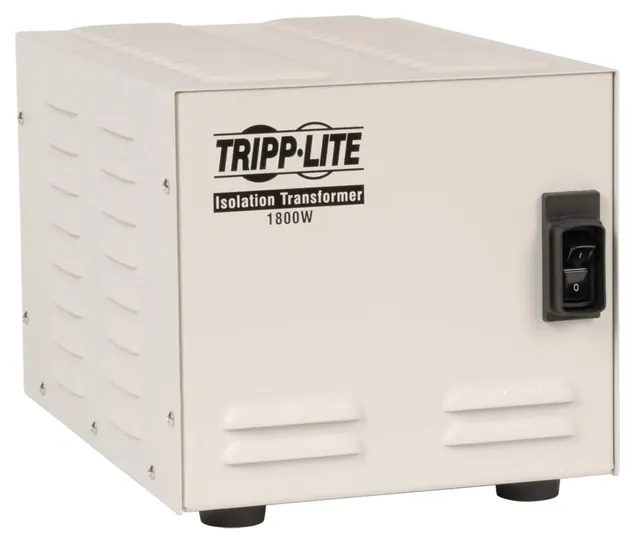
The PHC ISO-500 moves to the top because its maker spells out what matters on a repair bench: a floating output with no ground bond from input to output, a fast-blow fuse and a steel case. The Jameco Valuepro GRP-1200 stays for benches that need isolated and ordinary outlets side by side, and the Tripp Lite IS1800HG stays for anyone powering a whole workstation.
Several old picks had simply disappeared. No seller offers the PHC ISO-1000, the Umi AV250 or the Tripp Lite Omni 1000 anymore, and the Omni 1000 was a battery backup rather than a plain transformer anyway. The Tripp Lite IS1000HG and Tripp Lite IS500HG had no current offer either, and the old Tripp Lite IS250 gives way to its current version, the Tripp Lite IS250HG. PHC still sells the ISO-1000 from its own store, so it appears below as a special honor.
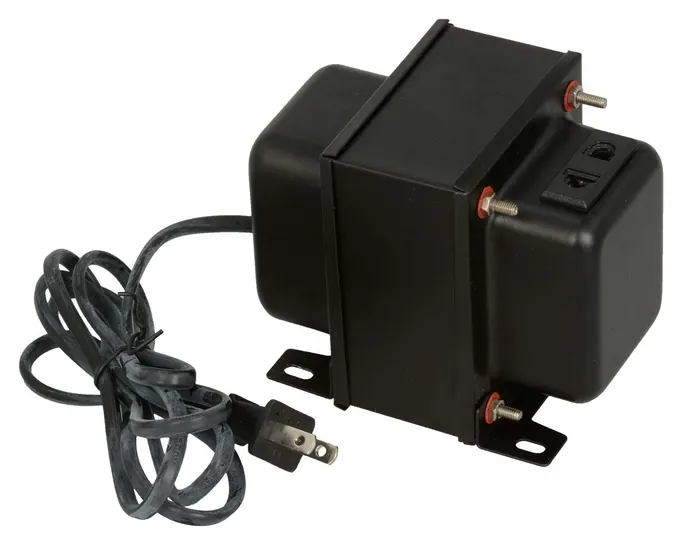
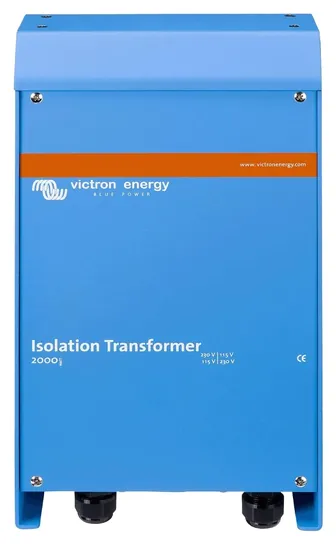
New are the Jameco Valuepro ITR300, a low-cost plug-in unit, and the Victron Energy Isolation Transformer 2000W, which solves a different problem: corrosion on boats plugged into shore power.
This category runs on paperwork, not reviews. We leaned on PHC's spec pages, Victron's datasheet, Tripp Lite's published ratings and a long repair-forum discussion of what isolation does and doesn't protect against. Nobody we could find has bench-tested these models side by side.
Earlier notes
February 8, 2021, by Will Rhoda:
It was a fairly straightforward round of updates – as we determined that our existing rankings, in their entirety, were still worth our users’ consideration – but we did find manage to dig up a couple additional options that we thought were worth including.
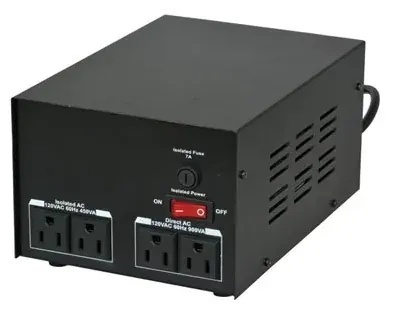
Our first new pick, the Jameco Valuepro GRP-1200, is a basic model that we selected based primarily on its budget-friendly price. In addition to offering two isolated outlets for your protected equipment, it also has a pair of standard, 120-volt outlets that you can use for less-sensitive gear, as long as you’re ok with hooking up to the same circuit as your protected loads.
Our second new addition, the Umi AV250, caught our eye with its contemporary aesthetic, which will likely make it a shoo-in for users who’re sensitive about the styling in their recording studio. Just note that, despite its two-outlet configuration, this model’s maximum power rating tops out at 250 watts, which significantly limits the equipment you can connect to it.
September 6, 2019, by Daniel Imperiale:
When seeking out an isolation transformer, its intended use is paramount. Hobbyists are going to have much simpler needs than experts in medical fields or engineers in a recording studio. Interestingly, the vast majority of isolation transformers currently on the market don't offer true circuit isolation, in that so many have three-prong outlets whose grounds — if you trace the circuit back to the building's breaker or the telephone pole outside — actually connect to the neutral line. This can create a potentially hazardous situation for the unsuspecting hobbyist, as he or she could easily hook up a grounding clip to an otherwise safe component and either experience the unpleasant effects of an electrical shock or cause significant damage to their equipment.
One of the reasons that there are so many Tripp Lite models on our list is that they're relatively easy to tinker with, so savvy customers can actually remove this grounding with relative ease to create true isolation for their workbenches. A simple shortcut to this would be to employ a three-to-two prong adapter, which is included with one or two of the offerings listed. Of course, this kind of thing is only really necessary if you're after that highest degree of isolation. Most users are happy with the noise and surge suppression that many of these models offer, whether it's for use in medical fields, musical spaces, or something else. And we took that general use into account when selecting things like the Tripp Lite model at number three, which offers an admittedly short period of battery backup, but that gives you enough to make sure you can save valuable projects and even back them up onto external hard drives before the power goes completely out or a generator can kick on.
Special Honors
PHC ISO-1000 PHC's 1,000 VA bench model is gone from the big marketplace but still sold from the maker's store. Like the ISO-500, it has a floating output with no ground bond and a fast-blow fuse, with twice the capacity for larger amplifiers and receivers. phcenterprise.com
What Isolation Protects You From, And What It Doesn't
A variac, or variable autotransformer, has one winding, so its output still shares the wall's neutral.
An isolation transformer has two separate windings with no wire between them, so its output isn't tied to the building's ground (Wikipedia: Isolation transformer). On a repair bench that matters for old radios, tube amps and some TVs whose metal chassis can sit at mains voltage. Touch that chassis while you're grounded and current flows through you. Run the set from an isolated output and that path is gone, because the output has nothing to return to.
It is not a force field. Touch both output wires at once and you are part of the circuit, just as before. Clip a grounded oscilloscope lead to one side of the output and you've rebuilt the ground path, so a second point on the circuit can be live to earth again. Repair technicians on the EEVblog forum also point out a less obvious catch: a ground-fault outlet or breaker upstream can't see a fault on the isolated side, so it won't trip for you there. Treat the isolated output as live and keep one hand away from the work.
Two look-alikes aren't isolation transformers. A variac, or variable autotransformer, has one winding, so its output still shares the wall's neutral. Most step-up and step-down voltage converters are the same unless the maker says the windings are separate. A battery backup with an isolation feature, like the discontinued Tripp Lite Omni series, is a different machine with its own trade-offs.
Reading The Rating: Volt-Amps, Watts And Start-Up Surges
The rating on an isolation transformer is how much it can deliver without overheating. Bench units list volt-amps (VA), and for most electronics you can treat VA and watts as close enough. The picks here run from 250 watts on the Tripp Lite IS250HG and 300 VA on the Jameco Valuepro ITR300 to 1,800 watts on the Tripp Lite IS1800HG. PHC rates the ISO-500 at 500 VA behind a 5-amp fast-blow fuse (PHC ISO-500 specifications).
Add up what you'll run from the isolated side and leave headroom. A table radio or a small guitar amp draws well under 100 watts, so a 300 VA unit is plenty. A tube receiver, a large amplifier or a flat-screen TV can need 300 to 600 watts, and many switch-mode power supplies pull a brief surge when switched on. If you repair larger gear, a 1,000 VA unit such as PHC's ISO-1000 is the sensible size.
Watch outlet ratings, not just the headline number. The Jameco Valuepro GRP-1200 has 1,800 VA coming in but only 450 VA available at its two isolated outlets; the rest goes to its plain outlets.
Shields, Outlets, Boats And 230-Volt Countries
A grounded electrostatic shield between the windings, often called a Faraday shield, blocks much of the high-frequency noise that rides in on the power line. It matters most for audio, video and lab gear, and it's why the Tripp Lite IS250HG and IS1800HG cost more than a plain bench unit. Hospital-grade outlets grip plugs harder, but the label alone doesn't make a transformer suitable for patient-care equipment; that takes certification under medical standards and an installer who knows them.
Bench units differ on ground. PHC states that its output floats, with no ground bond from input to output. Some others pass the ground pin through to the outlets for safety, and a few, like the Jameco Valuepro ITR300, have a two-prong plug that can't ground the shield at all. Know which you have before connecting test gear.
Boats are a separate use. Shore power links the dock's ground to your boat's underwater metal, and stray current can eat away at fittings. Victron's isolation transformer datasheet shows how its units break that link, and they accept 115 or 230 volts. In Australia, the U.K. or Europe, buy a 230-volt unit made for your local plugs; a 120-volt bench transformer won't work there.
How we researched this
We compared 18 isolation transformers and related units, read the makers' spec pages and datasheets where we could reach them (PHC and Victron), used the published ratings for the Tripp Lite and Jameco models, read repair-forum discussion of bench isolation, and checked each brand against CPSC recall listings. Updated October 23, 2026 by Ezvid Wiki Editors.
Frequently asked questions
Does an isolation transformer replace a GFCI outlet?
No. It removes the path from one output wire to ground, but touching both output wires still shocks you, and a ground-fault outlet upstream can't detect faults on the isolated side.
Is a variac an isolation transformer?
Usually not. A standard variac is an autotransformer with one winding, so its output shares the wall's neutral. Some bench units combine a variac with a separate isolation transformer, and they say so.
What size isolation transformer do I need?
Add up the watts or volt-amps of everything on the isolated side and leave headroom. About 300 VA covers radios and small amps; larger amplifiers and TVs call for 500 to 1,000 VA.
Is the Tripp Lite IS500HG still available?
On October 23, 2026, its listing showed no seller offering it. The Tripp Lite IS250HG and IS1800HG were still sold, and the PHC ISO-500 covers the same 500-watt size.
Can I use a 120-volt isolation transformer in Australia or Europe?
No. Buy one rated for 230 volts with local plugs. Victron's marine units accept 115 or 230 volts, but they are hardwired and need an electrician.