The 10 Best Landscape Speakers
Updated by · How we research

Ten in-ground, rock and stake speakers for yards and pools compared by coverage, bass, weather build and wiring. The OSD Audio Forza 850 leads. When users buy our independently chosen editorial picks, we may earn commissions to help fund the Wiki.
Nearly every landscape speaker is passive, so it needs an amplifier and burial-rated wire run through the yard, and the small stake styles carry little bass unless a buried subwoofer joins them. These suit anyone who wants music across a lawn, garden or pool deck without bolting boxes to the house, from a single unit to a full kit.
At a Glance


Editor's Notes
October 23, 2026, by Ezvid Wiki Admin:
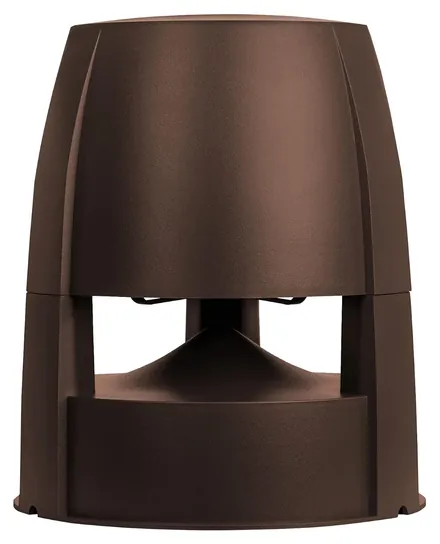
The OSD Audio Forza 850 leads the list now. It puts a woofer and a real tweeter in a bronze housing that throws sound all the way around and disappears into a planting bed, for a mid-range price. The old leader, the TIC B503 Bluetooth speaker, is out because its power supplies keep failing within a few months.
Most of the rest had vanished. The Bose Free Space 51, AVX Audio, Sound Appeal, OSD Audio subwoofer, Theater Solutions B82S and Homewell picks are gone or unavailable, and the OSD LS2 gave way to its bigger sibling, the OSD Audio LS3. The JBL Professional Control 85M and the Alpine solar rock stay. New picks cover each style readers ask about: garden satellites from JBL, rock speakers, a Bose commercial unit, and two complete kits with subwoofers.
No lab has measured these speakers, so we lined up driver sizes, frequency ranges, transformer taps and water ratings from the makers, read installer guides on placement and wiring, and leaned on owner reports where enough existed to show a pattern.
December 30, 2020:
A number of items have been replaced in the latest update of our ranking due to availability issues with some older models, while others have been upgraded to newer releases. One of our choices that has withstood the test of time is the Bose Free Space 51 Outdoor, which is still popular in many commercial outdoor spaces and has become something of an industry standard for static landscape speakers.
Of the new additions, the TIC B503, deserves a mention, as it is a complete powered solution, which has an impressive power amp built-in, 360-degree sound, and a huge 300-foot wireless range. While a pair of these would be similarly priced to the two Bose units, this option, in our minds, has a lot more to offer as far as simplicity, connectivity, and controllability are concerned.
Another new addition is the OSD Audio Subwoofer, which was included as many outdoor setups have satellite speakers, but lack that bottom-end punch. This unit is mostly subterranean, with all but the upper vent buried below ground level, but as far as the sound is concerned, the effect is very noticeable. Like many on the list, this is a passive option and requires a wired connection to an amplifier, which should be one of the first considerations when shopping for landscape speakers.
January 18, 2019:
A lot of good brand names have embarked on creating outdoor speakers that can easily be camouflaged in the average backyard. Bose offers a particularly nice set, with an emphasis on sound quality over discretion. Other big names like Klipsch and MartinLogan make an appearance, both with rock models intended to disappear among the other stones in a garden.
Special Honors
Sonance Sonarray Sonance's Sonarray landscape systems pair small aimable satellites with in-ground subwoofers and are sold and installed through custom audio dealers. Worldwide Stereo lists the Sonarray SR1 system first among its outdoor picks. It's a step up in cost and planning, and suits a yard being designed around its sound. sonance.com
Origin Acoustics Landscape Systems Origin Acoustics, a maker of custom-installed home audio, sells the AS4.1 landscape system of four satellites and a buried subwoofer through dealers. It's an option for owners who want a professional design and installation rather than a boxed kit. originacoustics.com
Mushrooms, Stakes, Rocks Or A Full Kit
One or two can cover a lawn or a pool deck, and the bigger ones carry real bass.
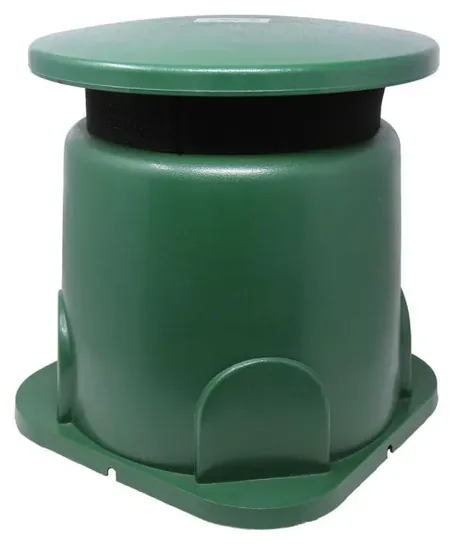
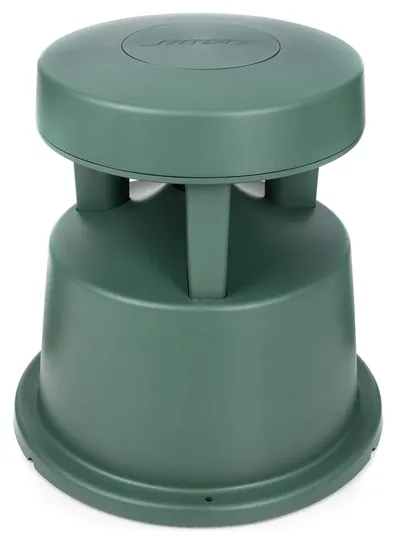
Landscape speakers come in four shapes, and the shape decides how the sound spreads. Omnidirectional "mushroom" speakers sit in or on the ground and spray sound in a full circle from one woofer and tweeter. One or two can cover a lawn or a pool deck, and the bigger ones carry real bass. They're the easiest way to fill an open area with few units.
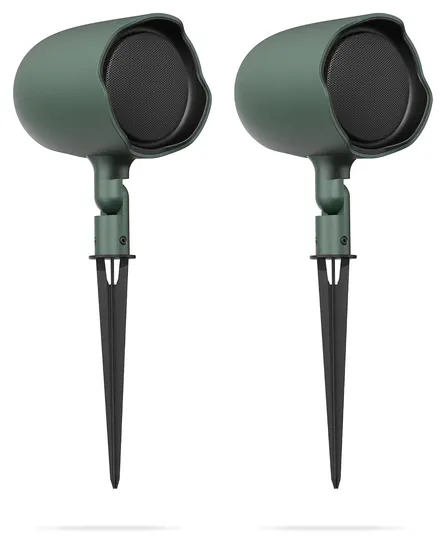
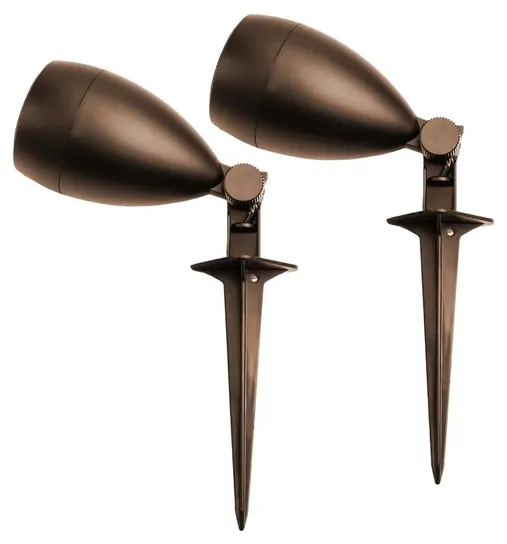
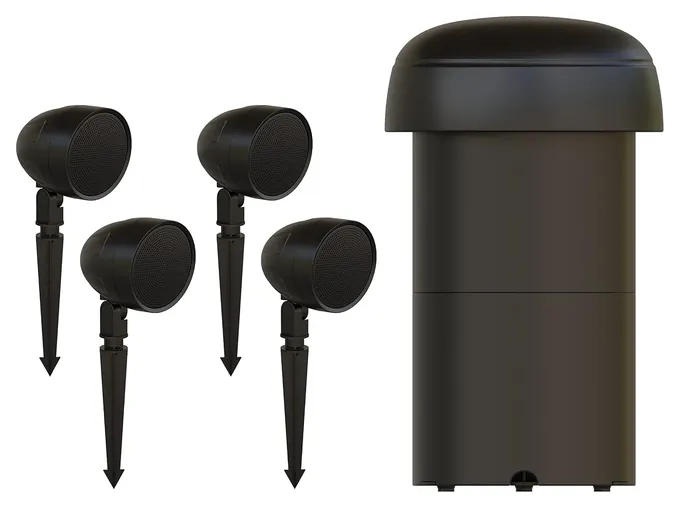
Stake satellites are small, aimable speakers on a ground spike. They hide among plants and point music at a seating area, and they're directional, so you can aim them away from the neighbors. Their drivers are small, usually 2.5 to 4 inches, so most of them start losing output below about 150 to 200 hertz. HiDef NJ's satellite guide explains how these systems pair several satellites with one buried subwoofer.
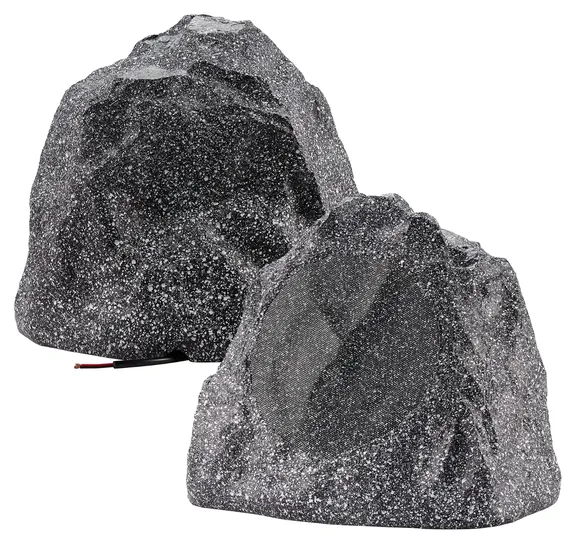
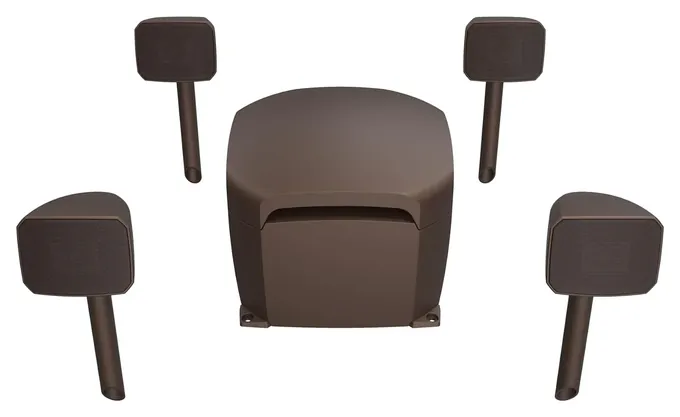
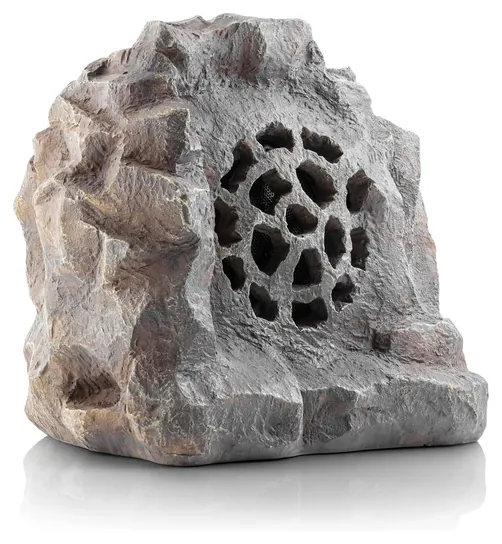
Rock speakers are resin shells shaped like boulders. They're the cheapest way to get large woofers outdoors, but they're also the most visible, and Audio Advice calls them the older option next to satellite-and-subwoofer systems. Complete 4.1 kits bundle four satellites and a sub, so you only add an amplifier.
Amplifiers, Burial Wire And 70-Volt Systems
Most landscape speakers are passive. They need a stereo receiver or amplifier, and wire rated for burial runs from it to each speaker. Theater Solutions recommends CL3-rated 16-gauge wire for runs under 40 feet and 14-gauge for longer runs. Running the wire through buried PVC conduit protects it from shovels and edgers. A buried subwoofer can take a hit from a mower or trimmer, so mark where it sits.
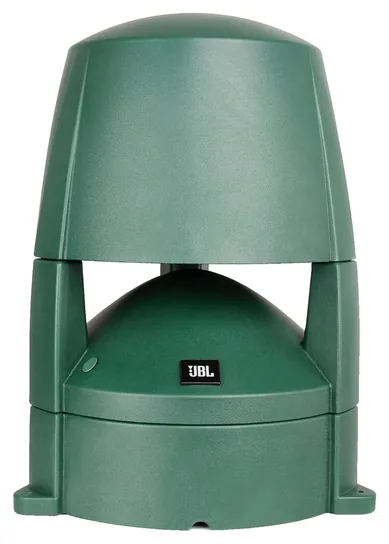
Commercial speakers such as the JBL Professional Control 85M and Bose FreeSpace 360P Series II carry a transformer for 70-volt or 100-volt systems. That wiring lets one amplifier feed many speakers over long runs, with a tap on each speaker setting its volume. It suits a hotel or a large estate, but it needs an amplifier built for it. Some models, like the JBL Professional GSF3GN, switch between 70-volt and normal 8-ohm use. JBL Professional lists its landscape line with both options. Handle 70-volt lines with care, since they carry a higher voltage than home speaker wire.
Speakers with their own power, such as solar Bluetooth rocks or powered in-ground units, avoid speaker wire. A plug-in model should run from a GFCI outlet, and local code may cover how you bury its cord.
Placement, Bass And Keeping The Peace
Several speakers at modest volume sound better than one loud pair, because the sound stays even as you move around the yard. A rule of thumb from installers is about a foot of spacing for every inch of driver diameter between satellites, and soft soil makes stakes easier to set than rocky ground. Worldwide Stereo suggests a dedicated outdoor amplifier for larger systems.
Bass is what small outdoor speakers lack, since there are no walls to reinforce it. A subwoofer buried up to its cap fills that gap, and its low tones don't need to be aimed. Point satellites toward the house and the seats, not the property line. Outdoor music falls under local noise rules, and evening limits are common.
Weather ratings on these speakers come from the makers. A sealed housing, a drain hole and a UV-stable finish matter more over the years than the rating itself. Keep drivers facing sideways or down where you can, so rain and sprinklers don't pool on them.
How we researched this
We compared 17 landscape and outdoor speakers, read the makers' published specs for the 10 finalists, read installer guides from HiDef NJ, Audio Advice and Worldwide Stereo, looked at owner feedback where enough of it existed, and checked every brand for recalls with the U.S. Consumer Product Safety Commission.
Frequently asked questions
What are the best outdoor landscape speakers?
For one speaker that covers an open lawn, an omnidirectional in-ground model like the OSD Audio Forza 850 is a strong start. For garden beds, stake satellites such as the JBL Professional GSF3GN aim music at the seats. Rock speakers cost less but are easier to spot.
Do landscape speakers need an amplifier?
Most do. Passive models need a receiver or amplifier and burial-rated wire. Solar Bluetooth rocks and powered in-ground speakers play without one, but they put out less sound.
What is a 70-volt speaker system?
It's commercial wiring that lets one amplifier drive many speakers over long runs. Each speaker has a transformer with taps that set its volume. It needs an amplifier made for 70-volt use.
Do I need a subwoofer with landscape speakers?
With small stake satellites, yes, if you want any bass. Large omnidirectional and rock speakers carry more low end on their own, but a buried sub still fills out the sound.
Can in-ground speakers stay outside all winter?
The ones made for it can. Makers rate them for rain, snow and sun, and sealed housings with drain holes hold up best. Running the wire in conduit protects it from frost heave and digging.
How far apart should landscape speakers be?
Installers suggest about a foot of spacing for every inch of driver diameter, and several speakers at low volume rather than one loud pair.