The 9 Best Model Rocket Kits
Updated by · How we research

Launch sets, ready-to-fly rockets and space replicas compared by build time, altitude and what's in the box. The Alpha III Launch Set is our first-launch pick. When users buy our independently chosen editorial choices, we may earn commissions to help fund the Wiki.
Almost no model rocket box, not even a complete launch set, includes the engines, igniters, flame-proof wadding or AA batteries you need on launch day, so plan on a pack of engines too. These picks suit kids 10 and up with an adult nearby, first-time builders, and fans of space-program replicas who want to fly one at a park or school field.


Editor's Notes
October 23, 2026, by Ezvid Wiki Editors:
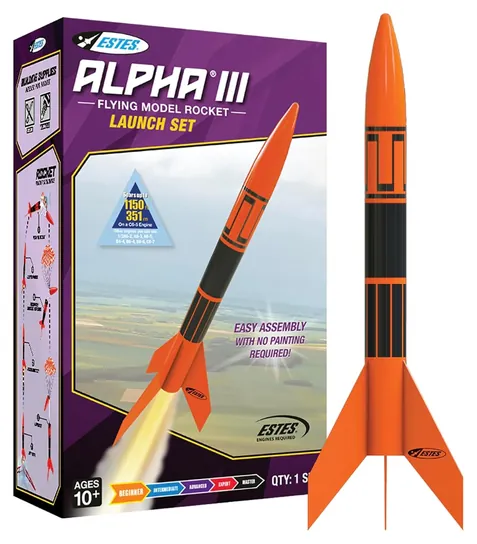
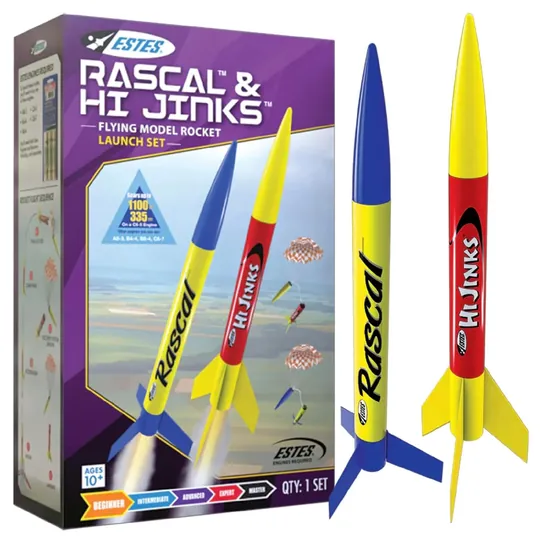
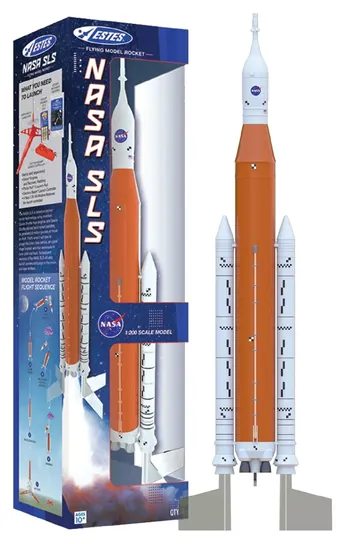
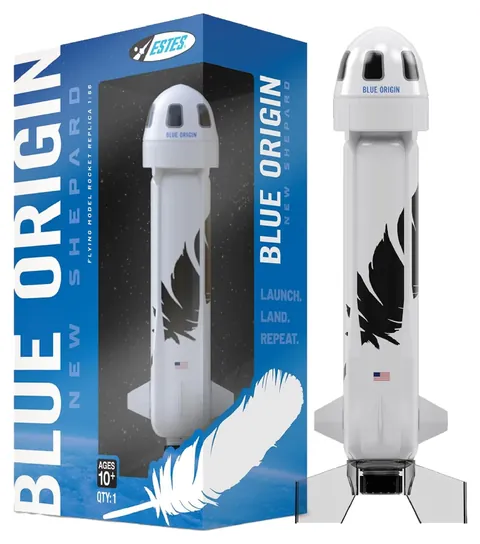
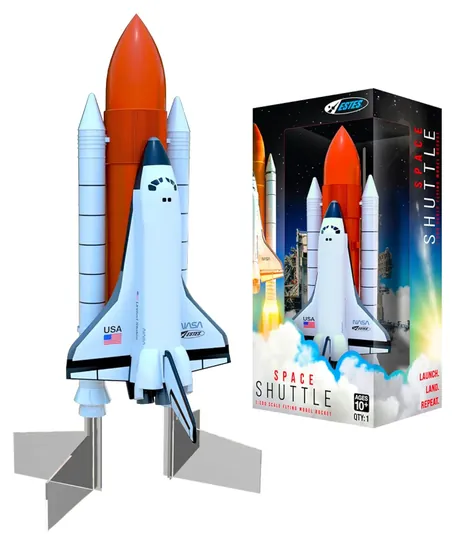
A rocket that flies on launch day is what most readers want here, so a complete set, the Estes Alpha III Launch Set, now leads. It has the pad, the controller and molded plastic fins that shrug off hard landings. The Estes Rascal & HiJinks Launch Set covers families who want to skip the build, and the NASA SLS, New Shepard and Space Shuttle replicas cover space fans.
The old list had drifted away from flying rockets. A Lego Saturn V, a stomp rocket and a water rocket are fine toys, but none of them is a model rocket kit. The Sasha, Custom Equinox, Horizon Mercury-Atlas and Semroc Hawk are gone, the Wizard is now sold only as a 12-pack, and the old Shuttle gave way to the current Estes Space Shuttle. The two high-power kits that were honors need certification to fly, so we swapped them for the national club and a next-step kit maker.
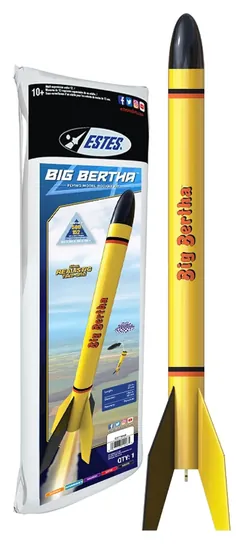
One caution shaped the order: the box price is never the whole bill. We read the Estes spec sheets and engine charts against the national safety code's field sizes, which is why low-flying replicas and the Big Bertha rank as well as they do.
Earlier notes
December 3, 2020, by Gregg Parker:
There are two main things people look for in model rockets: realistic details that look good on display and the ability to blast really, really high. For the first part, the Lego Ideas Apollo Saturn V is the best-looking model out there, but like the Horizon Mercury-Atlas, it can't go anywhere. Similarly, the 7246 Shuttle looks great, but tops out at 500 feet, and to get that high you'll need an E-series engine and rod setup, which can be costly.
As for height, the clear winner is the Estes Sasha, which requires the skill and patience of a master builder and goes an incredible 2,300 feet. If you're not ready for that, then the 1754 Wizard, Athena Flying, and Custom Equinox are all solid choices.
If the purpose of this is to get kids interested in science while keeping them entertained, then consider the Stomp Rocket, Semroc Hawk, or 4M Water Rocket, all of which aren't traditional model rockets, but can be educational and fun. The 1754 Wizard is also a solid choice if you're purchasing for a scout troop or classroom.
November 14, 2019, by Karen Bennett:
If you’re looking for a fun outdoor game or other activity to get your kids outside on a nice day, one of these model rockets can provide hours of excitement and learning. Our selection is carefully curated to provide options for a variety of skill levels and budgets, so you’re sure to find something your kiddos will enjoy.
The Lego Ideas Apollo Saturn V comes on board today, and it’s actually the only model here that’s not made to be launched. However, this intricate build can still provide many hours of enjoyment. It’s made for ages 14 and up and includes 1969 pieces – which is not a random number, as it’s the year humans first set foot on the moon, as part of the Apollo 11 mission. This three-stage rocket is a replica of the real one used back then. Once it’s built, it stands at a meter tall (that’s over 3 feet), with each of the 3 sections easy to separate from each other. It also comes with two tiny astronauts, a command and service module, a launch escape system, and lunar lander and lunar orbiter pieces. Its impressive design features many details that are true to life of the real rocket.
Leaving the list today is the Estes Tandem, which experiences some problems with its controller’s durability, not to mention many of those who have purchased it found it unclear that the engine has to be purchased separately.
Always make sure a given toy is age-appropriate for your child, and supervise kids and their toys for a safe playtime.
Special Honors
National Association of Rocketry The National Association of Rocketry is the U.S. hobby group behind the Model Rocket Safety Code. Its local clubs hold regular public launches on large fields with club pads, which is the easiest way for a family to fly bigger engines safely and to learn from experienced flyers. nar.org
Apogee Components Apogee Components, based in Colorado Springs, sells model rocket kits, parts and motors from its own store, including kits for builders who have outgrown starter sets. It also publishes free how-to articles and videos on building and flying. apogeerockets.com
What's In The Box, And What You Still Need
Snap-together kits with molded plastic fins take about an hour with glue.
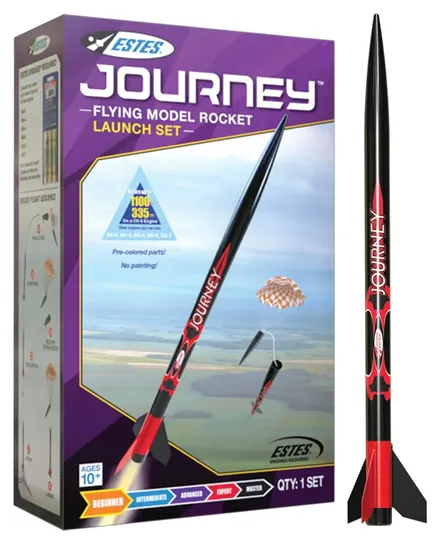
Model rockets come two ways. A launch set, such as the Alpha III Launch Set or the Rascal & HiJinks Launch Set, adds a launch pad and an electric controller to the rocket. A rocket-only kit, like the Big Bertha or the NASA SLS, assumes you already own both. Estes sells the Porta-Pad II pad and Electron Beam controller as a pair, and one pad serves every rocket on this list.
Neither kind includes the consumables. You need single-use engines, the igniters that light them (Estes calls them starters), flame-resistant recovery wadding to shield the parachute, and four AA batteries for the controller. A three-pack of C6-5 engines comes with starters, so budget for one pack per three flights.
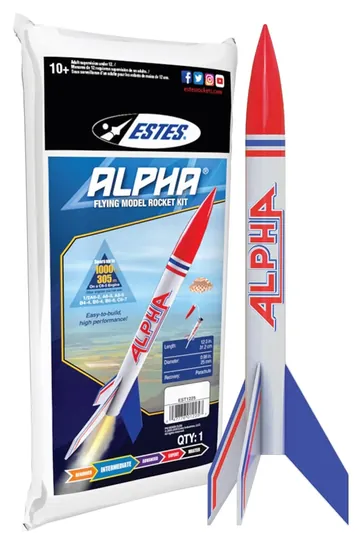
Build style is the other choice. Ready-to-fly rockets, such as the Rascal, the SLS and the Space Shuttle, need only an engine and a folded parachute. Snap-together kits with molded plastic fins take about an hour with glue. Balsa kits like the Alpha and Big Bertha mean sanding, gluing and painting, with drying time between steps. Plastic fins survive rough landings; balsa fins chip, but a dab of wood glue fixes most damage.
Reading An Engine Code And Sizing Your Field
Every model rocket engine carries a code such as C6-5. The letter is the total power class, and each letter roughly doubles the one before it: an A engine has up to 2.5 newton-seconds of impulse, a B up to 5 and a C up to 10. The middle number is the average push in newtons. The last number is the delay in seconds between burnout and the small charge that pops the parachute out.
Bigger engines need bigger fields. The Model Rocket Safety Code of the National Association of Rocketry asks for an open site at least 100 feet on a side for A engines, 200 feet for B and 400 feet for C (text of the code). A football field fits a B launch; a C wants a large park or a farm field.
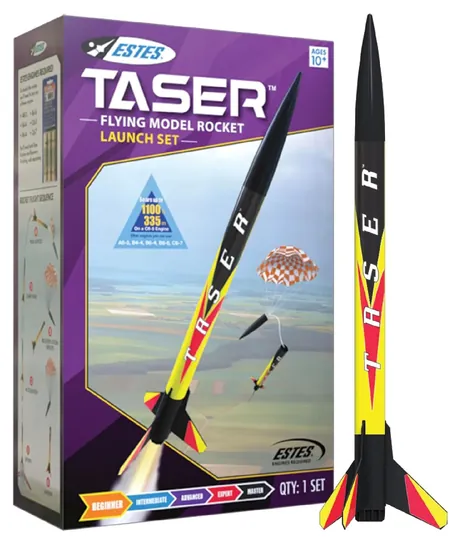
The altitudes on the box are best cases on a calm day with the largest recommended engine. Slim sport rockets such as the Alpha III and Taser reach about 1,000 feet or more on a C, while heavy replicas such as the SLS and New Shepard fly a few hundred feet on a C with a short three-second delay. For a first launch, start with an A or B engine: the rocket stays in sight and lands close by.
The Safety Code, And Is It Legal?
Estes builds its kits around the safety code, and following it avoids nearly every accident. Use only certified, store-bought engines and never alter them. Launch with an electric system that has a safety key, count down, and stand at least 15 feet back for engines up to D. If nothing happens, pull the key and wait 60 seconds before walking up. Keep the launch rod within 30 degrees of vertical, use the blast deflector, and never launch in winds over 20 miles per hour, near dry grass, at aircraft or into clouds. Don't climb trees or go near power lines to get a rocket back.
Small model rockets are legal across most of the U.S. The FAA treats a rocket with no more than 125 grams of propellant and a total weight of no more than 1,500 grams as a Class 1 model rocket (14 CFR 101.22), and ATF rules exempt model rocket motors with no more than 62.5 grams of propellant (27 CFR 555.141). Every kit here is far below both limits. Some states, cities and parks add their own fireworks or launch rules, so check before you fly, and ask the landowner first.
How we researched this
We compared 20 model rocket kits and launch sets, read the Estes spec sheets for the nine finalists (contents, engine range, projected altitude, skill level), checked them against the National Association of Rocketry safety code and the FAA and ATF rules for model rockets, read one editorial roundup and the long-run sales record, and checked every pick for recalls with the U.S. Consumer Product Safety Commission. We found no independent hands-on test of these kits.
Sources (16)
- Estes: Alpha III Launch Set
- Estes: Rascal & HiJinks Launch Set
- Estes: Taser Launch Set
- Estes: Journey Launch Set
- Estes: NASA SLS
- Estes: Blue Origin New Shepard
- Estes: Space Shuttle
- Estes: Big Bertha
- Estes: Alpha
- Estes: Porta-Pad II and Electron Beam controller
- Estes: C6-5 engines
- NAR/MMA Model Rocket Safety Code (2012 revision)
- 14 CFR 101.22: Class 1 model rocket
- 27 CFR 555.141: exemptions
- Space.com: Best model rocket sets (March 2026)
- CPSC recalls: Estes-Cox model rockets (2007)
Frequently asked questions
What is the best model rocket kit for a first launch?
A launch set, because it includes the pad and controller. The Estes Alpha III Launch Set is a good start: about an hour to build, plastic fins and a wide engine range. Buy a pack of engines with it.
What age are model rockets for?
Estes rates its kits for ages 10 and up. Children under 12 should launch with an adult, and an adult should handle the engines.
What engine should I use?
Use the engines printed on the kit's instructions. A C6-5 is the usual pick for small sport rockets, but start with an A or B engine in a smaller field. Replicas often call for a C6-3 or C5-3.
How high do model rockets fly?
The kits here range from about 350 feet for heavy replicas to about 1,150 feet for slim sport rockets on their largest recommended engine. Wind and a smaller engine bring that down.
Are model rockets legal?
Yes, in most places. Small model rockets fall under the FAA's Class 1 rules and the engines are exempt from federal explosives permits, but some states, cities and parks set their own rules, so check locally.
What does it cost to get started?
Plan on a launch set plus a pack of engines and four AA batteries. A rocket-only kit also needs a launch pad and controller, which Estes sells as a pair.