The 10 Best Molecular Model Kits
Updated by · How we research

If your syllabus names a kit, buy it. Otherwise, ten molecular model kits compared for organic chemistry, high school and classrooms; the Old Nobby 239 leads. When users buy our independently chosen editorial choices, we may earn commissions to help fund the Wiki.
Check the carbon count, not just the piece total: 14 or 15 carbons can run short on larger molecules. Building molecules from colored atoms and bonds makes bond angles, rings and 3D shapes much easier for students to see than on paper. Ball-and-stick kits suit most classes, while polyhedron and magnetic sets suit specific needs.


Compare the specs
Swipe the table sideways to see every column.
| Product | Style | Carbon atoms (count) | Hydrogen atoms (count) | Atoms in all (count) | Orbital or lone-pair pieces (count) |
|---|---|---|---|---|---|
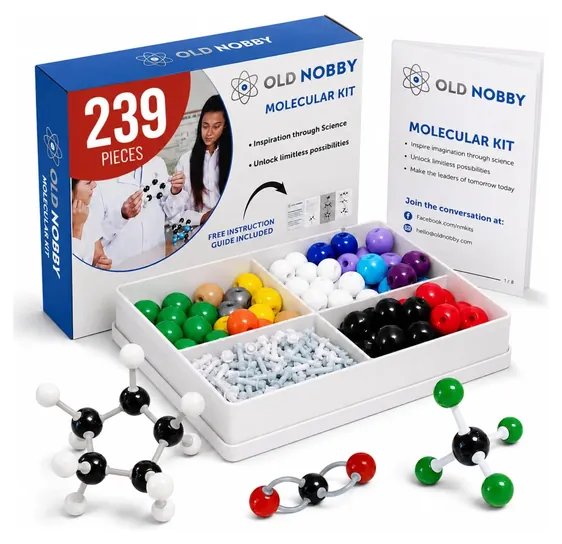
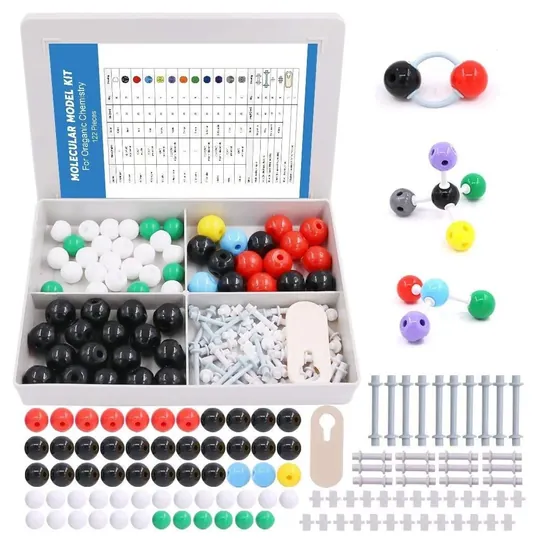
| 1. Old Nobby 239 | Ball-and-stick | 15 | 30 | 86 | None listed |
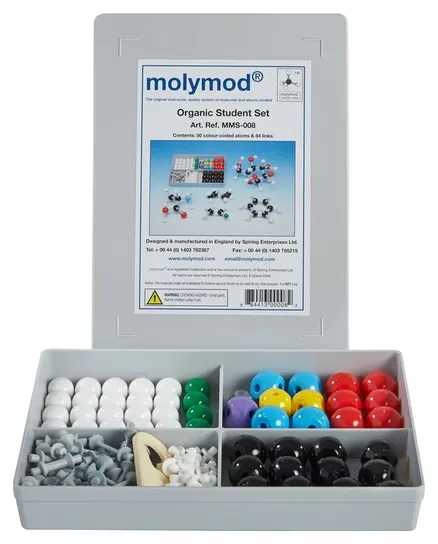
| 2. Molymod MMS-008 | Ball-and-stick | 14 | 20 | 53 | None |
| 3. HGS Maruzen 1013 Alpha | Polyhedron | 18 (12 sp3, 6 sp2) | 30 | 58 | 4 p-orbital plates |
| 4. Mega Molecules MG180 | Fixed pegs | 15 | 36 | 100 | None |
| 5. Duluth Labs MM-007 | Ball-and-stick | 26 | 34 | 120 | 16 p-orbitals |
| 6. Linktor 444 | Ball-and-stick | — | — | 136 | — |
| 7. Swpeet 122 | Ball-and-stick | 23 | 20 | 59 | None listed |
| 8. Molymod MMS-009 | Ball-and-stick | 6 | 14 | 52 | 3 lone-pair paddles |
| 9. Duluth Labs MM-003 | Ball-and-stick | 14 | 22 | 54 | None |
| 10. Happy Atoms Complete Set | Magnetic | 6 | 14 | 50 | None |
Counts come from each maker's manual or parts list; Molymod's come from a distributor's copy of its list. Old Nobby, Linktor and Swpeet publish no manual, so their rows use the sellers' own parts lists, and Linktor's gives only the atom total. Duluth's 120 atoms for the MM-007 is the maker's figure; its manual's parts table lists 118 atoms plus 16 orbital pieces. HGS counts are for the 4th edition of the 1013 Alpha. Our rule of thumb for a first organic course is about 12 carbons and 20 hydrogens.
Sources
- Old Nobby Seller's parts list, Retail Market copy
- Molymod MMS-008 contents, Scientrific (distributor) MMS-009 contents, Scientrific (distributor)
- HGS Maruzen 1013Alpha parts list Polyhedron Alpha manual, 4th edition (PDF)
- Mega Molecules MG180 instructions (PDF)
- Duluth Labs MM-007 instruction manual (PDF) MM-007 product page MM-003 instructions (PDF)
- Linktor Seller's listing, Desertcart copy
- Swpeet Seller's parts list, Tiendamia copy
- Thames & Kosmos Happy Atoms Complete Set page Complete Set kit contents sheet, Gopher Sport copy (PDF)
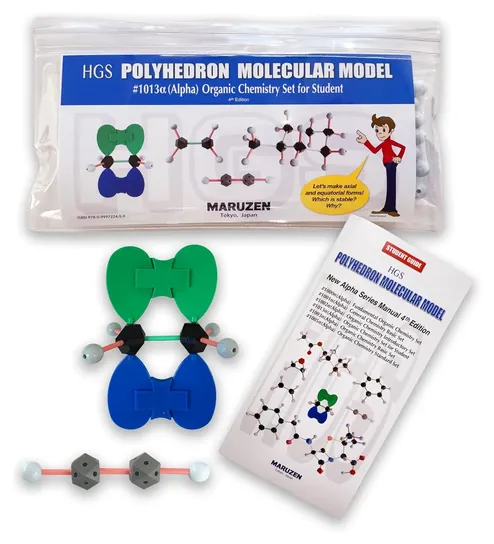
From the manual
- Alpha parts fit only other Alpha-series sets, never any earlier HGS set or part. p. 27
- Its sp2 carbons build flat double bonds and benzene rings at true 120-degree angles; Maruzen calls bent-bond double bonds geometrically wrong. pp. 13-15
- Bonds fit tight on purpose: press atoms on from both ends, and pull bonds straight out with the included puller, never sideways. assembly sheet
- For strained rings such as bicyclobutane, the manual suggests softening the plastic bonds with a hair dryer. p. 10
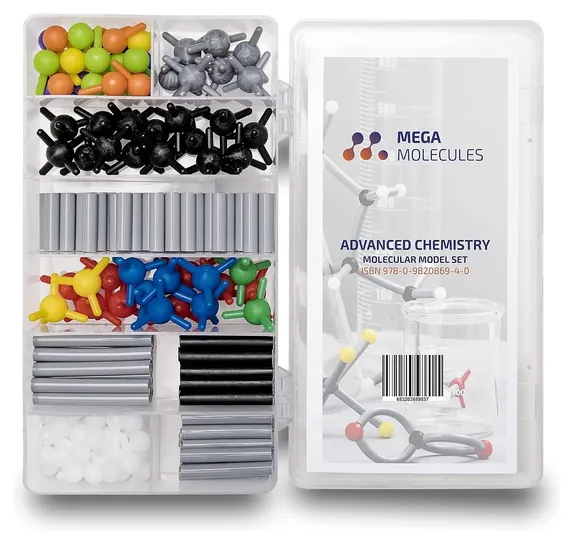
From the manual
- Bonds slide onto the atoms' poles with a twist; the black bonds let atoms rotate around a carbon-carbon single bond, the gray ones hold firm. p. 2
- Double and triple bonds use two or three of the 14 long gray bonds, and a benzene ring alone takes six. p. 2
- The scale is 25 millimeters per angstrom, and the maker labels the set for ages 12 and up because parts can choke. p. 2
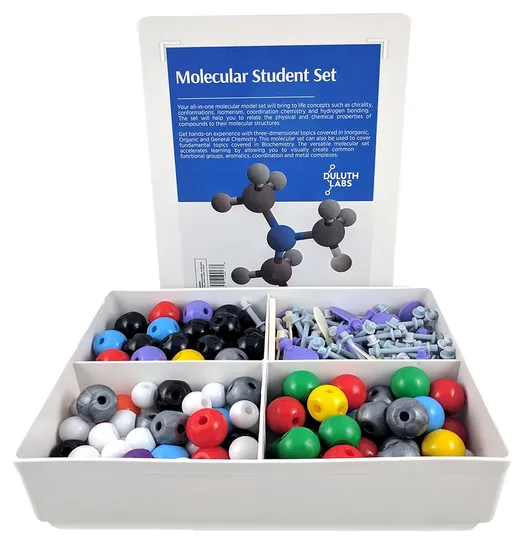
From the manual
- Bonds start tight and loosen with use; the maker suggests a dab of Vaseline on connector ends for easier take-apart. p. 3
- To pull a bond, slip the grooved tool between atom and bond and twist it like a bottle opener. p. 3
- Carbons come with four, five or six holes (20, 4 and 2), so pick the right one for each atom's shape. p. 1
- Twelve purple long connectors are meant for ligands, the groups that attach to a metal in coordination compounds. p. 1
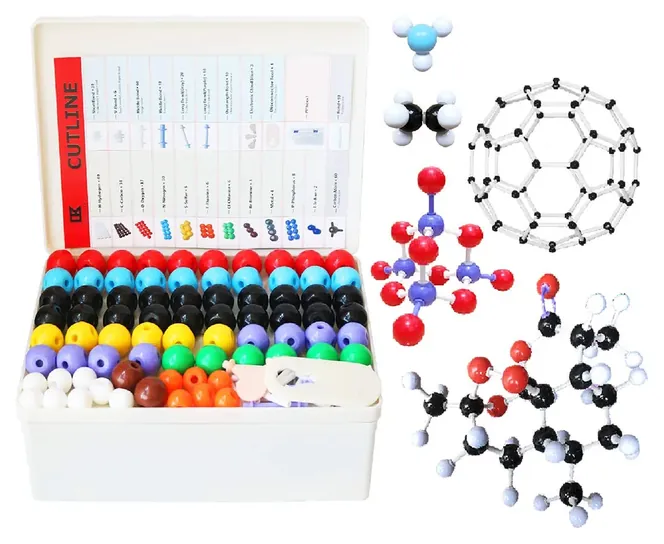
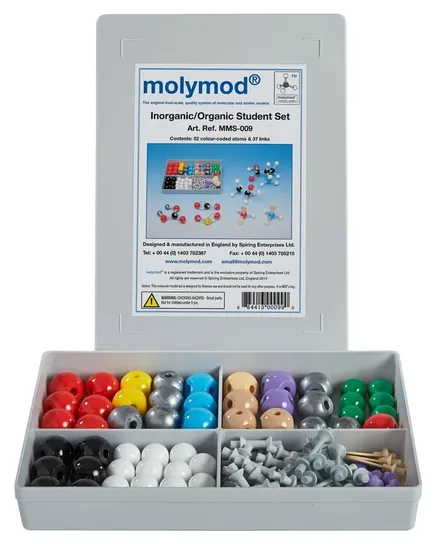
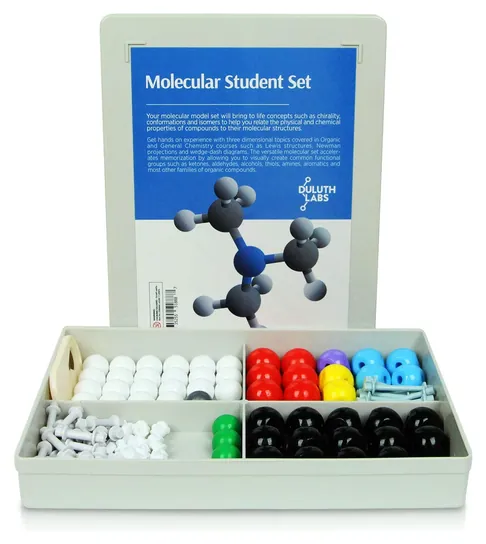
From the manual
- Each double bond takes two long connectors, and the set has 12, so one model can carry at most six double bonds. pp. 1, 5
- Nitrogen comes with three or four holes and sulfur with four or six, so amines, ammonium and sulfonic acids all build correctly. pp. 4, 6
- The cyclohexane ring flips between chair and boat, and swapping one hydrogen for a halogen shows axial and equatorial positions. p. 3
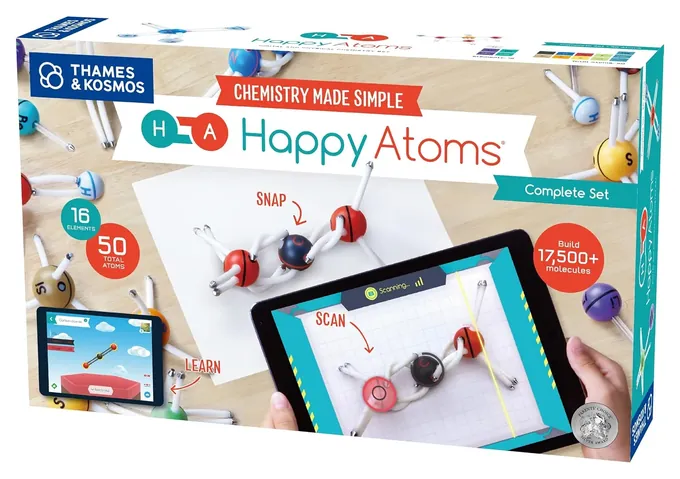
From the manual
- The scanner needs molecules on a white surface in bright indoor light; it works less well in dim rooms or direct sun. p. 3
- Keep the atoms a few inches from tablets and phones while scanning; the manual warns their magnets can harm electronics. inside cover
- A single bond uses two arms, one per electron, unlike stick kits; bendable arms make double bonds, and six make a triple. p. 4
- On first launch, the app asks which Happy Atoms set you own and tailors its molecules to it. p. 2
Editor's Notes
November 16, 2026, by Ezvid Wiki Editors:
The SnatomsX left the list because the store we link to no longer offers it new, though its maker still sells it direct; in its place we added Duluth Labs' compact MM-003. A second check against the makers' manuals and listings added Duluth's own MM-003 instructions, corrected the Molymod MMS-009's lone-pair pieces and the Swpeet's element list, and removed claims we couldn't source. On November 16, the MM-007 and the Happy Atoms Complete Set showed as sold out in their makers' shops, though neither is listed as discontinued, and a recall search found nothing for any kit here.
November 4, 2026, by Ezvid Wiki Editors:
We checked the parts lists against the makers' manuals for HGS, Mega Molecules, Duluth Labs and Happy Atoms, added a parts comparison table and notes from those manuals, and corrected the course page we cite: it belongs to Rainer Glaser's 2023 organic chemistry course at Missouri S&T, not the University of Missouri. We also fixed the Molymod MMS-008's element list and made clear that new HGS Alpha parts don't fit older HGS sets.
October 15, 2026, by Ezvid Wiki Editors:
Most people land here looking for an organic chemistry kit for a college course, so we rebuilt the list around that. We added two sets that university course lists and bookstores carry, the Molymod MMS-008 and the HGS Maruzen 1013 Alpha, along with the Linktor 444 for classrooms and the Swpeet 122 for tight budgets. The Duluth Labs MM-007 is the same kit as before under its current model number.
The Atomic Architect, Dalton Labs, LearnOn and Happy Atoms Introductory are no longer available, and we couldn't find the Vision Scientific set for sale, so they're gone. The Reliancer's listing now leads to a different set that overlaps the Linktor. Snatoms moved from a special honor into the main list as the SnatomsX, next to the Happy Atoms Complete Set. Both are magnetic, which makes them fun, but they're not toys for small children.
Nobody has run lab tests on model kits, so makers' parts lists, a university course list, publishers' companion kits and owner feedback guided the picks. Check your syllabus first: if it names a kit, that's the one to get.
Earlier notes
February 16, 2021, by Sheila O'Neill:
There weren't many new additions in this update, as the brands already represented on the list continue to be the best choices available. While our understanding of molecular structures continues to evolve over time, the basic makeup of elements and their bonds are still well represented by these time-tested models.
The University Chemistry Co. was removed due to availability concerns. New to the list, we have the Happy Atoms Introductory. While it isn't as comprehensive as most comparable alternatives, and is a bit pricier than most, it has several features that make it ideal for younger students (it's aimed at kids aged 10-17). For one thing, the atom pieces are labeled with their atomic symbols, rather than relying on the universal color coding system alone. This can help kids learn which element is which more easily, without having to constantly check the guide. It also uses magnets for the connections, which makes it easier to put molecules together and take them apart. Its most innovative feature is an app that can be used to scan a completed molecule. Once it recognizes the molecule, it provides not only its name, but also facts about its structure and how it is used in real-world settings.
One of the biggest issues with otherwise high-quality kits is the storage boxes that come with them. Some have issues with ill-fitting lids, and some, like the Reliancer 444, don't have any dividers, making it difficult to keep the various pieces organized and easy-to-find. If the kit that best matches your needs and budget doesn't have the best container, you might want to consider buying a higher-quality organizer as well, especially if you're planning to use the kit in a classroom or science camp setting, where small parts often get lost in the shuffle.
October 15, 2019, by Gia Vescovi-Chiordi:
While visual and kinetic learners can get plenty of information from the diagrams and charts in their chemistry textbooks, there's nothing quite like a molecular model kit for getting hands-on, tactile experience to understand complex concepts.
We ensured this list had offerings to suit almost any learning level, with the exception of very small children, and so included kits of varying price points and piece counts to cater to any budget and learning need. These sets are great for both teachers to have in their classrooms and students to purchase for use as a home study aid.
We expanded our selections to create a full ten-item list and retired the Hensah Chemistry, Wisehands Labs, and Molecularity Resonating due to fulfillment issues. This gave us the leeway to diversify our offerings by adding the Vision Scientific Large, a professional-grade, comprehensive kit that, unlike its competitors, comes with a strong, reliable case. We also brought on the Old Nobby Instructional, Mega Molecules Advanced, and Dalton Labs Building. We especially like the Dalton unit because it comes bundled with helpful 3D modeling software and is offered in five kits of varying comprehensiveness. The Mega Molecules Advanced has been lauded for the ease of assembly its pieces offer.
Special Honors
Molecular Visions by Darling Models Darling Models makes the Molecular Visions kits in the U.S., and publishers have sold them as companions to organic chemistry textbooks. Atoms and bonds join in many combinations, and finished models can go back in the box without being taken apart. The organic kit costs about $20, and the larger organic and inorganic kits about $26 to $30. Replacement parts are sold through the company's Molecular Visions site. darlingmodels.com
Does Your Course Require A Specific Kit?
Many organic chemistry instructors list approved kits, and some let you bring models to exams.
Check the syllabus before you buy. Many organic chemistry instructors list approved kits, and some let you bring models to exams. Rainer Glaser, a chemistry professor at Missouri University of Science and Technology, required a model set in his fall 2023 Organic Chemistry II course, let students bring it to tests, and told them to pick what they like from three options: HGS Maruzen sets, Mega Molecules and Duluth Labs (course page). He also pointed out that HGS instruction manuals are free online. UC Davis's winter 2024 Chemistry 118A syllabus recommends the Molymod MMS-008 "or similar" (syllabus).
If your instructor allows a kit at the test, use it there. James Ashenhurst, an organic chemist with a McGill doctorate who has tutored the subject one-on-one since 2010, wrote on his Master Organic Chemistry site that "there is nothing that causes people to leave marks on the table more than not using their model kits" (Master Organic Chemistry). His point: students who know the reactions still lose credit for a bond rotation drawn wrong.
Some textbooks have companion kits. McGraw-Hill sells Darling Models' Molecular Visions organic kit as a textbook companion (McGraw-Hill), and Wiley's kit for the Solomons and Fryhle text was built on the same Molecular Visions parts (Wiley). If no kit is named, any good set on this list will do.
Ball-And-Stick, Polyhedron, Peg Or Magnetic?
Ball-and-stick kits, like the Old Nobby and Molymod sets, use round atoms with holes drilled at bond angles. They're familiar from textbook drawings, but a ball with spare holes lets you build wrong shapes. Molymod's atoms run 17 to 23 millimeters across (Scientrific).
HGS polyhedron carbons have flat faces with exactly placed holes, and separate pieces for sp3 and sp2 carbon. HGS bonds are scaled at 2.5 centimeters per angstrom, so a C-C bond is visibly longer than a C-H bond. Maruzen's manual calls the old trick of two bent bonds for a double bond geometrically wrong, since it forces tetrahedral angles where a flat 120 degrees belongs (HGS manual). Mega Molecules uses atoms with fixed pegs, which are quiet and need no tool.
Magnetic kits such as Happy Atoms skip the sticks. They're quick and fun, but their rubbery arms don't hold fixed bond angles, and they cost several times more, so treat them as a supplement rather than an organic chemistry tool.
How Many Pieces You Need, And Safety
For a first organic course, look for at least 12 carbons and 20 hydrogens. Cyclohexane takes six carbons and 12 hydrogens, so comparing two full chair shapes side by side takes 12 carbons and 24 hydrogens. Flexible links or bent bonds are needed for double and triple bonds, and p-orbital pieces help with pi bonds and resonance. Inorganic and general chemistry need 5- and 6-hole atoms for trigonal bipyramidal and octahedral shapes.
A bigger part count isn't always better. Of the Linktor's 444 pieces, 150 go into a single buckyball, so compare atoms, not pieces.
All of these kits contain small parts, and Molymod and Mega Molecules rate their sets for ages 12 and up. Magnetic kits need more care: if a child swallows more than one magnet, they can pull together inside the body and cause serious injury (CPSC). Keep magnetic sets away from young children and throw out any cracked atom. Neither the U.S. Consumer Product Safety Commission nor Health Canada lists a recall for any kit here; Health Canada's 2021 recall of U.S.-version Thames & Kosmos chemistry sets didn't involve Happy Atoms.
How we researched this
About 20 molecular model kits were in the running, and ten made the list. For their parts we read Maruzen's HGS Polyhedron Alpha manual (4th edition) and its assembly sheet, Mega Molecules' MG180 instructions, Duluth Labs' MM-007 and MM-003 manuals, Thames & Kosmos's Happy Atoms manual and kit contents sheet, and Molymod's contents lists from its distributors; Old Nobby, Linktor and Swpeet publish no manual, so their counts come from the sellers' own parts lists. Rainer Glaser's Missouri S&T course page, a UC Davis syllabus, the publishers' companion-kit pages, chemist James Ashenhurst's exam advice and the CPSC's magnet warning shaped the guide. In November 2026, neither the CPSC's recall database nor Health Canada's listed a recall for any of these brands.
Sources (28)
- Missouri S&T CHEM 2220, fall 2023 (Rainer Glaser): molecular models
- UC Davis CHE 118A, winter 2024: syllabus (PDF)
- McGraw-Hill: Molecular Visions Kit #3
- Wiley: molecular modeling kit for Organic Chemistry 7e
- Darling Models
- Molymod
- CPSC: Magnets
- CPSC recalls
- Rainer Glaser: curriculum vitae, 2024 (PDF)
- HGS Maruzen: Polyhedron Alpha series manual, 4th edition (PDF)
- HGS Maruzen: insertion and removal of atoms and bonds (PDF)
- HGS Maruzen: 1013Alpha Organic Chemistry Set for Student
- Mega Molecules: MG180 instructions (PDF)
- Mega Molecules: MG180 Advanced General and Organic Chemistry set
- Duluth Labs: MM-007 instruction manual (PDF)
- Duluth Labs: MM-007 student set
- Duluth Labs: MM-003 student set instructions (PDF)
- Duluth Labs: MM-003 student set
- Scientrific (Molymod distributor): MMS-008 Organic Student Set
- Scientrific (Molymod distributor): MMS-009 Organic/Inorganic Student Set
- Rapid Electronics: Molymod MMS-009 contents and age notice
- Thames & Kosmos: Happy Atoms Complete Set
- Thames & Kosmos: Happy Atoms quick start guide and experiment manual (PDF)
- Health Canada: recall of U.S. versions of CHEM C1000 and C500 (Thames & Kosmos, 2021)
- Health Canada: recalls and safety alerts
- James Ashenhurst, Master Organic Chemistry: exam tip on using your model kit (2010)
- Master Organic Chemistry: about James Ashenhurst
- Thames & Kosmos: Happy Atoms Complete Set kit contents sheet, Gopher Sport copy (PDF)
Frequently asked questions
What is the best molecular model kit for organic chemistry?
Get the kit your course lists, if it names one. Otherwise the HGS Maruzen 1013 Alpha and Molymod MMS-008 both appear on university course lists, and the Old Nobby 239 packs 86 atoms across eleven elements at a low price.
How many carbons does an organic chemistry kit need?
At least 12 carbons and 20 hydrogens covers single rings, chair shapes and most textbook exercises. Comparing two full cyclohexane chairs side by side takes 12 carbons and 24 hydrogens.
Do new HGS Alpha parts fit an older HGS kit?
No. Maruzen says its Alpha sets fit only each other, not any earlier HGS sets or parts. Buy spares from the Alpha line.
Can I bring a model kit to an organic chemistry exam?
Some instructors allow it; Rainer Glaser's fall 2023 Organic Chemistry II course at Missouri S&T did, for example. Check your syllabus or ask your instructor.
What's a good molecular model kit for middle school?
A mixed inorganic and organic set like the Molymod MMS-009 fits most middle and high school courses. Every kit here has small parts, and Molymod and Mega Molecules label theirs for ages 12 and up.
Where can I buy replacement parts?
Mega Molecules and Darling Models sell replacement parts. For generic kits, buying a second kit is often cheaper.