The 9 Best Network Cable Testers
Updated by · How we research

Ethernet testers, toners and a live-port checker compared on split pairs, length, PoE and phone or coax support. The Klein Scout Pro 3 leads nine picks. When users buy our independently chosen editorial choices, we may earn commissions to help fund the Wiki.
A tester that lights up green proves each wire lands on the right pin, but it can't promise gigabit speed. Only a qualifier or a certifier can. Split pairs are the classic trap: they pass a simple light test and still slow a link. This list is for homeowners, installers and IT staff who build, fix or trace cables.


Editor's Notes
October 19, 2026, by Ezvid Wiki Admin:
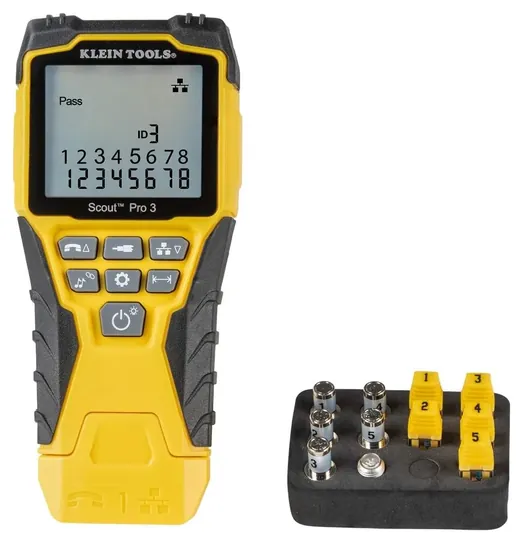
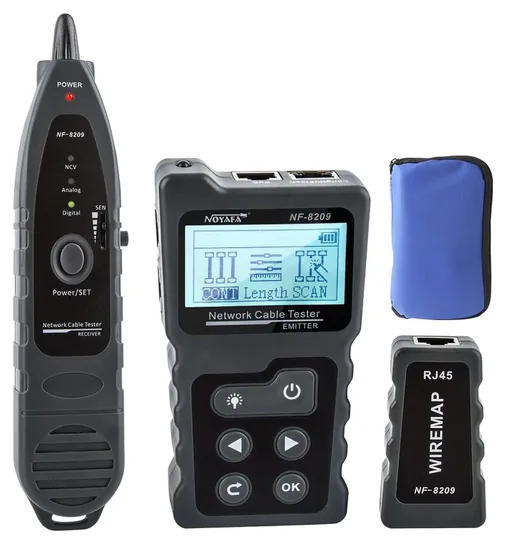
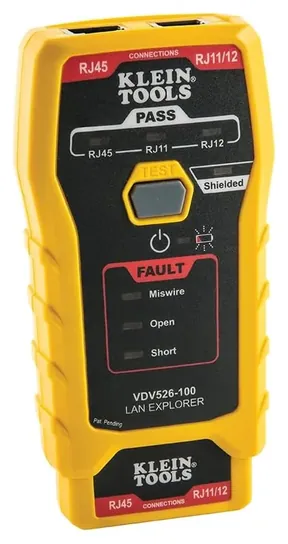
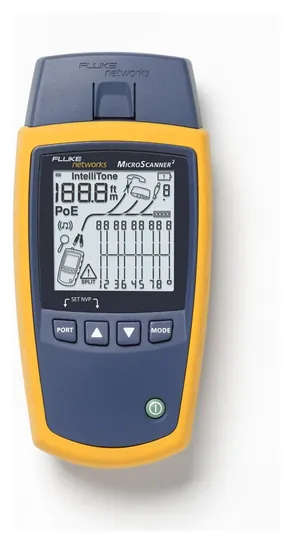
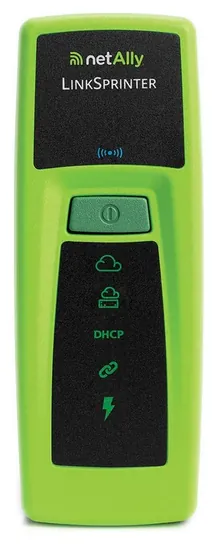
The Klein Scout Pro 3 is our new top pick. It checks data, phone and coax cables, catches split pairs and comes with numbered remotes for mapping wall jacks, which covers most home and small-office installs at a fair price. The old list leaned on pro gear that cost hundreds or thousands, so we rebuilt it around the testers people really reach for, from the Klein LAN Explorer to the Noyafa NF-8209 kit. The Fluke Networks MicroScanner2 and NetAlly LinkSprinter 300 stay for IT work.
Several older picks are gone. Fluke has retired the CableIQ, the Tripp Lite tester belongs on a fiber page, the Trendnet TC-NT3 is out of stock, and the Noyafa NF-8209 replaces the thinly documented Noyafa AT278. We also dropped three generic testers we couldn't confirm are still sold, plus the T3 Net Prowler. Two toners join the list, because finding the right cable is half of most jobs.
For evidence we leaned on Klein's and Fluke's manuals and spec sheets, Fluke Networks' guide to verification versus certification, and one independent bench check of the Noyafa. Certification testers that cost thousands sit in the honors below.
November 16, 2020:
My primary consideration during this update was to reorder the list to reflect a more ‘equitable’ product mix, since we had many sophisticated qualification testers on this list in here with the ranks of cheap and basic verification testers that do nothing more than indicate the presence of an performance or connectivity problem. Granted, high end options are a lot more comprehensive, but arguably they’re less in demand, as they're only used by professionals to check large networks. Hence, I’ve removed options like the NetScout 2000 LinkRunner and Fluke Microscanner 2, though I have left in the Fluke CableIQ.
High-End Qualification Testers
I’ve added special honors for new high-end qualification testers from both NetAlly – formerly known as NetScout – and Fluke, and, of course it goes without saying that both are leading companies in the development of comprehensive network testers. Resultantly, these are some of the most sophisticated, user-friendly and up-to-date models that money can buy, especially the NetAlly LinkRunner 10G.
Support for The Multi-Gig Network Generation
The Microscanner 2 we had was actually a kit, which included the SimpliFiber Pro optical power meter and other accessories, and not the basic model on its own, which is a little cheaper. I could have easily just included the standalone model here as an option in our more ‘reasonable product mix’ though, the Microscanner 2 is a little dated now, and isn’t built for the next generation of network infrastructure – multi-gig ethernet, including 2.5G and 5G, and all the way up to 10G.
Multi-gig networks using copper-based infrastructure would require at least Cat 6 cabling, which brings up another major consideration of mine during this update, which was to ensure that models could support these high speeds. With the exception of the Tripp Lite Fiber and D Yedemec Fault Locator, which have been featured primarily because of their support for optical fiber cables, all of these models should support at least Cat 6 and Cat 6a cabling.
September 06, 2019:
Among IT professionals, Fluke is generally considered to be the gold standard for diagnostics, so it's no surprise that they have a pair of models in our top three, including the model in our number one slot. A quick look at what it has to offer sets the tone for the rest of our list, with its ability to diagnose problems on both copper and fiber lines. It has a big, informative display, though some modern technicians may prefer a full color screen like the ones offered by Net Ally and T3. Often, the menus on these systems will be a little easier to navigate, potentially making them better choices for IT managers trying to train new employees, but the prices of these two in particular prevent them from being viable for homeowners setting up small networks, or for students learning the trade.
Availability concerns caused us to remove the TopOne model from our previous ranking, but we found a viable option that offers both user-friendliness and, surprisingly for its price point, a color screen. Beyond these considerations, we gave priority to testers that could offer techs a location on any given fault, to make their jobs that much easier.
Special Honors
NetAlly LinkRunner 10G A full Ethernet field tester for IT teams that support Multi-Gig and 10-gigabit networks. It runs cable and wire-map tests, toning and PoE load tests up to 90 watts, then checks the network itself, and it can watch a link for intermittent faults for up to a day. Reseller prices run into the thousands. netally.com
Fluke Networks DSX2 CableAnalyzer The certifier many cable makers expect to see reports from before they'll back a structured-cabling warranty. The DSX2 units measure crosstalk, return loss and insertion loss against the TIA and ISO standards for Cat6A and beyond, and turn the results into pass or fail reports. It's a contractor's tool priced in the thousands, well past what a home network needs. flukenetworks.com
Verify, Qualify Or Certify
A qualifier goes further and tells you whether the link can carry a given speed, such as gigabit.
Fluke Networks sorts cable testers into three tiers (Fluke Networks). A verifier, which is what most people buy, checks the wire map: every one of the eight wires lands on the matching pin at the far end, with no open, short, miswire or split pair. A qualifier goes further and tells you whether the link can carry a given speed, such as gigabit. A certifier measures crosstalk and signal loss against the TIA and ISO cabling standards and produces a report, and cable makers usually demand those reports before they'll honor a system warranty.
So a pass on a verifier means the wiring is right, not that the cable will run 10-gigabit. It also can't read the category printed on the jacket: a Cat5e and a Cat6 run look the same to it.
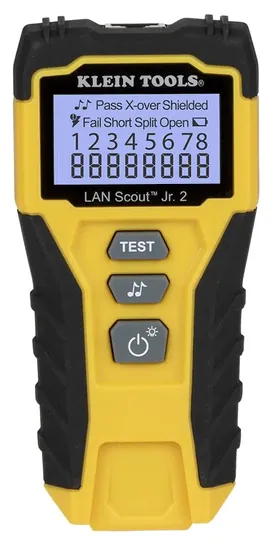
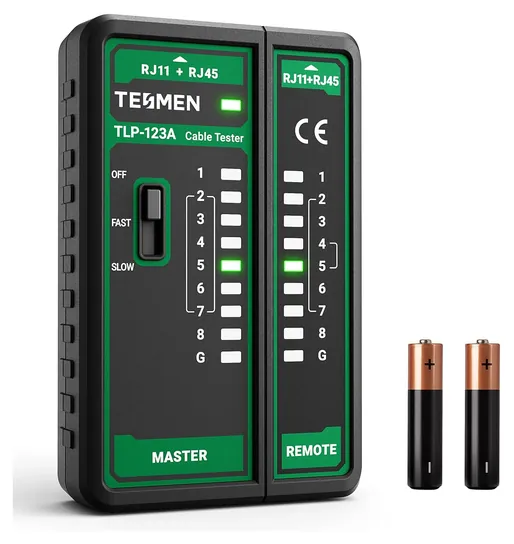
Split pairs deserve special mention. If the wires are landed pin to pin but the twisted pairs are broken up, a simple continuity test passes while the link drops packets or falls back to a slower speed. Testers with a screen that shows the map by pair, such as the Klein LAN Scout Jr. 2, flag this. Basic light-up testers usually don't.
Ports, Length And PoE
Match the tester to the jacks you work on. Many handle only Ethernet plugs. Others add phone plugs and coax F connectors, which matter in older homes with mixed wiring. Numbered far-end remotes let one person test several wall jacks and see which room each one lands in.
Length readings come from timing a pulse down the cable, so they're estimates. The tester needs the cable's speed factor, called NVP, set correctly, and even then expect an error of a meter or two on a long run. An independent check of the Noyafa NF-8209 read 101.6 meters on a 100-meter Cat5e cable (epanorama.net). Noyafa's manual lists the length mode's range and limits (manuals.plus).
Power over Ethernet (PoE) is where testers break. Klein's manual for the LAN Explorer gives 66 volts DC between pins as the most it can take without damage, and says indoor use only (Klein Tools). PoE switches put out roughly 44 to 57 volts, and a ringing phone line can spike higher, so unplug cables from switches and phone gear before you test unless the tester is rated for live ports. Some models only detect older PoE: Fluke notes that the MicroScanner2 recognizes 802.3af power (Fluke Networks).
Finding A Cable With A Toner
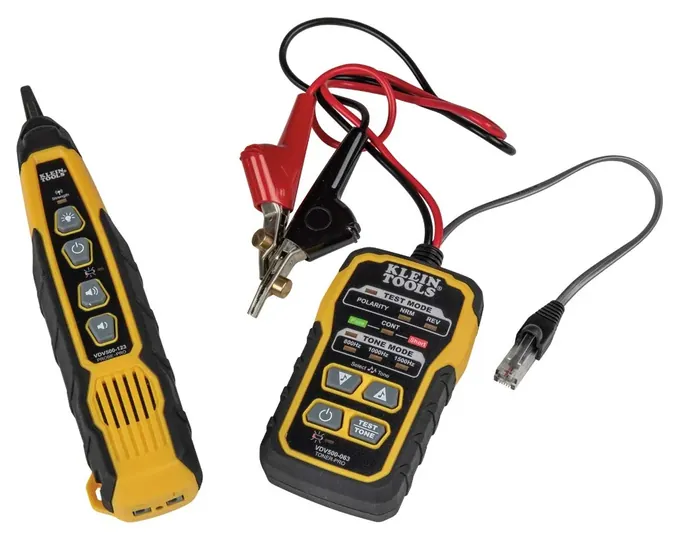
A toner is not a tester. It answers a different question: which of these 48 cables in the closet goes to the bedroom? You clip the tone generator to the cable at one end, then run the probe along a bundle or patch panel until it hums loudest.
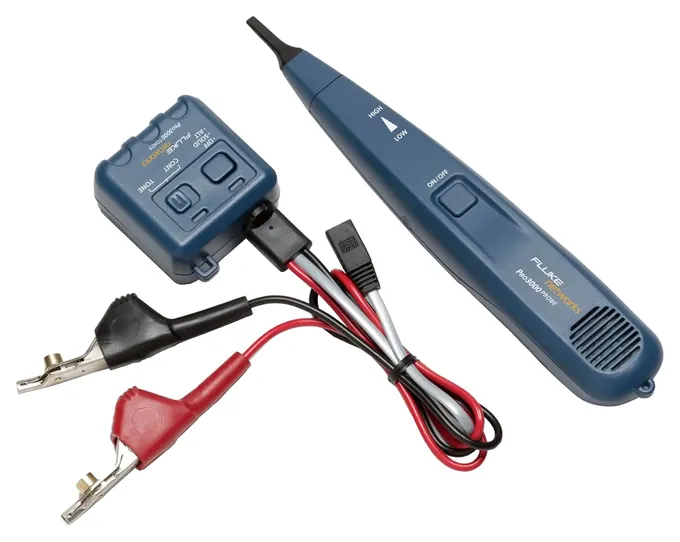
Analog toners like the Fluke Networks Pro3000 carry a tone a long way and are simple to use, but they only work on cable that isn't connected to live gear. Klein limits its toners to non-energized wiring under 60 volts, and says they won't trace a cable through drywall or other solid barriers. Digital toners use a higher frequency that can be traced on an active network and ignore electrical hum, at a higher price.
Near power wiring, an unfiltered analog probe picks up a 60-hertz buzz. Fluke sells filtered versions of the Pro3000 probe for that reason. Several testers, including the Klein Scout Pro 3 and LAN Scout Jr. 2, can send tone but need a separate probe to hear it.
How we researched this
We compared 17 current network cable testers, toners and port checkers, read the manuals, spec sheets or maker knowledge-base pages for the 9 picks, used Fluke Networks' guidance on verification, qualification and certification, reviewed one independent bench check, analyzed patterns in owner feedback, and checked every brand against U.S. Consumer Product Safety Commission recalls. The 3D models are built from published dimensions.
Sources (8)
- Fluke Networks: Certification vs. qualification
- Klein Tools: LAN Explorer VDV526-100 manual
- Klein Tools: LAN Scout Jr. 2 product page
- Noyafa NF-8209 manual (manuals.plus)
- epanorama.net: Cable tester NF-8209 tested
- Fluke Networks: Detecting PoE with the MicroScanner2
- Fluke: Pro3000 tone and probe kit
- U.S. Consumer Product Safety Commission: Recalls
Frequently asked questions
Can a cable tester tell Cat5e from Cat6?
No. A wire-map tester checks that each wire reaches the right pin. The category is printed on the cable jacket, and only a certifier can show whether a run performs to a category's limits.
If my tester says pass, will the cable run gigabit?
Not necessarily. A pass means the wiring is correct. Gigabit and faster links also depend on crosstalk, termination quality and length, which only a qualifier or certifier measures.
Why does my cable pass but the connection is slow?
The usual causes are split pairs, poorly terminated plugs, a run longer than 100 meters or a damaged jacket. A tester with a pair-by-pair map catches split pairs; the rest may need a qualifier.
Can I plug a cable tester into a PoE switch?
Not a basic one. PoE runs at roughly 44 to 57 volts, and many testers are rated only for unpowered cables. Use a model made for live ports, or unplug the cable from the switch first.
What is a tone and probe kit for?
Finding one cable among many. The generator puts a tone on the cable at one end, and the probe beeps when you touch or pass near the same cable at the other end. Use it only on unpowered wiring.
Do I need cable certification?
Only when a cable maker's warranty or a building contract calls for it. Certification needs a certifier and produces a report for each link. For home and small-office work, a good verifier is enough.