The 9 Best Paper Shredders
Updated by · How we research

Security level, run time and cool-down matter more than sheet count. We compared nine home and office shredders, and the Aurora AU1210MA micro-cut leads. When users buy our independently chosen editorial choices, we may earn commissions to help fund the Wiki.
A shredder's sheet count is rated on single, flat sheets of copy paper, so a folded bill or stapled packet cuts it fast. What decides whether a weekend purge goes well is run time: cheap machines stop after a few minutes and sit for half an hour. These picks suit homes and small offices shredding bank statements, medical forms and junk mail.


Editor's Notes
November 1, 2026, by Ezvid Wiki Editors:
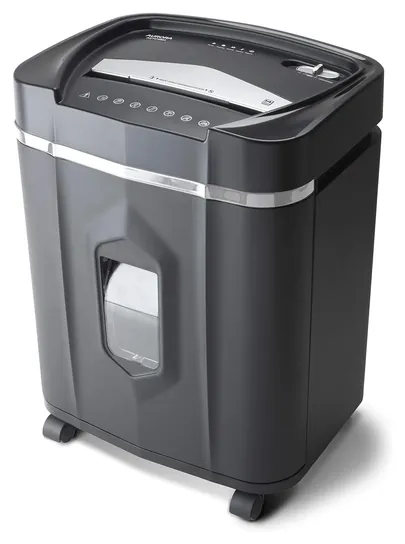
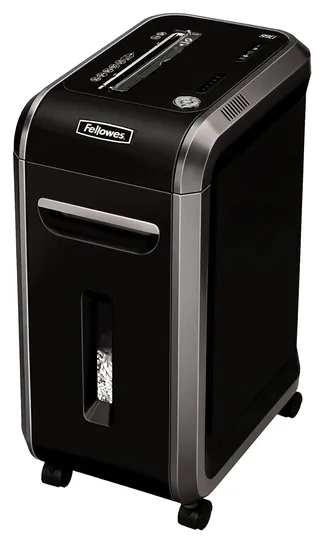
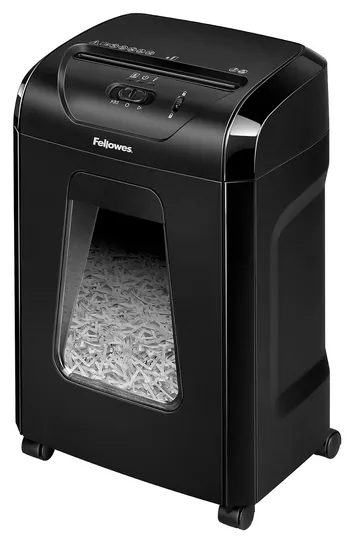
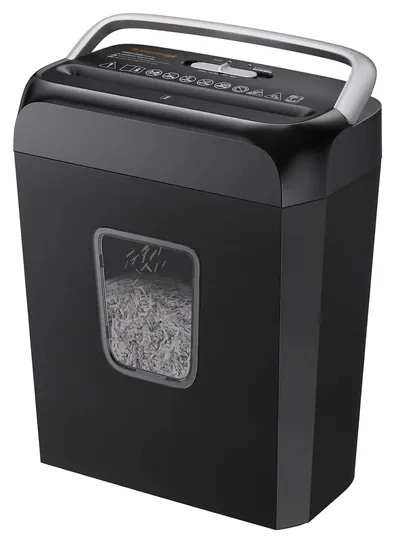
The Aurora AU1210MA now leads this list. It cuts paper into confetti, keeps running for a long stretch without overheating and backs out its own jams, at a price most households can live with. The Fellowes Powershred 99Ci is the pick for busier offices that want a bigger bin and blades that stop at a touch.
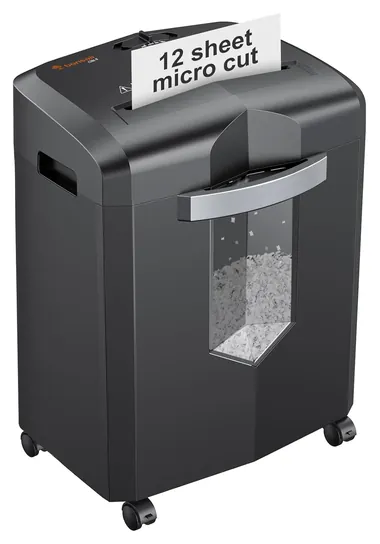
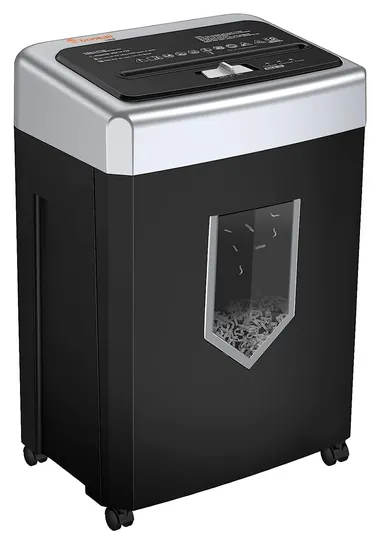
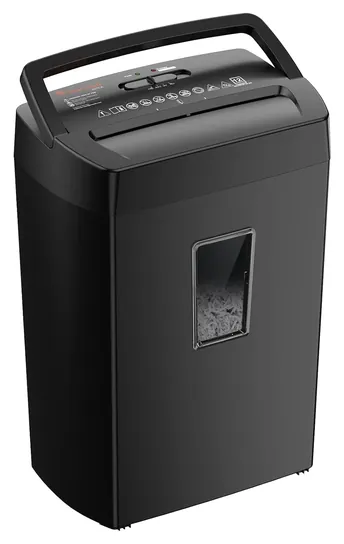
Very little from the old list could still be bought new. The Fellowes 79Ci is out of stock, the 24-sheet house-brand model has no steady supply, and the Aurora High-Security, Fellowes Powershred 125Ci, Royal 1840MX Platinum Series, Aurora Desktop, Muji Handy, GBC EX12-05 and Sentinel On Guard are no longer easy to find. The older Bonsaii 6-Sheet gave way to the Bonsaii C237-B.
This time we put each maker's posted run and cool-down limits next to its sheet rating, because a cheap machine that stops after three minutes can't clear a box of old tax files in an afternoon. We matched every cut size to the DIN 66399 security levels, leaned on Bob Vila's review for the Aurora, and checked each brand for recalls. The list stops at nine: the other options were near copies of these, or strip-cut models too coarse for financial papers.
Earlier notes
December 16, 2020, by Melissa Harr:
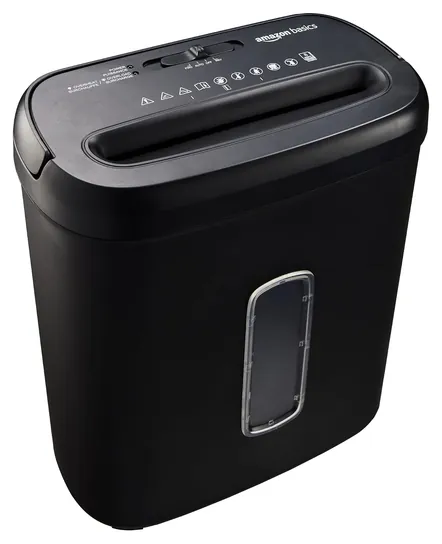
With this update, we've largely focused on cross-cut and micro-cut models, most rated to P-4 standards, which is more than adequate for providing most at-home and business security. When it comes to these models, the AmazonBasics 24-Sheet remains in the top spot. We like its casters, user-friendly operation, and the fact that this model comes in other versions for those who don't need the 24-sheet capacity.
The Aurora High-Security and the Fellowes Powershred 125Ci remain, as well, with the former giving excellent peace of mind for the price, and the latter offering power and jam prevention you can count on. For a less expensive version of the Fellowes machine, we kept the Fellowes 79Ci. It doesn't have as many bells and whistles, but it's quiet, reliable, and energy saving.
If it's affordability on which you're focused, take a look at the newly added Bonsaii 6-Sheet. While it's true that some of their machines can't live up to the top competitors when it comes to long-term durability, this small machine is a good choice for occasional use, especially if you don't want to spring for one of the pricier models.
As for other types, we added the tiny Muji Handy for those who need portability and simplicity. It's operated by hand, so no electricity is required, but it produces strip cuts, so don't rely on it to protect ultra-sensitive information. You'll also need to supply your own trash can, perhaps one that's hands-free, as it doesn't have a bin for paper collection. At the other end of the security spectrum, the Dahle PowerTEC 727 CS joins the list as a Special Honor. Rated to P-7 standards, it will nearly obliterate paper, but the extremely high price ensures that it's overkill for many uses.
December 18, 2019, by Melissa Harr:
Because of potential issues with its overall durability, we have opted to remove the Bonsaii C149 at this time. We've elected to remove the AmazonBasics 12-Sheet, as well, due to occasional issues with availability. But both the AmazonBasics 24-Sheet and the AmazonBasics 6-Sheet make fine options. The former is built a little more robustly, since it is designed to handle more sheets at once. Plus, it has plenty of usability features, including some found on more expensive models like the Fellowes 79Ci. We've also opted to add the Aurora High-Security as a budget choice. It creates micro-cut pieces and is easy to empty into a trash can, something that can't be said of all models. And for those who are in a hurry, we've kept the Fellowes Powershred 125Ci. The large bin and continuous shredding ensure that you can quickly tackle stacks of sensitive documents and carry on with your day.
Special Honors
Dahle Shredders Dahle, a German-engineered office brand, sells shredders well beyond home use: deskside units, department and high-capacity machines, auto-feed models and a high-security range that it says can handle documents up to Top Secret. Its PowerTEC series is the heavy-duty office line. These cost far more than home units and suit offices that shred all day or handle classified papers. dahle.com
Strip, Cross Or Micro-Cut: How Small Is Small Enough
They're fast, but a patient person can line the strips back up, so they're not for bank or tax papers.
Shredders are graded by the size of the pieces they leave. The German standard DIN 66399 sets levels from P-1 to P-7, and most home machines list one. Semshred and Binding101 lay out the limits: a P-3 piece can be up to 320 square millimeters, P-4 up to 160 and P-5 up to 30.
Strip-cut machines slice paper into long ribbons and usually rate P-2. They're fast, but a patient person can line the strips back up, so they're not for bank or tax papers. Cross-cut machines also cut across, leaving short pieces, and most land at P-3 or P-4. Micro-cut machines turn a page into confetti. Bob Vila calls micro-cut the most secure choice for home use, with the trade-off that it's slower.
For statements, medical bills and anything with an account number, P-4 is the usual target, and every pick here meets it. The micro-cut picks leave small rectangles about half an inch long; the long-strip cross-cut Fellowes models also qualify, but just barely.
Sheet Count, Run Time And Bin Size
The sheet count on the box assumes flat sheets of standard copy paper. Fold a page, leave a staple in or feed glossy stock and the real number drops. Feeding a few sheets under the limit keeps the motor cooler and cuts down on jams.
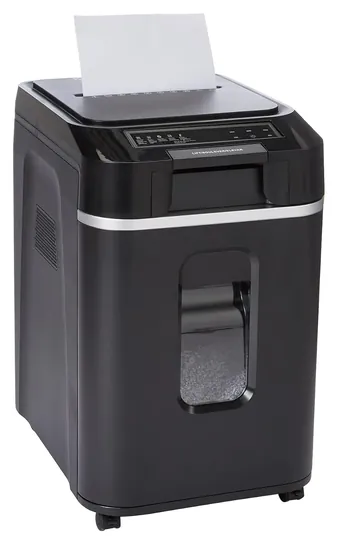
Run time matters more for a big cleanout. Small budget machines run three to six minutes and then need 20 to 40 minutes to cool. Mid-range models manage about 20 minutes, the Fellowes Powershred 99Ci about 30, and the Aurora AU1210MA and the 200-sheet auto-feed model up to an hour. In Bob Vila's Aurora review, the AU1210MA ran about an hour and a half of near-steady shredding without overheating and measured about as loud as a vacuum cleaner.
Bin size sets how often you empty it, and a 5-gallon bin is a sensible minimum for regular use. If you shred a whole box at a time, an auto-feed model lets you load a stack and walk away.
Care, Jams And Safety
Most jams come from overfeeding. Pull the stack back, use the reverse switch, and unplug the machine before reaching near the blades. Oil the cutters every so often: Bob Vila recommends a good machine oil, and shredder oil sheets work too. Several makers warn against spraying aerosol lubricants or dusters into or near a shredder, since the motor can ignite the vapor. With care, a shredder typically lasts five to 10 years.
Fingers, hair, ties and pet paws are the real hazards. Some models, such as the Fellowes Powershred 99Ci, stop the blades when skin touches the slot. Others stop when the head is lifted or the bin is pulled out, or have a lock switch. Keep any shredder off when children are around, and don't let them feed it.
Check the rules on what each one takes. Most handle staples and small clips and many take credit cards, but binder clips are a no-go and some budget models forbid metal cards. We checked every brand here against U.S. Consumer Product Safety Commission recalls and found none for these shredders.
How we researched this
We compared 17 shredders from Aurora, Fellowes, Bonsaii and Amazon Basics, read the posted sheet ratings, cut sizes, run times and cool-down limits for the nine finalists, matched each cut size to its DIN 66399 security level, used Bob Vila's review of the Aurora AU1210MA, analyzed owner feedback for durability and jam patterns, and checked every brand against U.S. Consumer Product Safety Commission recall records. Updated November 1, 2026 by Ezvid Wiki Editors.
Frequently asked questions
What's the difference between cross-cut and micro-cut?
A cross-cut shredder cuts paper both ways into short pieces, usually security level P-3 or P-4. A micro-cut shredder cuts much smaller confetti, P-4 or higher. Micro-cut is harder to reassemble but slower and fills the bin sooner.
Is a cross-cut shredder secure enough for home use?
For most households, yes, if it's rated P-4. That level is the usual advice for bank statements, tax papers and medical records. Avoid strip-cut models (P-2) for anything with an account number.
What is a trash can top shredder?
It's the common home design: a cutting head that sits on top of a wastebasket-style bin. Some lift off by a handle so you can dump the bin, and larger ones have a pull-out drawer instead. Every pick on this list is built this way.
How long can a paper shredder run before it needs to cool down?
It depends on the model. Small budget units run three to six minutes, then rest 20 to 40 minutes. Mid-range models run about 20 to 40 minutes, and heavy-duty ones up to an hour.
Can a paper shredder handle staples, credit cards and CDs?
Most handle staples and small paper clips, and many take credit cards. Only some take CDs and DVDs, and metal cards and binder clips are usually off limits. Check the maker's list before you feed anything but paper.
How long does a paper shredder last?
Bob Vila puts the average at five to 10 years. Oiling the cutters, staying under the sheet limit and respecting the cool-down help it last.