The 10 Best Pipe Cutters
Updated by · How we research

Ten copper, steel and plastic pipe cutters compared by pipe size, tight-space reach, ratchet or cordless feed and blade type; the Ridgid 150 leads for copper. When users buy our independently chosen editorial recommendations, we may earn commissions to help fund the Wiki.
Copper sold as half-inch pipe measures five-eighths of an inch on the outside, and cutters are rated by that outside size, so a tool that looks big enough can come up short. The pipe also decides the tool: a wheel for copper, a heavier frame for steel, a ratcheting shear for PVC and PEX. This list serves homeowners, plumbers and HVAC techs.


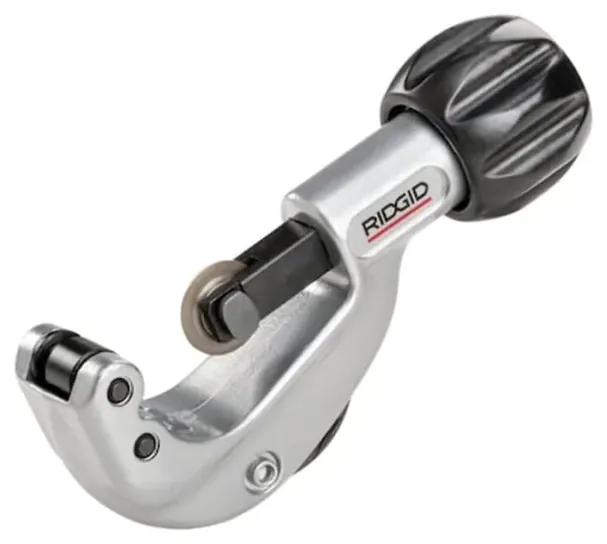
From the manual
- A ball-detent wheel pin lets you change the wheel without tools or loose clips. p. 1
- An enclosed feed screw keeps the feed from clogging or jamming. p. 1
- Grooved rollers allow close-to-flare cuts. Ridgid spec page
Why the Ridgid 150 is our top pick
The 150 does the whole copper job in one tool, and the runner-up doesn't. Both reach 1-1/8 inches on the outside, which is 1-inch copper,1,3,5 but only the 150 carries a fold-away reamer in its frame and a spare wheel in its knob.1,2 Our runner-up, the Ridgid 101, has neither on its maker's feature list.3
The reamer matters more than it sounds. The Copper Development Association says to ream every cut end to the full inside diameter, because the burr a wheel leaves can cause erosion-corrosion from turbulence in the line.6 With the 101, that means a second tool in the bag.
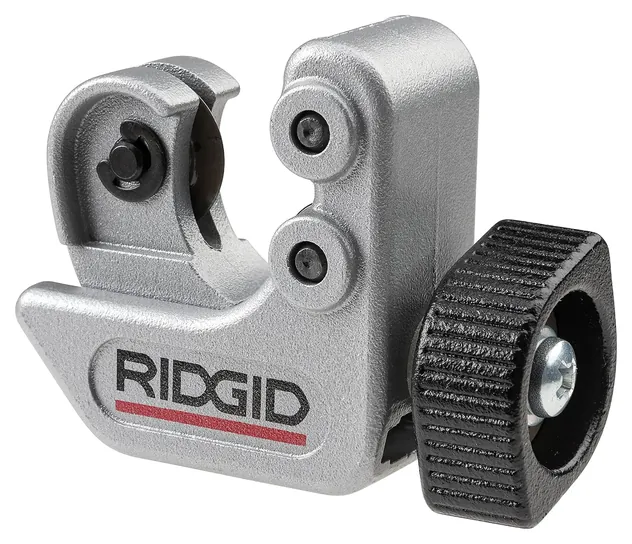
The runner-up wins in tight spots. It was designed for restricted spaces, weighs half as much, and takes the same ratchet handle as the 118 for places where you can only rock it back and forth.3,4 Both use the same standard wheel, so spares are shared.1,3 If your copper sits tight against a joist, get the 101; for most other copper work, the 150 is the better buy.
| Ridgid 150 | Ridgid 101 | |
|---|---|---|
| Size range, outside | 1/8 - 1 1/8 in. | 1/4 - 1 1/8 in. |
| Reamer | Fold-away, in the frame | None listed |
| Spare wheel | Stored in the knob | None listed |
| Weight | 1 lb | 1/2 lb |
Sources
- Ridgid 150 1Constant swing cutters, features and ordering table 2Catalog sheet R-05-G, 2005 (copy)
- Ridgid 101 3Close quarters cutters, features and ordering table 42-in-1 AUTOFEED cutter page (ratchet handle fits the 101)
- 5Engineering ToolBox: ASTM B88 copper tube dimensions
- 6Copper Development Association: Copper Tube Handbook, soldered joints
Compare the specs
Swipe the table sideways to see every column.
| Product | Size range (in. OD) | Feed | Weight (lb) | On-board extras |
|---|---|---|---|---|
| 1. Ridgid 150 | 1/8 - 1 1/8 | Knob, enclosed screw | 1 | Reamer, spare wheel |
| 2. Ridgid 101 | 1/4 - 1 1/8 | Knurled knob | 1/2 | — |
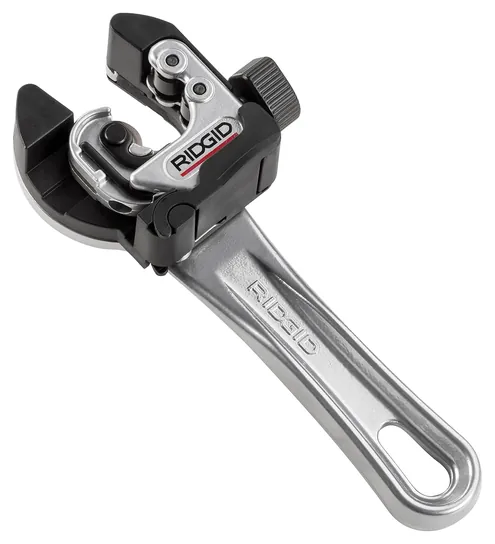
| 3. Ridgid 118 | 1/4 - 1 1/8 | Self-feeding knob | 5/8 (cutter) | Spare wheel, ratchet handle |
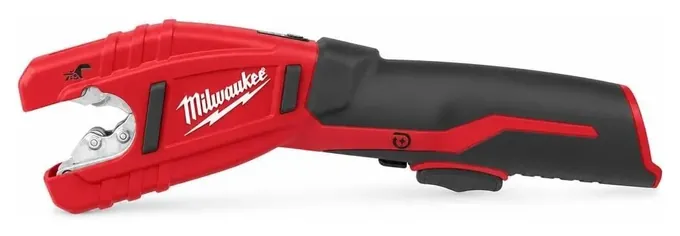
| 4. Milwaukee M12 2471-20 | 1/2 - 1 1/8 | 12-volt motor, trigger | — | LED, fuel gauge |
| 5. Knipex TubiX | 1/4 - 1 3/8 | One-hand quick lock | 0.83 | Deburrer, spare wheel |
| 6. Ridgid 103 | 1/8 - 5/8 | Knurled knob | 1/3 | — |
| 7. Ridgid 152 | 1/4 - 2 5/8 | Quick-acting, knob | 2 | Fold-away reamer |
| 8. Ridgid 2-A | 1/8 - 2 nominal steel | Feed screw handle | 7 | Converts to 3 wheels |
| 9. Klein Tools 50080 | 2 3/8 OD, 2 ID max | Ratchet squeeze | — | Locking latch |
| 10. Bates PVC Cutter | — | — | — | — |
Sizes are outside diameters from each maker's table, except where noted: Milwaukee rates its cutter by copper trade size (3/8 to 1 inch), converted here with the ASTM B88 table, the 2-A is rated by nominal steel pipe size, and Klein gives inside and outside limits. Weights are the makers' figures for the cutter alone. Bates publishes no specs, and a dash means no maker figure.
Sources
- Ridgid Constant swing cutters (150) Close quarters cutters (101, 103, 118) 2-in-1 AUTOFEED cutter (118) Quick-acting cutters (152) Heavy-duty pipe cutters (2-A)
- Milwaukee M12 2471-20 operator's manual (PDF)
- Knipex TubiX 90 31 02 BK datasheet (PDF)
- Klein Tools 50080 product page 50080 sell sheet (PDF)
- Engineering ToolBox: ASTM B88 copper tube dimensions
From the manual
- Cuts copper tubing from 3/8- to 1-inch trade size; under ASTM B88 that is 1/2 to 1-1/8 inches outside. pp. 2-3
- Don't cut off pieces shorter than 1/2 inch: small offcuts can be pulled into the moving carriage and damage the tool. p. 3
- Use only Milwaukee's 48-38-0010 wheel; to swap it, pull the battery, remove a clip ring and slide out the axle. p. 2
- Milwaukee asks owners to send the tool, battery and charger to a service center every six months to a year for lubrication and inspection. p. 3
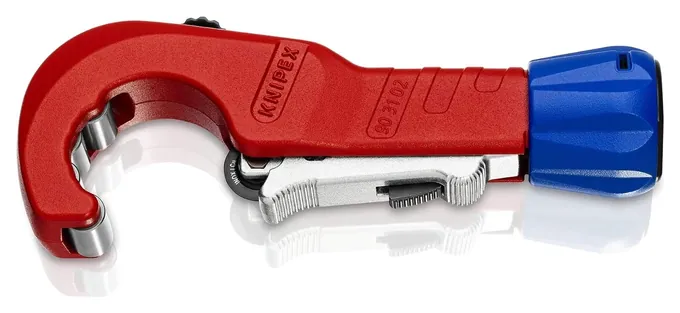
From the manual
- Rated for pipe from 6 to 35 mm across with walls up to 2 mm, in copper, brass or stainless steel. p. 1
- It also cuts rigid steel electrical conduit and strips steel-wire-armoured cable. p. 1
- The wheel changes without tools, a spare is stored in the handle, and the deburring tool is removable. p. 1
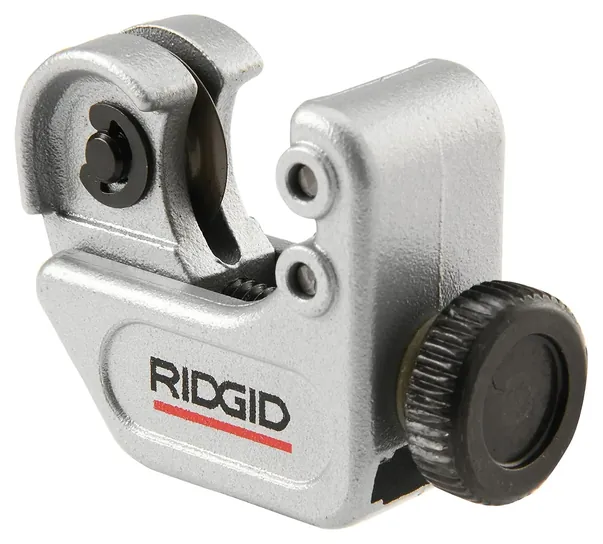
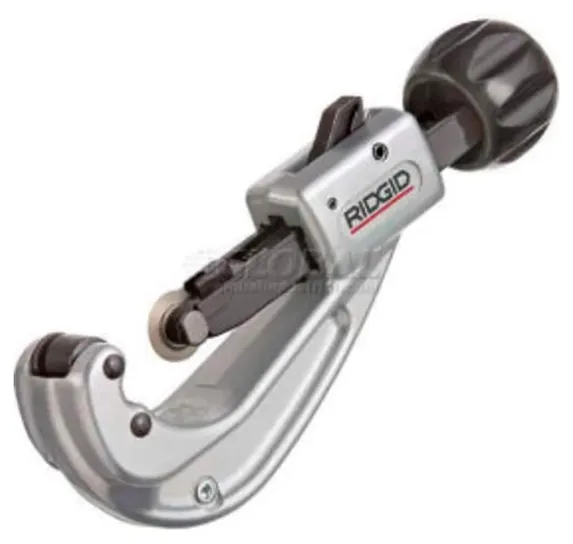
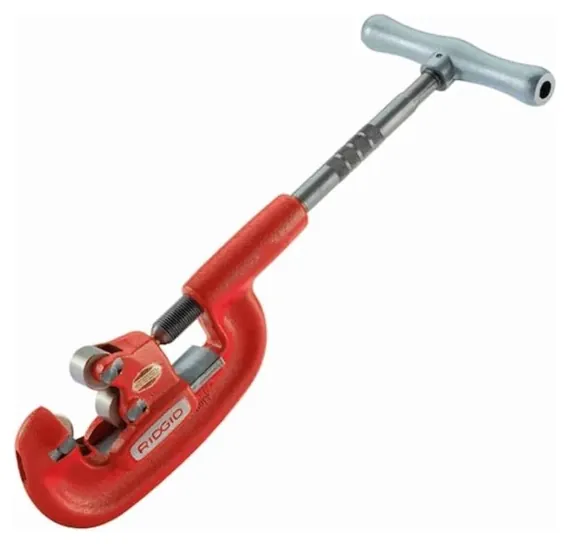
From the manual
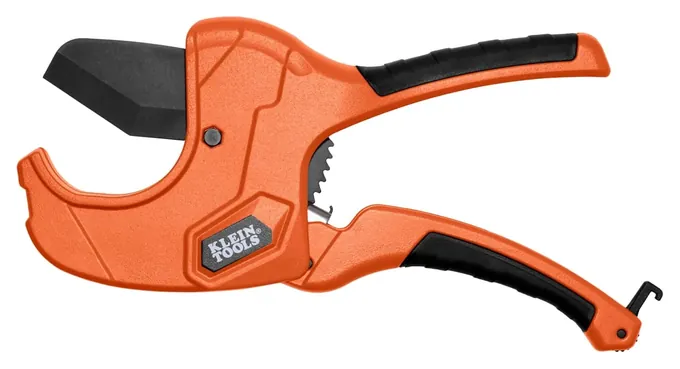
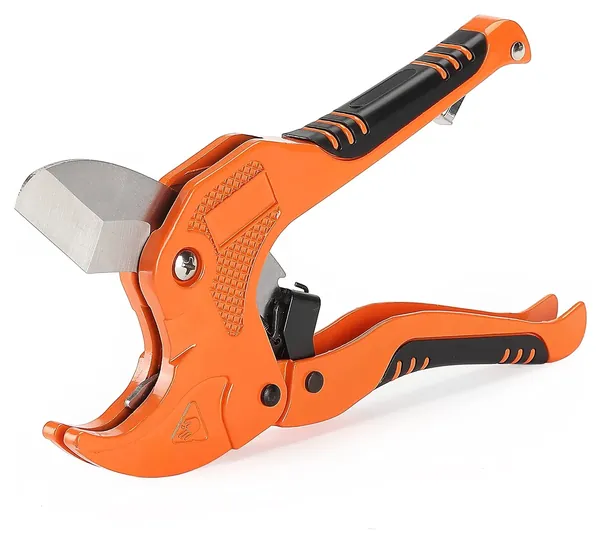
- Klein rates it by inside diameter, 2 inches, and 2-3/8 inches outside, for Schedule 40 and 80 PVC, CPVC and PEX. product page
- The blade retracts for one-handed use, and a latch keeps the tool closed in storage. p. 1
- Klein warns never to use it on or near electrical circuits. product page
Editor's Notes
November 5, 2026, by Ezvid Wiki Editors:
This pass checked every pick against Ridgid's ordering tables, Milwaukee's M12 manual and the Knipex and Klein spec sheets. We corrected the Ridgid 101's size limit, the Ridgid 118's feed and the Klein 50080's blade and Schedule 80 claims, and dropped unsupported lines about where the Ridgid 152 and Knipex TubiX are made. We also added a spec table, a section on why the Ridgid 150 leads and notes from the manuals.
October 23, 2026, by Ezvid Wiki Editors:
The Ridgid 150 moves to the top because most readers here are cutting copper, and its fold-out reamer and spare wheel handle a whole sweat joint with one tool. The old list mixed copper cutters with exhaust and hardware-store tools, and several of those no longer turn up for sale. The Klein Tools 88904 is out because it's no longer available, the Steel Dragon SDT-2A gave way to the Ridgid 2-A it was modeled on, and the Ridgid 154 went because it starts near two inches, which few homes need. The Master Plumber 745122, Cobra Products PST002, Magbit MAG801 and Gearwrench 2031DD are gone too.
The Ridgid 118, Milwaukee M12 2471-20 and Ridgid 103 stay. New are the Ridgid 101 for pipe tight against a wall, the Knipex TubiX for stainless, the Ridgid 152 for big copper, the Ridgid 2-A for steel, and two ratcheting shears for plastic pipe, the Klein Tools 50080 and the Bates PVC Cutter.
To rank them we lined up each maker's rated capacity against the Copper Development Association's tube size tables, weighed recurring owner complaints such as cordless cutters failing after a soaking, and searched federal recall records, which list no recall for any of these tools.
Earlier notes
February 12, 2021, by Chris Gillespie:
The material you are working with and the diameter of the tubing will determine the type of pipe cutter you need, and in compiling this ranking we tried to select a range of tools to cover all eventualities. For PVC and PB plastic piping, a ratcheting cutter such as the Cobra Products PST002 is the best choice, whereas for copper pipe a wheeled cutter like the Magbit MAG801 and the Klein Tools 88904 is necessary.
For larger diameter tubing, or for cutting steel or iron, a more heavy-duty option such as the Ridgid 154 or the Steel Dragon Tools SDT-2A is needed, with the former having a four-and-a-half-inch capacity and the latter having an industrial-grade body and a hardened cutting wheel. Compact cutters are useful when there is little clearance to work around the pipe and the Ridgid 32975 is a compact option that measures under three inches and can slice through pipes as small as one-eighth of an inch. The Milwaukee 2471-20 is a battery-operated tool that requires no almost lateral clearance and automatically adjusts to the size of the pipe, making it extremely useful in tight spaces.
September 18, 2019, by Rafael Perez:
Removed the Tekton 6463 because of availability issues. Added the Klein Tools 88904 and the Rigid 32573.
The Klein is a great model when space is not an issue, as is the case when building new plumbing. The four rollers allow for smooth cutting with no wandering. The Rigid 32572 is perfect for repairs when only certain sections of pipe must be replaced or rerouted. The ratchet engages with minimal turning, which means that you can cut pipes even if you only have a half foot of lateral space to work with.
When cutting hard metals like steel, its always best to use some lubrication to prolong the life of your wheel blades. Working on plumbing or fluid lines can be dangerous and should only be done by trained technicians to avoid personal injury or property damage.
Measure The Outside, Not The Name
A cutter listed to 1-1/8 inches, like the Ridgid 150 or 101, tops out at 1-inch nominal copper.
Copper tube sizes are nominal, and the number on the pipe isn't its real width. Under the ASTM B88 standard, copper water tube measures 1/8 inch more on the outside than its name, so "1/2-inch" copper is 5/8 inch across and "3/4-inch" is 7/8 inch (Engineering ToolBox). Tubing cutters are rated by that outside diameter. A cutter listed to 1-1/8 inches, like the Ridgid 150 or 101, tops out at 1-inch nominal copper. For 1-1/4-inch and larger lines, you need something like the Ridgid 152, which reaches 2-5/8 inches.
Then check the room around the pipe. A constant-swing cutter needs clearance to travel a full circle. Close-quarters cutters such as the Ridgid 101 and 103 turn in a few inches, and the Ridgid 118 adds a ratchet handle for spots where you can only rock it back and forth. Milwaukee says the rotating head of its M12 cutter cuts installed copper with as little as 1-1/2 inches of clearance (Milwaukee).
Match The Tool To The Pipe
Copper, brass and aluminum cut cleanly with a standard tubing wheel. Stainless steel is harder, so use a cutter rated for it, such as the Knipex TubiX, which Knipex lists for stainless tube with walls up to 2 millimeters (Knipex).
Black iron and galvanized steel pipe need a heavy pipe cutter with a T-handle, like the Ridgid 2-A, rated for 1/8- to 2-inch steel pipe (Ridgid). Its wheel leaves a square end for threading, but it also pushes a ridge into the bore that must be reamed out.
PVC, CPVC and PEX are best cut with a ratcheting shear such as the Klein Tools 50080, which squeezes through in steps and is rated for Schedule 40 and 80 pipe (Klein Tools). Keep the blade sharp, because a dull one crushes thin tubing. PVC turns brittle in the cold, so warm it up or use a fine-tooth saw outdoors in winter. Plastic pipe bigger than about 2 inches and cast iron soil pipe are jobs for a saw, a chain cutter or a soil pipe cutter.
Clean Cuts: Feed Slowly, Ream Every Time
Tighten a wheel cutter only a little on each turn. Cranking it down hard flattens soft copper out of round and can send the wheel off in a spiral, which leaves an end that won't seat in a fitting. A cutter with more guide rollers tracks straighter.
Every wheel cut leaves a burr on the inside edge. Ream it off with the fold-out reamer on the Ridgid 150 or 152, or a separate deburring tool, because that lip slows the flow and can erode the pipe over time (Copper Development Association). Clean the outside with emery cloth before soldering or pressing a fitting.
Wheels are replaceable. Ridgid's standard E-3469 wheel fits the 101, 103, 118, 150 and 152 (Ridgid). Before cutting, shut off the water, open a faucet below the cut to drain the line, and keep fingers clear of the jaw. Battery cutters should stay dry.
How we researched this
We compared about 25 copper, steel and plastic pipe cutters and lined up each finalist's rated size range against the ASTM B88 copper tube table. We read Milwaukee's operator's manual for the M12 2471-20, Knipex's datasheet for the TubiX 90 31 02 BK, Klein's 50080 sell sheet, Ridgid's 2005 catalog sheet for the 150 and Ridgid's ordering tables for the 101, 103, 118, 152 and 2-A, and took the reaming advice from the Copper Development Association's Copper Tube Handbook. A November 2026 search of CPSC recall records found no recall of any pipe or tubing cutter from Ridgid, Milwaukee, Klein, Knipex or Bates.
Sources (12)
- Engineering ToolBox: ASTM B88 copper tube dimensions
- Copper Development Association: Copper Tube Handbook, soldered joints
- Milwaukee: M12 Copper Tubing Cutter 2471-20
- Milwaukee: 2471-20 operator's manual (PDF)
- Ridgid: tubing cutters
- Ridgid: constant swing cutters (150)
- Ridgid: close quarters cutters (101, 103, 118)
- Ridgid: quick-acting cutters (152)
- Ridgid: heavy-duty pipe cutters (2-A)
- Knipex: TubiX 90 31 02 BK datasheet (PDF)
- Klein Tools: 50080 ratcheting PVC cutter
- U.S. Consumer Product Safety Commission: recalls
Frequently asked questions
Can I cut steel pipe with a copper tubing cutter?
No. A copper cutter's wheel and frame aren't built for steel. Use a steel pipe cutter like the Ridgid 2-A, or a cutter rated for stainless such as the Knipex TubiX for thin stainless tube.
What size tubing cutter do I need for 1/2-inch copper?
Half-inch copper measures 5/8 inch on the outside, so any cutter rated to 5/8 inch OD or more works. Cutters rated to 1-1/8 inches cover every size up to 1-inch copper.
What is the best pipe cutter for tight spaces?
A close-quarters cutter such as the Ridgid 101 or 103 turns in a very small circle. The Ridgid 118 adds a ratchet handle, and the Milwaukee M12 2471-20 works close to a wall.
Why does my tubing cutter spiral instead of cutting straight?
Usually too much pressure on the feed. Tighten a little on each turn, keep the cutter square to the pipe, and replace a chipped or dull wheel.
What is the best way to cut PVC pipe?
A ratcheting shear like the Klein Tools 50080 makes quick, square cuts up to 2 inches. For larger or very cold pipe, use a fine-tooth saw and deburr the edge.
Is a cordless copper cutter worth it?
Mainly for professionals or big remodels with many cuts. For a few repairs a year, a hand cutter does the same job for far less.