The 8 Best Pocket Radios
Updated by · How we research

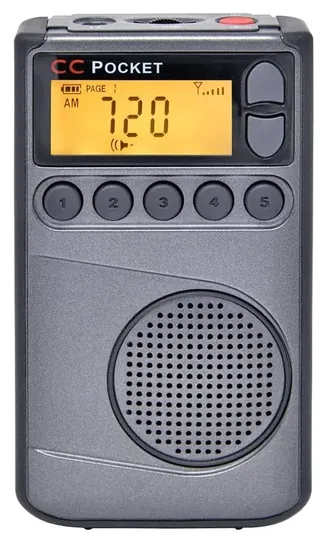
Eight AM/FM pocket radios compared on reception, weather alerts, battery life and size; the C. Crane CC Pocket leads for its weather band and long AA runtime. When users buy our independently chosen editorial selections, we may earn commissions to help fund the Wiki.
Every pocket radio hides a tiny AM antenna, so strong local AM stations come in fine but distant ones fade indoors, while FM leans on a pull-up antenna or the earbud cord. These little sets suit walkers, ballgame fans, campers and anyone who wants news and weather in a power outage without a phone, a data plan or an app.


Editor's Notes
October 23, 2026, by Ezvid Wiki Editors:
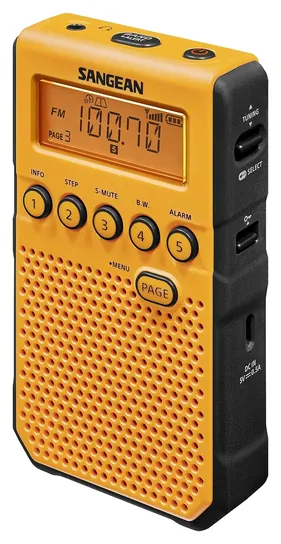
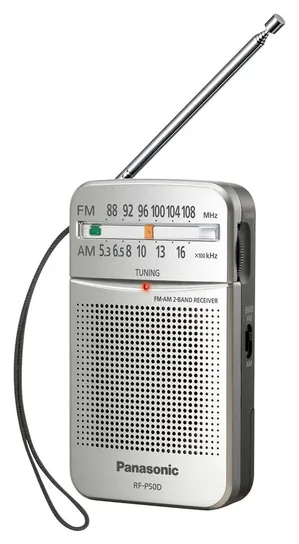
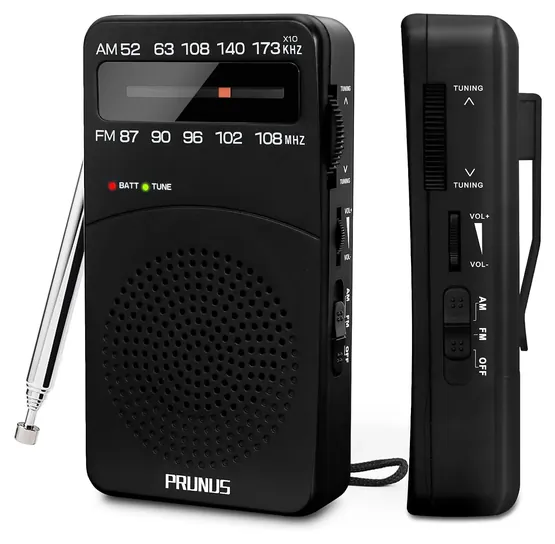
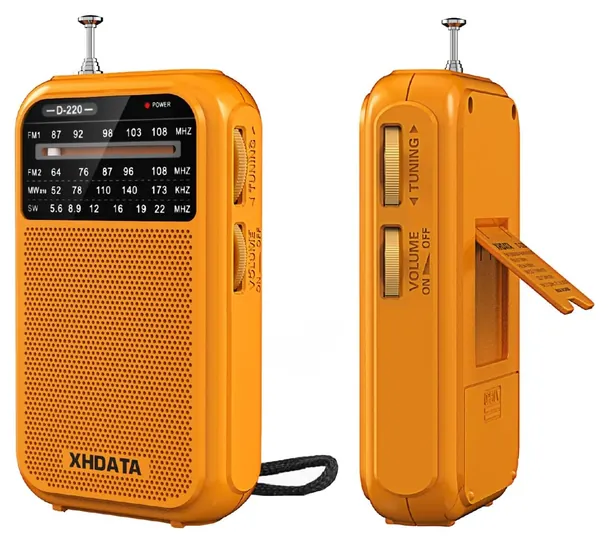
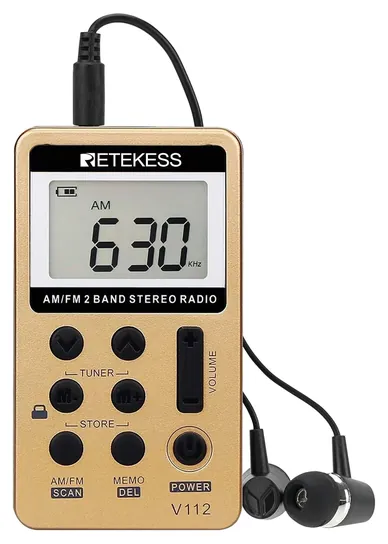
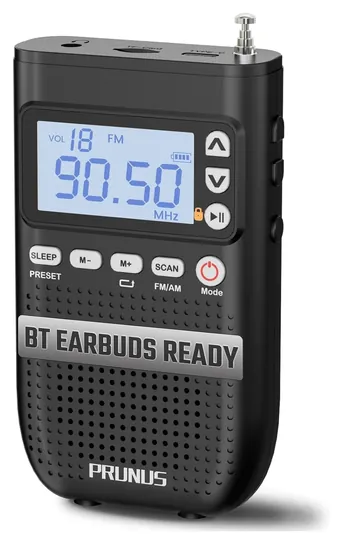
The C. Crane CC Pocket takes the top spot. It matches the Sangean DT-800 on reception and weather alerts, runs about 100 hours on a pair of AA cells, and costs noticeably less right now. The Sangean DT-800, Sangean DT-160 and Prunus J-166 stay, the Prunus under its current model listing. New picks fill gaps the old list left open: the Panasonic RF-P50D for a plain dial, the XHDATA D-220 for shortwave, the Retekess V112 for the smallest size and the Prunus J-618 for wireless earbuds.
The Eton FRX2 and Sangean HDR-14 are good radios, just too big for a pocket. The Sony ICF-P26 can't be bought new anymore, and three off-brand MP3-style radios went because nobody has documented how they perform. The best evidence in this niche is one radio hobbyist's long run of side-by-side listening reviews, which we checked against the spec sheets from Sangean, C. Crane and Panasonic.
Earlier notes
December 9, 2020, by Brendon Hannaford:
For this update we had to replace several models that were experiencing stock issues, and in their place we've added some distinct radios in order to make sure everyone can find the best option for their particular needs.
For instance, those who are specifically interested in a radio to accompany them during camping or hiking trips might be interested in the Eton FRX2. It features a built in LED flashlight and the ability to receive NOAA weather broadcasts, both of which are camp-friendly features on their own, but most importantly it can be charged by cranking the built-in lever. Of course it's always ideal to utilize the integrated battery first, and this secondary charging system does add some bulk, but it's good to know that if you're way out in the middle of nowhere on a backpacking trip you'll still have access to tunes even when all of your batteries and power packs have died.
The Greadio Retro Pocket on the other hand was added purely due to its uncommon look, and it definitely leans more towards novelty than practicality. Of course it doesn't have modern features like station presets or automatic scanning, but that's sort of the whole point. This radio makes a great gift for vintage style enthusiasts who will appreciate tuning in their favorite stations with the large rotating dial.
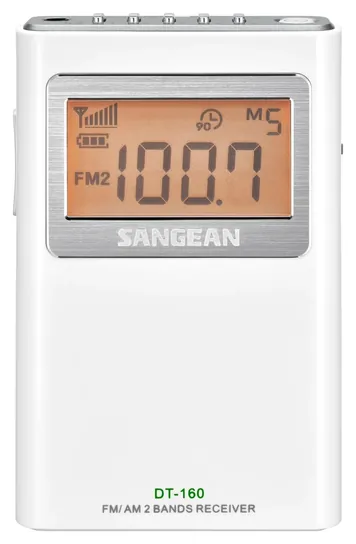
We also added the Sangean DT-160, which is on the opposite side of the spectrum when it comes to novelty versus practicality. This small white radio may not be particularly eye-catching, but it's super reliable, and it offers a ton of features that make for a smoother user experience when compared to other bare-bones choices. It has presets, a stereo-mono switch, a backlit display, a sleep timer, and the list goes on. This makes it a very versatile device, and while it definitely isn't the cheapest model you can get it's not exorbitantly expensive either, so it's probably worth it if you're an avid listener who's going to be using their radio everyday.
Even if you came to this article looking for a dedicated pocket radio don't immediately discount the Grtdhx MP3 Player, as its built in FM receiver runs with the best of them when it comes to signal reception. This option is definitely worth considering for those who already have a large library of audio files, and it also offers a few rare abilities such as radio recording. However, if you're only ever going to use the FM radio function it's probably not the best choice. All of its extra functions and its detailed color screen make it so that it can't provide nearly the same battery life as options that only have a tuner and a simple LCD, if they even have a display at all.
November 13, 2018, by Jeff Newburgh:
Added the Sangean DT-800 for its ability to accept all NOAA stations as well as its dynamic boost feature for audio clarity. Also included the Prunus Anjan due to its copper core antenna and digital signal processing functionality for improved reception. The Tecsun 4-in-1 is extremely versatile and capable of scanning international broadcasts.
Special Honors
Sangean SR-35 The Sangean SR-35 is a small speaker radio with an analog dial that radio reviewer Jay Allen rates among the best-sounding portables of its kind. It runs on two AA cells and has a pull-up FM antenna. We couldn't find a steady US listing for it, so it sits here rather than in the main list; check Sangean's site for dealers. sangean.com
AM, FM And The Tiny Antenna Problem
Many speaker radios with a dial tune in small electronic steps rather than a smooth sweep, so rock the dial past a station and back to land on its strongest point.
A radio this small has room only for a short AM antenna rod inside the case. That's enough for strong and medium local AM stations, but faint or distant ones fade, especially indoors, in a car or in a building with a steel frame. Radio reviewer Jay Allen, who has compared dozens of pocket sets side by side, notes that turning the radio or moving to a window often does more than any feature (Jay Allen's pocket radio roundup). Because the AM antenna is directional, rotating the radio until the hiss drops is the quickest fix.
FM depends on the pull-up antenna or, on earbud models, the earbud cord, and your hand on the case changes reception too. Many speaker radios with a dial tune in small electronic steps rather than a smooth sweep, so rock the dial past a station and back to land on its strongest point. If you mostly want talk, sports and local news, AM matters; for music, FM stereo through earbuds sounds far better than any tiny speaker.
Speaker Radio Or Earbud Radio
Pocket radios come in two styles. Speaker radios, like the Panasonic RF-P50D, have a pull-up antenna, a small speaker and usually a dial. They're simple, loud enough for a tent or a workbench, and mono. Earbud radios, the old Walkman style, have a digital screen, presets and often a clock. They use the earbud cord as the FM antenna, so the buds have to be plugged in for good FM, and they play FM in stereo. Some, like the Sangean DT-160, have no speaker at all.
Digital tuning lets you jump straight to a saved station, which helps in the dark or with stiff fingers. Dial radios are quicker to grasp but can skip past weak stations. The earbuds bundled with cheap radios tend to be poor, and a decent pair improves the sound a lot. Spending more mostly buys better selectivity, presets, a clock and a weather band, plus steadier build quality.
Weather Band, Batteries And Power Outages
A weather band picks up the seven channels of NOAA Weather Radio, the National Weather Service's round-the-clock broadcast of forecasts and warnings. Radios with an alert feature stay on standby and sound a tone when a warning goes out, but only while switched to that mode. On the C. Crane CC Pocket, AM and FM are silent while the alert is armed.
Most pocket radios run on two AA cells, which makes them handy in a blackout: you can keep a spare pack in a drawer. Speaker play drains cells much faster than earbuds. Rechargeable NiMH cells work in AA radios, though C. Crane says not to use lithium AA cells in the CC Pocket. Take batteries out of a radio you'll store for months to avoid leaks. For a long outage, a hand-crank or solar emergency radio is the better tool, and Ready.gov lists a battery or crank radio in its basic emergency kit.
How we researched this
We compared 19 pocket radios, read the makers' or sellers' spec sheets for the 8 picks, used an independent radio reviewer's side-by-side listening reports, and checked every brand against the CPSC recall database. Updated October 23, 2026 by Ezvid Wiki Editors.
Sources (9)
- Jay Allen: Pocket Portable AM/FM Radios update
- Jay Allen: Sangean DT-800 review
- Jay Allen: C. Crane CC Pocket review
- Jay Allen: Sangean DT-210 and DT-160 review
- C. Crane: CC Pocket product page
- Panasonic: RF-P50D specifications
- National Weather Service: NOAA Weather Radio
- Ready.gov: Build a Kit
- CPSC recalls
Frequently asked questions
Do pocket radios get AM stations well?
They get strong and medium local AM stations fine. The AM antenna inside is tiny, so distant or weak stations fade, especially indoors. Turn the radio or move near a window to improve it.
Do I need a license to use a pocket radio?
No. AM, FM, shortwave and weather radios only receive signals, so no license is needed anywhere in the US.
Why does FM sound better with earbuds plugged in?
On earbud-style radios the earbud cord is the FM antenna, and FM stereo only plays through earbuds. Speaker radios use a pull-up antenna and play in mono.
Can I use rechargeable batteries in a pocket radio?
Yes, rechargeable NiMH AA cells work in AA radios, and the Sangean DT-800 can charge them inside the case. C. Crane says not to use lithium AA cells in the CC Pocket.
Will a pocket radio work in a power outage?
Yes, as long as it has charged cells. Models with a weather band can sound an alert for National Weather Service warnings. For a long outage, a hand-crank or solar radio is a better backup.
Is there a pocket radio with Bluetooth?
A few can send the radio to wireless earbuds, like the Prunus J-618. Most pocket radios still use wired earbuds, partly because the cord serves as the FM antenna.