The 6 Best Pool Timers With Freeze Protection
Updated by · How we research

Six freeze-protection pool timers compared on voltage, circuits and dial or digital clocks. The Intermatic PF1102T is the pick for most single-pump pools. When users buy our independently chosen editorial picks, we may earn commissions to help fund the Wiki.
A freeze thermostat reads the air at the box, not the water, and it only works while the power is on: a tripped breaker or an outage leaves the pipes on their own. These controls suit pools in mild-winter regions that run year-round, where a hard freeze comes a few nights a season and draining makes no sense.


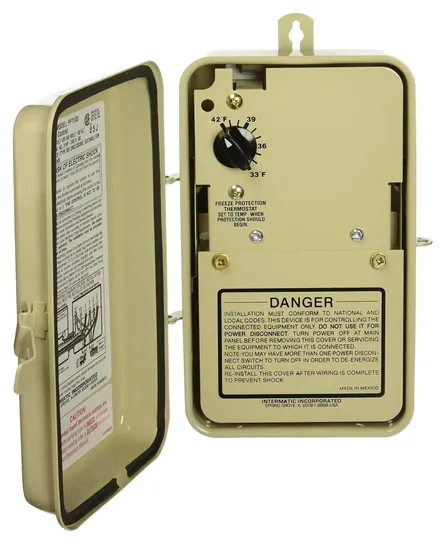
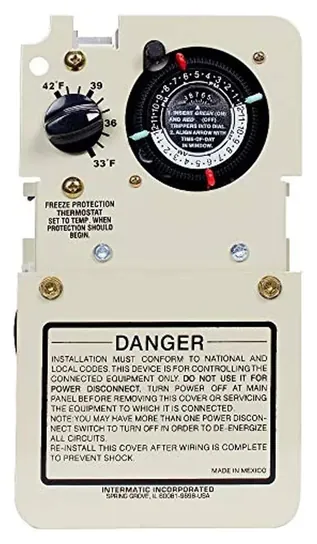
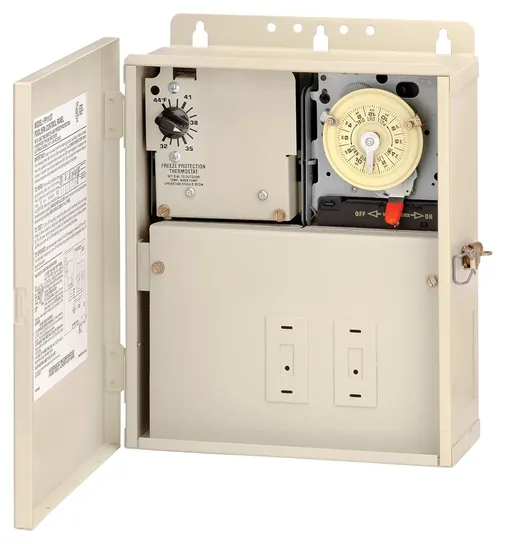
Editor's Notes
October 23, 2026, by Ezvid Wiki Admin:
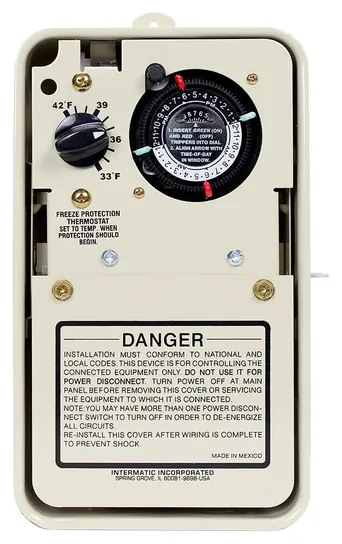
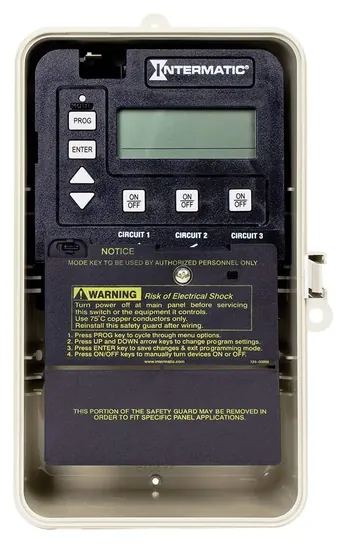
The Intermatic PF1102T moves to the top. For one pump it puts a dial timer and a freeze thermostat in one rainproof box, and it's the simplest complete setup still sold. Both Tork controls are gone, so they're out, and the Intermatic PF1103T has no current listing, which is why the thermostat-only Intermatic PF1103 takes its place for 120-volt pools. The old digital pick returns as the Intermatic PE153PF, the same three-circuit control bundled with its air sensor.
Readers often ask about Wi-Fi pool timers. The popular ones we looked at have no thermostat, so none made the list, but a thermostat-only box can sit beside one. Intermatic's own spec pages wouldn't load for us, so the numbers here come from pool-supply retailers' spec sheets and the sellers' specifications, checked against photos of each dial.
September 28, 2020:
With an unusually large amount of availability issues all but obliterating our previous picks for this category, the easiest thing to do was simply start from scratch, and come up with an entire new list of offerings. As with previous iterations of these rankings, this set consists primarily of options from Intermatic and Tork, two well-recognized names in the American pool industry.
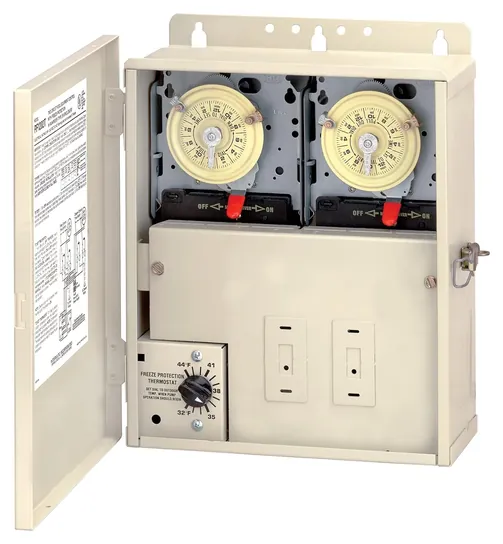
Some notable new additions are the Intermatic PF1202T — which boasts two, electrically interlocked timing mechanisms in the same housing; the Tork PP-20R-F2 — which separates itself from other analog models with a handy three-position selector switch that makes it easy to transition from automatic to manual modes; and the Intermatic PE153 — a digital model that can control three circuits simultaneously, each with as many daily events.
A few things to look for in this category:
Compatibility: First and foremost, before you even get as far as serious consideration, you’ll need to make sure that this timer is compatible with your existing pool pump. This might mean making sure that your pump’s power rating doesn’t exceed the maximum controllable wattage for the timer, but manufacturers usually make this nice and easy by providing a horsepower rating for most of their models. So, make sure that the timer jives with your pump’s voltage (likely 120 or 240), and make sure that your timer’s maximum horsepower rating does not exceed that of your pump.
Installation: Once you’re confident that you’ve selected a timer that can handle your pump, you’ll be just about ready to order, but one last thing worth looking into, especially in the case of retrofits, is whether or not your timer requires a neutral wire. And if it does, is one available the desired point of installation? While some analog models – like the Intermatic PF1102T, which is designed for use with 240-volt equipment – can get by without a neutral wire, digital units like the Tork PFPEW1103 will require a true neutral line, even if the equipment they service doesn’t.
Additional Equipment: If you, like I, enjoy a simple swimming pool setup that only employs a single pump, then any properly sized timer will do for you. However, if your backyard’s a bit more elaborate, and your pool’s outfitted with a booster pump, or you’ve also got a hot tub, or you’d also like to automate your backyard lighting, then you might want to consider an option equipped to manage multiple loads. The Intermatic PF1202T comes with two interlocked mechanisms, so you can control your supplementary pump separately, but never have to worry about it turning on when your primary pump isn’t running. The Intermatic PE153 can control up to three circuits, and each circuit can have three daily events programmed into it.
January 11, 2019:
Given the limited comparable features among the market's models, features like digital readouts and well-made enclosures were among the most important advantages in ranking. Pretty much all of the items on our list are from one of two companies making reliable entries (Intermatic and Tork), and a lot of those differ only in their ability to work with single- or dual-speed pool pumps.
How A Freeze Thermostat Decides When To Run
The control needs power, so an outage or a tripped breaker on a cold night leaves the plumbing unprotected.
A freeze control is a thermostat wired to the pump circuit. When the air at the box drops below the temperature you set, it turns the pump on, and the heater too if one is wired in, so water keeps moving through the pipes, the pump housing and the filter. Moving water is far slower to freeze than standing water. On the Intermatic dial models the setting runs from 33 to 42 degrees Fahrenheit, and Inyo Pools lists about a 5-degree gap between the on and off points, so the pump doesn't cycle on and off with every small swing.
The sensor reads air, not water. Mount the box in the open, in the same air as the equipment, not in a warm garage or beside heater exhaust. Leslie's describes these controls the same way: they start the pump or heater at a preset air temperature.
Two limits matter. The control needs power, so an outage or a tripped breaker on a cold night leaves the plumbing unprotected. And it isn't a substitute for insulating exposed pipes or winterizing where hard freezes last for days.
Matching Voltage, Horsepower And Circuits
Start with the pump's nameplate. Most of these controls are built for 240-volt pumps up to 3 horsepower. The Intermatic PF1103 family also works at 120 volts, where its rating drops to 1.5 horsepower. A 120-volt pump on a 240-volt-only control won't run, so check before you buy.
Next, count what needs switching. One filter pump needs one timer and a thermostat. A pump plus a cleaner booster or a heater wants two timers in a power center, like the two-timer model Poolweb sells, or a digital control with three circuits that also handles two-speed pumps.
Variable-speed pumps are different. Many have a freeze guard built into their own drive, so check the pump's manual before adding a separate control; a thread on the Inyo Pools forum walks through exactly this case. And the popular Wi-Fi pool timers are timers only: none of the ones we checked has a freeze thermostat.
Installing, Setting And Checking It
These boxes switch line voltage beside water, so the work belongs to a licensed electrician if you're unsure. Turn the power off at the breaker before opening the box, wire to local code and the pool rules in Article 680 of the National Electrical Code, and put the inner cover back before power goes on. Pool equipment generally needs ground-fault protection.
Set the thermostat a few degrees above freezing. Before the first cold night, turn the dial up until the pump starts, then set it back; that confirms the thermostat and wiring work. A dial clock stops during an outage, so reset the time afterward or the schedule drifts.
Parts wear out. Retailers such as Inyo Pools sell the replacement thermostat and spare trippers, and a whole replacement mechanism can go into an existing Intermatic box. The Consumer Product Safety Commission lists no recalls for Intermatic pool timers or freeze controls.
How we researched this
We compared 17 pool timers and freeze controls, including every Intermatic freeze model still sold and the best-selling Wi-Fi pool timers, read pool-supply retailers' spec sheets and the sellers' specifications for the finalists, looked at owner feedback patterns, and checked Intermatic, Tork and Dewenwils against U.S. Consumer Product Safety Commission recall records. We found no independent lab tests of these controls.
Frequently asked questions
Does a Wi-Fi pool timer protect against freezing?
Not on its own. The popular Wi-Fi pool timers we checked have no thermostat. Pair one with a thermostat-only control such as the Intermatic PF1103, or use a timer with a built-in freeze thermostat.
At what temperature does freeze protection turn the pump on?
You choose it. The Intermatic dial models set between 33 and 42 degrees Fahrenheit, measured in the air at the box. A few degrees above freezing is the usual setting.
Can I add freeze protection to the timer I already have?
Yes. Thermostat-only boxes like the Intermatic PF1103 wire in beside an existing timer and start the pump when it gets cold, whatever the schedule says.
Does freeze protection work during a power outage?
No. The thermostat can only start the pump when there's power. In an outage or with a tripped breaker, the pipes are unprotected, so drain or insulate exposed plumbing if a long freeze is coming.
Do variable-speed pumps need a separate freeze control?
Often not. Many variable-speed pumps have a freeze guard in their own drive. Check the pump's manual first, and add a separate control only if it lacks one.
Mechanical or digital: which should I get?
A mechanical dial timer is simple and suits one pump. A digital control makes sense for two-speed pumps or when a cleaner booster and a heater need their own schedules.