The 7 Best Professional Camcorders
Updated by · How we research

Seven pro camcorders and cinema cameras compared on sensor size, zoom reach, audio inputs and live outputs. The Canon XA75 leads for its one-inch sensor. When users buy our independently chosen editorial recommendations, we may earn commissions to help fund the Wiki.
Sensor size, not resolution, decides how a camcorder looks indoors. Nearly every model shoots 4K now, but a one-inch sensor gathers about four times the light of the tiny chips in most handhelds, so a dim church or reception hall looks cleaner. These picks are for people who film events, services, news, sports or short films for hours at a stretch.


Editor's Notes
October 23, 2026, by Ezvid Wiki Editors:
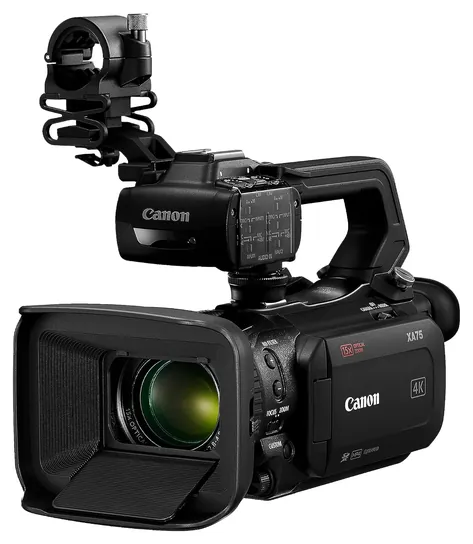
We moved the Canon XA75 to the top because it puts a one-inch sensor, SDI output and pro audio inputs in a body small enough to carry through a whole wedding. That mix suits most people who search for a pro camcorder. The old list leaned on cinema bodies and broadcast cameras, and most of them have dropped away. The Sony ILME-FX6 Cinema and Blackmagic Design Ursa Mini Pro no longer have listings we can link to, the Sony PXW-FX9 XDCAM, JVC GY-HC550U and Canon XC15 are unavailable, and the Canon XF705 is out of stock with no date to return.
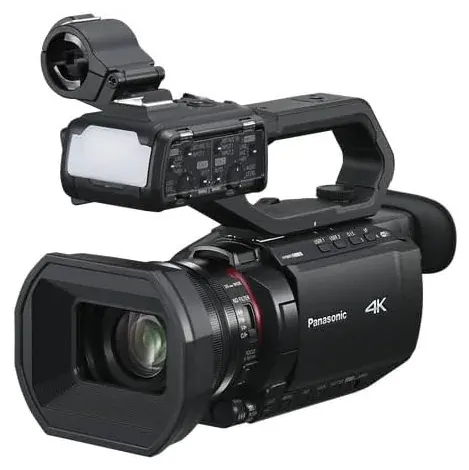
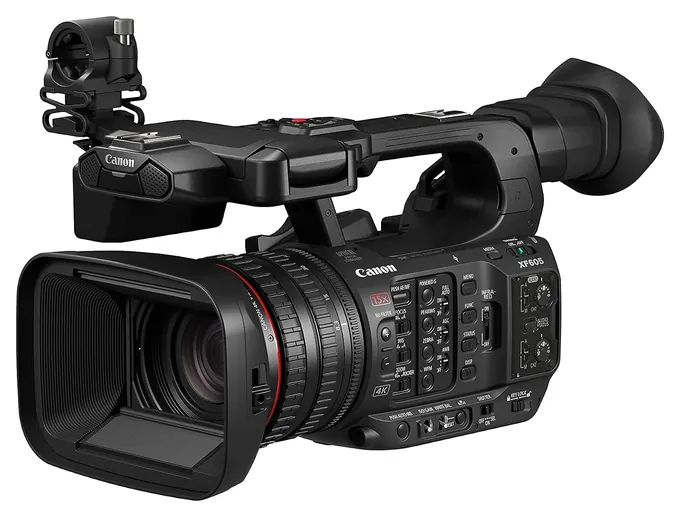
The Panasonic X2000 made way for the Panasonic AG-CX20, which keeps its long zoom and small sensor and adds streaming over a network cable at about the same price. The Sony PXW-Z280 stays for news and sports crews. New picks cover a cheaper way in, a camera for a film look and a renewed Canon XF605 for broadcast work.
Panasonic's technical pages for its pro models were the most detailed source we found. For the Canon and Sony picks we compared published specifications line by line, and the most common owner complaint across small-sensor models was grain in dim rooms, which shaped the order.
Earlier notes
December 16, 2020, by Daniel Imperiale:
We saw a lot of exciting upgrades in this sector recently, most notably from Sony, who have upgraded to both the Sony ILME-FX6 Cinema and the Sony PXW-FX9 XDCAM from their older FX5 and FX7 models. These new offerings house full-frame sensors where the previous models worked with Super 35. Now, there's the argument to be made that Super 35 will work better with classic cinema lenses that were designed to shoot with celluloid, but the advantages of modern lenes simply outweigh that consideration. The reason the slightly less feature-rich, and slightly lower-resolution FX6 beat out the FX9 was that the 9 is prohibitively expensive and still doesn't provide an option for internal RAW recording. Neither does the FX6, to be fair, but at least it's nearly half the cost.
We also saw the arrival of the Blackmagic Design Ursa Mini Pro 12K, which edged out the FX9 due to its ability to capture 12K or downsample to 4K or even 8K, all while recording RAW footage to CFast cards internally. It still couldn't beat out the FX6, however, due to its use of the Super 35 sensor, as well as its 14 stops of dynamic range to the FX series' 15 plus. And we also added the Panasonic AJ-CX4000GJ for use in extremely low light situations like nighttime sports.
September 26, 2019, by Daniel Imperiale:
While all the companies on our list produce a number of new cameras every year, their products that can truly be considered professional grade come out somewhat more rarely. As a result, the only newcomer to our list is the Sony PXW-Z280, which offers users much of the same features as their FS5 and FS7 cameras, but with a different sensor and a fixed zoom lens. It's a nice option, but it couldn't climb toward the top of our list as it's hard to justify that kind of cost with a fixed lens, especially when the company's top cameras aren't terribly pricier.
Beyond that, we found it prudent to move the Canon XC15 to the number two spot as a DSLR form factor has become such a mainstay in pro videography that it finds itself uniquely suited to a number of rigs that might accommodate a more traditional camcorder design. It also doesn't hurt that it shoots in 4K and from a 1-inch sensor when nearly everything else in its price range shoots with much smaller chips, limiting everything from their low-light performance to possible bokeh.
Special Honors
Panasonic AJ-CX4000GJ Broadcasters who want a shoulder camera that takes standard broadcast zoom lenses should look at the Panasonic AJ-CX4000GJ. It uses the B4 lens mount found on news and studio lenses, records 4K HDR to P2 and SD cards, and can stream directly with the SRT protocol or join an NDI network for remote production. It's sold through professional video dealers rather than general retailers. pro-av.panasonic.net
Sensor Size Matters More Than 4K
Big sensors give cleaner footage and softer backgrounds but shorter zooms, around 15x on the Canon one-inch models.
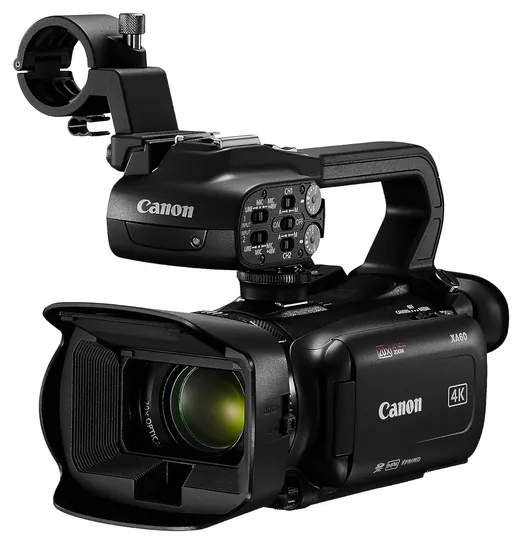
Almost every camcorder sold today records 4K, so resolution no longer separates good from great. Sensor size does. A 1/2.3-inch sensor measures roughly 6 by 4.5 millimeters, while a one-inch type sensor is about 13 by 9 millimeters, close to four times the area. More area means more light per pixel, which shows up as less grain in a dark church, gym or reception hall. The Canon XA75 and Canon XF605 use one-inch sensors, while the Canon XA60, Canon VIXIA HF G70 and Panasonic AG-CX20 use smaller chips and make up for it with longer zooms of 20x to 24x.
That trade-off is real. Small sensors let a maker fit a very long lens in a compact body, which helps at sports and from the back of a hall. Big sensors give cleaner footage and softer backgrounds but shorter zooms, around 15x on the Canon one-inch models.
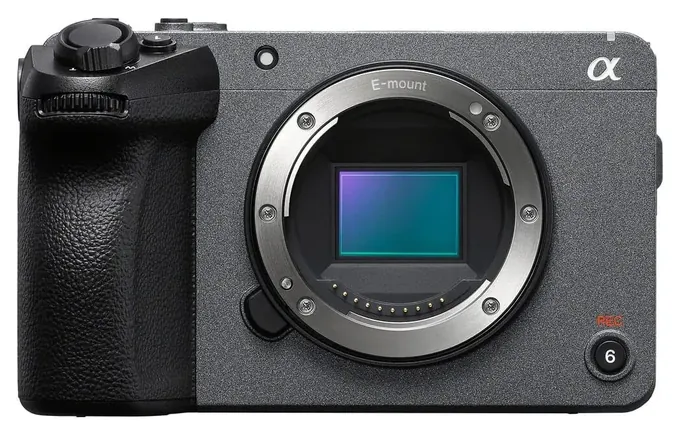
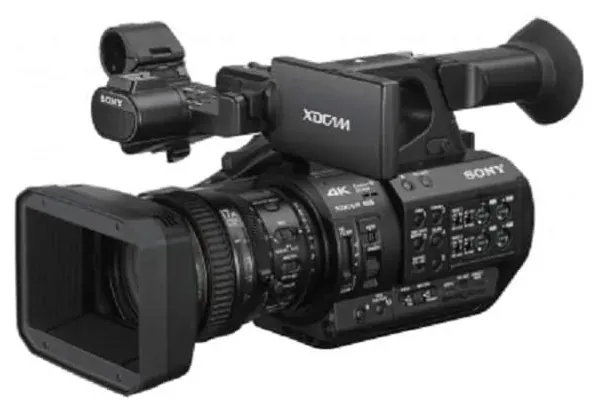
Cinema cameras such as the Sony FX30 go further, with a Super 35 sensor and interchangeable lenses. That brings the shallow focus of a film, but you buy lenses separately, and you lose the one-piece convenience of a camcorder. Full-size broadcast camcorders like the Sony PXW-Z280 use three small sensors, one per primary color, a design news crews have used for decades.
Audio Inputs, Outputs And Streaming
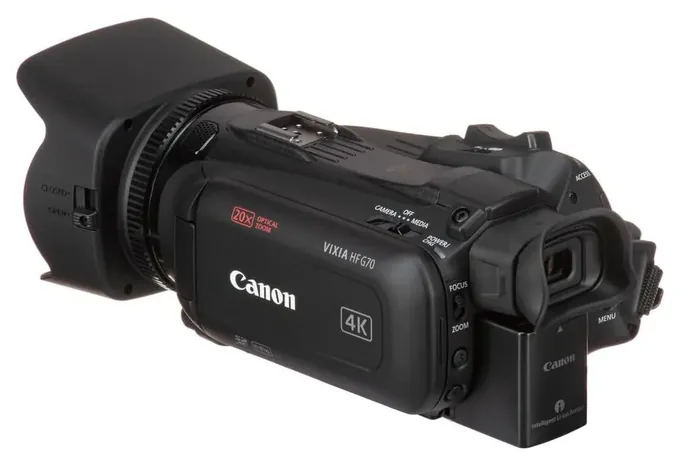
Pro camcorders carry XLR inputs, usually on a detachable top handle. XLR plugs lock in place and carry a balanced signal that resists hum on long cables. Most also supply phantom power, the 48-volt feed that condenser and shotgun microphones need. Consumer models such as the Canon VIXIA HF G70 have only a small mic jack, which is fine for an on-camera shotgun but limits you with a mixer.
For live events, look at video outputs. SDI uses locking connectors and coaxial cable that runs much farther than HDMI, so it's the standard for feeding a switcher across a room. The Canon XA75, Canon XF605, Panasonic AG-CX20 and Sony PXW-Z280 have SDI, while the Canon XA60 and Canon VIXIA HF G70 have HDMI only. Canon sells an XA65 version of the XA60 that adds SDI.
Streaming has moved into the camera. The Canon XA60 and XA75 act as a USB webcam for simple streams. The Panasonic AG-CX20 goes further: it connects to a network by cable or Wi-Fi, streams with the SRT and RTMP protocols, and supports NDI HX2, which lets production software pick up the camera over a local network with no capture card.
Batteries, Cards And Recording Rules
A camcorder's main job is to keep running. Dual card slots let you record to both cards at once, so a failed card doesn't cost you a ceremony, or relay from one to the next for long events. Most handheld models use SD cards; the Sony PXW-Z280 uses SxS cards, and the Sony FX30 takes CFexpress Type A or SD. Check the speed class the maker asks for before buying cards.
Spare batteries matter on long shoots, and they have travel rules. The FAA limits lithium-ion batteries to 100 watt-hours each for most travelers, allows up to two spares from 101 to 160 watt-hours with airline approval, and requires spare batteries to ride in carry-on bags only. Big broadcast batteries can exceed those limits, so check the label before you fly.
Recording people also comes with rules. State laws on recording conversations differ, and some require every person's consent before audio is recorded. The Reporters Committee for Freedom of the Press keeps a state-by-state recording guide. For paid work, get signed releases from the people you film and clear any music you use.
How we researched this
We compared 17 professional camcorders and cinema cameras, including every model from the previous list, checked which were still sold, compared the published specifications of the finalists, read Panasonic's technical pages for its pro models, looked for patterns in owner feedback, and checked every brand against U.S. Consumer Product Safety Commission recall records, which list no camcorder recalls for these makers.
Sources (9)
- Panasonic: AG-CX20 professional camera recorder
- Panasonic: AJ-CX4000GJ professional camera recorder
- FAA: Lithium batteries in baggage
- Reporters Committee for Freedom of the Press: Reporter's Recording Guide
- Wikipedia: Image sensor format
- Wikipedia: Serial digital interface
- Wikipedia: XLR connector
- Wikipedia: Phantom power
- Wikipedia: Network Device Interface
Frequently asked questions
What makes a camcorder professional?
Mostly what surrounds the lens: XLR microphone inputs, built-in ND filters on many models, two card slots for backup recording, manual focus and zoom rings, SDI output on many models, and batteries that run for hours. Picture quality depends more on sensor size than on the word pro.
Is a camcorder better than a mirrorless camera for video?
For long events, often yes. A camcorder records for hours with one long zoom, pro audio inputs and no lens changes. A mirrorless or cinema camera like the Sony FX30 gives softer backgrounds and a film look, but you buy lenses separately and set it up with more care.
What is the best professional video camera for sports?
Reach matters most, so long zooms help. The Panasonic AG-CX20 has a 24x zoom, and the Sony PXW-Z280 is built for news and sports crews with a 17x zoom and a sensor for each primary color. For indoor gyms, a larger sensor like the one in the Canon XA75 gives cleaner footage.
Do I need SDI output?
Only if you feed a live switcher or monitor over long cables. SDI uses locking connectors and runs much farther than HDMI. For recording to cards and editing later, HDMI is enough.
Can I take spare camcorder batteries on a plane?
Yes, in carry-on bags only. The FAA allows lithium-ion batteries up to 100 watt-hours each, and up to two spares between 101 and 160 watt-hours with airline approval. Check your airline's rules too.