The 8 Best Programmable LED Signs
Updated by · How we research

Rigid outdoor cabinets, window film strips and a hand-written board compared by dot size, sealing and control. The CXGuangDian CX P5 is our pick for most shops. When users buy our independently chosen editorial selections, we may earn commissions to help fund the Wiki.
Dot spacing decides whether a sign reads well: a P5 sign puts its lights about five millimeters apart and stays sharp from a few steps away, while P10 dots suit drivers passing at a distance. Many towns also require a permit for an outdoor sign and may limit scrolling or brightness. The picks suit cafes, restaurants and small shops.


Editor's Notes
October 26, 2026, by Ezvid Wiki Admin:
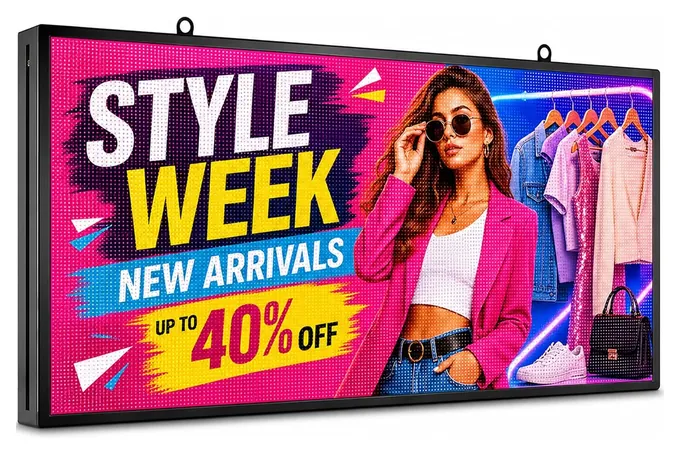
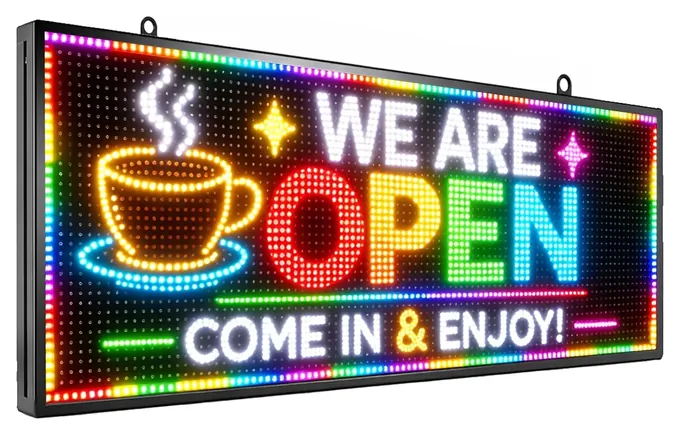
The CXGuangDian CX P5 is the new first choice. It's a sealed aluminum cabinet with fine dots that takes its messages from a phone, and its maker also built the CXGuangDian CX-P6 that ranked near the top last time. Seven of the ten earlier picks had disappeared: the Olive LED Outdoor, Blue Corvus Bird, CXGuangDian CX-P6, MaxLit Business, DS Ledsign P10, Leadleds P5 and Sheen Sign Full Color are gone from sale. We dropped the Divoom Pixoo because it's a desk toy rather than a shop sign, and the Wesiri Flexible because it's a bare hobby panel that needs its own controller.
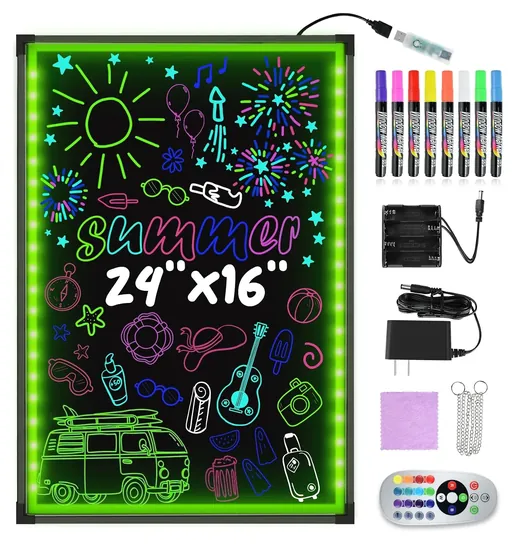
The Hosim LED Writing Board stays for anyone who would rather chalk up specials by hand. The new picks split into rigid cabinets for outdoor walls and thin film strips for a shop window. That split matters more than any other choice here, because a window strip is nowhere near bright enough for direct sun.
Nobody has lab-tested these signs, so we worked from each seller's spec sheets and setup photos for dot spacing, sealing and brightness claims, set them against a sign maker's viewing-distance table and several town sign codes, and looked up every brand in the federal recall database.
January 07, 2021:
Not only useful for retail businesses and restaurants, these programmable signs are also ideal for trade shows, conferences, vehicle identification, or even as art displays, and use LED pixels to create text, animations, and images of varying quality.
In this update, we added several models to the list to reflect more versatility in usage. The Wesiri Flexible, for example, is able to be bent or shaped around surfaces and can be linked together in series, however, it does need an external controller such as a Raspberry Pi. The MaxLit Business, on the other hand, is very easy to program using a downloadable app and a separate remote control provides extra functions like setting brightness levels and selecting when the text should be displayed. The Innovative Divoom Pixoo was included as its multiple functions allow it to be used as a sign, a clock, a temperature display, or as a medium for creating pixel art.
November 08, 2018:
Many of the available options are foreign-made, which can make things difficult when it comes to programming the unit. As a result, ease of use and quality of instructions factored highly into the results, nearly as much as image clarity and versatility.
Special Honors
Daktronics Message Displays For a permanent sign on a pole or monument, Daktronics, a South Dakota company, builds Galaxy message displays that local sign dealers size, permit and install. They cost far more than a plug-in sign, but come with dealer service and automatic dimming for town sign codes. daktronics.com
Dot Spacing And Viewing Distance
For a sign in a window that people walk past, P5 or P6 is the sensible range.
The P number on a sign is its pixel pitch: the distance in millimeters from one light to the next. Small numbers pack the lights closer, so text and logos stay smooth when people stand near the sign. Big numbers spread them out, which costs less per foot of sign and still reads well from far away, but looks like a grid of dots up close.
Sign maker LEDCraft puts the closest comfortable viewing distance at roughly 3.5 feet for each millimeter of pitch: about 14 feet for P4, about 21 feet for P6 and about 35 feet for P10. Other vendors use a looser rule of about one meter per millimeter, so treat both as rough guides. For a sign in a window that people walk past, P5 or P6 is the sensible range. For a sign facing a road or a parking lot, P10 is fine and buys more length for the money.
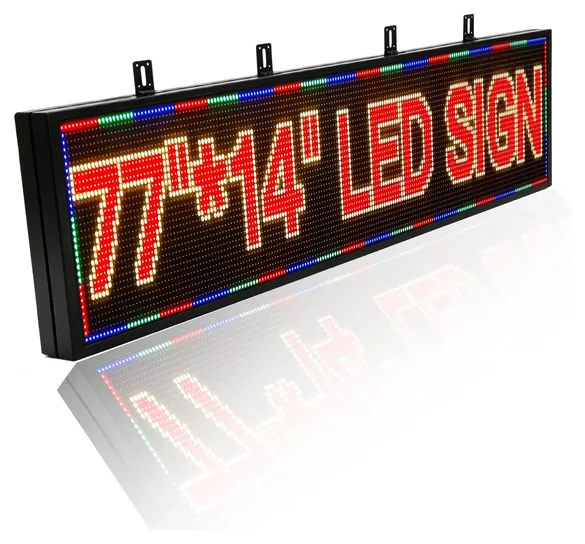
Pitch also sets how much fits on the face. A 39-inch P5 cabinet has 192 dots across, enough for a short line of large letters or two lines of smaller ones. Pictures and video need a fine pitch to look like anything at all; the seller of the HIJH SAIL P6 says its own sign looks grainy close up and is best viewed from about 19 feet.
Window Strip Or Outdoor Cabinet
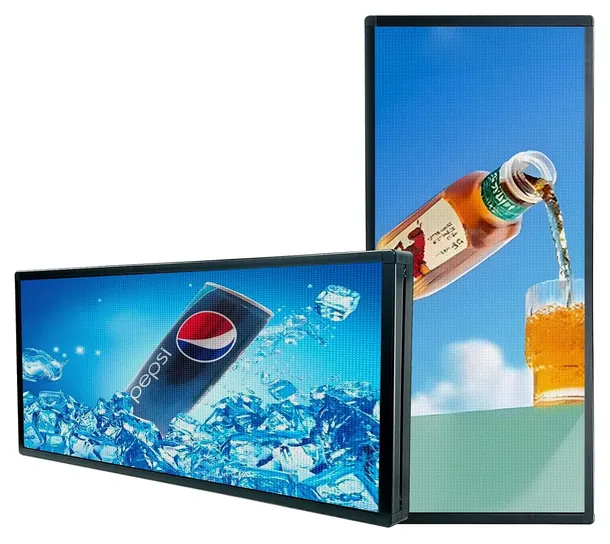
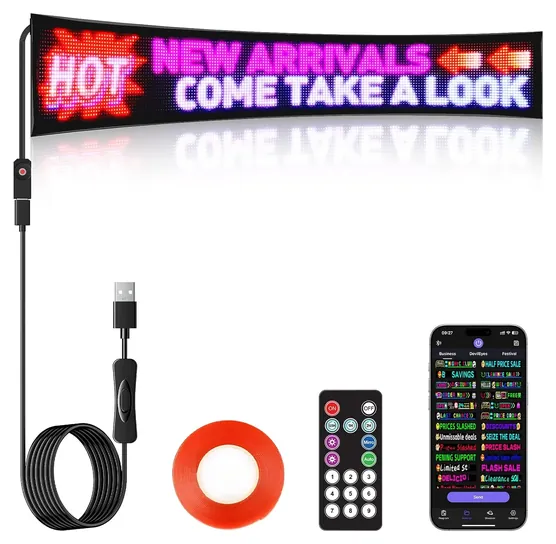
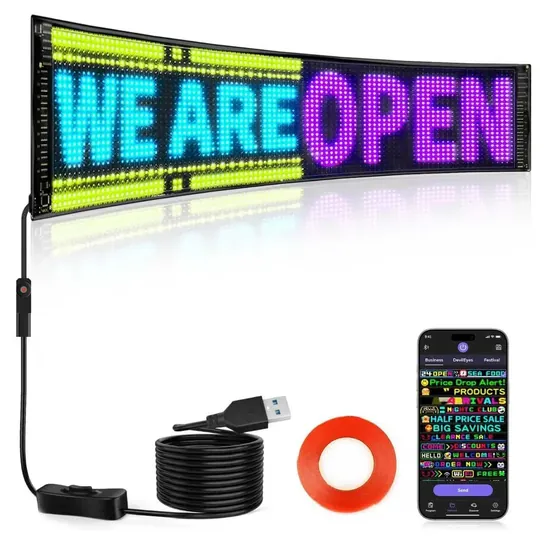
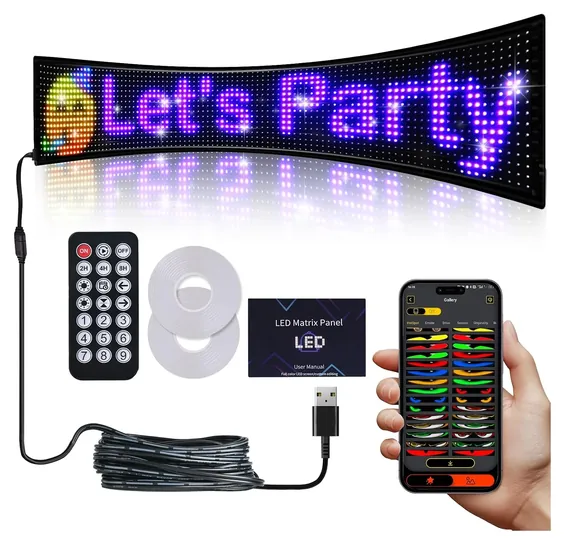
Two very different things are sold as programmable LED signs. Rigid signs are aluminum cabinets about two inches deep, wired to a wall outlet, and built for walls, awnings and poles. Flexible signs are thin strips of LED film that tape to glass and run from a USB charger. The strips are cheaper and far simpler to put up, but they are indoor signs.
Brightness is the reason. KJOY rates its strip at 550 candelas per square meter (nits). Display vendors such as Unilight put indoor screens at roughly 800 to 1,500 nits and say direct sun calls for 5,000 nits or more, which is what the outdoor cabinets claim. A strip behind a shaded window works; the same strip in afternoon sun washes out.
For rain, look at the IP rating. The second digit is water: per the IEC, 5 means jets of water and 4 means splashes. An IP65 cabinet is meant for open weather, while an IP45 sign such as the YONEVIS P10 belongs under an awning. None of these ratings comes with a published test report, so mount any outdoor sign where water can't pool on top, and plug it into a weatherproof, GFCI-protected outlet.
Permits, Sign Codes And Programming
Check with your town before you hang anything outside. Outdoor signs usually need a sign permit and zoning review, and wired installs may need an electrical permit, according to a permit guide from DigitalSignage.com; approval can take weeks, and fines for an unpermitted sign can add up daily. A screen inside a window that faces the street can count as a window sign too.
Local codes often limit how the sign behaves, not just its size. Many ban flashing, scrolling or video on electronic message signs, require each message to hold for a set time (commonly a few seconds or more), and require automatic dimming at night. Examples include the codes of Reading, Pennsylvania and Frederick County, Maryland. If your town bans scrolling, every sign here can show a still message instead.
Programming is the other daily chore. The rigid cabinets join WiFi and take messages from a phone app or from Windows-only computer software, and some accept a USB stick. The film strips use a Bluetooth app, which means standing near the sign to change it. A handheld remote, like the ones with the KJOY Dual Row and Eachbid Flexible, helps when several staff members need to switch messages.
How we researched this
We compared 18 programmable signs, including the 10 from the previous version of this page, read the seller spec sheets and setup photos for the 8 finalists, compared their claims with sign makers' guides on dot spacing and brightness and with local sign codes, analyzed owner feedback patterns, and checked every brand against the U.S. Consumer Product Safety Commission's recall database.
Frequently asked questions
Do I need a permit for an LED sign?
Usually, if it's outdoors. Most towns require a sign permit and zoning review, and some also want an electrical permit. Many limit scrolling, flashing and night brightness, so ask your town's zoning office first.
What's the difference between a P5 and a P10 sign?
The number is the gap between lights in millimeters. P5 looks sharp from a few steps away, which suits windows and sidewalks. P10 looks dotty up close but reads well from a road and costs less per foot.
Can a flexible LED strip go outside?
Not in direct sun. The strips are about as bright as an indoor screen, so they wash out in daylight. They work best taped inside a shaded window.
Can I change the message from my phone?
Yes. The rigid signs here join WiFi and use a phone app or Windows software; the strips use a Bluetooth app, so you need to be nearby. The computer software is usually Windows-only.
How bright should an outdoor sign be?
Sign vendors suggest about 5,000 nits or more for direct sun, and around 800 to 1,500 nits indoors. Many towns cap brightness at night, so a sign that dims on its own is worth having.