The 10 Best Programmable Timer Switches
Updated by · How we research

Ten in-wall timer switches compared on neutral wires, sunset tracking, LED limits and 3-way wiring. The Leviton Decora VPT24 leads with its astronomic clock. When users buy our independently chosen editorial recommendations, we may earn commissions to help fund the Wiki.
Nearly every digital timer switch needs a neutral wire in the wall box to power its clock, and many homes built before the mid-1980s don't have one there, so check before you buy. These timers replace an ordinary light switch and run porch lights, hallway lamps and bath fans on a schedule, which suits anyone tired of lights burning all day.


Editor's Notes
October 26, 2026, by Ezvid Wiki Editors:
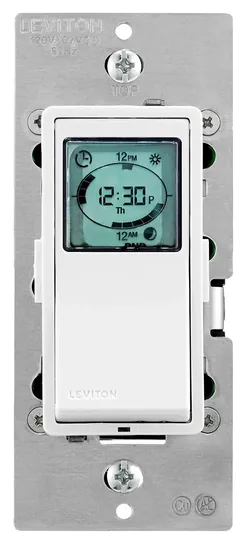
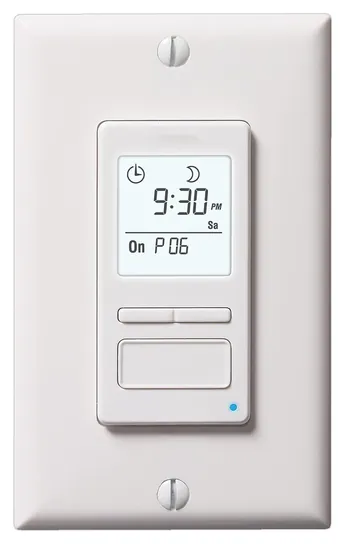
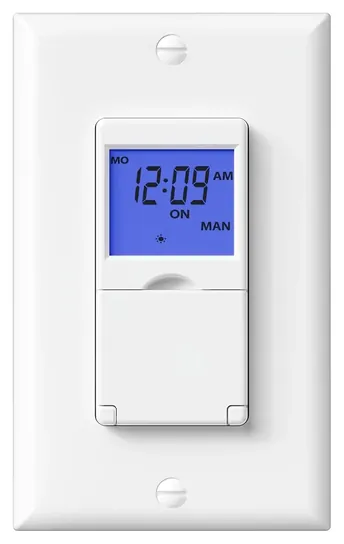
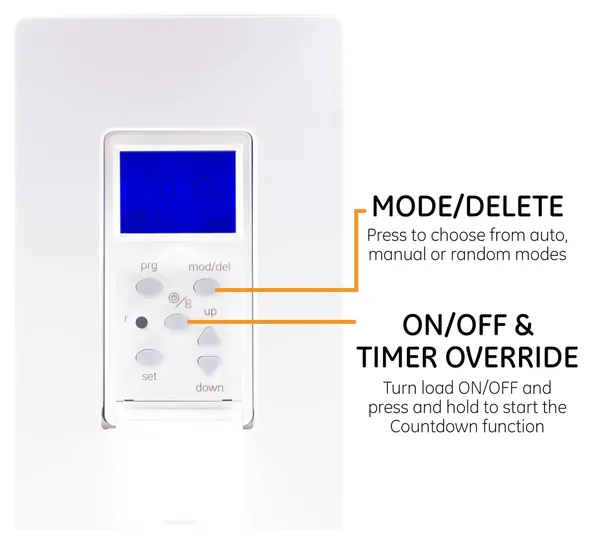
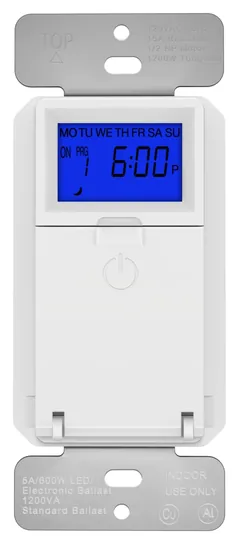
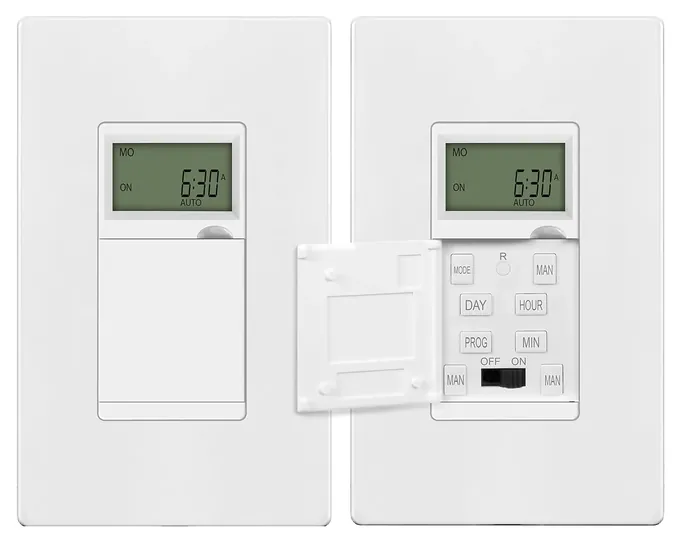
We moved the Leviton Decora VPT24 to the top. It works out sunrise and sunset from your location, stores far more events than a basic 7-day timer, and carries a five-year warranty at a midrange price. The Honeywell Home RPLS740B, Topgreener TGT01 and Enerlites HET01-C stay, the last two in their current versions.
Several old picks are gone. The Honeywell 7-Day and the Intermatic Self Adjusting have left the market, and the Switchmate SnapOn and the BN-Link BND-60/U110a-1 turned up nowhere in current stock. The MyTouchSmart 33861 lost its place to the GE SunSmart 32787, which does the same sunset job for less, and the UltraPro 41092 dial gave way to the sturdier Intermatic IW700K.
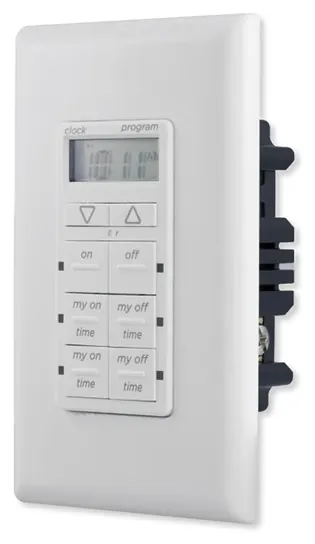
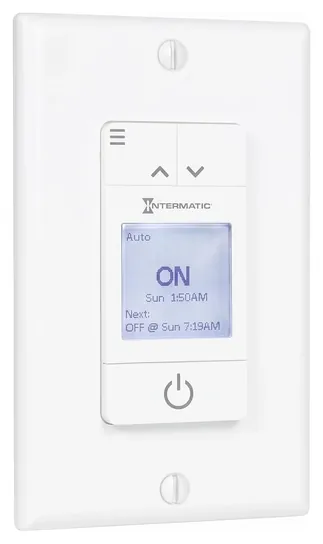
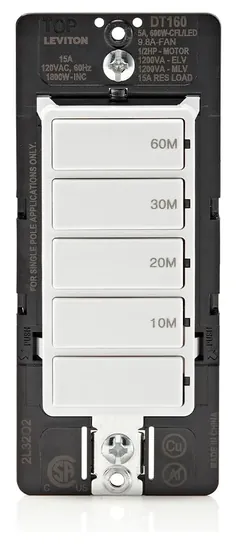
New picks cover the questions people bring to this page: a cheap three-way timer in the BN-LINK SU101D, a button for every on and off time in the myTouchSmart 26893, a big-screen astronomic model in the Intermatic ST700W Ascend, and the Leviton DT160 countdown switch for bath fans in boxes with no neutral wire.
Nobody has published a lab test of in-wall timer switches, so this ranking rests on Leviton's spec sheet, the makers' load ratings and wiring diagrams, an electrician-run guide on neutral wires and LED flicker, and a federal recall search that turned up only old Intermatic recalls on models not listed here.
Earlier notes
December 2, 2020, by Will Rhoda:
It was a relatively tame round of updates, with the majority of last round’s picks still being in good standing, but we did find a few places to brush up on things.
We removed the Century Neutral Wire, which was experiencing some availability issues, and eliminated the Woods 59020, noting that our list already included a virtually identical option that was being offered at a more affordable price. We also replaced the MyTouchSmart 26893 with the MyTouchSmart 33861, which shares a similar aesthetic with the 26893, but offers a maximum of eight programmable events, compared to just two, as well as a convenient countdown function.
The last option we decided on removing was the SWE AutoChron, purely because it was priced so expensively. We hated to see it go, because we felt that the AutoChron – a battery-powered model that installs over top of an existing switch – presented a nice option for users who aren’t comfortable with hardwired installations, but for the price it was offered, there’s a good chance you could hire a professional to install a permanent model and windup with a slicker installation at less cost. As a replacement, we added the Switchmate SnapOn to our list — a battery-powered Wi-Fi- switch that uses magnets to latch on to your existing switch. The SnapOn does require a smartphone to program it, which some users will see as a major drawback, but it still presents a budget-friendly means of programming a light without doing any electrical wiring.
Our other new additions this time around were the UltraPro 41092 — a simple, analog model that some users on a budget may find suitable; and the BN-Link BND-60/U110a-1 — a basic countdown timer that includes a handy daily-repeat function.
If you personally feel comfortable installing your new switch, there’s a good chance that your local bylaws permit it, but please: make sure that’s the case, and if it is, make sure that the appropriate circuit breaker is set to the off position before proceeding with the install. If you have any concerns or apprehensions, we strongly recommend consulting a reputable, licensed electrician.
December 11, 2018, by Gabrielle Taylor:
We considered quality, affordability, and ease of use when making our selections. The Topgreener Astronomic, Intermatic Self Adjusting, and Leviton Vizia have astronomical clocks that automatically adjust to your local sunrise and sunset times, so you can schedule your lights to turn on as soon as it gets dark, and several models on our list have a one-touch daylight savings time feature. We also included the SWE AutoChron as an option that doesn't require any wiring.
Check The Wall Box For A Neutral Wire First
Turn off the breaker, pull the old switch and look before you order.
A digital timer needs a little power all the time to run its clock and screen, and nearly all of them get it from a neutral wire, the white conductor bundled at the back of most switch boxes. The National Electrical Code has required a neutral in switch boxes in new construction since 2011, but many homes built before the mid-1980s have only a hot wire, a load wire and a ground there (JourneymanHQ). Turn off the breaker, pull the old switch and look before you order.
If there is no neutral, a scheduled timer like the Leviton VPT24 won't work. A countdown switch such as the Leviton DT160, which can draw its power through the ground wire, covers bath fans and heat lamps. For a lamp, a plug-in outlet timer or a smart plug skips the wall box entirely; Consumer Reports recommends smart plugs for outdoor holiday lights on a sunset schedule.
Swapping a switch is a common do-it-yourself job, but it means working inside a live circuit's box. Shut off the breaker, confirm it with a voltage tester, and photograph the wiring before you disconnect anything, as this install walkthrough shows. Hire a licensed electrician if the wires don't match the diagram, and check whether local rules require one.
Match The Timer To The Load: LEDs, Fans And Pumps
Every timer lists separate ratings for incandescent bulbs, LEDs and motors, and the LED number is usually far lower. Leviton rates the VPT24 for 600 watts of LED or CFL lighting but 1,800 watts of incandescent, and a 1-horsepower motor (Leviton). The Topgreener TGT01 tops out at 150 watts of LED, enough for a few porch fixtures but not a long string of floodlights.
Tiny LED loads cause a different problem. Electronic timers switch with a part that leaks a trickle of current, and many need a minimum load of roughly 10 to 40 watts; below that, a single low-wattage LED bulb can flicker or glow faintly when it should be off. Adding a bulb or fitting an LED bypass capacitor at the fixture usually fixes it (JourneymanHQ).
For a fan, pump or heater, read the horsepower rating. Most of these timers handle half a horsepower; the Honeywell Home RPLS740B goes to three-quarters, and the Intermatic IW700K is built for heavy 20-amp loads. Pool pumps often need more, so check the motor's nameplate against the timer's rating before you wire it.
Astronomic, Weekly, Countdown Or Mechanical
A plain 7-day timer turns lights on at the same clock time every day you choose. That's fine indoors, but a porch light set for 6 p.m. comes on in daylight in June and hours after dark in December. An astronomic timer fixes that by calculating sunset from your location, by latitude and longitude on the Leviton VPT24 or by a zone map on cheaper models, so it adjusts every day without help.
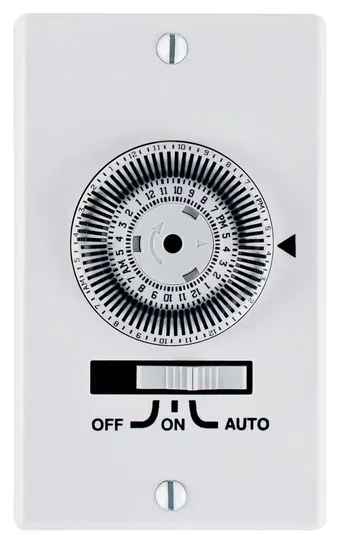
Countdown timers solve a different job: they turn something off after a set time, which suits bath fans, heat lamps and towel warmers. Mechanical dial timers use pins on a 24-hour wheel. They tick, lose time in a power cut and set in coarse steps, but they handle cold garages and power surges better than electronic ones (JourneymanHQ).
Check the circuit too. If a light is controlled from two switches, you need a timer rated for three-way use, and some need a matching companion switch; Leviton's VPT24 needs its VP0SR remote for multi-location control. If you want phone control, a Wi-Fi smart switch with schedules, from makers like Leviton, is the other route, though it usually needs a neutral wire as well.
How we researched this
We compared 18 in-wall, plug-in and smart timer switches and narrowed them to ten wall-mounted models, read Leviton's spec page and the makers' wiring diagrams and load ratings, used an electrician-run buying guide and an installation walkthrough for the wiring advice, analyzed owner feedback patterns, and checked every brand against the U.S. Consumer Product Safety Commission's recall database. No independent lab has published tests of in-wall timer switches. Updated October 26, 2026 by Ezvid Wiki Editors.
Sources (7)
- Leviton: Decora VPT24-1PZ programmable astronomic timer
- Leviton: timer switches
- Honeywell Home: light switch timers
- JourneymanHQ: best hardwired timer switches
- The Frugal Noodle: install a wall switch timer
- Consumer Reports: smart plugs as outdoor light timers
- CPSC: Intermatic recalls in-wall timers due to shock hazard (2009)
Frequently asked questions
How do I put a light switch on a timer?
Replace the wall switch with an in-wall timer switch that fits your wiring, usually one that needs a neutral wire. For a lamp that plugs in, a plug-in outlet timer or a smart plug does the job with no wiring.
Do I need a neutral wire for a timer switch?
Almost every digital timer needs one to power its clock. Look for a bundle of white wires at the back of the box. Without one, a countdown switch that can use the ground wire, such as the Leviton DT160, is an option.
Do timer switches work with LED bulbs?
Yes, within the LED rating, which is often much lower than the incandescent rating. A single low-wattage LED can flicker or glow when the timer is off; a second bulb or an LED bypass capacitor usually stops it.
What's the difference between a 7-day and an astronomic timer?
A 7-day timer switches at fixed clock times. An astronomic timer works out sunrise and sunset for your location and shifts its times through the year, so outdoor lights track the dark.
Will a timer switch lose its settings in a power outage?
Most digital models keep their programs and clock on a backup battery. Mechanical dial timers stop during an outage and need their time reset afterward.
Can I use a timer switch on a bathroom fan?
Yes, if its motor rating covers the fan. A countdown switch that turns the fan off after a set time is the usual choice for bathrooms.