The 8 Best Rolling Saw Stands
Updated by · How we research

Eight wheeled miter and table saw stands compared on stability, saw fit, load rating and board support. The Bosch T4B leads for heavy sliding saws. When users buy our independently chosen editorial recommendations, we may earn commissions to help fund the Wiki.
A saw stand's load rating has to cover the saw and the boards resting on its arms together, and a big sliding miter saw alone can top 60 pounds. Wheeled stands suit contractors who move a saw between rooms or job sites, and home shops short on space that park the saw against a wall between projects.


Editor's Notes
October 23, 2026, by Ezvid Wiki Editors:
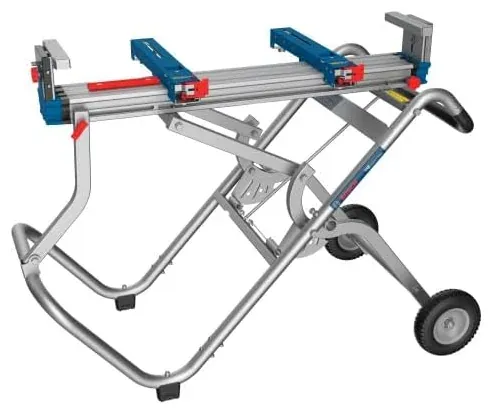
The Bosch T4B takes the top spot. With a heavy sliding saw on it, it stayed among the steadiest stands in an independent comparison, and its air-filled tires cope with gravel where solid wheels bog down.
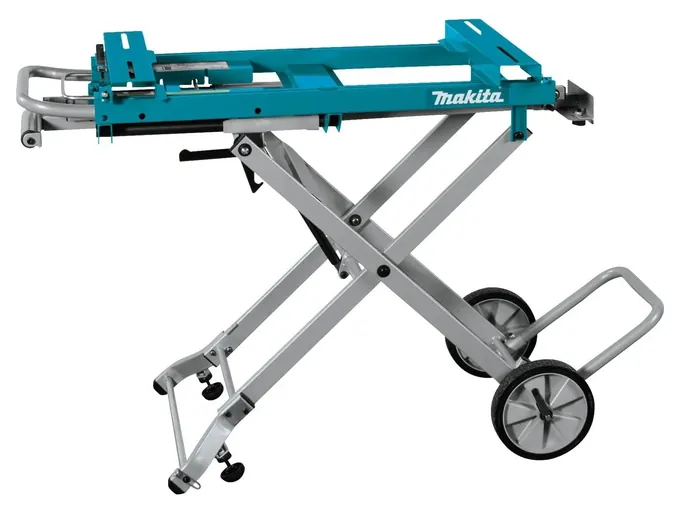
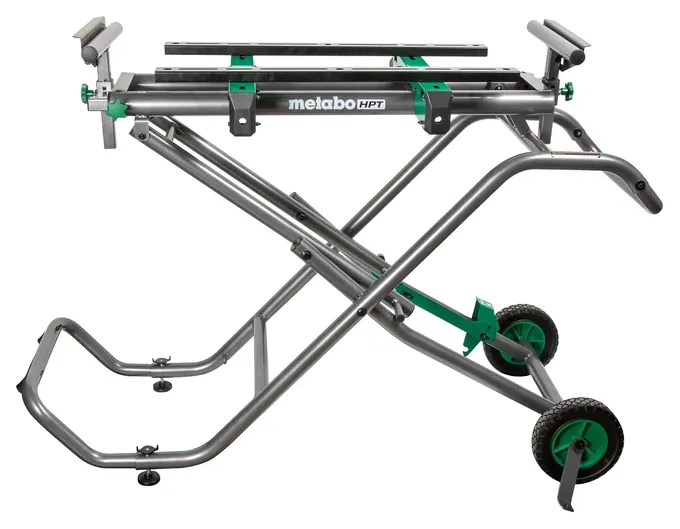
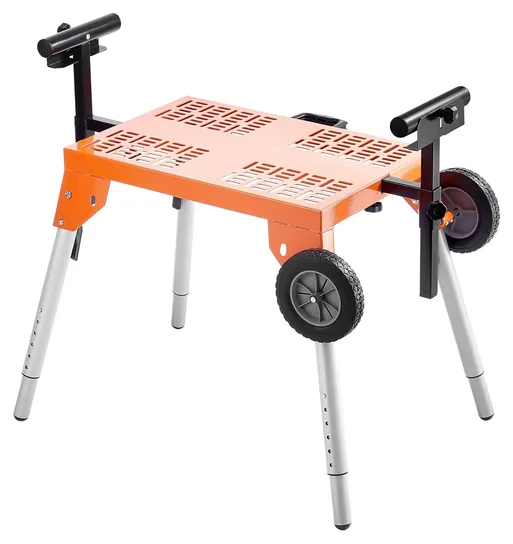
We dropped the Delta 36-267, Ridgid AC9946 and Metabo HPT UU240R, which are gone, and the Protocol Equipment Professional and DeWalt DWX726 because of availability concerns. The DWX726 was a strong stand, and it could come back. New picks are the Makita WST05 for long boards, the Metabo HPT Fold and Roll and the budget VEVOR 26515.
Evidence for this category is thin. One roundup mounted a big slider on a dozen stands, DeWalt's spec pages filled in the table saw side, and a search of every brand turned up no recalls of any saw stand.
Earlier notes
October 21, 2020, by Will Rhoda:
While many of our previous picks made it through this round of updates, we ended up eliminating the Powertec MT40042 and Husqvarna for TS 70 and TS 90, due to quality concerns and a lack of available ratings that made it difficult to rank the latter item credibly. We also removed the DeWalt DW374911, recognizing that our list already included two additional options from the company — the DeWalt DW7440RS, which is suitable for table saws, and the DeWalt DWX726, which is designed for miter saws. Our new additions this time around were the Bosch T4B — a rugged model that’s a pleasure to setup, thanks to the company’s patented collapsing system; the Protocol Equipment Professional — which features an impressive 500-pound capacity and 124-inch extended width; and the Delta Power Equipment 36-267 — a durable option with a handy release pedal that keeps setup simple.
A few things to look for in this category:
Compatibility: As our discussion of DeWalt stands has already hinted at, many (indeed, likely most) rolling stands are designed with a specific tool in mind. While models like the Powertec MT4009 and DeWalt DW7440RS are intended for use with table saws, other choices like the Metabo HPT UU240R and Wen MSA330 were made with miter saws in mind. If you are trying to outfit a miter saw, we also maintain a separate page for miter stands, which may be of interest to you.
It should also be noted that even if you’ve got the tool type right, not all stands are universal, although it does appear that many have made an effort to get as close to that point as possible. Before your order, do your due diligence and compare your prospective stand’s mounting specs with those of your saw, in the interest of avoiding unnecessary aggravation.
Capacity: This consideration is twofold, especially when considering miter stands, which are often depended on for cutting long material. Not only do you want a saw that can handle the combined weight of the saw and the material you’ll routinely be putting on top of it, but you also want one that can handle the widest range of material possible.
To handle the first consideration, simply look at the stand’s rated weight capacity. While the DeWalt DW7440RS is only rated to handle 200 pounds, most options in this category can handle over 300, while top-end models – including the Ridgid AC9946 and Bora Portamate Portacube STR – can accommodate 400 pounds. At 500 pounds, the Protocol Equipment Professional boasts the highest weight capacity of any model that we ranked this time around.
To get a clue regarding the second consideration, take a look at the stand's maximum extended width (which is often alternatively labeled as extended length). The Bosch T4B, which has an 8-1/2-foot extended width, brags that it has the “highest capacity among fully portable units,” with an 18-foot material capacity, but it isn’t made explicitly clear why it should be able to accommodate longer material than say the Delta Power Equipment 36-267 – which features a 9-1/2-foot extended width – or the Protocol Equipment Professional — which boasts a 124-inch extended width.
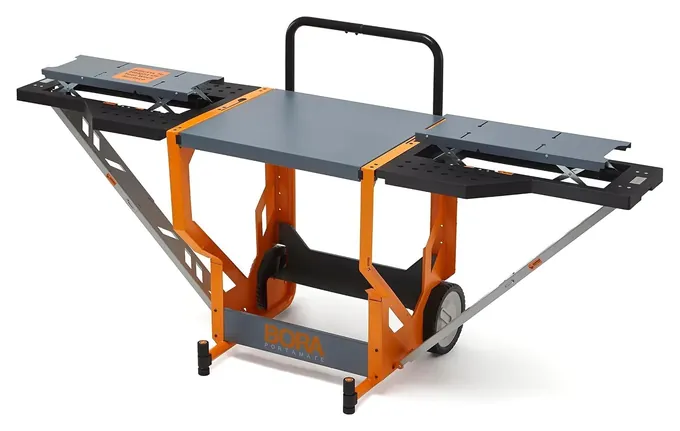
Convenience: While many models in this category feature slick bells and whistles that further contribute to their convenience – like the lumber-stacking brackets on the Protocol Equipment Professional, or the reversible design on the Bora Portamate Portacube STR, which easily converts it to a viable workbench –the biggest thing you want to be looking for, if you like having your life made easy, is a convenient collapsing system.
Bosch likes to brag about their patented “Gravity Rise System” – which I can say, based on firsthand experience, really is excellent – but in terms of functionality, I’m not sure that it’s much different than that of the Ridgid AC9946 — which is also outstanding. Though I haven’t had an opportunity to work with the Delta Power Equipment 36-267 or Metabo HPT UU240R, models like these also appear to have convenient, well-thought-out collapsing systems, as do others on our list and elsewhere throughout the category.
Selections like the Wen MSA330 and Protocol Equipment Professional, which feature sawhorse-style configurations, tend to be a bit more cumbersome and, if used regularly over the long term, present a potential source of agitation. However, they can also be much more affordable, and still quite functional. Because its collapsing system was the only major observable flaw we found with the Protocol Equipment Professional, it still made it quite close to the top of our list.
February 16, 2019, by Quincy Miller:
Assuming that the stand is safe and stable, the next most important consideration is ease-of-use. The DeWalt DW7440RS was exemplary in this category, as it's simple for a single user to operate, even with hands that are otherwise occupied. The Wen MSA330 is another standout, thanks in large part to its three electrical outlets. At the other end of the spectrum is the Powertec MT4002 Deluxe, which is inexpensive and gets the job done, but will likely cause you a fair deal of frustration along the way.
Match The Stand To The Saw
Most rolling miter stands use a pair of quick-release brackets with slots, so they fit nearly any miter saw.
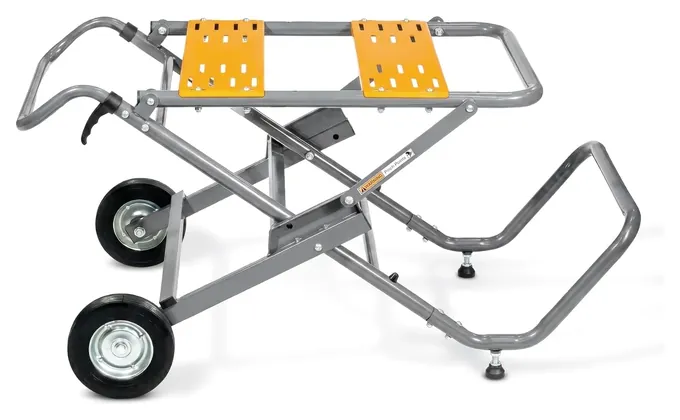
Miter saw stands and table saw stands aren't interchangeable. Most rolling miter stands use a pair of quick-release brackets with slots, so they fit nearly any miter saw. Table saw stands bolt to the saw's feet. The DeWalt DW7440RS is made for DeWalt's own jobsite saws, while universal stands such as the Powertec MT4009 use slotted plates that line up with many bases. Measure your saw's mounting holes before ordering.
Then check the load rating. It covers the saw plus whatever leans on the arms, not the saw alone. Bob Vila's reviewers mounted a 12-inch sliding miter saw that weighs more than 60 pounds, and a stack of long hardwood adds fast. A 200-pound rating is fine for a compact table saw; a big slider with long stock is better on a stand rated for 300 pounds or more.
Wheels, Weight And The Truck
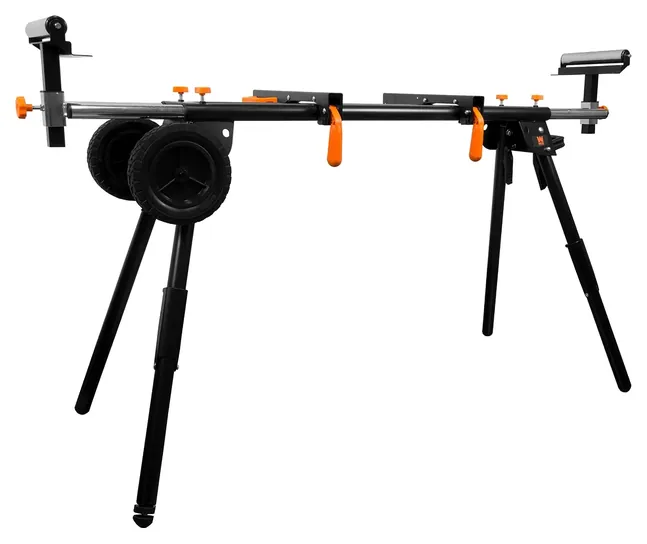
Wheels only help if the stand is built to roll with the saw on it. Lift-assist designs such as the Bosch T4B and Makita WST05 tilt back like a hand truck, and the frame helps raise the saw to cutting height. Twin-beam stands such as the WEN MSA330 have wheels on one end, but Bob Vila found rolling one with a saw attached awkward.
Tire type matters on a job site. Air-filled tires ride over gravel and plywood scraps; solid rubber is fine on a slab or shop floor. A stand maker's blog argues that the Bosch handles rough ground better than DeWalt's rolling stand.
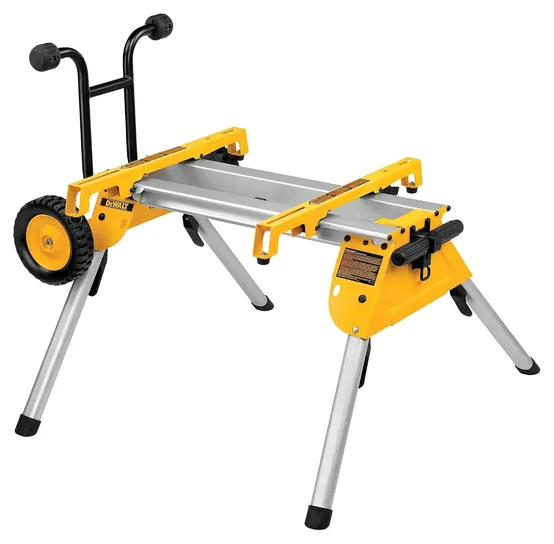
The trade-off is weight. The Bosch weighs about 77 pounds and the Bora Portacube about 90, while the WEN is under 40. DeWalt's DWX726, left off this list for now, sits near 67 pounds with arms that reach 8 feet. If you lift the stand into a truck bed every day, the light ones save your back.
Setting Up And Rolling Safely
We found no recall of any saw stand in the U.S. Consumer Product Safety Commission database for the brands on this page. Recalls in this space have hit the saws instead, including DeWalt miter saws in 2022, so check your saw's model too.
Most stand accidents come from setup. Lock every leg and arm before you cut, and level the stand on uneven ground with its adjustable feet. Support long boards on both sides: a board that hangs off one arm can tip the stand or pinch the blade. Before rolling, unplug the saw, lock the head down and pull from the handle end. Clamp the saw with the brackets or bolts the stand maker specifies, and keep the saw plus material under the rated load.
How we researched this
We compared 25 rolling saw stands and close alternatives, read the makers' and sellers' spec sheets for the eight picks, used one independent comparison that mounted a heavy sliding miter saw on each stand it covered, weighed owner feedback patterns, and searched the U.S. Consumer Product Safety Commission's recall database for every brand. Updated October 23, 2026 by Ezvid Wiki Editors.
Frequently asked questions
Do I need a saw stand with wheels?
Only if you move the saw often. Wheeled stands are heavier, so a fixed beam stand or a bench is simpler if the saw stays in one shop. If you carry it between rooms or job sites, wheels and a fold-with-saw-on design save a lot of lifting.
Can one stand hold a miter saw and a table saw?
Usually not. Miter saw stands use slotted brackets sized for miter saw bases, and table saw stands bolt to the table saw's feet. Universal table saw stands fit many brands, but they aren't meant for miter saws.
Will any miter saw fit a rolling miter stand?
Most will, because the brackets slide along the beams. Very deep sliding saws can be too long for some workstation designs, such as the Bora Portacube, so check the maker's depth limit.
Do I still need material support stands?
For very long boards, often yes. The arms on most rolling stands reach about 7 to 9 feet in total. Longer stock needs a roller stand at the far end so the board doesn't sag and pinch the blade.
Have any saw stands been recalled?
We found none in the U.S. Consumer Product Safety Commission database for the brands on this page as of October 2026. Some saws have been recalled, so check your saw's model as well.