The 8 Best Stirling Engines
Updated by · How we research

Coffee-cup and flame-driven Stirling engines compared, from cheap desk models to a build-it kit. The Sunnytech LT001 is our pick: it runs on hot water alone. When users buy our independently chosen editorial recommendations, we may earn commissions to help fund the Wiki.
A Stirling engine will run on almost any temperature difference, so the gentlest models turn on nothing more than a mug of hot coffee, while hot-air models burn alcohol and spin far faster. None makes useful power; the best light a small LED. They suit physics students, desk tinkerers and anyone hunting for a gift that moves.


Editor's Notes
November 1, 2026, by Ezvid Wiki Admin:
No flame, no fuel: set the Sunnytech LT001 on hot coffee and it runs, which makes it the easiest engine to give someone for a desk or a classroom. The Sunnytech SC001 and Sunnytech SC02M stay for anyone who wants the speed of a flame-driven engine. The PeleusTech Physics Model, the Dstar Vehicle, the DStar Metal LTD-1, the DStar LED Light and the Elenker Steel Kit are gone, because none of them can be bought now.
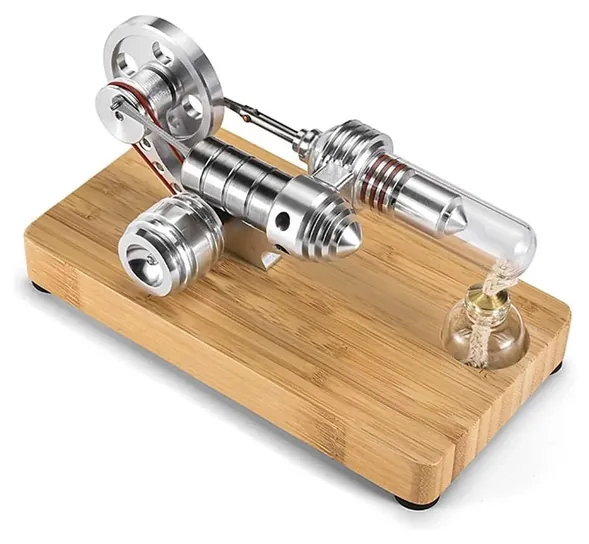
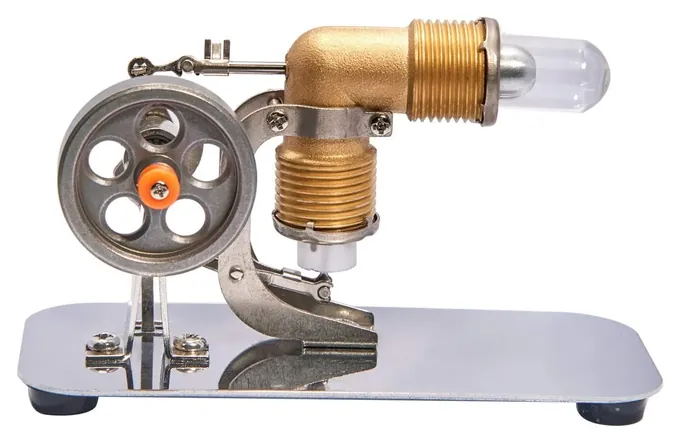
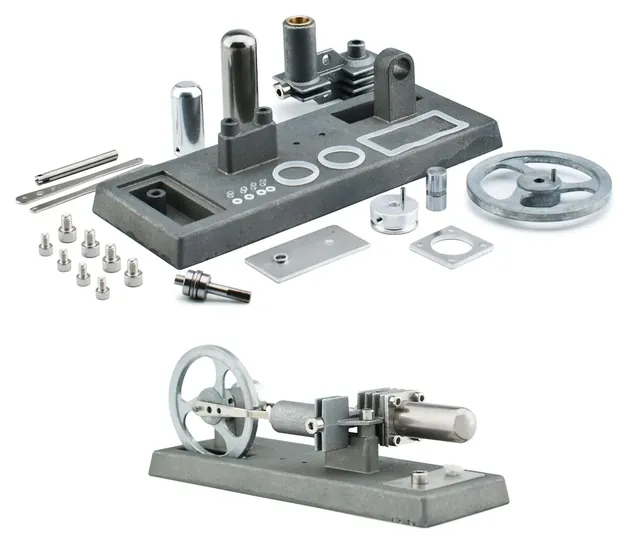
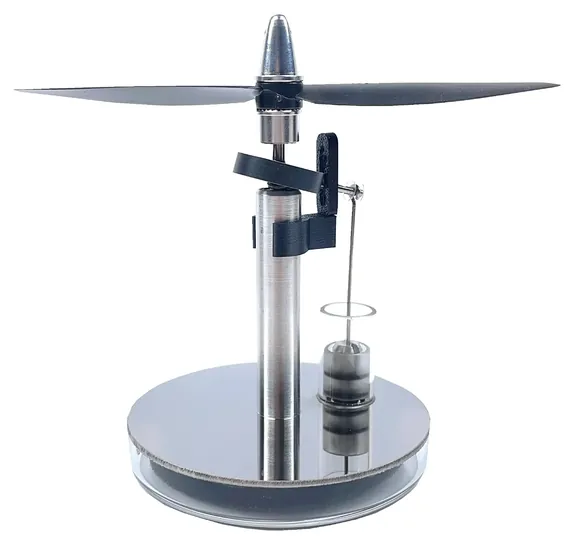
New here are the DjuiinoStar DLTD-303 for small budgets, the Sunnytech M14-03-S on a wood base, the pocket-size Sunnytech HA001, the DjuiinoStar DIY-605 for people who'd rather build one, and the Sunnytech LT004 with its propeller. No lab has published tests of desktop Stirling engines, so we went on the makers' build and fuel details, a physics teaching site's account of how cup engines work, owner reports of cracked glass and hard starts, and the federal recall database. Buying for a child? Pick a cup engine, because the flame models need an adult watching.
April 09, 2019:
While we've added some fun new models to our lineup, only one had to be removed from this year's ranking, and that's the Goodlife 623 Mini, which developed some serious durability issues after a relatively short period of use. Those were mostly located in the glass piston housing, and when that thing shatters it makes one big, dangerous mess.
Among additions to our list you'll find the D-Star Vehicle, which takes what is normally a purely ornamental or educational device and gives it a nice application, specifically in this case using it to power a little car.
Elsewhere, the Elenker low-temperature took a dive from our third position all the way down to number seven, as it failed to run as smoothly as expected, and in some cases could be overwhelmed by excessive heat.
Special Honors
Kontax Stirling Engines Kontax, a small British firm, makes precision low-temperature engines such as the KS90 family, with copper or aluminum plates, a borosilicate glass cylinder and a graphite piston. Kontax says a fresh cup of tea can run one for up to half an hour. They cost far more than mass-market cup engines and sell out often, but they're the next step for anyone who wants a finer engine. stirlingengine.co.uk
Cup Engine Or Flame Engine
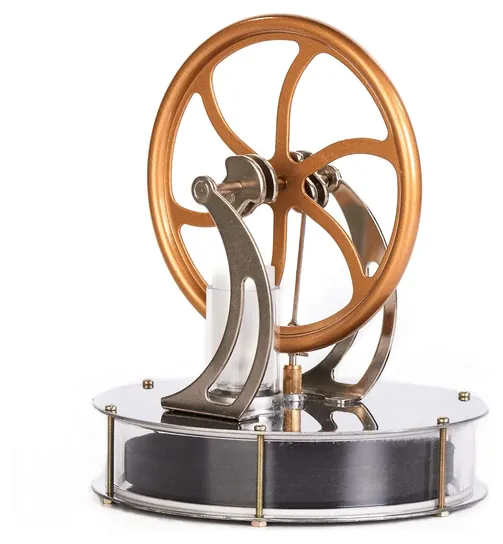
Heat rises through its bottom plate, the top stays cooler, and the sealed air inside expands and shrinks to turn a big, light flywheel.
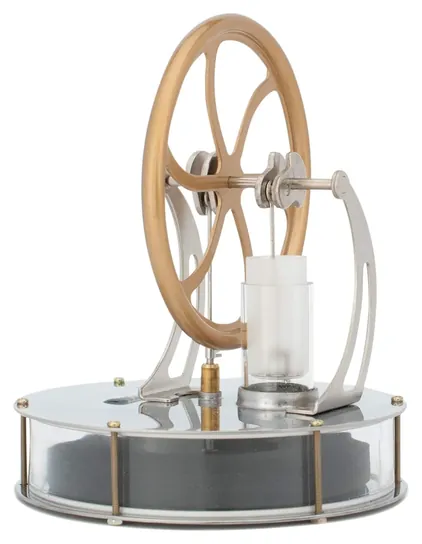
Desktop Stirling engines come in two kinds, and the choice decides who can use one. A low-temperature engine, often called a coffee-cup engine, sits on a mug of hot water. Heat rises through its bottom plate, the top stays cooler, and the sealed air inside expands and shrinks to turn a big, light flywheel. The physics site Animated Engines notes that a cup of coffee is usually enough heat. These engines are quiet and slow, and they have no flame, so they're the safer pick for a desk or a younger student.
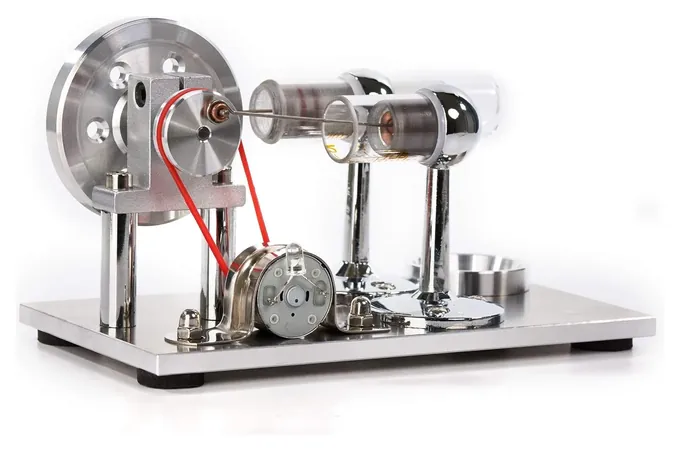
A hot-air engine heats the closed end of a glass tube with a small alcohol lamp. Makers say to warm it for a minute or two, then flick the flywheel. It runs much faster, often powers a tiny LED, and puts on a better show. The trade-off is an open flame and hot glass. A 2022 Gadgeteer post on one mini model passed along owner reports of tubes breaking under heat, and most makers pack spare tubes for that reason. Run a flame engine on a heat-proof surface, away from paper and curtains, and let it cool before you touch it or refill the lamp.
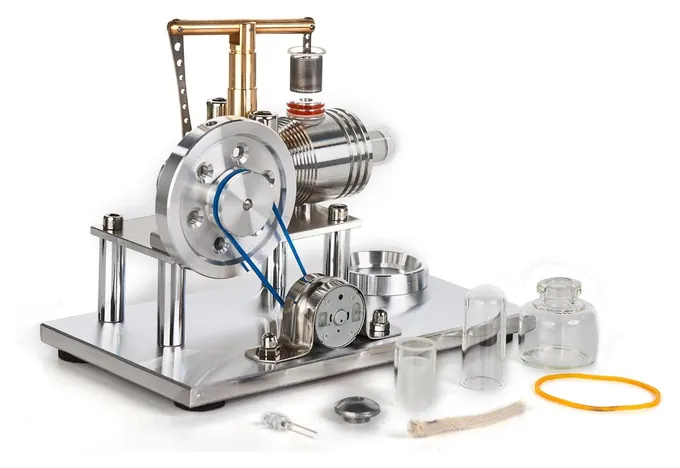
Kits are a third path. You assemble the engine yourself, which teaches more but takes patience: the parts can be tiny, and one mistake can stop it from running.
How Little Heat It Takes, And Why One Won't Start
The engine runs on a difference in temperature, not on heat alone. A carefully built low-temperature engine can turn on the warmth of a hand, and Professor James Senft built one in 1990 that ran on half a degree Celsius, according to Animated Engines. Store-bought cup engines are less sensitive, so they need water near boiling to start and slow down as it cools. They also run in reverse when the bottom is chilled, on a bowl of ice, for example.
Most starting problems come down to three things. The first is too little heat: use fresh, very hot water for a cup engine, and give a flame engine its full warm-up with the flame covering the end of the tube. Don't hold a cup engine over a candle or a stove, since makers warn against burning the base. The second is friction, from a bent part or a dry joint, so the flywheel should coast freely when you spin it cold. The third is a stuck or leaking piston, which makers handle with spare seals. The air inside is sealed, so nothing burns or vents from the engine itself; the only flame is the lamp's.
What A Desktop Engine Can And Can't Do
Robert Stirling patented his air engine in 1816, and the design is still in use. Wikipedia's overview lists modern jobs such as solar dish generators, home heat-and-power units, submarine propulsion and cryocoolers. It also explains why they never replaced car engines: they're heavy for the power they make and better suited to machines that stay put.
A desk model makes very little power. The best can light a small LED or a USB lamp, and none will charge a phone. Their value is in showing the cycle: you can watch the pistons trade heat for motion. Engine names follow the layout. An alpha engine has two pistons in separate cylinders, a beta engine puts a displacer and a piston in one cylinder, and a gamma engine splits them into two cylinders, the way most coffee-cup engines do.
No efficiency claim should be taken at face value either. Theory caps any heat engine at the Carnot limit, and small models are far below it. We searched the U.S. Consumer Product Safety Commission records for Stirling engines and the brands here and found no recalls. Most makers rate these engines for teens and adults, and the flame models say plainly that they aren't toys.
How we researched this
We compared 17 Stirling engines, read each maker's build details, fuel directions and age guidance, drew on a physics teaching site and an engineering reference for how the engines work, weighed patterns in owner reports such as cracked glass and hard starts, and checked every brand against U.S. Consumer Product Safety Commission recall records. No independent lab has published tests of desktop models.
Frequently asked questions
What are the different types of Stirling engines?
Alpha engines use two pistons in separate cylinders. Beta engines put a displacer and a piston in one cylinder. Gamma engines split them into two cylinders, which is how most coffee-cup engines work.
How much does a Stirling engine cost?
A good desktop cup engine or kit costs about $30 to $40, a flame-driven model about $45 to $60, and a heavy display engine about $100. Precision engines from small makers cost more.
Is a 100% efficient engine possible?
No. Physics caps every heat engine at the Carnot limit, which depends on the hot and cold temperatures, and real engines fall short of even that. Small desk models are far below it.
Why aren't Stirling engines used more?
They make little power for their weight and respond slowly, so they suit machines that stay in one place, such as solar generators, home heat-and-power units, submarines and cryocoolers, rather than cars.
Can a desktop Stirling engine charge a phone?
No. The models with a generator can light a small LED or a USB lamp, but they don't make enough power to charge a phone or run anything useful.
Is a Stirling engine safe for kids?
Cup engines have no flame and suit older kids with an adult nearby, though the water is hot. Flame-driven models use an open alcohol lamp and hot glass, so they need adult supervision. Most are rated for ages 13 or older.