The 9 Best Telephoto Smartphone Lenses
Updated by · How we research

Clip-on and case-mount phone telephoto lenses compared on reach, glass, mounting and tripod needs. The Apexel TeleMacro Pro 10X leads for everyday shooting. When users buy our independently chosen editorial selections, we may earn commissions to help fund the Wiki.
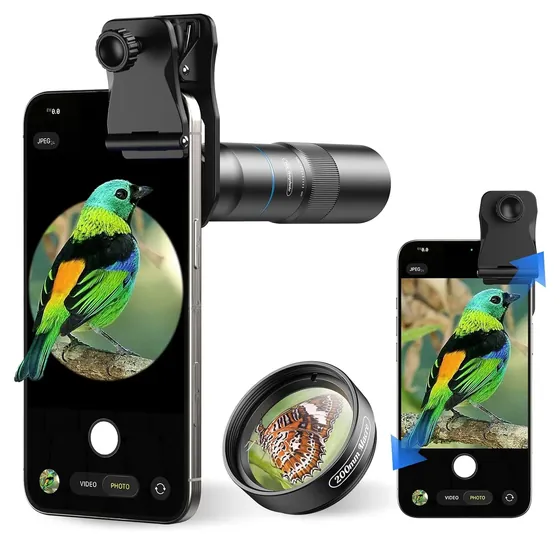
The 36x or 50x printed on a clip-on phone lens describes reach, not sharpness: past about 10x you need a tripod, and a phone with its own zoom camera can still win at short range. These lenses suit people who shoot birds, the moon, concerts or ball games from far back and want more reach than the phone gives.


Editor's Notes
November 1, 2026, by Ezvid Wiki Admin:
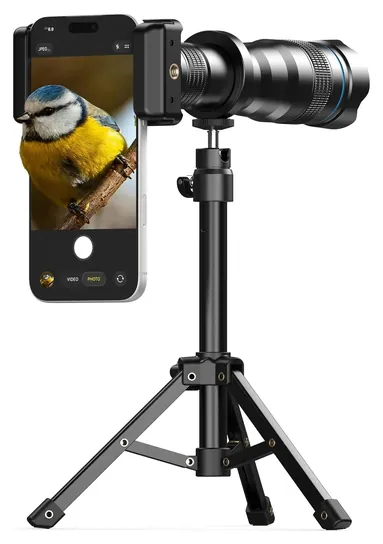
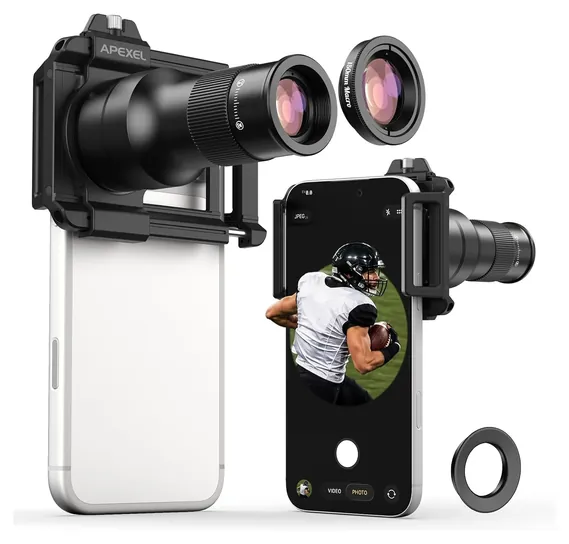
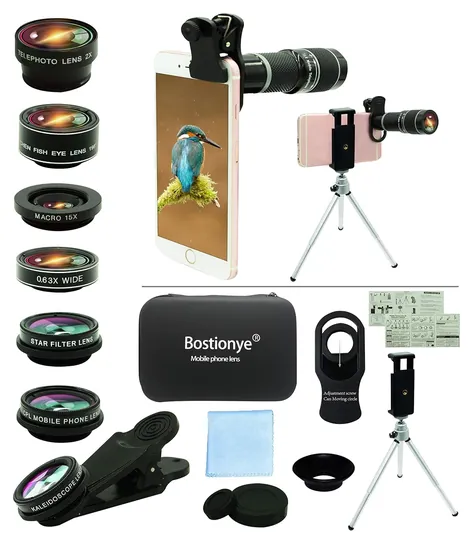
The Apexel TeleMacro Pro 10X now leads, because it's the strongest lens here you can still hold in one hand, and it adds a macro lens for close-ups. Little survived from the 2020 version: the Black Eye, Ztylus and Beastgrip M Series lenses can't be bought now, the Xenvo Pro is really a wide-angle kit, and the Mactrem kit went, leaving the Bostionye 11-in-1 as the one starter kit. The Apexel 36X stays on under its current name.
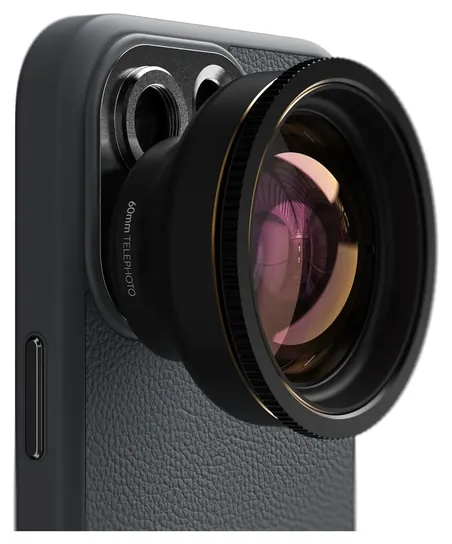
Moment and Beastgrip still make fine case-mount lenses but now sell them mainly through their own stores, so they appear as special honors. Long-reach clip-ons are where the choice has grown, from the ShiftCam LensUltra 60mm for clean portraits to the Apexel 50X for the moon.
The evidence for this list was a Digital Camera World field review of the Apexel 36X, a Tom's Guide review of the Apexel TeleMacro 6X, Neewer's manual for the LS-78, and the makers' spec sheets, checked against U.S. recall records. If you want wide-angle or fisheye lenses instead, see our phone camera lenses list.
December 01, 2020:
This year saw a fair degree of change in the market for smartphone lenses. While most of the items on this list were around at the time the previous update was written, reviewers have had the opportunity to test out a lot more of what's on the market, helping to show which of these really are top-quality pieces of equipment and which are essentially toys. We feel quite confident that each of the items we're recommending here will prove to be effective at capturing good quality photos or video footage, and that they're worth the money they cost. Some of these kits include additional macro or wide angle lenses, though rest assured these sets were included for the quality of their telephoto lens alone, though the additional lens may have factored into perceived value.
One thing worth noting is that we have removed a number of the long, telescopic options, and we're seeing more 2x and 3x telephotos replacing them. The majority of the lenses that offer 16x or greater have a lot of trouble aligning with cameras in such a way that they don't create vignettes or distortion in the images. That said, the Bostionye Universal and Mactrem 9 in 1 both appear to perform fairly well and can increase the size of images by up to 20x. For even more power, the Apexel Power grants as much as 36x magnification, though again, you won't see the same reliably crisp shots that you can expect to see from a more meticulously crafted lense like the Moment Tele.
In general, there are two ways that smartphone lenses attach to cameras. They can either attach to clips that clamp onto the phone, like the Black Eye Pro Portrait or the Ztylus Z-Prime, or they can screw directly onto special phone cases like the Beastgrip Pro Series. In general, lenses that screw directly into cases have an easier time aligning with the camera, creating consistent high-quality pictures, and giving them some added stability. The downside is that these cases are often sold separately, and can be rather pricey. They're also, in general, only designed to fit on one specific model of phone, so if you upgrade to a new model, your lenses are suddenly useless until you replace the case as well. The clips, on the other hand, are a bit tougher to align, though they tend to be virtually universal in terms of what devices they can be attached to. That said, many of them do require you to take off your phone's case in order to fit them on, so it'll be exposed to potential hazards while you're shooting.
The one unique exception to this dichotomy is the Ztylus Revolver M Series. It has a magnetic wheel that sticks to the back of the company's protective case, which is included with the purchase of the lenses. This has 6 different options that can be flipped out from the disk when you're ready to take pictures, then tucked back away to protect it when it's not in use. It makes switching lenses rather convenient, and it comes at a very reasonable price, though the picture quality doesn't quite compete with high-end options available.
October 09, 2019:
With the exception of the Vorida Black and one other item with quality issues, every product on the list was no longer available, necessitating an extensive overhaul of the rankings. We made an effort to include some single-lens options as well as several kits that provide multiple lenses (such as macro, fisheye and wide angle) in addition to the standard telephoto lens.
Some models, like the Bostionye Universal and Omitium Zoom, also come with special filters for spicing up your images with enhanced colors, more dynamic contrast, vibrant lighting, and other features. Users of the Omitium model appreciate its portability and simple operation, noting the ability to quickly attach and detach the lenses while hiking, traveling or watching a sporting event.
In terms of zoom capabilities, the Apexel Power is one of the more impressive models available, and it comes with a sturdy tripod stand to ensure stability as you zero in on faraway objects. Reports suggest that it’s an effective lens for capturing images of animals and nature with exceptional clarity.
Special Honors
Moment Tele Lenses Moment's case-mount tele lenses were a fixture of the old list and are still made, now in a redesigned line that includes a long tele-converter for Pro iPhones. They lock onto Moment's own phone cases, which keeps them lined up, and Moment sells them mainly from its own store. shopmoment.com
Beastgrip Pro Series Telephoto Beastgrip makes threaded telephoto lenses that fit its universal phone rigs and adapters, which suits video shooters who switch phones. The company is open about the limits, advising owners which phone cameras give the best results with its tele lenses. beastgrip.com
Reach Or Sharpness: Decide First
A 36x or 50x figure tells you how much closer a far subject will look, not how crisp it will be, and every jump in reach magnifies hand shake, haze and focusing errors.
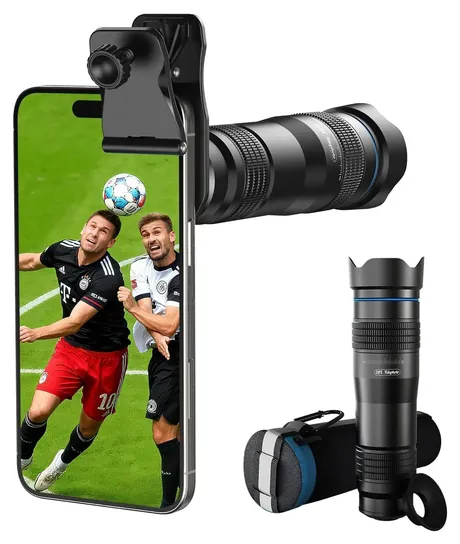
The big number on a clip-on lens is the first thing to question. A 36x or 50x figure tells you how much closer a far subject will look, not how crisp it will be, and every jump in reach magnifies hand shake, haze and focusing errors. In its field review of the Apexel 36X, Digital Camera World got sharp, colorful bird shots on the included tripod, but also blue color fringing on high-contrast edges and a real learning curve with focus.
Many recent phones already carry a 3x to 5x zoom camera. A clip-on beats that for reach, but not always for detail: Tom's Guide found a Pixel's own telephoto shot sharper than the same scene through the Apexel TeleMacro 6X. Beastgrip, which makes its own tele lenses, warns that add-on lenses give lower quality when placed over a phone's 5x or 10x camera.
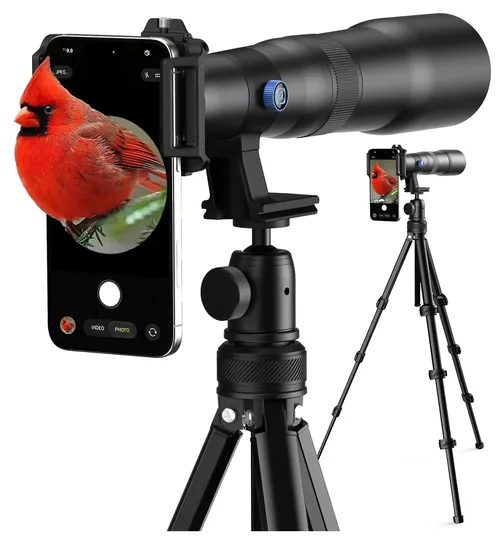
So pick by subject. For portraits, street shots and stage shows from the middle rows, a 2x to 3.5x case-mount lens gives cleaner results. For birds, wildlife, sports from the stands or the moon, a 10x to 50x clip-on wins, and anything above about 10x belongs on a tripod. Digital Camera World's roundup of add-on lenses covers the wider range of phone lens types.
Clip, Case Or Thread: How The Lens Attaches
A spring clip fits almost any phone, usually about 2.6 to 3.9 inches wide, but you have to center the lens over the main camera by eye every time. If it's off by a little, you get a dark ring or a soft side. Phones with several rear cameras make this harder, and a thick case can stop the clip from sitting flat.
Case-mount lenses, such as those from ShiftCam and Moment, lock onto a matching phone case with a twist, so they line up the same way every time and don't wobble. The catch is the case, which is usually sold separately and has to match your exact phone model. ShiftCam's LensUltra lenses also work with a universal clip-style mount for phones it doesn't make cases for.
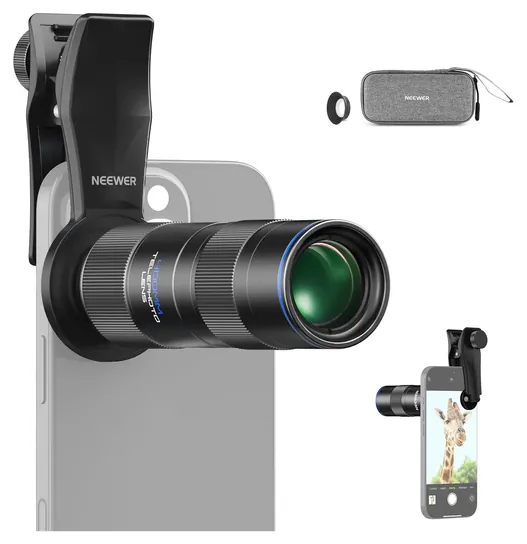
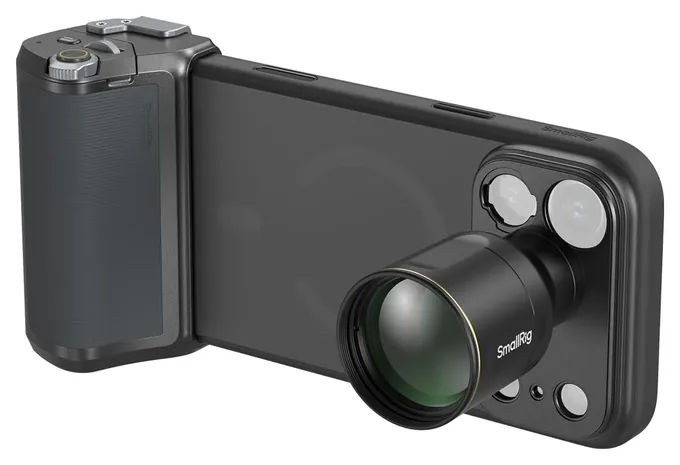
A third option is a threaded lens. The Neewer LS-78 screws onto the 17mm thread used by many phone cages and some cases, and comes with a clip for bare phones. Kits built for one phone, like the SmallRig 3.5X kit for the iPhone 17 Pro and 18 Pro, fit well but won't move with you to your next phone.
Getting Sharp Shots, And Staying Safe
Most of the frustration with phone telephoto lenses comes from the phone, not the glass. Modern phones switch between their cameras on their own, so the lens you clipped over the main camera can end up in front of the wrong one. Turn off automatic macro and lens switching in the camera settings, or use a manual camera app that locks one lens. SmallRig and Neewer both suggest this in their instructions.
If you see a dark circle around the picture, zoom to 2x in the camera app until it disappears. Focus with the lens's ring first, then tap the screen to fine-tune. For anything past 10x, use a tripod and a self-timer or a Bluetooth remote, because pressing the shutter is enough to shake the frame. Apexel tells owners of its 50X to mount the lens on the tripod first and attach the phone second, so the heavy barrel can't tip it over.
Never point a telephoto lens or monocular at the sun, even near sunset, and never look through the eyecup at it: magnified sunlight can damage your eyes in seconds, as NASA's eye safety guidance explains for solar viewing. Use the moon instead. And keep these lenses pointed at wildlife and stages, not into homes; privacy laws apply to long-lens photos. Some concert venues and stadiums ban detachable lenses and tripods, so check the rules before you go.
How we researched this
We compared more than 20 phone telephoto lenses and kits, read the makers' spec sheets and Neewer's manual for the LS-78, weighed two independent reviews, looked at owner feedback patterns on alignment, sharpness and tripod use, and checked every brand against the U.S. Consumer Product Safety Commission's recall database. Updated November 1, 2026 by Ezvid Wiki Admin.
Sources (9)
- Digital Camera World: Apexel 36X lens kit review
- Digital Camera World: best add-on lenses for phones
- Tom's Guide: Apexel TM6 TeleMacro lens review
- Beastgrip: Pro Series 1.7x telephoto lens
- Neewer LS-78 user manual (manuals.plus)
- PetaPixel: Moment Mobile II lenses
- ShiftCam
- NASA: eclipse eye safety
- U.S. CPSC SaferProducts.gov
Frequently asked questions
Are phone telephoto lenses worth it?
For reach, yes: a clip-on brings birds, the moon and players on a far field much closer than most phones can. For sharpness at short range, a phone with its own 3x to 5x zoom camera can match or beat a clip-on, so the gain is mostly distance.
Is a 50x phone lens really 50 times closer?
It makes distant subjects look about that much bigger in the frame, but detail depends on the glass, the air and how steady you are. Above about 10x, you need a tripod and a remote or timer to get sharp photos.
Do telephoto lenses work on any phone?
Clip-on lenses fit most phones about 2.6 to 3.9 inches wide, but the clip must sit over the main camera and a thick case can get in the way. Case-mount lenses need the maker's case for your exact model, and some kits fit only certain iPhones.
Why are there dark corners in my photos?
The lens isn't centered on the camera, or the phone has switched to a different camera on its own. Re-center the clip, turn off automatic lens switching, and zoom to 2x in the camera app to crop out the ring.
What's the difference between a telephoto lens and a zoom lens?
A telephoto lens has a long focal length, so it magnifies distant subjects and makes backgrounds look closer. A zoom lens can change its focal length. Most phone add-on telephoto lenses are fixed, and you zoom with the phone.