The 10 Best TV Carts
Updated by · How we research

Ten rolling TV carts compared on screen size, weight limit, base and tilt. The Vivo TV03E wins for its steady two-post frame and three-year warranty. When users buy our independently chosen editorial choices, we may earn commissions to help fund the Wiki.
A TV cart can't be strapped to a wall the way a dresser can, so its base, its posts and how low the screen rides decide whether it stays upright. These rolling stands suit renters who can't drill, classrooms and meeting rooms that share one screen, and anyone who wants the TV to follow them from room to room.


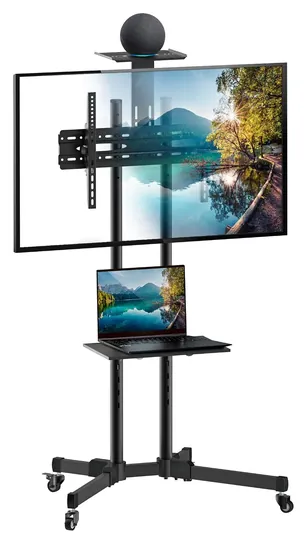
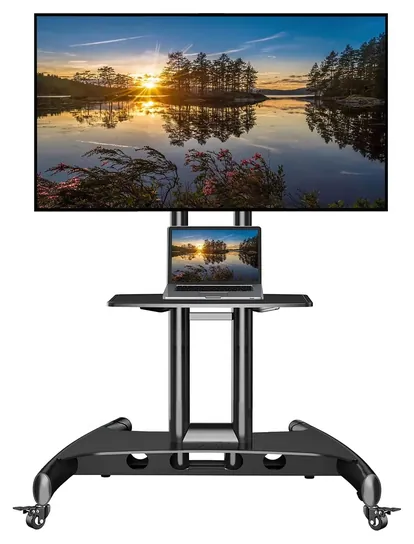
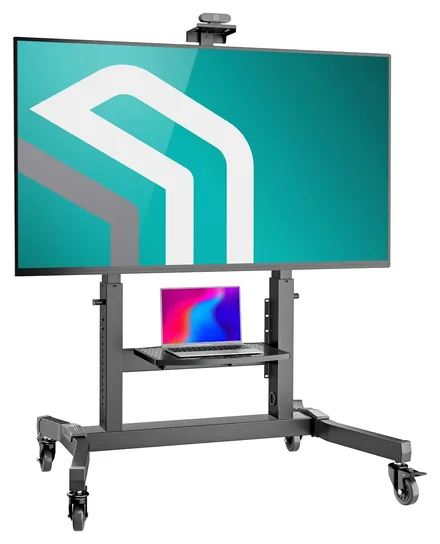
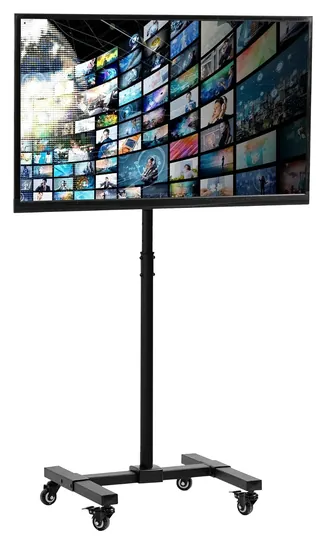
Editor's Notes
October 27, 2026, by Ezvid Wiki Editors:
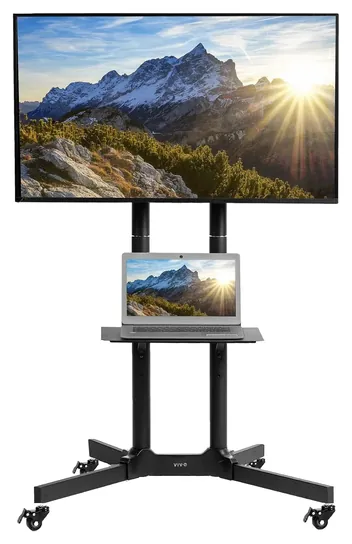
The Vivo TV03E moves to the top. Two posts on a wide base, locks on every wheel and a three-year warranty make it the safest everyday cart we found, and Vivo publishes its full specs on its own site.
Six of the earlier picks are out. The Kanto Mobile and the old Onkron Universal have disappeared from stores, the Line Leader Extra Wide is now a different cabinet cart, and the Honey-Can-Do CRT-03937 was built for tube TVs. We also dropped the Rfiver Rolling, a pricier near-twin of carts that stay, and the Perlesmith Mobile, which became an outlet model that overlaps the Perlegear PGTVMC17. The Mount-It MI-876, North Bayou AVA1500 and Vivo TV07W stay.
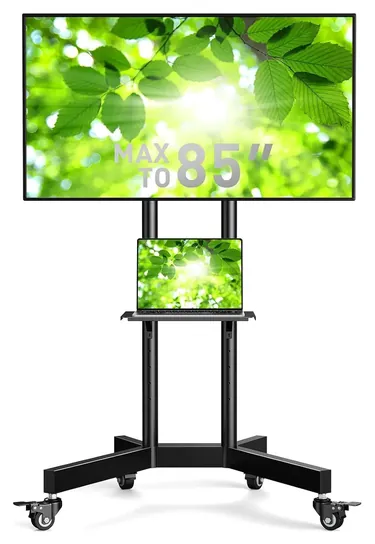
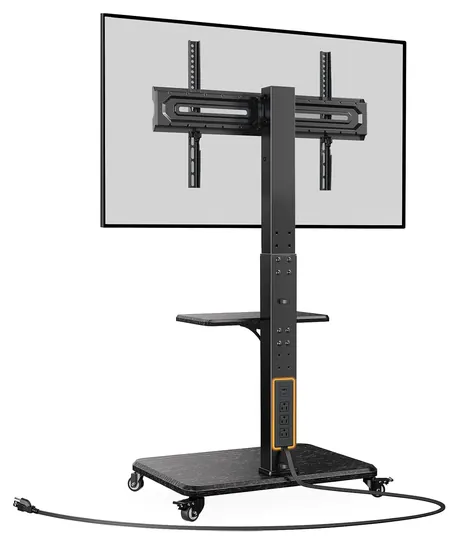
The additions follow what people search for here: big screens with the Perlegear PGTVMC01, Vivo TV22S and Onkron TS1991-B, built-in power, a cheap single-post stand and a wooden easel. For evidence we leaned on Vivo's spec pages, NB's safety certification claim and the federal Anchor It campaign's tip-over guidance, and we say in each entry when a number comes only from the seller.
Earlier notes
January 14, 2021, by Chris Gillespie:
Designed to provide versatility, these TV carts have wheels for easy repositioning in different rooms, are height adjustable for a variety of viewing arrangements, have adjustable shelves for hooking up peripherals, and can support a range of differently sized televisions.
In this update, we added several new models, thus broadening their scope of usability. The Perlesmith Mobile is a popular choice due to its robust construction and anti-marring wheels that won't damage wooden floors, however, its narrow footprint means that it is only suitable for screens of up to 55 inches. The North Bayou AVA1500, on the other hand, has a wide sturdy base and dual support poles making it capable of accepting much larger televisions up to 100 pounds. The Line Leader Extra Wide was selected as a good choice for smaller screens and would be ideal for use in a school, as it features a locking steel cabinet in the base, and a pull-out keyboard tray. Finally, we included the Rfiver Rolling, a minimalist option that is better perhaps suited to a home environment, and makes an attractive entertainment console.
March 27, 2019, by Taber Koeghan:
The Aleratec Entertainment Rack was removed due to complaints about missing hardware and flimsiness, and the North Bayou Heavy Duty and Mount Factory Rolling were axed due to fulfillment issues. This updated collection is made up of products that are suitable for use both at home and in professional environments, and most of the models in this list have extra features like storage trays and camera holders, making it possible to create a totally integrated media station. However, it’s important to note that these units have wheels and are not designed to be fixed to the wall, and therefore can pose a tipping risk. Do keep this in mind if you have children or pets.
Start With Your TV's Weight And Bolt Pattern
Shelves are rated separately and lightly, usually 10 to 22 pounds, so a soundbar and a console may not both belong there.
The screen size printed on a cart is a rough guide. What matters is your TV's real weight, which is in its manual or on the maker's spec page, and the spacing of the four bolt holes on its back, called the VESA pattern. Two TVs of the same size can differ a lot in weight, especially older sets and commercial displays. Pick a cart rated at least 20 percent above your TV's weight, so the posts and bracket aren't working at their limit.
Most home carts top out at a 600 by 400 millimeter bolt pattern, which covers the typical 32- to 75-inch TV. The Vivo TV03E lists 110 pounds and patterns up to 600 by 400. Panels past about 80 inches often use wider patterns, and only heavy frames like the Vivo TV22S, rated for 220 pounds and patterns up to 1000 by 600, take them. Shelves are rated separately and lightly, usually 10 to 22 pounds, so a soundbar and a console may not both belong there.
Single Post, Two Posts, Or Heavy Duty
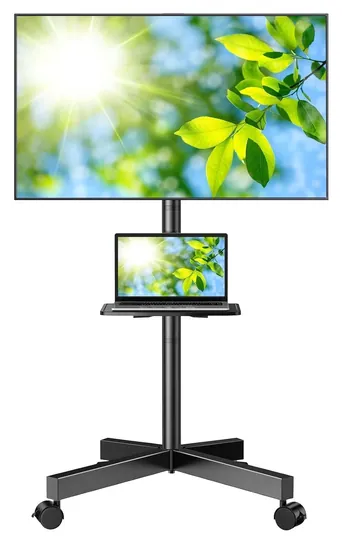
A single-post cart is the cheapest and lightest. It's fine for a 32- to 55-inch TV that moves between two rooms, but it can sway when the screen is raised high. Small single-post stands like the Vivo TV07W are sized for 13- to 50-inch screens and monitors.
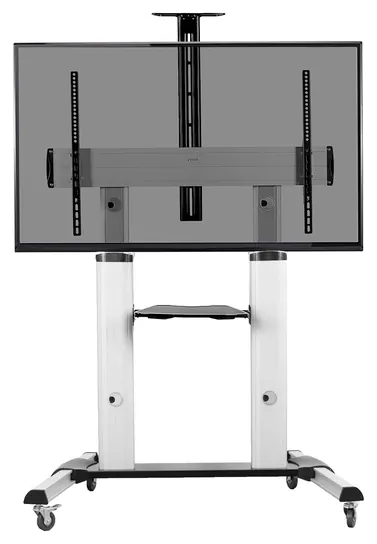
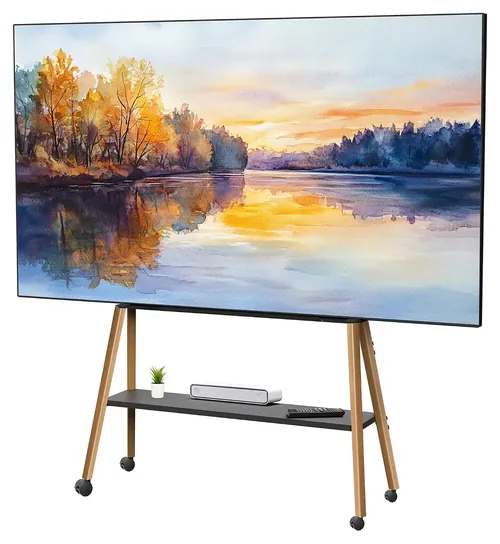
Two posts on a wide H- or X-shaped base are the safe middle ground for 55- to 75-inch TVs at home, in classrooms and in offices. Heavy-duty frames with 200-pound-plus ratings are for 85- to 100-inch TVs and touch displays. An easel stand such as the Vivo TV75R trades some adjustment for a furniture look and includes an anti-tip strap.
Set the height during assembly, since most carts change height by moving bolts, not a crank. Fitueyes, a cart maker, suggests testing the wheel locks on your own floor before trusting them (Fitueyes buying guide). Thick carpet makes any cart harder to push.
Keeping A Rolling TV Upright
A TV on a cart is top-heavy, and unlike a dresser, a cart can't be bolted to the wall. The federal Anchor It campaign urges anchoring furniture and TVs because tip-overs injure children, and the same risk applies to a cart in a home with small kids or climbing pets. Keep the screen as low as you can watch it, lock every wheel when parked, and never hang bags or coats on the frame.
Before rolling it, lower the TV if you can, unplug it, and push slowly over door thresholds and cords. Check the bracket bolts every few months, since moving loosens them. Carts with a built-in power strip should plug straight into a wall outlet, never into another strip.
We found no TV-cart recalls for any brand on this list in the U.S. Consumer Product Safety Commission's recall database. "Outdoor" on a cart means it can roll on a dry patio; the TV and the steel still need cover from rain.
How we researched this
We compared 20 TV carts and rolling stands and kept 10. We read Vivo's own spec pages for four of its carts and each other maker's published size range, weight limit, bolt pattern and warranty, noted where a figure comes only from the seller, checked the federal Anchor It tip-over guidance, and searched the U.S. Consumer Product Safety Commission's recall database for every brand. We found no independent lab tests of TV carts.
Frequently asked questions
Do I need to drill to use a TV cart?
No. A TV cart is freestanding: the TV bolts to the cart's bracket, and nothing attaches to the wall. That makes carts popular with renters and in classrooms.
Can a TV cart hold a 75- or 85-inch TV?
Yes, if both the weight limit and the bolt pattern match your TV. Check the TV's real weight, and choose a two-post or heavy-duty frame such as the Perlegear PGTVMC01 or Vivo TV22S rather than a single post.
What should a school or office look for in an AV cart?
A wide two-post base, locks on every wheel, a shelf for a laptop or camera and, where policy requires it, a safety certification such as a UL listing. NB says the North Bayou AVA1500 is UL Listed.
Do TV carts work on carpet?
On low-pile carpet, yes. The wheels lock, but pushing takes more effort, and thick carpet can make a tall cart wobble as it rolls. Move it slowly with the TV lowered.
Can I use a TV cart outside?
Only on a dry, hard patio or deck. The cart's steel and the TV both need to come in or be covered when it rains.
What is the strongest TV stand on wheels?
Heavy-duty carts carry the most. The Onkron TS1991-B is rated for 265 pounds and the Vivo TV22S for 220, both for screens up to 100 inches.