The 6 Best Wearable Gimbals
Updated by · How we research

Five stabilizers you can wear plus a chest harness, compared on camera fit, battery life and splash resistance. The Hohem iSteady Pro 4 leads for action cams. When users buy our independently chosen editorial selections, we may earn commissions to help fund the Wiki.
The dedicated chest-worn gimbal, built for action cameras around 2017, has all but vanished, partly because new action cameras smooth video in software. A small motorized gimbal still earns its place when you walk, pan slowly or film for hours. These picks are for riders, hikers, cooks and vloggers who want hands-free footage without the wobble.


Editor's Notes
October 23, 2026, by Ezvid Wiki Admin:
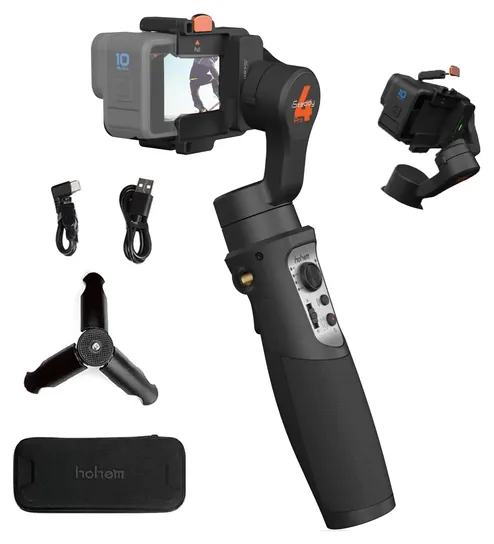
The wearable gimbal as its own gadget has mostly disappeared, so this list now covers the gear people actually wear for smooth hands-free video: small action-camera gimbals bolted to a chest harness, a gimbal camera and a head-worn camera. We put the Hohem iSteady Pro 4 first: it costs little, runs all day and fits most GoPro and DJI action cameras.
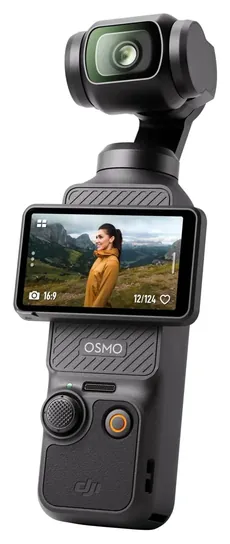
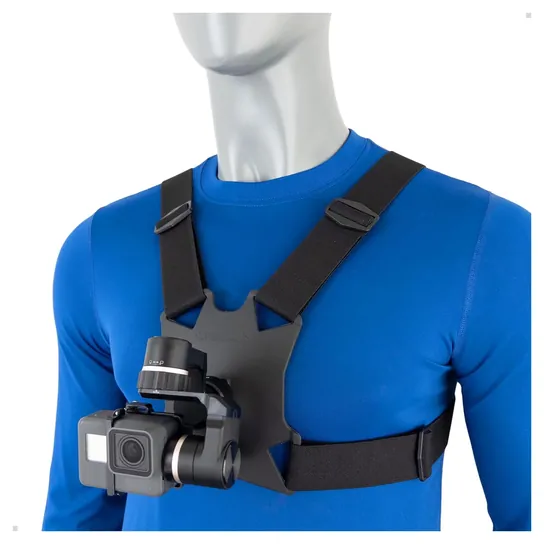
All six earlier picks are gone. The FeiyuTech WG2, FeiyuTech WG2X, Evo SS, Zhiyun Rider-M and Removu S1 have dropped out of the usual stores, and the Hohem XG1 is unavailable. The newer DJI Osmo Pocket 4 isn't officially sold in the U.S., so the DJI Osmo Pocket 3 stays as the gimbal camera here. We added the Stuntman STM367 harness, because a handheld gimbal is only wearable once it has something to ride on.
Lab tests of these gimbals are scarce, so the ranking rests on makers' payload limits and compatibility lists, a mountain-biking guide to chest-mounting a gimbal, a camera site's comparison of motor-driven and electronic stabilization, and a year-long review of a Stuntman chest harness.
September 11, 2020:
Even with the advances in electronic stabilization, gimbals are indispensable for many shots. This is probably doubly true with action cams because they are generally used for extreme activities where it would be impossible to hold them steady in your hand.
Between our last update and this most recent one, we are dismayed to report that there have been no new wearable gimbals of note released, which means we retain and stand by all of our previous recommendations.
Despite the newer FeiyuTech WG2X being available, our favorite is actually its previous iteration, the FeiyuTech WG2 because it is fully waterproof and capable of withstanding brief periods of immersion, whereas the WG2X is just splashproof. It is worth mentioning that the Removu S1 is also splashproof. Of all the models on our list, the above three are the only ones rated for any level of water resistance.
When it comes to battery life, the Evo SS is heads and tails above the pack, offering twice what most others generally offer. That being said, the Zhiyun Rider-M does include an extra set of batteries, so if you don't mind bringing them along on your adventure, it will also get you the five hours the EVO SS boasts.
Though the Hero 8 is often touted as a gimbal killer for its, admittedly, impressive Hypersmooth 2.0 digital image stabilization, anyone who owns one and has tried using it in the dark knows that its performance is underwhelming, at best, in low light conditions. However, before you go out and buy a wearable gimbal just for this purpose, you should know that none of the options currently available are compatible with the Hero 8 right out of the box. In fact, the makers of the FeiyuTech WG2X and FeiyuTech WG2 are the only ones that even sell a component that allows their gimbals to hold a Hero 8, and even then, it is intended specifically for use with the WG2X. That being said, we don't see any reason it wouldn't fit on the WG2. For all the rest, you'll have to figure out how to modify the mounts yourself if you plan on using them with a Hero 8.
February 20, 2019:
Since wearable gimbals are designed to be used with action cameras, we thought it prudent to include some very durable models that are water resistant, such as the FeiyuTech WG2X and Removu S1. The FeiyuTech WG2 is even fully waterproof and can withstand brief periods of immersion, so if you plan on recording paddleboarding adventures, using it while snowboarding, or expect you may often get caught in heavy downpours, it is your best option. Unfortunately, its image stabilization capabilities, while decent, aren't as good as the more recently released FeiyuTech WG2X. If you want the ability to view your recordings on an external screen as they are happening, the Zhiyun Rider-M and Evo SS can provide that, though there are reports of the latter being damaged by just a few drops of sweat. When it comes to versatility, it is hard to beat the Removu S1, as it can be handheld, tripod mounted, or worn, and comes with most of the necessary equipment for all of those usage styles.
Do You Still Need A Gimbal?
It keeps the horizon level through slow turns, makes pans look deliberate and handles the low, rolling sway of walking better than software.
Most action cameras sold now steady their video electronically: they record a slightly wider frame and crop it to cancel the shake. That works well for running, riding and anything wet, and it adds no weight. Rise Up River Trips treats a camera's built-in stabilization as the practical answer for wearable filming on the water.
A motorized gimbal still wins in a few places. It keeps the horizon level through slow turns, makes pans look deliberate and handles the low, rolling sway of walking better than software. Fstoppers rates the mechanical gimbal in the DJI Osmo Pocket 3 steadier than the electronic modes of action cameras, while noting its moving parts are exposed and it isn't waterproof. A gimbal also lets an older action camera, one without modern stabilization, produce smooth footage.
The trade-offs are bulk, a battery to charge and weather protection that stops at splashes. If you film in rain, surf or rivers, a waterproof action camera with good built-in stabilization is the safer buy.
Check The Fit Before You Buy
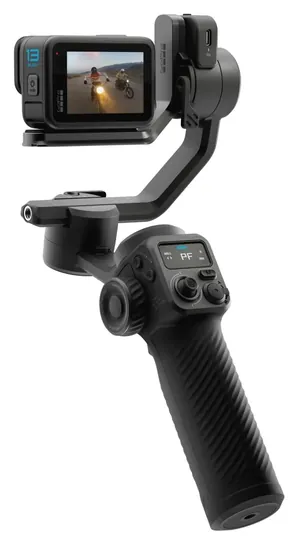
Every gimbal has a size and weight limit, and an action camera wearing a cage, a microphone adapter or a media module can blow past it. The Hohem iSteady Pro 4 takes cameras up to 51 millimeters tall and 30 millimeters deep, which covers GoPro models from the Hero 5 on, the DJI Osmo Action line and the Insta360 One R. The GoPro Fluid Pro AI carries up to 400 grams, enough for a phone or a small compact camera, but its Bluetooth controls work only with the Hero 9 Black and later.
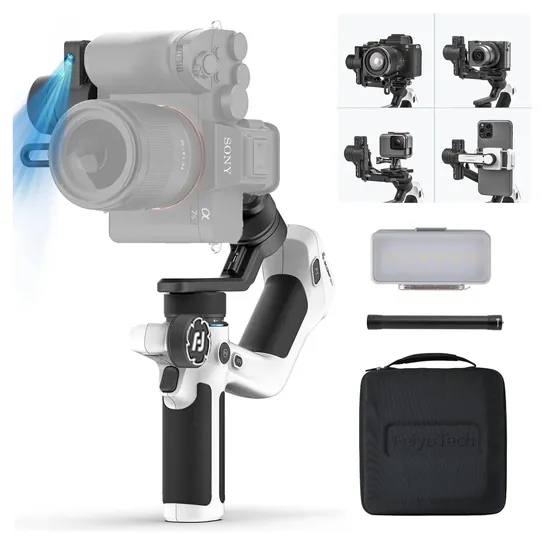
Older wearable gimbals were built for lighter cameras. The FeiyuTech WG2X handles only 130 to 135 grams and GoPro 4 to 7 sizes, which is why a used one is a poor match for a current camera. Larger handhelds such as the FeiyuTech SCORP Mini 2 take 1.2 kilograms but weigh 852 grams themselves, more than most people want strapped to their chest.
Balance matters as much as the limit. Mount the camera centered and snug, and power the gimbal on only after the camera is in place, or the motors will fight the load and drain the battery.
Chest, Helmet Or Head
Where you wear the gimbal changes the footage. Singletracks prefers a chest mount for mountain biking because it shows the handlebars and feels connected to the ride, while helmet footage can look like floating. It recommends clamping the gimbal at its base, not its end, so the weight stays balanced, and running all three axes when the gimbal rides on your chest.
A good harness spreads the load. The Loam Wolf found Stuntman's high-stability chest mount kept footage steady through big drops and held its strap adjustment over a year of use, though the stiff plate caused hot spots after about five hours. Look for straps that lie flat under a backpack.
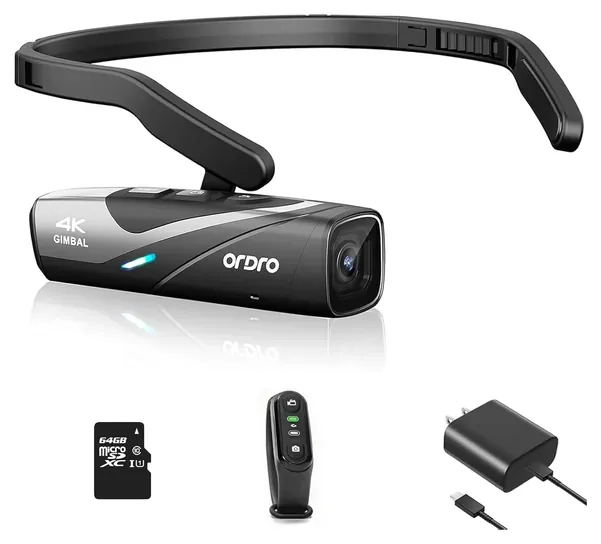
Head-worn cameras such as the Ordro EP8 give the most natural point of view for cooking, crafts and walking tours, but they carry a lighter gimbal with fewer axes. All of these record sound, and some states require everyone's consent before you record a private conversation, so check local rules before filming people.
How we researched this
We screened about 20 wearable gimbals, action-camera gimbals, gimbal cameras and chest harnesses, including every item from the previous version of this list. We read the makers' spec sheets and compatibility lists for the finalists, a mountain-biking guide to chest-mounting a gimbal, a camera site's comparison of stabilization types and a long-term harness review, looked at owner feedback patterns, and checked every brand against the U.S. Consumer Product Safety Commission's recall database. None had a recall.
Sources (11)
- Hohem: iSteady Pro 4
- DJI: Osmo Pocket 3 specs
- GoPro: Fluid Pro AI
- FeiyuTech: SCORP Mini 2
- FeiyuTech: WG2X
- Fstoppers: best action and 360 cameras 2026
- Singletracks: how to use a wearable action cam gimbal
- The Loam Wolf: Stuntman High-Stability Chest Mount review
- Rise Up River Trips: best wearable action cameras
- DroneXL: Osmo Pocket 4 US availability
- U.S. CPSC recalls
Frequently asked questions
What are gimbals used for?
A gimbal uses small motors and sensors to hold a camera level and steady while you move, so walking, riding and panning shots come out smooth instead of shaky.
Is a gimbal better than an action camera's built-in stabilization?
For running, riding and wet conditions, built-in electronic stabilization is usually enough and adds no bulk. A gimbal does better with slow pans, level horizons and the sway of walking.
Should I wear a gimbal on my chest or my helmet?
The chest gives a steadier, more grounded view and keeps weight off your head. Helmet footage follows where you look but can feel floaty.
Will a gimbal fit a GoPro Hero 13?
Yes, if the camera is bare. The Hohem iSteady Pro 4 and GoPro Fluid Pro AI both list the Hero 13 Black, but add-on modules and cages can exceed the size or weight limit.
Are wearable gimbals waterproof?
No. The best you'll find is splash resistance, such as the Hohem iSteady Pro 4's IPX4 rating. Keep gimbal cameras like the DJI Osmo Pocket 3 out of rain.
Why isn't the DJI Osmo Pocket 4 on this list?
DJI hasn't released it officially in the U.S., so U.S. buyers pay third-party prices with no clear DJI warranty support. The Pocket 3 remains the safer purchase here.