The 10 Best Wrestling Headgear
Updated by · How we research

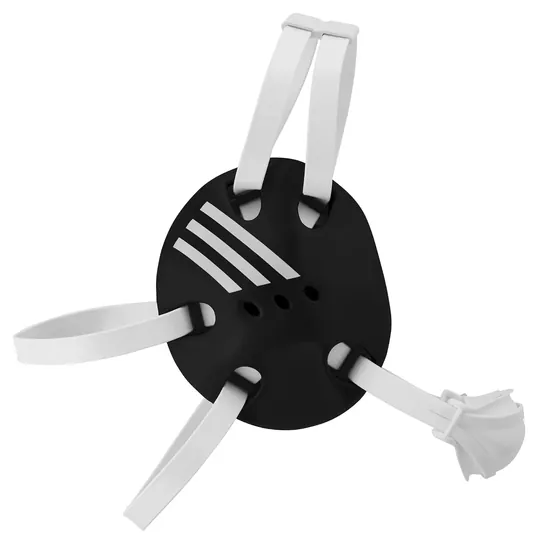
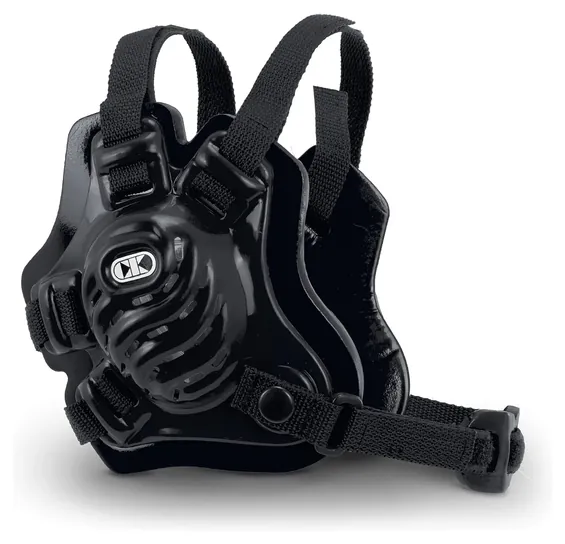
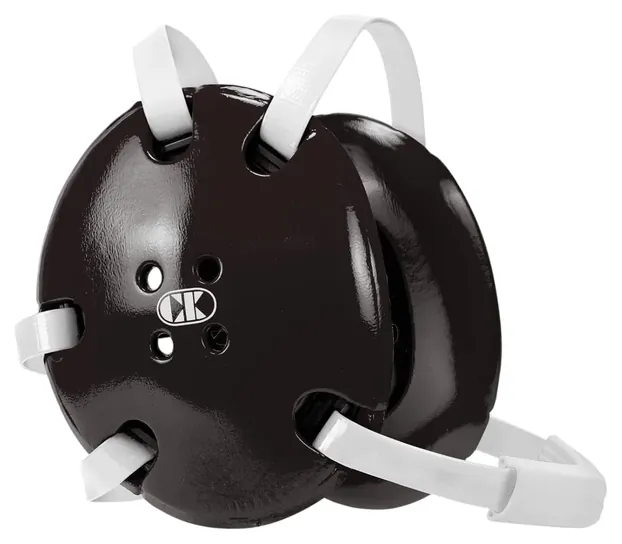
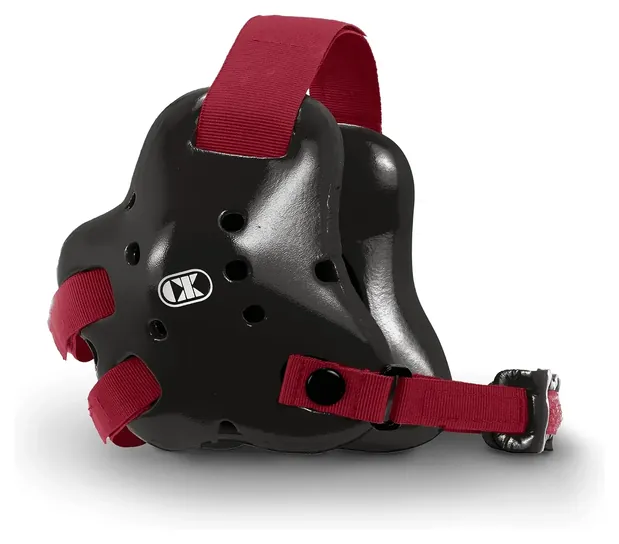
School rules require ear guards for wrestlers. Ten hard-shell, vented and soft guards compared on fit, straps and hearing; the Adidas Response AE100C is first. When users buy our independently chosen editorial recommendations, we may earn commissions to help fund the Wiki.
Headgear protects ears, not brains, a sports-medicine group says, so don't count on any guard to prevent a concussion. It does stop the rubbing and blows that cause cauliflower ear, and high school and college rules require it. Wrestlers choose between hard shells and soft foam cups, and vented designs make it easier to hear the coach.


From the manual
- Fit it chin first: button the chinstrap, then snug each strap working back over the top until each ear sits centered in its cup. p. 1
- If an ear touches the inner cup, the fit is usually off; readjust starting with the back straps and work forward. p. 1
- The back strap sets stability: too tight and the front can pull back over the head, too loose and it rides up the ears. p. 1
- Pressure points can take minutes or hours to show, so check your face for red spots in a mirror right after taking it off. p. 1
Editor's Notes
November 17, 2026, by Ezvid Wiki Editors:
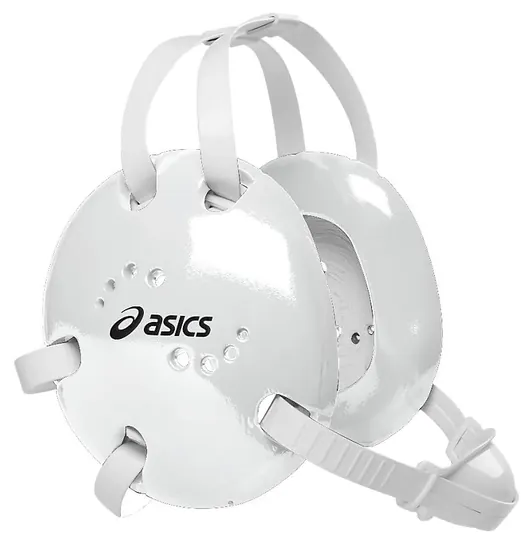
We dropped the Asics Gel Headgear because the retailer we link to no longer sells it; the Rudis 2.0 Elite Headgear, a four-strap guard its maker says meets high school rules, takes its place. The other nine picks are still sold with no new recalls, so their order stands. We also corrected the guide's wording of the Ringside Physicians' concussion finding, added its ear-injury figures, and noted the chin-strap and breakage problems owners describe on the Snap Down, Trymaker and Rudis.
November 16, 2026, by Ezvid Wiki Editors:
We dropped the Asics Gel Headgear because the retailer we link to no longer sells it, and the Rudis 2.0 Elite Headgear takes its place: a classic four-strap guard with softer foam over rigid cups that its maker says meets high school rules. We rechecked the other nine picks and found each still sold with no new recalls, so their order stands.
November 5, 2026, by Ezvid Wiki Editors:
This pass checked the page against the makers' pages, Cliff Keen's Fusion fit guide and the current high school and NCAA rules. We corrected several material and strap details, dropped claims no source supports, added fit notes for the Fusion, and noted a 2001 Asics ear guard recall, which covers only old units. The 2020 and 2021 notes now say which picks have since come back or left.
October 19, 2026, by Ezvid Wiki Editors:
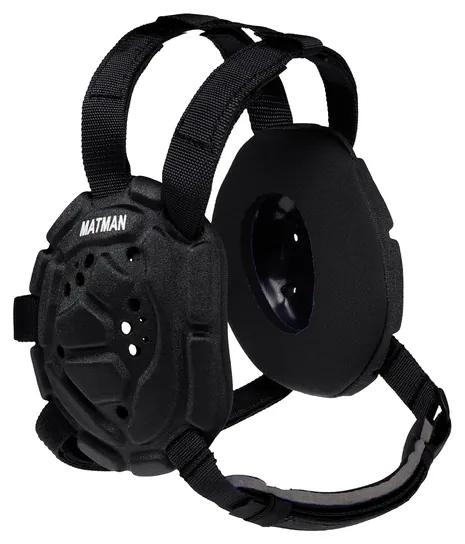
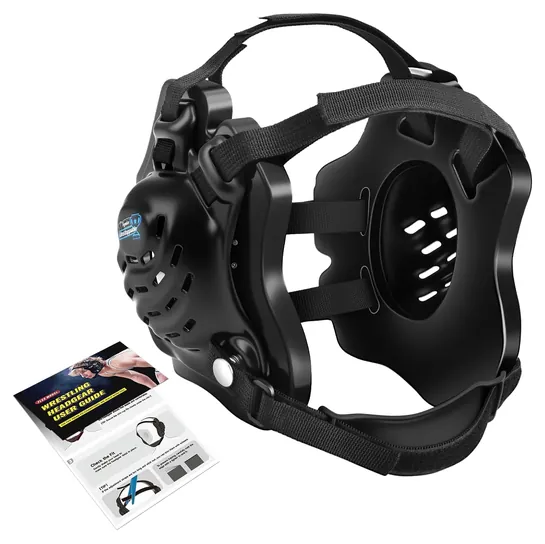
Wrestling headgear doesn't change much, and most of the old list still holds up. The Adidas Response AE100C, Cliff Keen F5 Tornado, Cliff Keen Signature and Cliff Keen Fusion all stay, along with the Asics Gel Headgear as a low-cost option and the Gold BJJ Headgear for jiu jitsu players. We dropped the Matman Halo, the Asics Aggressor and the Venum Kontact Evo because they're no longer available, and the Geyi Joker, a pricey decal version of a standard foam guard. New picks include the Matman Medalist and the Matman Dynasty, which put soft covers over hard cups, plus the Asics Snap Down and the Trymaker Headgear.
Wrestling headgear has no published lab tests we could find, so the picks rest on makers' and retailers' specs, two published roundups, owner reports and recall records. One thing worth knowing before you buy: a sports-medicine group says headgear protects ears, not brains, so don't count on any of these to prevent a concussion.
Earlier notes
March 31, 2021, by Will Rhoda:
It was a fairly fast round of updates for us, as virtually all of our previous picks were still available and presenting as great choices for the category. The only exception was the Asics Snap Down, but being as our rankings already included some representation for the company – in the form of the arguably superior Asics Aggressor, as well as the Asics Unisex – we had no problem with replacing the Snap Down with the Geyi Joker — one of many flashy offerings from the brand, this one featuring a portrait of a menacing villain that bears a strong likeness to the iconic Batman villain (although it wasn’t made immediately obvious whether or not this was a licensed product). [2026 update: the Asics Snap Down is back on the list, and the Geyi Joker and the Asics Aggressor are gone.]
Note that, while the wrestling-specific headgear included on this list may have some viability for other forms of grappling, like jiu jitsu, it isn’t an ideal form of protection for sparring sessions that involve striking. If that’s what you’re interested in, then you may want to hop over to our rankings for MMA headgear.
January 8, 2020, by Gia Vescovi-Chiordi:
While not quite as vital as picking the right singlet or shoes, choosing solid headgear is still pretty important, especially if you're practicing hard enough and often enough to risk developing cauliflower ear.
Picking the right headgear can be tricky, as many are adjustable, one-size-fits-all models, and so you may not know if the fit is right until you try one. Thinking critically about the construction and style of various selections is paramount to your comfort and can prevent the hassle of making a return. Things like deep ear cups, thick straps, 2, 3, or 4-strap designs, chin cups, and material all play a big part in how your gear will feel. You may have to try a few before you get the perfect one.
Our latest update saw the removal of the Asics Unrestrained, which became unavailable. We added the unisex Asics Snap Down in its stead, as well as the thoughtfully designed Cliff Keen Fusion, which brought this list up to an even 10 items. The Fusion is a top of the line model that's made with extremely high-quality materials and boasts a trademarked “On-The-Fly” Strapping System and sleek-profiled ear cups that are snug, yet still give enough room for a comfortable fit.
If you like the classic headgear look, then you can't go wrong with the Matman Halo, which also happens to be very well made and economically-priced. The drawback to its strong plastic-like material is that it feels stiff at first and takes a while to break in, but once it molds to your head shape it will seem like it's barely there. [2026 update: the Matman Halo is no longer available and has left the list.]
Special Honors
WrestlingMart Throwback WrestlingMart, a retailer that sells only wrestling gear, makes its own Throwback ear guard: a classic plastic shell with foam padding, six ear holes for hearing, adjustable straps and a cushioned chin strap. It comes in more than two dozen color pairs, and a custom version lets a team pick its own colors, which makes it a practical choice for coaches outfitting a whole roster. wrestlingmart.com
Hard Shell, Soft Cover Or Soft Guard
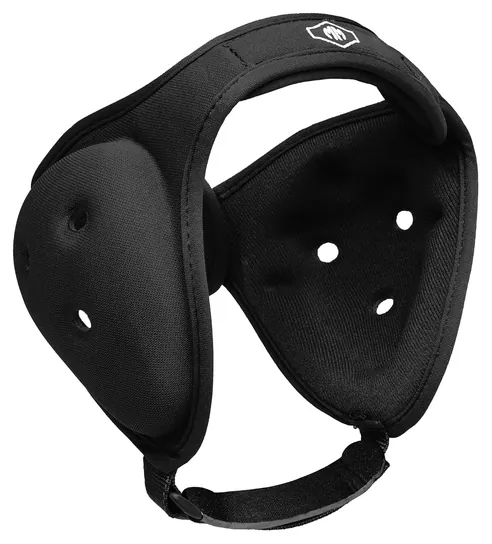
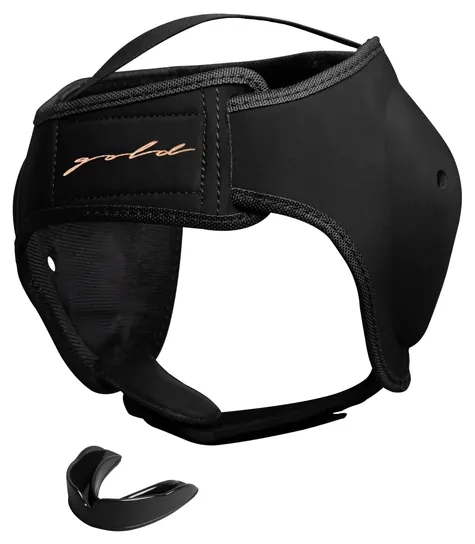
Then there are soft guards with no rigid shell, made mostly for jiu jitsu and MMA.
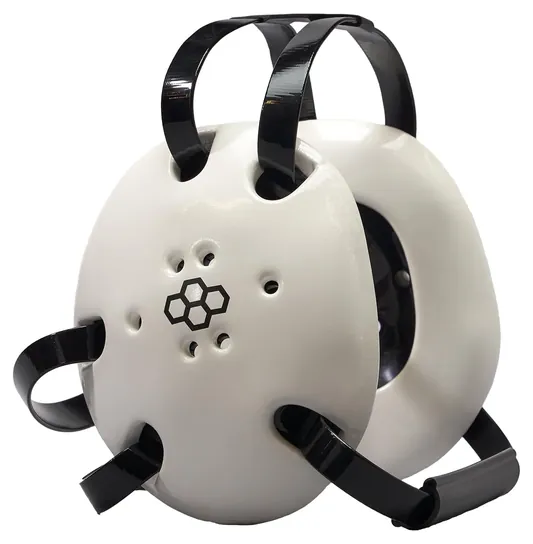
Wrestling ear guards come in three broad types. The classic is a hard plastic or polycarbonate cup inside foam, held by four straps, like the Cliff Keen Signature. Vented molded shells such as the Cliff Keen Tornado are the newer take, built to be lighter and let more sound through. Soft-covered guards put a neoprene or fabric cover over a hard insert, which is gentler on a partner's face but holds more sweat.
Then there are soft guards with no rigid shell, made mostly for jiu jitsu and MMA. They're comfortable for open mats but are a poor fit for school wrestling. High school rules from the National Federation of State High School Associations call for ear guards made for wrestling that are rigid and padded, with a locking adjustment so they can't come off or rotate (NFHS rule 4-1-4). Since July 2022, a maker's logo may appear only on the ear cups, once per cup (WIAA), and no larger than 2.25 square inches (2019 NFHS rules proposal, adopted, via the NWCA). A hair cover has to attach to the ear guards, and a bandanna doesn't count (Iowa High School Athletic Association).
College wrestlers need ear protection too. The NCAA considered making it optional in 2025 and dropped the idea (NCAA). Rules vary by state and league, so check yours before buying a soft or heavily decorated guard.
Fit, Straps And Hearing The Coach
A guard only works if it stays put. The cups should sit squarely over the ears without pressing them flat, and no strap should let a cup slide forward over the face. Wear it in practice so the straps are dialed in before matches (Gear Report), and expect a little break-in: Cliff Keen's Fusion fit guide says the straps and padding gradually mold to the head (fit guide, PDF).
Four straps spread from the forehead to the back of the head are the standard and give the most ways to tune the fit. Three-strap designs like the Cliff Keen Fusion are quicker to set. Halo-style guards, with just two head straps and a chin strap, are less bulky but slip more easily, and Gear Report warns that the stiff rubber on older ones can cut the face if the guard slides down. Under the jaw, a padded chin strap or a chin cup keeps the guard from riding up; a chin cup left loose can slide over the mouth.
Hearing matters more than many first-time buyers expect. Thick foam cups muffle a coach's voice, while open vents or extra holes let more sound through. Sizing is mostly one size with adjustable straps, and several adult models adjust down for youth wrestlers. Small children may need a dedicated kids size, measured by head circumference.
What Headgear Does And Doesn't Prevent
Ear guards exist to prevent auricular hematoma, the injury behind cauliflower ear. Repeated rubbing or a hard blow can make blood collect between the skin and the cartilage of the ear. A doctor should drain it as soon as possible, since after about a week the blood may be too hard to remove and the cartilage can scar into a permanent lump (Sports Med Today). A 2024 study of wrestlers with cauliflower ear also linked the injury to hearing loss (American Journal of Audiology).
What headgear doesn't do is prevent concussions. A 2024 position statement from the Association of Ringside Physicians, led by sports-medicine physician Kevin deWeber, says headguards haven't been shown to prevent concussion or other brain injury and shouldn't be relied on for that (Physician and Sportsmedicine). For ears the evidence is limited but points one way: in a survey of 571 college wrestlers that the statement cites, those who wore headgear had ear hematomas about half as often as those who didn't. The authors also warn that athletes may take more risks when they feel protected.
Care is simple but easy to skip. Hard shells wipe down with warm, soapy water, and Cliff Keen says to keep its guards out of the washing machine and dryer. Fabric and neoprene covers need regular hand-washing because they soak up sweat. The same statement notes that research offers little guidance on when to replace a guard, so check it often: one that smells or has cracked cups, split foam or worn hook-and-loop is due for replacement.
How we researched this
We compared 16 wrestling ear guards. Cliff Keen's one-page Fusion fit guide is the only maker document we found for any pick, so the rest rests on the makers' product, materials and care pages for the Adidas AE100C, the Cliff Keen Tornado, Signature and Fusion, both Matman guards, the Rudis 2.0 Elite and the Gold BJJ guard, plus dealer and listing copy for the Asics Snap Down and the Trymaker, a brand with no site of its own that we could find. The rules come from NFHS rule 4, the WIAA's logo clarification and the NCAA's June 2025 decision, the medical points from the Association of Ringside Physicians' 2024 position statement, and the roundups that mattered were Gear Report, written by a volunteer high school assistant wrestling coach, and Grappler's Graveyard. Searches of CPSC and Health Canada recall notices found one old recall, of about 60,000 Asics Gel ear guards sold from 1998 to 2001 whose plastic shells could break, and none for any current pick.
Sources (24)
- Cliff Keen: The Fusion
- Gear Report: Best high school wrestling headgear
- Grappler's Graveyard: Best wrestling headgear
- Reddit r/wrestling: headgear that stays on and lets you hear
- deWeber et al., Association of Ringside Physicians position statement, Phys Sportsmed 2024
- Sports Med Today: Auricular hematoma
- American Journal of Audiology, 2024: cauliflower ear and hearing
- NWCA: 2019 proposed high school wrestling rule changes (logo limits adopted)
- WIAA: Ear guards and manufacturer's logo
- NCAA: Men's wrestling rules changes, June 2025
- U.S. Consumer Product Safety Commission recalls
- Adidas Wrestling: AE100c Response headgear
- Cliff Keen: The Tornado
- Cliff Keen: The Signature
- Cliff Keen: Fusion fit guide (PDF, dealer copy)
- Matman: The Medalist headgear
- Matman: The Dynasty adult headgear
- Matman: The Dynasty kids headgear
- Gold BJJ: Headgear
- NFHS: Wrestling uniform rules (rule 4)
- Iowa High School Athletic Association: Grooming rule, 2020
- CPSC: ASICS Tiger wrestling ear guard recall, 2001
- Rudis: 2.0 Elite Headgear
- Health Canada: Recalls and safety alerts
Frequently asked questions
Does wrestling headgear prevent concussions?
No. The Association of Ringside Physicians says headguards haven't been shown to prevent concussion or other brain injury and shouldn't be relied on for that. The limited data it reviewed show a marked drop in ear injuries such as cauliflower ear, which is what they're designed for.
Is headgear required in wrestling?
Yes, in U.S. high school and college wrestling. High school rules require rigid, padded ear guards made for wrestling, and the NCAA kept ear protection mandatory after considering an optional rule in 2025. Youth clubs and leagues set their own rules.
What types of wrestling headgear are there?
The main types are classic hard cups inside foam, vented molded shells, soft-covered guards with a hard insert, and soft guards with no rigid shell. Soft guards suit jiu jitsu but usually don't meet school wrestling rules.
How should wrestling headgear fit?
The cups should cover the ears without pressing them flat, and the straps should keep the guard from sliding or rotating. A chin strap or chin cup should sit on the chin, not over the mouth. Recheck the straps before every match.
Can I wear a bandanna under my headgear?
Not in high school matches. A hair cover has to be attached to the ear guards, and a bandanna isn't a legal hair cover.
How do I clean wrestling headgear?
Wipe hard shells with warm, soapy water or antibacterial wipes after practice. Hand-wash fabric or neoprene covers and let them air-dry. Cliff Keen says to keep its guards out of the washing machine and dryer.