The 10 Best Avocado Scoopers
Updated by · How we research

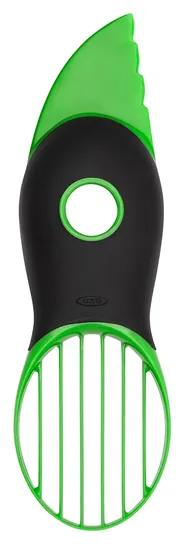
Ten avocado scoopers, pitters and slicers compared on pitting, blade, cleanup and storage. The OXO Good Grips 3-in-1 leads: it twists pits out, no knife needed. When users buy our independently chosen editorial selections, we may earn commissions to help fund the Wiki.
U.S. emergency rooms saw an estimated 50,000 avocado knife injuries between 1998 and 2017, often from stabbing at the pit with the fruit held in one hand. A good avocado tool takes that step away: it splits the skin, pulls the pit with a grip or a twist, and lifts the flesh out. It suits daily avocado eaters.


Editor's Notes
October 26, 2026, by Ezvid Wiki Admin:
The OXO Good Grips 3-in-1 is the new pick to beat. Its twisting pit ring keeps a knife out of the riskiest step, and that matters: a study in the American Journal of Emergency Medicine found avocado knife injuries in U.S. emergency rooms grew more than eightfold from the late 1990s to the mid-2010s.
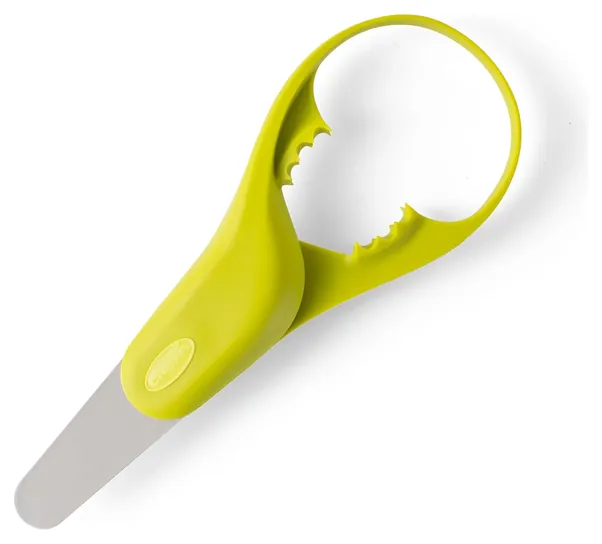
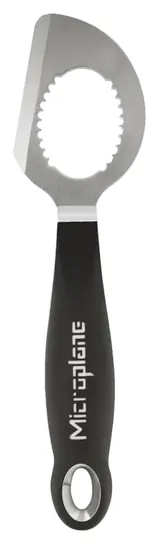
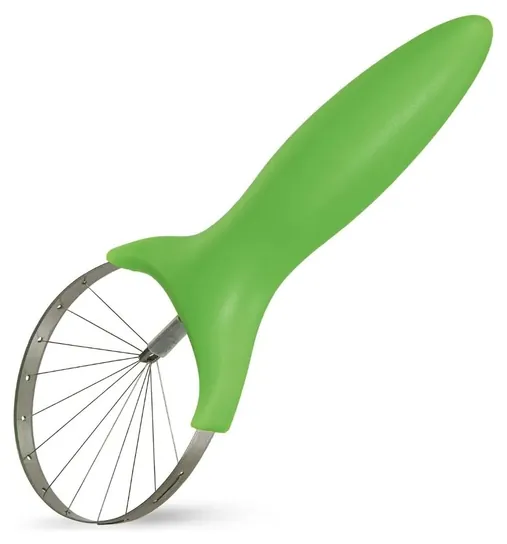
The Chef'n Avoquado, Kuhn Rikon Colori, Amco 8685 and Trudeau Slicer stay. Microplane replaced its old green tool, so the Microplane Avocado Tool takes its place. The JustDoLife 3-in-1, AvoLoop Fast Peel and KitchenAid Gourmet are gone from the market. We also cut the Winco basting spoon, since the spoon you already own does the same work. New picks add a folding tool, a budget take on the classic three-in-one, a guacamole masher and a wire-wheel slicer.
For this category the evidence was thin: makers' care and material notes, a few published roundups, one TV kitchen head-to-head and the injury research. No lab measures avocado tools, so we leaned on design and the pattern of complaints.
July 18, 2019:
Beware the dreaded avocado hand! No, really, "avocado hand" is a distinct and increasingly common injury that occurs when you're trying to slice open an avocado and remove the pit, but you miss the fruit with your chef's knife and hit your own flesh, between your thumb and first finger. Most of these tools completely do away with that danger. The one that doesn't, the simple Winco spoon, is on the list because it's the exact thing used in the back of many restaurant kitchens for their high-volume prep. If you decide to go that route, make sure your chef's knife is sharp, and it really helps to have a cutting glove to ensure your hand remains whole. I've personally cut more avos than I could possibly ever count -- some with a cut glove, and some without -- and when done right, a large serving spoon like the Winco is by far the quickest way to process an entire case at once.
If you're only working with one or a few of these succulent fruits at a time, though, the rest are all very safe. The KichenAid and Microplane are the most similar to traditional kitchen tools, and the Amco is one of the most popular. Keep in mind that the Amco, like the Oxo, will limit you to slices or dices, and won't let you remove entire halves at once. The JustDoLife is nice because it has a built-in masher and comes with a case to store your leftover half -- remember to leave the pit in to help prevent oxidation, as the case has a depression specifically to accommodate for the entire seed. The Trudeau and Kuhn Rikon are both worthy choices because they're compact and easy to fit into a chef's kit or toolbox. Luckily, none of these are terribly expensive, and it's a bit surprising to some people how much variety you have in your choice of avocado preparation.
Pick The Type That Matches How You Eat Avocados
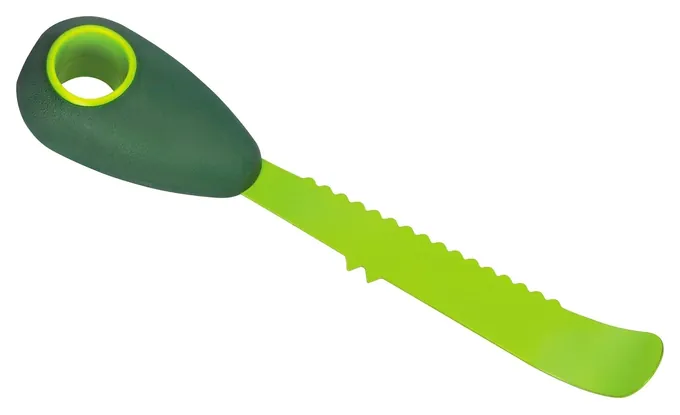
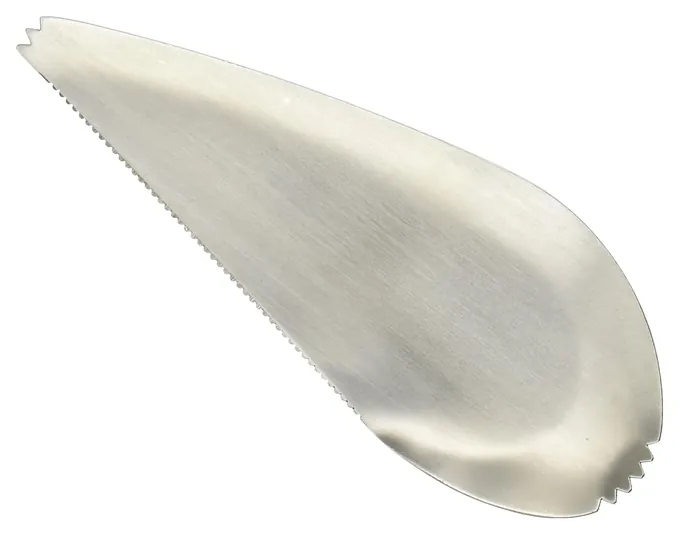
Knife-style tools such as the Kuhn Rikon Colori swap the plastic edge for serrated steel, which cuts firmer skin but skips the slicing paddle.
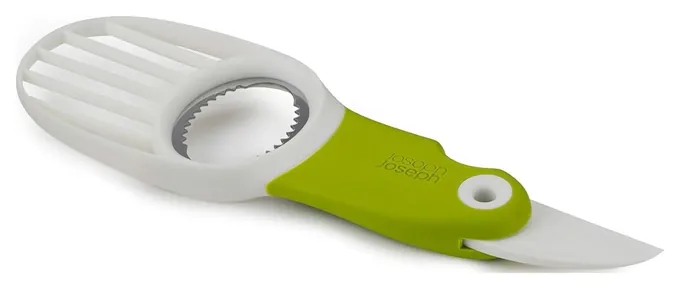
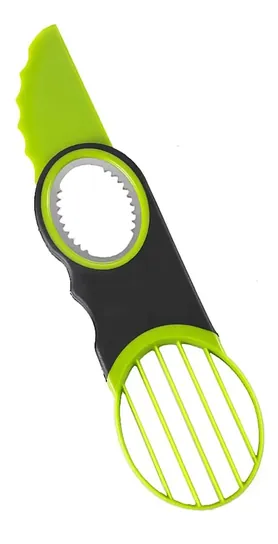
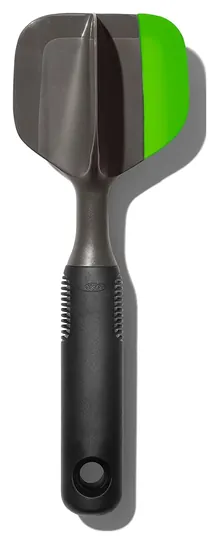
Most avocado tools follow one of four designs. The common one is the three-in-one paddle: a plastic edge splits the skin, a toothed ring or loop pulls the pit, and a slotted paddle cuts slices and lifts them out. RealHomes named the OXO version its best avocado tool (RealHomes), and many cheaper tools copy its layout.
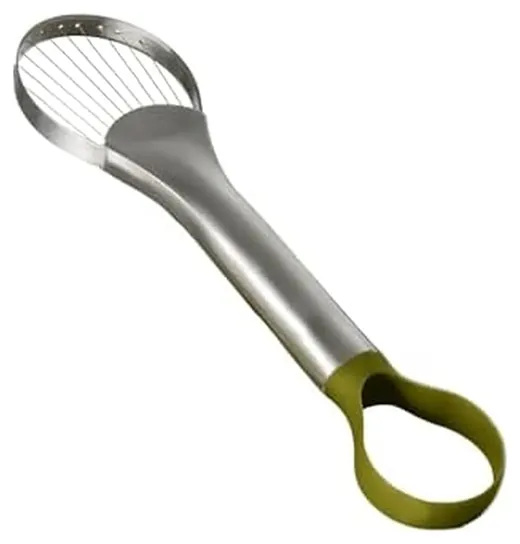
Knife-style tools such as the Kuhn Rikon Colori swap the plastic edge for serrated steel, which cuts firmer skin but skips the slicing paddle. Wire-wheel slicers cut even fans of slices and do nothing else. Mashers like the OXO Scoop and Smash are for guacamole and don't pit at all.
Blunt edges have a real upside. When Food Network's The Kitchen ran the Chef'n Avoquado against a plain knife and spoon, the hosts still preferred the old way for speed but liked the tool's blunt edge for safety (Food Network). If you eat an avocado a week, a spoon may be all you need. If you eat one a day or feed kids, a tool that pulls the pit without a knife earns its place.
Ripe Fruit, Pit Size And Why Tools Struggle
Avocados ripen after picking. A hard fruit softens in one to two weeks at room temperature, and faster in a paper bag with a banana or apple, because those give off ethylene (Wikipedia). Ripe flesh yields to gentle pressure in the palm.
Ripeness decides how well a tool works. Plastic edges cut ripe fruit cleanly but skate across a firm skin, and plastic blades can crack if you force them. A serrated steel blade copes better with fruit that's a day short of ready.
Pit size matters too. A fixed ring with teeth holds a medium pit well, but a small pit can spin or slip out. Squeeze loops with moving jaws adjust to the pit, and a steel loop or notch works by levering under it rather than gripping. If your store sells small Hass avocados and big Florida ones, a loop-style pitter covers both.
Safety, Allergies And Care
So-called avocado hand is a real injury. A 2019 study in the American Journal of Emergency Medicine estimated about 50,000 avocado-related knife injuries in U.S. emergency rooms from 1998 to 2017, rising with consumption (PubMed). The California Avocado Commission's advice: keep the fruit on the cutting board, never strike or poke the pit with a knife while holding the avocado, and lift the seed out with a spoon (California Avocado Commission). Avocado tools still have teeth and edges, so the same rule applies to them.
People with a latex allergy can react to avocado, and the pit, skin and leaves contain persin, which is harmful to birds, horses and some other animals (Wikipedia). Toss pits where pets can't reach them.
Rinse a tool right after use, because avocado dries hard in slots and hinges. Most plastic tools go on the top rack; coated steel blades last longer washed by hand. We found no recalls for any of these brands' avocado tools in the Consumer Product Safety Commission's database (SaferProducts.gov).
How we researched this
We compared 18 avocado tools, from three-in-one slicers to mashers, read the makers' material, care and warranty details for the 10 finalists, weighed published roundups and a TV kitchen head-to-head, reviewed emergency-room injury research and the California Avocado Commission's cutting advice, and checked every brand against the Consumer Product Safety Commission's recall database. Updated October 26, 2026 by Ezvid Wiki Admin.
Frequently asked questions
Do I need an avocado tool, or will a spoon do?
A spoon and a sharp knife work fine on ripe fruit if you keep the avocado on a cutting board. A tool helps most with the pit, because it lets you remove it without a knife.
Why does my avocado tool slide off the skin?
The fruit is probably still firm. Plastic edges cut ripe avocados well but skate on hard ones. Let it ripen a day or two, or use a serrated steel tool.
Are avocado tools dishwasher safe?
Most plastic ones go on the top rack. Makers of coated steel blades, such as Kuhn Rikon, advise hand washing to protect the coating. Rinse any tool soon after use so flesh doesn't dry in the slots.
Can avocado tools handle mangoes or kiwis?
Some sellers say so, mainly for steel scoops, but most tools are shaped for an avocado's pit and skin. A paring knife and spoon are still the better choice for mango.
Is avocado safe for pets?
Not for every animal. The pit, skin and leaves contain persin, which can harm birds, horses and some other animals, and a pit is a choking risk for dogs. Throw pits away where pets can't reach them.