The 6 Best Blacksmith Anvils
Updated by · How we research

Sellers supply the hardness figures for cast imports, and they sometimes conflict. The U.S.-made JHM Certifier tops six anvils from bench size to 116 pounds. When users buy our independently chosen editorial choices, we may earn commissions to help fund the Wiki.
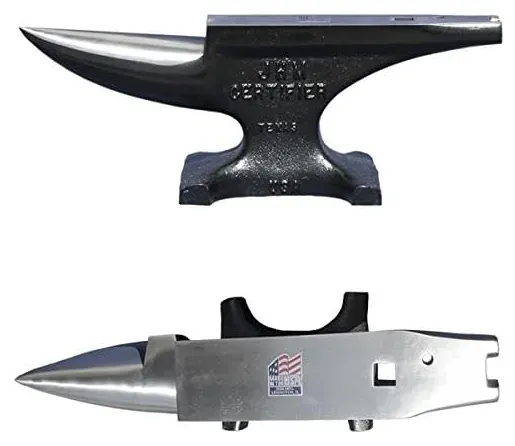
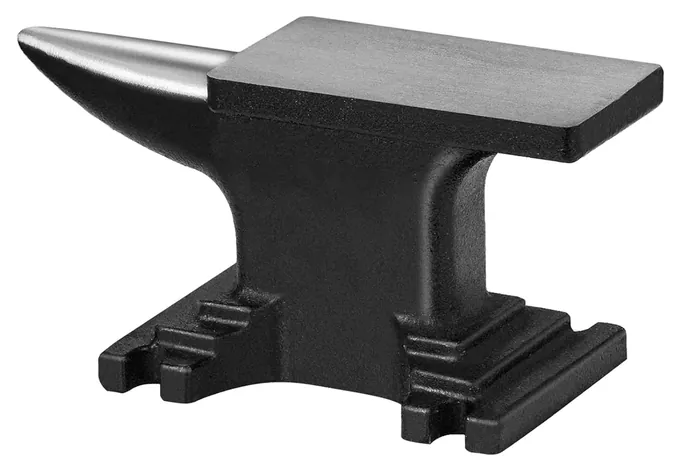
Many smiths treat about 100 pounds as the minimum anvil for hot forging, since a heavier one shifts less and puts more of each blow into the work. An anvil is the heavy block a smith hammers metal on. Its flat face is for flattening and straightening, the horn bends curves, and the square hardy and round pritchel holes hold tools and take punches.


Why the JHM Certifier is our top pick
The Certifier wins on the two things that decide how an anvil works and which tools it takes: mass and a standard hardy hole. It weighs 100 pounds, the figure blacksmithing teacher Robb Gunter called the usual minimum for an adult in a 1998 ANVIL Magazine column,5 and its hardy hole is a true 1 inch.1 Our runner-up, the VEVOR 55 lb Single Horn, weighs 55 pounds and has a 20 mm hole, so 1-inch tooling won't go in.3,4
Its maker also publishes more detail. Anvil Brand gives the face as 4 by 16.5 inches, lists the horn, base and pritchel sizes, and adds a tapered heel and turning cams for bending bar.1 It states a Rockwell hardness of 48 to 52 for the ductile-iron JHM line and says each anvil is tested for integrity at the foundry before it's machined.2 For the runner-up, the store page says 50 HRC while the manual's table says 53, plus or minus 4,3,4 and no outside test confirms either.
The runner-up still has a case. It claims a harder face, costs a fraction as much and has a cutting step that keeps chisel work off the face,3 so for a first anvil on a tight budget it's the one we'd start with. For a smith who wants full forging weight and standard tooling from the start, our pick is the safer buy, with one caveat: its maker quotes two to six weeks to ship.1
| JHM Certifier | VEVOR 55 lb Single Horn | |
|---|---|---|
| Weight | 100 lb | 55 lb |
| Hardy hole | 1.0 in (standard) | 20 mm (about 0.8 in) |
| Face | 4 x 16.5 in | 3.2 x 15.9 in |
| Stated hardness | 48-52 HRC (maker) | 50 HRC page, 53±4 manual |
| Material | Ductile iron, made in U.S. | Cast steel |
Sources
- JHM Certifier 1Anvil Brand product page 2JHM line page (material, hardness)
- VEVOR 55 lb Single Horn 3Store page (GZJ55) 4Anvil user manual, parameter table (ManualsLib), p. 3
- 5Robb Gunter, ANVIL Magazine, May 1998
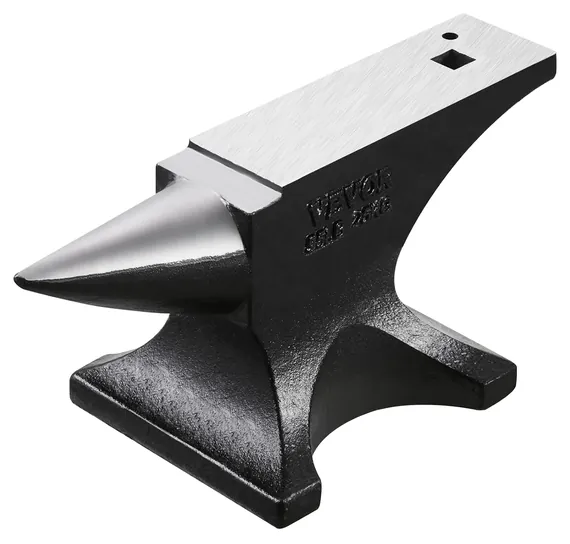
From the manual
- The parameter table lists a 20 mm square hardy hole, so three-quarter-inch tools fit and standard 1-inch tools don't. p. 3
- The pritchel hole is 10 mm, a little under half an inch, which limits the punches and drifts that pass through. p. 3
- Bought from VEVOR's own store, it carries a 12-month warranty and free 30-day returns for damage, defects or missing parts. VEVOR warranty policy
Compare the specs
Swipe the table sideways to see every column.
| Product | Weight (lb) | Face, width x length (in) | Hardy hole (in) | Material |
|---|---|---|---|---|
| 1. JHM Certifier | 100 | 4 x 16.5 | 1.0 | Ductile iron |
| 2. VEVOR 55 lb Single Horn | 55 | 3.2 x 15.9 | 0.8 (20 mm) | Cast steel |
| 3. VEVOR 116 lb Single Horn | 116 (110 on some pages) | 3.9 x 22.5 | 1.25 (31.75 mm) | Cast steel |
| 4. Easmvetaln EA-Anvil-DT65 | 65 | 3.1 x 14.8 | — | Cast steel |
| 5. VEVOR 22 lb Double Horn | 22 | — | — | Listing names conflict |
| 6. VEVOR 9 lb Single Horn | 8.8 | 2.7 x 5.2 | None listed | Cast steel |
Figures come from the makers' pages and VEVOR's anvil manual. The Easmvetaln and the 22 lb VEVOR have no maker spec page, so their values come from the sellers' listings. Hardness and rebound are left out: for the imports they are seller claims nobody has checked.
Sources
- JHM Certifier product page (Anvil Brand) Line page, material and hardness (Anvil Brand)
- VEVOR 55 lb store page 116 lb store page, U.S. 110 lb store page, U.K. 8.8 lb store page Anvil manual, GZJ table (ManualsLib) Anvil manual, GZL9 section (ManualsLib) 22 lb listing, reseller copy
- Easmvetaln 65 lb listing, reseller copy
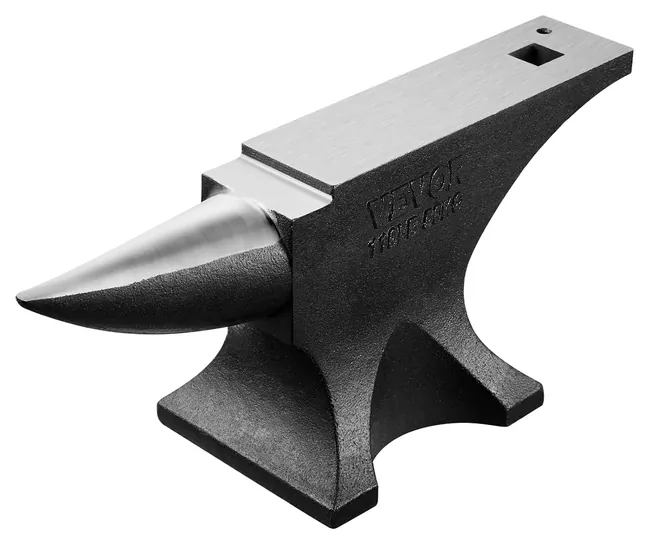
From the manual
- The table lists a 31.75 mm square hardy hole, a full 1-1/4 inches, so 1-inch tools sit loose without a sleeve. p. 3
- Net weight in the table is 52.8 kg, about 116 pounds; some VEVOR store pages call it 110. p. 3
- The pritchel hole is 12.7 mm, a true half inch, so half-inch punches and drifts pass through. p. 3
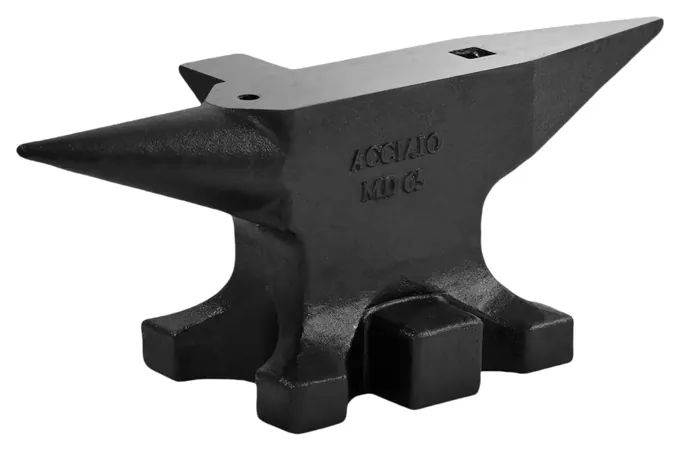
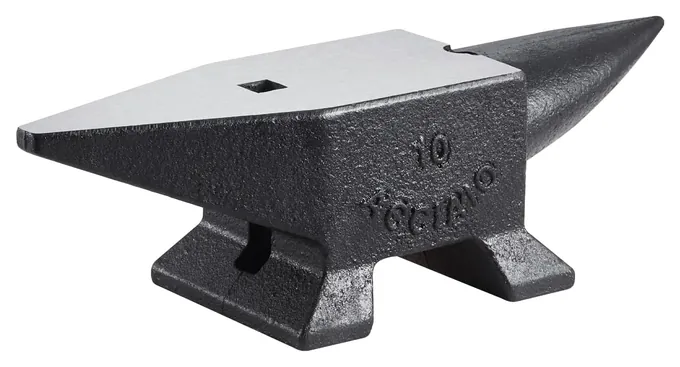
From the manual
- The 9 lb section lists four mounting holes in the base for screwing it to a bench, and no hardy or pritchel hole. p. 5
- Net weight is 4 kg, about 8.8 pounds, with the face rated at 53 HRC, plus or minus 4. p. 5
- For long storage, wipe anti-rust oil on the face and keep it somewhere dry, ventilated and out of direct sun. p. 6
Editor's Notes
November 4, 2026, by Ezvid Wiki Editors:
This pass checked each pick against its maker's or seller's pages and VEVOR's multi-model anvil manual, and added a spec table, a section on why the JHM Certifier is our top pick, and manual notes for three VEVOR anvils. We raised the intro's forging-weight floor to the usual 100 pounds, corrected the 116 lb VEVOR's weight note, the 9 lb VEVOR's hardy hole and the Easmvetaln's pattern, and fixed a dead dealer link. Two older notes now carry 2026 updates.
October 18, 2026, by Ezvid Wiki Editors:
The JHM Certifier stays on top as the one professional anvil that's still easy to buy, from a maker that publishes real dimensions. Little else from the 2020 lineup is left. The three Ridgid anvils, made by Peddinghaus in Germany, are no longer offered, and neither are the HappyBuy Single Horn or the CO-Z Round Horn. We also dropped the Mophorn 88-Pound, now sold under the VEVOR name, because its listing gives two different weights and the VEVOR 116 lb Single Horn costs only a little more for a lot more iron.
Everything else here is an imported cast anvil, and we want to be plain about that. Their hardness and rebound figures come from the sellers, they sometimes contradict each other, and we couldn't find anyone who has tested them. They're still the realistic way in for most beginners. The VEVOR 55 lb Single Horn is the one we'd start with, and the Easmvetaln EA-Anvil-DT65 suits knife makers.
If you want a forged anvil or a heavier American casting, the special honors point to the dealers that carry them.
Earlier notes
October 26, 2020, by Luke Perrotta:
We removed the Old World Forged, the NC Big Face, and the NC Cavalry all because of availability concerns. We've added a selection of smaller and cheaper anvils in their place, including the Mophorn 88-Pound, the HappyBuy Single Horn, and the CO-Z Round Horn, all of which are perfectly good choices for beginners and amateurs. Career blacksmiths and those planning to use an anvil for serious heavy-duty work should consider the larger models on this list, like the Ridgid Model 12 or the Ridgid Model 9. [2026 update: Ridgid has since discontinued both models, and neither is on the current list.]
November 26, 2018, by Christopher Thomas:
Blacksmithing projects that use stock any larger than 1/4" will need a serious unit upon which to hammer... whatever you do, avoid the imported ones that experts derisively refer to as "anvil-shaped objects." They claim to be steel, but they almost never are, and when a real craftsman works with them for a while, it's an easy lie to debunk. The Ridgid models are all super-high-end, crafted in one of the oldest German anvil factories. Alternately, the NC Tools options are great for hobbyists, whether they're making swords, daggers, hunting knives, or santokus (chef's knives). The Old World is a great value for its size, but only if you're okay with its lack of a real horn. [2026 update: Most of today's list is imported cast steel with a hardened face, a kind of anvil some smiths now consider fine for beginners; the 2026 note above explains the trade-offs. Ridgid has also discontinued its Peddinghaus-made anvils.]
Special Honors
Anvil Brand JHM Anvils Anvil Brand makes and sells the full JHM line directly, from the 70-pound Basic to the 260-pound Competitor, with several 125-pound Journeyman patterns in between. It publishes face, horn and hole dimensions for each, which makes it the place to compare farrier and blacksmith patterns heavier than the Certifier. anvilbrand.com
Kanca Forged Anvils Kanca makes drop-forged steel anvils, a step up from cast anvils for smiths who want a forged face without paying for a heavy German or American anvil. US dealer Blacksmiths Depot carries them alongside DTX and Perun anvils, plus Kanca leg vises. blacksmithsdepot.com
Centaur Forge Centaur Forge is a farrier and blacksmith supplier that stocks several anvil brands rarely found elsewhere online, including Atlas, Cliff Carroll, Emerson, NC Tool and Scott. It's a good place to compare heavier forged and cast-steel patterns side by side. centaurforge.com
Weight, Material And Rebound
A good anvil sends it back at least 7 inches, or about 70 percent.
Weight comes first. A heavier anvil moves less when you hit it, so more of the blow goes into the hot metal instead of into bouncing the anvil around. Robb Gunter of The Forgery School of Blacksmithing in Tijeras, New Mexico, wrote in ANVIL Magazine in May 1998 that 100 pounds is usually considered the minimum for an adult, and dealer Centaur Forge puts shop blacksmith anvils at 100 to 300 pounds or more. Specialist sellers such as Anvil Brand stock anvils from about 35 to 260 pounds. A 50- to 70-pound anvil can still start a beginner on light stock if it's fixed to a solid stand. Anything under about 30 pounds is a bench anvil for cold work like rivets and jewelry.
Material comes next. Forged steel anvils, such as the Kanca line, have a hardened face and the best rebound, and they cost the most. Cast steel is what most modern anvils are, according to Wikipedia's anvil article, which also notes that some smiths accept cheap cast anvils for beginners. Ductile iron, used by JHM, is machined and heat-treated, and Anvil Brand says its JHM anvils are used in farrier schools. Plain cast iron, common on cheap hobby anvils, dents and has little bounce, so it isn't suited to serious forging.
A common shop test for any anvil is to drop a steel ball bearing from 10 inches onto the face. A good anvil sends it back at least 7 inches, or about 70 percent. Several imported anvils claim more than 70 percent, but those figures come from the sellers, not from independent tests.
Holes, Horns And Face
The hardy hole is the square hole that holds cutters, fullers and bending forks, and its size decides which tools fit. Most hardy tools come with a three-quarter-inch or 1-inch shank. The JHM Certifier has a 1-inch hardy hole, while imported anvils often use in-between sizes, such as about 0.8 inch on the VEVOR 55 lb and 1.25 inches on the 116 lb, that leave standard tools loose or won't take them at all. Check the hole size before buying a tool set. Gunter's fix for a mismatch is to have a small hole machined larger or a large one sleeved down, so all your tooling fits. The round pritchel hole, usually about half an inch, is for punching through hot stock.
The horn is for bending curves and rings. A single-horn London pattern is the most common shape. Double-horn anvils and patterns with a squared step help with tight bends, scrolls and crisp shoulders on knife tangs. A cutting step, a soft ledge between the horn and the face, gives a chisel somewhere to land without marring the main surface, though many smiths avoid cutting there because it wears the step down over time.
Face width matters most for knife making and drawing out stock. About 3 to 4 inches is common on anvils from 55 to 100 pounds, and a flat, true face with clean edges lets you straighten a blade without leaving dents. Dealers such as Centaur Forge list face sizes for each anvil, which makes comparing easier.
Mounting, Care And Safety
An anvil only works as well as its base. Set it on an end-grain log or a steel stand and fix it down with chains, straps, spikes or bolts, as Wikipedia describes, and place it about a step from the forge so the steel stays hot. A common rule of thumb puts the face at about the height of your knuckles with your arms hanging at your sides. Lighter anvils need bolting most, since they walk under heavy blows.
Care is simple. Wipe a little oil on the face to keep rust off, since many imported anvils arrive with surface rust. Don't do heavy cutting on the face; use a hardy cutter or a mild-steel cutting plate instead. Keep the face edges slightly rounded, because sharp edges mark and can crack the work.
Forging calls for eye and hearing protection. Never strike a hardened anvil face with a hardened tool or hardened work at full force, because chips can fly. A 100-pound anvil is a two-person lift or a job for a hand truck. VEVOR's U.S. importer has Consumer Product Safety Commission recalls for other goods, such as baby gates and garment steamers, but we found none for an anvil from any brand on this page.
How we researched this
We compared 16 anvils, including the seven from our previous list, and screened 11 current models in depth. For the six picks we read Anvil Brand's Certifier and JHM line pages, VEVOR's store pages for its 55, 116 and 8.8 lb anvils, and VEVOR's multi-model anvil manual, whose tables give hardy-hole sizes, net weights and hardness for the GZJ55, GZJ110 and GZL9; the Easmvetaln and the 22 lb VEVOR have no maker page or manual we could find, so their figures come from the sellers' listings. Centaur Forge's anvil guide, Wikipedia and Robb Gunter's 1998 ANVIL Magazine column shaped the advice on weight, material and mounting. CPSC and Health Canada searches turned up VEVOR recalls for baby gates, steamers and other goods but none for anvils, and none for JHM or Easmvetaln, and we found no independent lab or magazine tests of these anvils.
Sources (14)
- Anvil Brand: JHM Certifier 100 lb anvil
- Anvil Brand: anvils collection
- Wikipedia: Anvil
- CPSC SaferProducts recall search
- Anvil Brand: JHM anvils (ductile iron, Rockwell 48-52)
- VEVOR: 55 lb single horn anvil (GZJ55)
- VEVOR: 116 lb single horn anvil (GZJ110)
- VEVOR: 8.8 lb single horn anvil
- VEVOR anvil user manual, GZJ24/GZJ55/GZJ110 table (ManualsLib)
- VEVOR anvil user manual, GZL22 and GZL9 sections (ManualsLib)
- VEVOR warranty and return policy
- Centaur Forge: About Anvils
- Robb Gunter, ANVIL Magazine (May 1998): Your Anvil is a Great Tool
- CPSC: Sanven Technology recalls Vevor baby gates (2026)
Frequently asked questions
How heavy should a blacksmith anvil be?
For general blacksmithing, about 100 pounds is the usual starting point, and shop anvils often run to 300 pounds. A 50- to 70-pound anvil works for a beginner forging light stock if it's fixed to a solid stand. Under about 30 pounds, an anvil is best for cold bench work like rivets and jewelry.
Is a cheap cast anvil good enough to start?
For learning, often yes. Some smiths accept inexpensive cast anvils for beginners, but expect a softer face, rough or odd-sized holes, and hardness claims nobody has verified. Avoid plain cast iron for hot forging, because it dents and has little rebound.
Why aren't Ridgid or Peddinghaus anvils on the list?
Ridgid sold forged anvils made by Peddinghaus in Germany, but it has discontinued them. For a forged anvil today, look at specialist dealers that carry brands like Kanca, or at a good used anvil.
What anvil is best for knife making?
Look for a flat, true face about 3 to 4 inches wide, clean edges and a squared step for setting shoulders. The Easmvetaln EA-Anvil-DT65 has that step, and any solid anvil of 55 pounds or more will handle most blades.
How do I check an anvil's rebound?
Drop a steel ball bearing from 10 inches onto the face. A good anvil returns it at least 7 inches, or about 70 percent. A dull thud and little bounce point to a soft face.
How should I mount an anvil?
Set it on an end-grain log or a steel stand, fix it with chains, straps or bolts, and put it about a step from the forge. A common rule puts the face near knuckle height with your arms at your sides.