
The 10 Best Digital Pianos
Updated by · How we research

Weighted keys, sound, speakers and what comes in the box compared across 10 digital pianos for home and lessons. The Yamaha P-145BT is the best starting point. When users buy our independently chosen editorial choices, we may earn commissions to help fund the Wiki.
The keys decide more than the sound does. A digital piano bought for lessons needs 88 full-size keys that are weighted and graded, heavier in the bass and lighter in the treble, or habits formed on it won't carry over to an acoustic. Many arrive without a stand, bench or proper pedal, so read what's in the box first.


Editor's Notes
November 1, 2026, by Ezvid Wiki Admin:
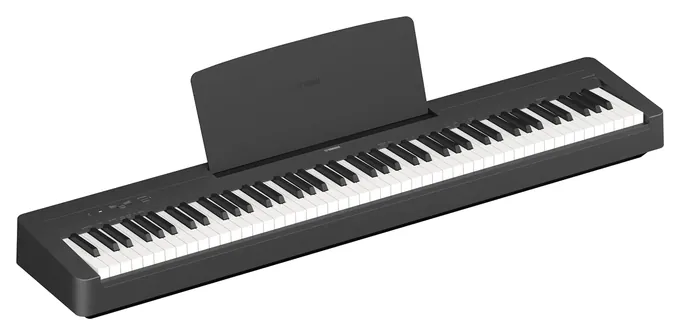
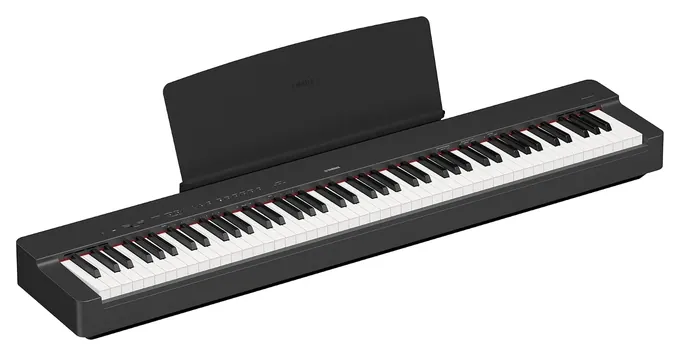
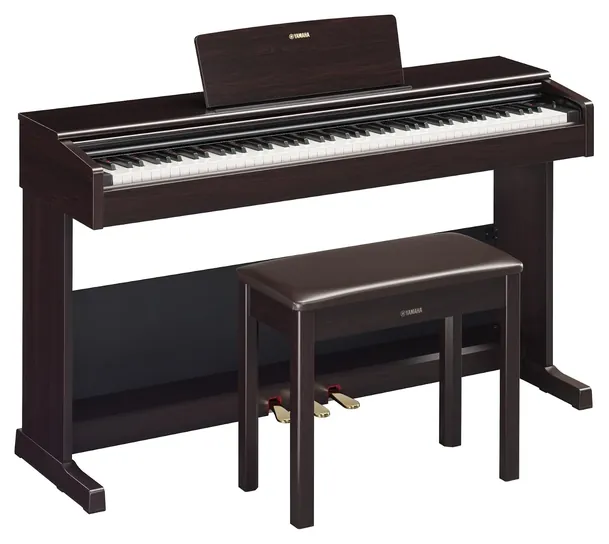
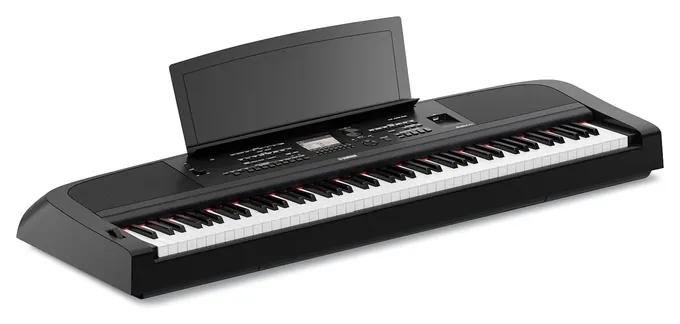
The Yamaha P-145BT now leads this page. It plays like a real piano for a beginner's budget, and it can play phone music through its speakers. Little of the 2021 lineup survived. The Kurzweil Home KAG100, Kawai KDP110 and Casio PX-870 Home Privia have left the market, while the Yamaha DGX660WH and Arius 144R have successors, the Yamaha DGX-670B and Arius YDP-105. The One Smart Piano, Roland Go Piano and Yamaha YPG535 dropped off because their keys don't play like a piano's, and the Donner DEP-20 takes the Donner slot.
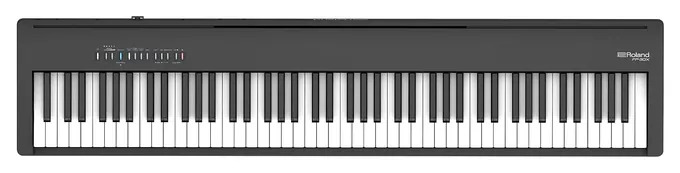
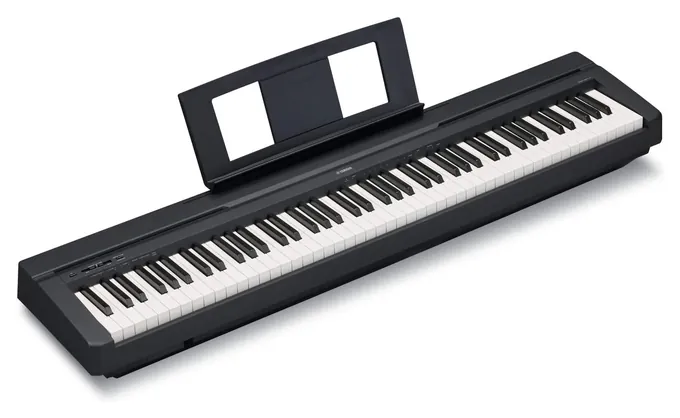
The Yamaha P71 stays as the simplest choice. The Roland FP-10, Roland FP-30X and Casio Privia PX-S1100 are new, and they cover what readers ask about most: real key feel, room to grow and small apartments.
The evidence here was Roland's and Casio's own spec sheets, Piano Dreamers' long reviews of the Roland and Yamaha slabs, and the federal recall list, which shows an old Yamaha power adapter recall but nothing for any piano on this page.
December 21, 2020:
This latest update sees the introduction of some interesting integrated learning tools on the Roland Go Piano and the One Smart Piano, with the former offering lessons via a connected mobile device, and the latter having LEDs on each key to highlight different finger positions as you play.
At the more affordable end of the scale, we added the Donner DDP-100, which, although limited in its number of sounds, represents great value for money, with fully-weighted keys and solid build quality. Another budget addition is the Yamaha P71, which replaced the Yamaha YDP184R Arius, and is well suited to beginner to intermediate players.
At the more professional end of the scale, we selected the Yamaha DGX660WH, with its extensive soundbank, and the Kawai KDP110, with its excellent craftsmanship, integrated speaker system, and faithful multi-sampled sound reproduction.
November 11, 2019:
Compared to our last visit to this ranking, there were a few things we wanted to make sure were consistent from one offering to the next, most importantly that each piano on the list contained 88 keys. Not all of the models we included offer fully-weighted keys, but each boasts some form of weighting that goes beyond the springy action of a cheap keyboard or even decent synthesizers. You'll also find a lot of common features like included lessons, and even app connectivity, as is the case with the Yamaha Arius Series 144R.
We're also aware that most people shopping for a digital piano are doing so due to considerations of space, but there's no denying that the Suzuki Baby Grand MDG-4000 and the Kurzweil Home KAG100 have more to offer than just about anything else on the list, and they have a considerably larger footprint than the rest of the selection. That space is made use of, however, in the form of excellent speaker systems that take these instruments' sound quality to levels other models couldn't reach without the help of a dedicated piano amplifier.
In making space for these, we removed an old Yamaha option that only offered 76 keys, as well as a Korg model with limited settings and a miserable stand. There was also an update to a popular Yamaha model that resulted in the inclusion of the 144R mentioned above.
Special Honors
Kawai ES120 Kawai's portable digital piano is sold mainly through piano dealers. It pairs a quieter hammer action with Bluetooth audio and MIDI and Kawai's concert grand samples, and it's worth a try at a dealer before buying a slab. kawaius.com
Yamaha Clavinova For a long-term home piano, Yamaha's dealer-sold Clavinova line steps up to larger cabinets, stronger speakers and more realistic key actions, at a much higher cost. usa.yamaha.com
Weighted, Graded Keys Come First
That means 88 full-size keys that are weighted and graded: heavier at the bass end and lighter toward the treble, as on an acoustic.
A digital piano is worth buying for lessons only if it feels like a piano. That means 88 full-size keys that are weighted and graded: heavier at the bass end and lighter toward the treble, as on an acoustic. Semi-weighted and unweighted keyboards are fine for synth parts and song ideas, but finger strength built on them doesn't carry over well. For those, see our portable keyboard picks.
Within weighted actions there are real differences. Roland's PHA-4 Standard action adds an escapement, a small notch felt at the bottom of a light keystroke that copies a grand, and textured key tops that absorb moisture (Roland FP-10 specifications). Yamaha's Graded Hammer Compact action in the P-145 senses each key with two sensors and has no escapement, and its short key levers make the backs of the keys feel stiff to advanced players (Piano Dreamers P-143/P-145 review).
Touch settings help too. Most models let you make the keys respond lighter or heavier, which suits small hands or players who switch between a digital and an acoustic. Polyphony, the number of notes a piano can sound at once, matters mostly with the sustain pedal down: 64 notes is enough for beginners, while 128 to 256 gives headroom for long pedaled passages (Piano Dreamers buying guide).
Pedals, Stands And What's Missing From The Box
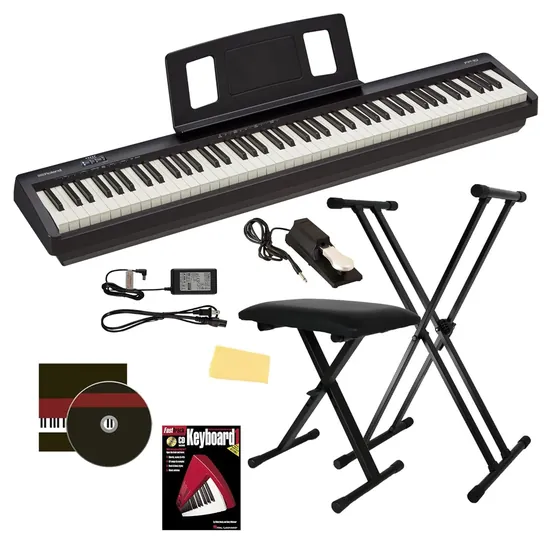
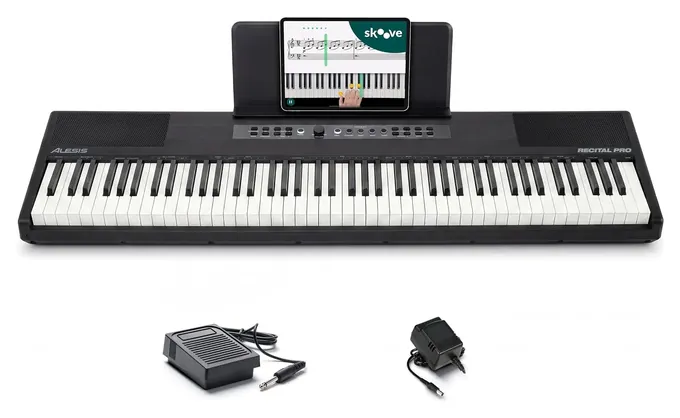
Most slab-style digital pianos ship with only a small on-off footswitch. It works for practice, but it can't do half-pedaling, the partial lift that pianists use to clear blurred notes. A proper damper pedal costs little: Roland sells the DP-10 for the FP-10 and FP-30X (Roland FP-30X specifications), and Yamaha's FC3A does the same for the P-series (Piano Dreamers P-143/P-145 review).
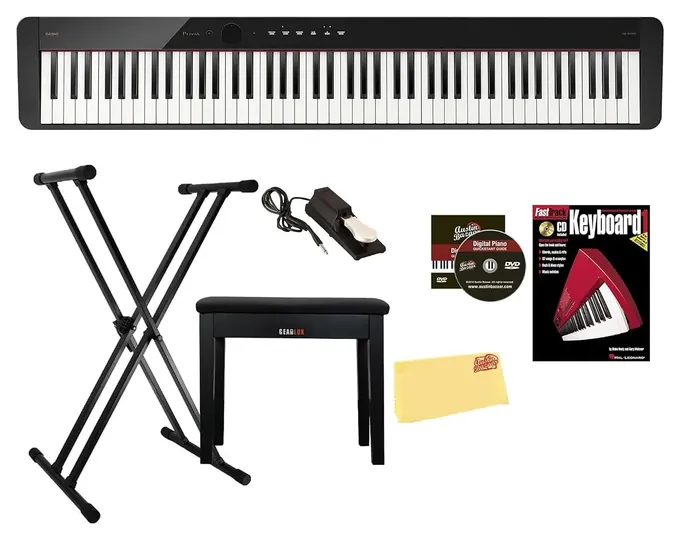
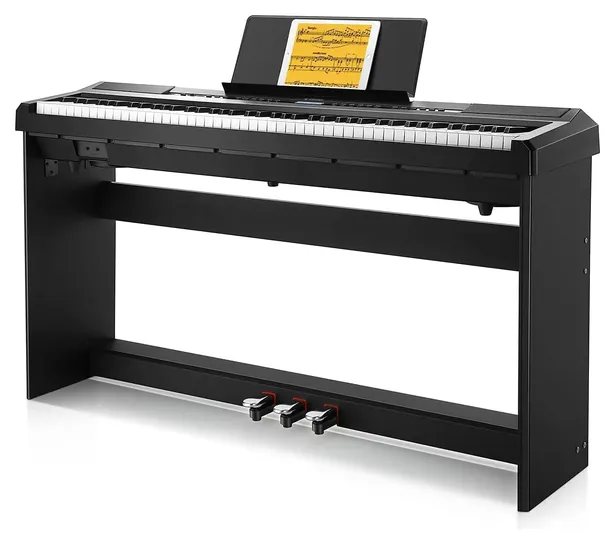
A slab also needs a stand and a bench at the right height. Bundles add both, but the X-style stands they include can wobble, and a matching furniture stand from the maker is steadier. Cabinet models like the Yamaha Arius YDP-105 come with three pedals and a bench, and they look like furniture, but they weigh around 80 pounds and are hard to move.
Measure first. A full 88-key piano is about four and a half feet wide, whatever its depth. The Casio Privia PX-S1100 is slim enough for a desk, and it runs on six AA batteries (Thomann PX-S1100 specifications).
Speakers, Headphones, Apps And Safety
Small built-in speakers are fine for practice in a bedroom, but they distort when pushed: Piano Dreamers found the FP-10's speakers weak and the FP-30X's bass-heavy at full volume (Piano Dreamers buying guide). Every piano here has a headphone jack, and good headphones often sound better than the speakers. For apartments, headphones also solve the neighbor problem, though key thumps still carry through floors, so a rug or a pad under the stand helps.
Bluetooth comes in two kinds. Bluetooth MIDI sends the notes you play to apps for lessons and sheet music; Bluetooth audio plays music from a phone through the piano's speakers. The Roland FP-10 has MIDI only, the FP-30X has both (Roland FP-30X specifications), and the Yamaha P-145BT has audio only, so lesson apps need a USB cable.
Use the power adapter that came with the piano. In 2025 Yamaha recalled PA-300C adapters made from 2010 to 2012 and sold with some older digital pianos, after reports of overheating (CPSC recall notice). That matters for second-hand Yamahas; none of the pianos on this page is part of it.
How we researched this
We compared 22 digital pianos and bundles, read Roland's spec sheets for the FP-10 and FP-30X, Casio and Alesis specifications, and Yamaha's published features, used Piano Dreamers' long-form reviews of the Roland and Yamaha models, looked at patterns in owner feedback, and checked every brand against the U.S. Consumer Product Safety Commission recall database.
Frequently asked questions
Do digital pianos need tuning?
No. A digital piano plays sampled notes, so it never drifts out of tune. That saves the yearly tuning an acoustic needs.
Do I need 88 keys?
For lessons and classical music, yes. Most piano pieces use the full range, and teachers expect 88 weighted keys. Shorter keyboards suit pop chords and song writing.
What's the difference between weighted and semi-weighted keys?
Weighted keys push back like an acoustic's hammers, and graded ones are heavier in the bass. Semi-weighted keys use springs and feel lighter, so they build less finger control.
Is a digital piano good for a small apartment?
Yes. Use headphones for quiet practice, and put a rug or pad under the stand because key thumps can travel through floors. Slim models fit on a desk.
Which digital pianos do piano teachers recommend for beginners?
Teachers usually want 88 graded, weighted keys and a real damper pedal. Entry models from Yamaha, Roland, Casio and Kawai all meet that bar.
Do digital pianos come with a stand and bench?
Slab models usually don't, and their pedal is a basic switch. Bundles add a stand, bench and pedal; cabinet models include their own stand and pedals.


