The 6 Best DSLR Audio Mixers
Updated by · How we research

Six on-camera mixers and XLR adapters compared on inputs, phantom power, noise and battery life. The BeachTek DXA-Micro PRO+ leads for clean, rechargeable gain. When users buy our independently chosen editorial selections, we may earn commissions to help fund the Wiki.
Most cameras offer one small mic jack, a hissy preamp and automatic gain that lifts the room noise whenever nobody is talking. An on-camera mixer works around all three: it takes pro XLR or wireless mics, adds clean gain and lets you set levels by hand. This list is for video shooters, interviewers and vloggers recording two voices at once.


Editor's Notes
October 23, 2026, by Ezvid Wiki Admin:
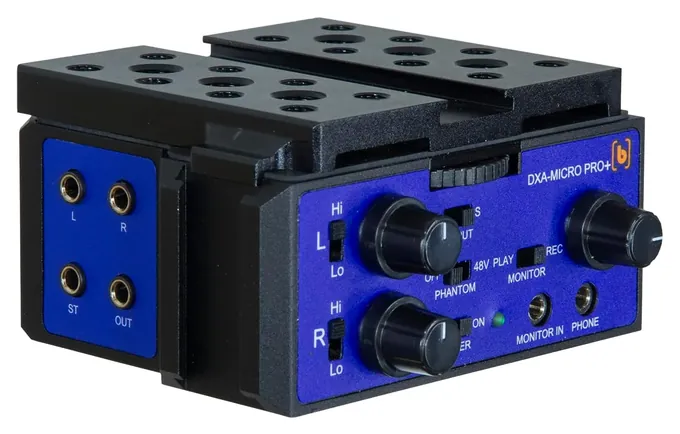
The BeachTek DXA-Micro PRO+ now leads. Its quiet preamps do the work a camera's own input does badly, and its built-in battery charges over USB instead of eating 9-volt cells. Eight of the ten earlier picks are out: the Tascam DR-60DMKII, Comica CVM-AX3, Movo AM200 and Andoer WS-VS are no longer sold, the Boya by MP4 has vanished, and the Saramonic SMARTRIG+ is now a phone interface. The Beachtek DXA-Micro Pro gave way to its successor, and we let the Marantz PMD-602A and Kopul CMX-1-V2 go, since stock was scarce and current documents were thin.
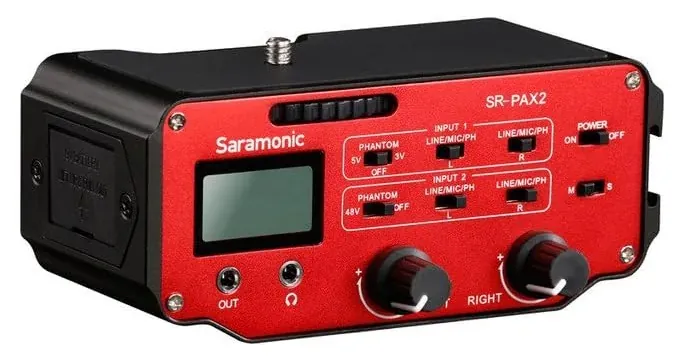
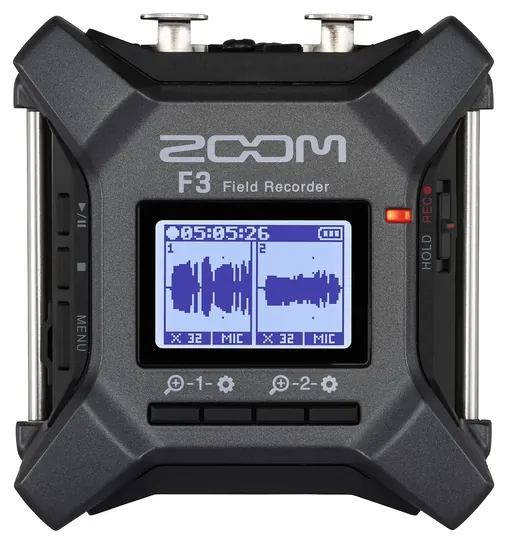
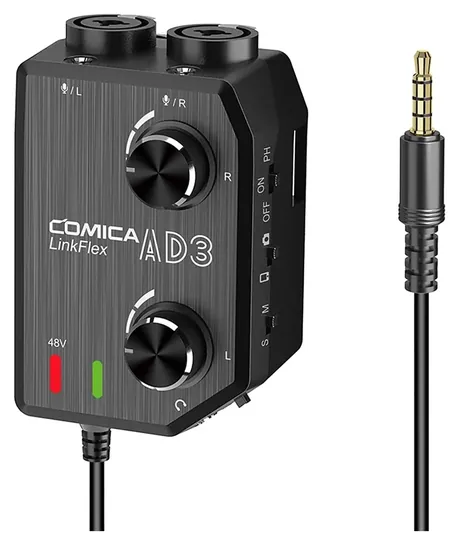
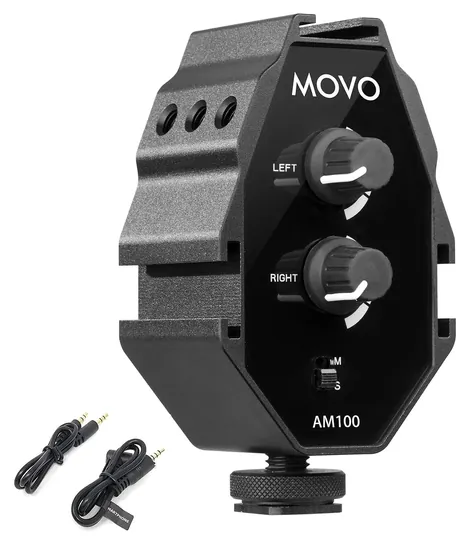
The Azden FMX-DSLR stays, since Azden still makes and sells it, though stock elsewhere is thin. New picks are the Saramonic SR-PAX2 for two wired mics, the Comica LinkFlex AD3 on a budget, the Movo AM100 for wireless kits, and the Zoom F3 for anyone ready to record sound separately.
This category is shrinking. Tascam now builds adapters with Canon, Fujifilm and Nikon that send digital audio through the hot shoe, so a box like these matters most for cameras with only a mini-jack mic input. We read the spec pages BeachTek, Azden, Comica and Zoom publish, and checked how each box handles phantom power, battery drain and the camera's automatic gain.
January 17, 2020:
Studies show that people will put up with the worst quality video but won't tolerate poor quality audio. Audio is often the distinguishing factor between what is considered an amateur or professional production, and it's what causes videographers the most headaches. The audio captured with the mic that's built-in to most DSLRs, as featured on our best DSLR cameras ranking, is typically thin and lacks the "presence" that handheld or boom mics can provide.
The solution is to use better quality mics, and even multiple mics, to capture the audio of an interview or event. If you don't want to use the "dual-system" method employed in professional filmmaking where the audio is captured on an external recorder and then later synchronized to the picture in post-production, or if you're a "crew of one" shooting a vlog and need a simple, portable solution, then consider one of the DSLR mixers I've included in this list.
DSLR audio mixers come in a wide variety of flavors and configurations but are all made to do one thing: take the audio from one or more microphones that normally won't connect directly to your camera and send their signal to your camera's built-in recorder. The difference between audio mixers and adaptors is that adaptors just convert one type of plug to another so you can use any mic you'd like with the traditional 1/8-inch audio input found on most DSLRs. I'm focused here on actual mixers that allow you to mix the audio from one or more mics into one audio stream that goes into your camera. The functions are as varied as the price tags, but there's something available for every videographer, from beginner to pro. I included mixers ranging from the high-end Tascam DR-60DMKII that accepts the professional XLR connector and can record onto an internal SD card, to the no-frills BOYA by MP4 that only accepts mics with 1/8-inch plugs like those used for headphones. Several mixers on the list can be mounted between the camera and a tripod like those featured on our tripods For DSLR cameras ranking. Mid-range mixers of note are the Movo AM200 and Saramonic SMARTRIG+ which provide two-channel mixing with lightweight portability and zero learning curve.
The mixers in this list were chosen for portability, ease of mounting directly to camera or tripod, and the ability to mix more than one audio source directly to your camera's audio input, all without breaking the bank.
Special Honors
Tascam CA-XLR2d Tascam's XLR adapter for mirrorless cameras adds two XLR/TRS inputs with phantom power and a mini-jack input. The Canon, Fujifilm and Nikon kits send digital audio through the camera's accessory shoe and run on camera power, while the analog kit runs on AA batteries and plugs into any camera's mic jack. It costs more than the boxes above, but for those camera brands it skips the analog stage altogether. tascam.com
Active Or Passive, XLR Or Mini-Jack
Pro shotgun and handheld mics use XLR connectors, while most wireless receivers and small on-camera mics use a mini-jack.
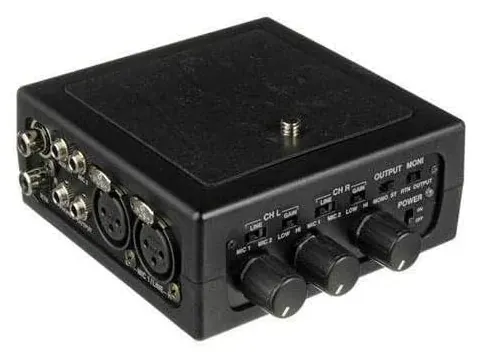
Start by counting your mics and their plugs. Pro shotgun and handheld mics use XLR connectors, while most wireless receivers and small on-camera mics use a mini-jack. An active mixer has preamps and a battery, so it can raise a quiet mic to a healthy level before the signal reaches the camera. The BeachTek DXA-Micro PRO+ offers two gain settings and 48-volt phantom power on its single XLR jack, plus mini-jack inputs for a wireless receiver. The Comica LinkFlex AD3 does a similar job with two combo jacks for less money, powered by one 9-volt battery.
A passive mixer has no electronics to power. It only blends and balances two signals, so it works when every mic brings its own battery, as wireless transmitters do. It can't add gain or power a condenser mic. Movo sells passive and active models side by side in its audio mixer range, which is a handy way to see the difference.
Mounting matters too. Most of these boxes sit between the camera and a tripod or on the camera's shoe, and a box with a cold shoe or threaded plate on top can carry a wireless receiver, keeping cables short.
Phantom Power, Gain And Camera Settings
Condenser mics need power to run. Over XLR, that usually means phantom power, a direct current sent down the mic cable, standardized at 48 volts for new gear. Dynamic and ribbon mics don't need it, and a wiring fault or an unbalanced adapter can damage them. Connect the mic first, then switch phantom on, and switch it off before unplugging. Small mini-jack mics use a much lower plug-in power instead, which most active mixers supply on those inputs.
The camera's settings matter as much as the mixer. Many cameras ship with automatic gain, which turns the level up during pauses and makes room noise rise and fall. Switch the camera to manual audio, set its input level low, and do the boosting on the mixer, whose preamp is usually quieter. Some mixers, such as the Azden FMX-DSLR, add a limiter that catches sudden peaks. Wear headphones, keep the volume moderate to protect your hearing, and set levels so speech peaks stay out of the red.
Battery choice is the other trade-off. A 9-volt cell runs phantom power for a short time, so carry spares. AA packs and built-in rechargeable batteries last longer. Take batteries out of a mixer you plan to store.
When A Recorder Or A Hot-Shoe Adapter Is The Better Buy
A separate recorder can beat any mixer on sound. The Zoom F3 records two XLR inputs in 32-bit float, a format with so much headroom that there is no gain to set and little risk of clipping. The cost is time: the audio lives on the recorder's card, so it has to be synced to the video in editing. Its line output can still send a backup track to the camera.
Newer cameras may not need an analog box at all. Tascam's CA-XLR2d was developed with Canon, Fujifilm and Nikon and sends digital audio straight through those cameras' accessory shoes, drawing power from the camera. An analog kit version works with nearly any camera that has a mic jack. Check your camera's manual for a digital audio shoe before buying a mixer.
If you record people, know the rules where you shoot. U.S. states differ on whether everyone in a private conversation must agree to be recorded; the Reporters Committee for Freedom of the Press keeps a state-by-state guide.
How we researched this
We compared 20 on-camera mixers, XLR adapters and recorders. We read the spec pages BeachTek, Azden, Comica, Zoom and Tascam publish, used seller specs where a maker page wasn't available, and looked at how owners rate each box for noise, battery life and build over time. We checked every brand for recalls with the U.S. Consumer Product Safety Commission and found none that apply. We found no independent lab tests of these mixers, so the ranking rests on documented features and owner patterns.
Frequently asked questions
Do I need an audio mixer for a mirrorless camera?
Only if you use XLR mics or two mics at once and your camera has just a mini-jack input. Some Canon, Fujifilm, Nikon and Sony bodies accept digital XLR adapters through the hot shoe, which is often the cleaner option.
What does turning off automatic gain control do?
Automatic gain raises the level whenever things go quiet, so background noise swells between sentences. With it off and the camera's level set low, the mixer's preamp sets the volume and the noise floor stays steady.
What is the difference between a passive and an active mixer?
An active mixer has preamps and a battery, so it can add gain and supply phantom power. A passive mixer only blends two signals, so it suits wireless kits and mics with their own batteries.
Can I use an XLR condenser mic with these mixers?
Yes, on any mixer with 48-volt phantom power on its XLR inputs. A passive mixer like the Movo AM100 can't power one.
Why record on a separate recorder instead of the camera?
A 32-bit float recorder such as the Zoom F3 almost can't clip and has better preamps than most cameras. The trade-off is syncing the audio to the video afterward.