The 8 Best Evaporative Coolers
Updated by · How we research

Airflow, tank size, water use and honest room ratings compared across eight evaporative coolers. The Hessaire MC37M wins for dry garages, patios and open rooms. When users buy our independently chosen editorial selections, we may earn commissions to help fund the Wiki.
No evaporative cooler can push air below the wet-bulb temperature. At 90 degrees and 20 percent humidity that leaves room for a drop of more than 20 degrees at the pads; at 70 percent, about eight. So these machines belong in dry summers, garages, shops and patios, and they need an open window or door to work.


Editor's Notes
November 16, 2026, by Ezvid Wiki Editors:
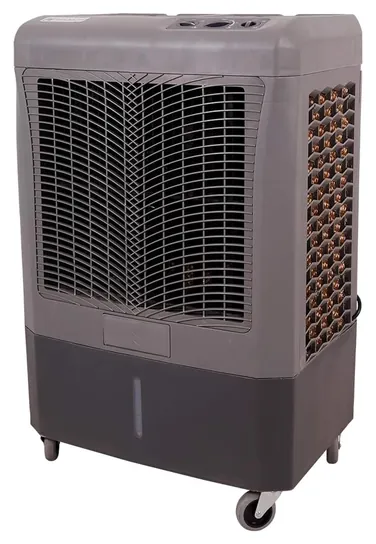
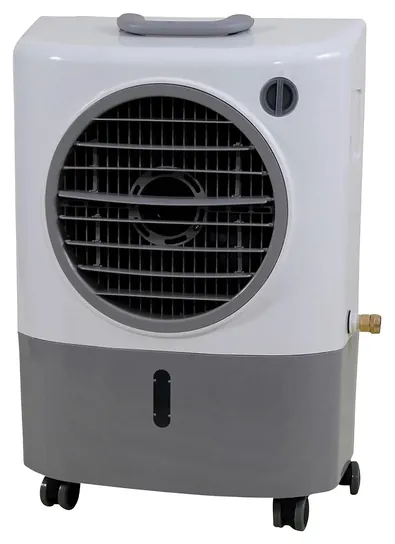
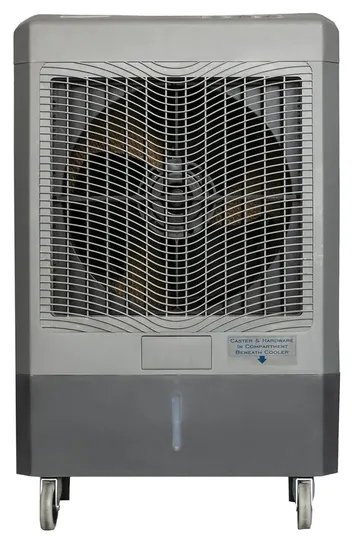
The Hessaire MC37M stays on top, and the reason is the arithmetic. Its area rating works out to roughly two dozen air changes an hour, which matches federal sizing advice, while some indoor models rate a room at about half that. The Hessaire MC18M also stays, and it now has a measured result behind it: an eight-degree drop in an hour in one reviewer's dry room.
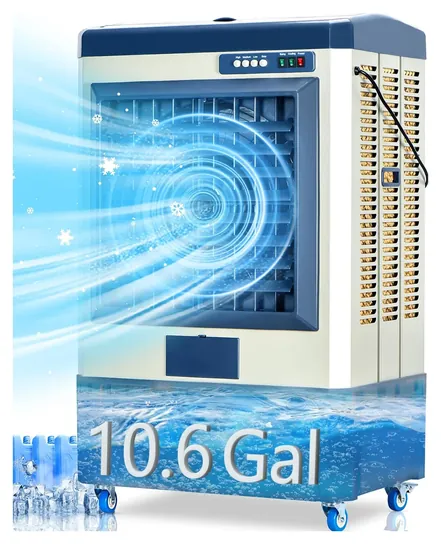
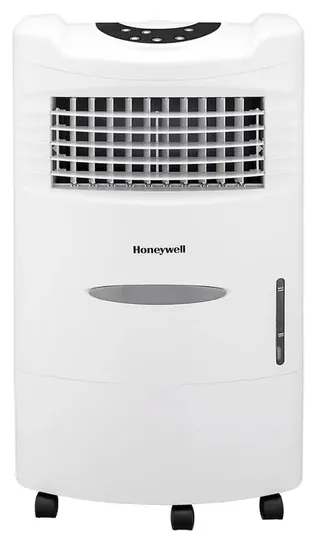
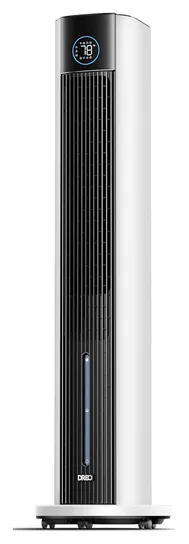
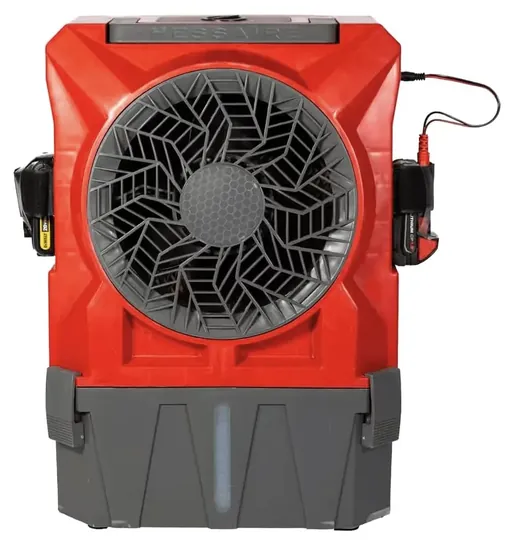
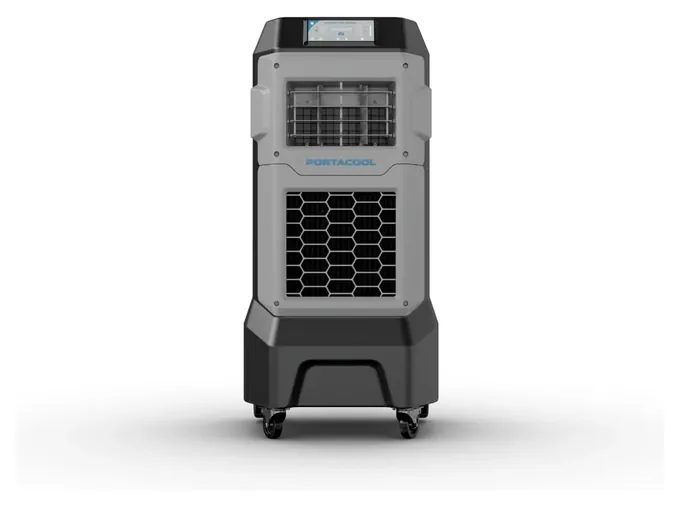
Most of the old list is gone. The Honeywell CO30XE, the model most readers searched for, survives only as an unavailable renewed unit, so the Honeywell CL201AEW fills the indoor slot. The Mason & Deck, Portacool Cyclone 130, Homelabs and Honeywell CO48PM are no longer sold, and the Phoenix Brisa is a window unit. New picks cover a big-garage cabinet, a bedroom tower and the Hessaire DC18, which runs on cordless tool batteries.
For every pick we checked the maker's airflow and area claims against the air-change math and the wet-bulb limit, read a two-month trial of nine coolers and two other roundups, and searched federal recall records. None of these brands has a cooler recall. If your summers are humid, a cooler like these will mostly add moisture; look at portable air conditioners instead.
Earlier notes
January 29, 2021, by Christopher Thomas:
For some background on the effectiveness of these, see our most recent editor's note. As an additional tip, we want to strongly advise keeping your swamp cooler as clean as possible. Don't hesitate to give it a full cleaning and/or replacement filter media as soon as you detect even a whiff of an off odor, as mold and mildew can build up pretty easily in these appliances.
With that said, the Honeywell CO30XE is a good choice for large bedrooms and medium-size living rooms, while the Homelabs Portable and Hessaire MC18M are suitable for smaller bedrooms and offices. For outdoor use, the Mason & Deck ME2MOGO is tough to beat for the price, and the Hessaire MC18M performs slightly better, for slightly more money. The Phoenix Manufacturing Brisa is a good choice for semi-permanent installation, and if you need to cool down a covered patio or good-size garage, take a look at the Portacool Cyclone 130.
May 7, 2019, by Christopher Thomas:
First of all, if you're looking for one of these, it's important to have realistic expectations. They only work in dry weather, and even then, they don't pump out frigid air. They generally reduce air temperature at their output anywhere from 7 to 15 degrees. But they also add humidity, which can make everything more comfortable. Incidentally, they work great with air conditioners, and don't let anyone tell you otherwise. These things work specifically by evaporating water (hence the name), while water condensation is actually a side effect of using an A/C unit. In fact, using an A/C unit can technically increase the efficiency of a swamp cooler, because the A/C is acting as a dehumidifier.
With that out of the way, you'd be hard pressed to find a more effective unit than one of those from Honeywell. They make great A/Cs and their evaporative coolers are no different. Also, they're available in relatively large models, some of which are powerful enough even for outdoor use. The Hessaire is another dual-purpose model, and though it's pretty costly, it's very effective. Speaking of the outdoors, if you're at a hot and dry job site or film shoot, consider the Portacool. They make some truly massive options which are very high on the price spectrum, and we've highlighted one of their most cost-effective selections.
The DeLonghi comes very close for indoor purposes, though, as does the Frigidaire, and they cost a bit less than Honeywell's products. The same is true of the Whirlpool. If you don't want to spend much, check out CostWay or SunpenTown, just don't expect them to cut temperatures much across entire rooms. And if you're interested in a semi-permanent solution that's more effective but also more expensive than most others, look at Essick's in-window unit, which is great for pole barns, workshops, and other large spaces.
Special Honors
Phoenix Manufacturing A portable cooler handles one room or a garage. For a whole house in a dry climate, the usual answer is a window or roof-mounted evaporative cooler with ducts. Phoenix Manufacturing, an Arizona maker in the business for more than 50 years, builds Frigiking window and residential coolers and the AeroCool line, sold and installed through local dealers. phoenixmanufacturing.com
Big Ass Fans Cool-Space For warehouses, loading docks and big shops, Big Ass Fans makes the Cool-Space line of commercial portable evaporative coolers. They cost several times as much as anything on this list and are sold through the company and its distributors, so they make sense mainly for businesses cooling large open floors. bigassfans.com
Humidity Decides How Cold It Gets
A good rigid-pad unit gets most of the way to the limit, while a thin-pad model gets about half.
An evaporative cooler works by pulling hot air through a wet pad. The water evaporates, and that soaks up heat. The limit is the wet-bulb temperature, the reading a thermometer gives when its bulb is wrapped in a wet cloth in moving air. No cooler can push air below it, so the drier the air, the bigger the possible drop.
At 90 degrees, the most a cooler can do is about 27 degrees at 20 percent humidity, 15 degrees at 50 percent and 8 degrees at 70 percent, according to the wet-bulb table worked out by Portable AC Lab. Those are pad-exit numbers; the room as a whole cools less. A good rigid-pad unit gets most of the way to the limit, while a thin-pad model gets about half.
That's why Popular Mechanics says indoor units do best at or under 30 percent humidity, which mostly means the West and Southwest, and that people east of Kansas are usually better off with air conditioning. Outdoors and in open garages, coolers stay useful up to about 60 percent. If you only need moving air, a fan or a misting fan costs less; if the air is muggy, only a compressor-based portable air conditioner pulls moisture out.
One rule applies everywhere: give the damp air a way out. Open a window or door on the far side of the room. Without that exit, humidity builds, the cooling stalls, and the room feels like a swamp.
Size By Airflow, Not The Square Footage On The Box
There's no common test behind the "cools up to" figures on these machines, and brands use very different assumptions. U.S. Department of Energy guidance calls for 20 to 40 air changes an hour, depending on how dry your climate is. With an 8-foot ceiling, that works out to a simple rule of thumb from Portable AC Lab: divide a cooler's airflow in CFM by 2.7 for the most area it can handle in a very dry place, or by 5.3 in a hot, borderline climate.
By that math, the Hessaire MC37M's 3,100 CFM covers about 580 to 1,150 square feet, and its 950-square-foot rating sits inside the range. Hessaire's ratings generally land near 20 to 25 air changes. Several indoor models from other brands rate rooms at about 12 air changes, which describes a breeze aimed at people more than a cooled room. Read those ratings as personal cooling.
For a two-car garage or a shop, look at 4,000 CFM and up. For a single bedroom or a porch, 1,000 to 1,500 CFM is plenty. Towers and small indoor units, often under 800 CFM, cool the person sitting in front of them.
Water, Pads And Cleaning
A cooler drinks a lot of water. Every gallon it evaporates absorbs roughly 8,700 BTU of heat, and a mid-size unit can go through about 3 gallons an hour on a hot, dry day, by Portable AC Lab's math from listed runtimes. If you plan to run one all day, a garden-hose float valve that keeps the tank topped up matters more than a big tank. Popular Mechanics recommends a hose-fed model for any spot near a spigot.
Rigid honeycomb media, the stiff cardboard-like blocks used by Hessaire and Portacool, holds its shape and wets evenly. Softer fiber pads cost less but sag and clog sooner. Either way, the pads wear out. An HVAC technician quoted by The Spruce advises cleaning the tank every other week at heavy use, checking the pads monthly and replacing them every three to six months, depending on use and water quality. Hard water leaves calcium that clogs the pump.
Standing water grows algae and mildew, so empty the tank when you won't use the cooler for a few days. Before fall storage, drain it and let it dry completely. Because water and electricity sit side by side, plug it into a GFCI outlet, keep the cord out of puddles, and park outdoor units under a cover or awning, out of the rain.
How we researched this
We compared 19 portable evaporative coolers, from small indoor towers to commercial cabinets, and narrowed them to 8. We checked each maker's airflow, tank and area claims against U.S. Department of Energy air-change guidance and the wet-bulb limit, read three independent roundups, including a two-month trial of nine coolers, studied patterns in owner feedback and searched U.S. Consumer Product Safety Commission recall records for every brand.
Sources (7)
Frequently asked questions
Do evaporative coolers work in humid weather?
Not well. They can't cool air below its wet-bulb temperature, so the possible drop shrinks as humidity rises. They work best under about 30 to 40 percent humidity indoors. Above roughly 60 percent, they mostly add moisture.
What size evaporative cooler do I need?
Go by airflow. Divide the cooler's CFM by 2.7 for the most area it can serve in a very dry climate, or by 5.3 in a borderline one, assuming an 8-foot ceiling. The square footage on the box often runs high.
Is an evaporative cooler better than a fan?
In dry air, yes: it can blow air several degrees cooler, while a fan only moves the air you have. In humid air the difference is small, and the added moisture can make a room feel worse.
Can I run a swamp cooler with the windows closed?
No. It needs fresh air coming in and damp air going out. Open a window or door on the far side of the room, or humidity builds up and the cooling stops.
How much water does an evaporative cooler use?
Small units use roughly 1 to 2 gallons an hour, and big garage models can use 3 to 5 on a hot, dry day. A garden-hose hookup saves constant refilling.
Are evaporative coolers worth it?
In dry climates and in garages, shops and patios, yes. They use a fraction of the power of an air conditioner and need no exhaust hose. In humid regions, an air conditioner is the better buy.