The 8 Best Fire Extinguishers
Updated by · How we research

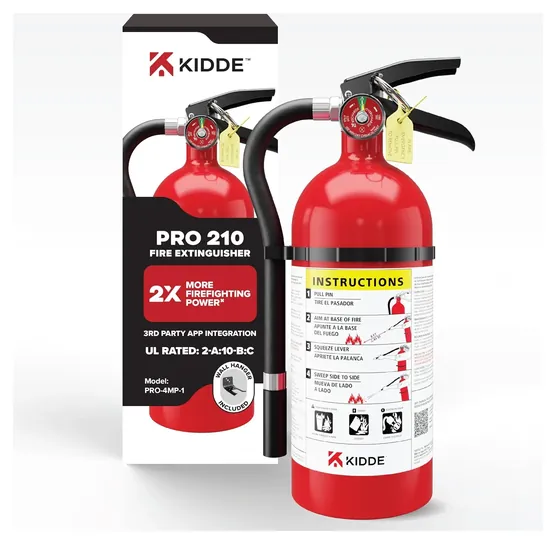
Eight home fire extinguishers compared by rating, refills and heft, from kitchen sets to garage units. The Kidde Pro 210 is the best all-round pick. When users buy our independently chosen editorial selections, we may earn commissions to help fund the Wiki.
Fire officials suggest buying the largest extinguisher you can lift and aim with confidence, because a bottle too heavy to grab won't help anyone. For most homes that means a multipurpose powder unit rated for wood, grease and electrical fires. These picks cover kitchens, hallways and garages, for renters and homeowners setting up one on each floor.


Editor's Notes
November 1, 2026, by Ezvid Wiki Admin:
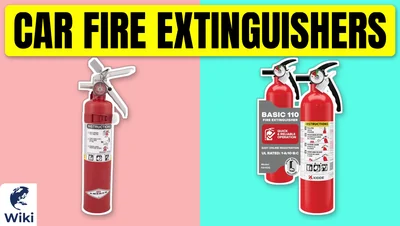
Our first choice for this restored page is the Kidde Pro 210, since it pairs the rating many workplaces must meet with a body light enough for most adults to aim, and a usability trial run with a former fire chief found it easy to handle. The page now covers the home, kitchen and garage; car units have their own list of automotive fire extinguishers.
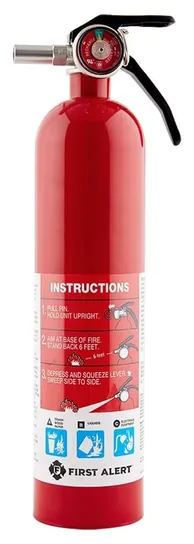
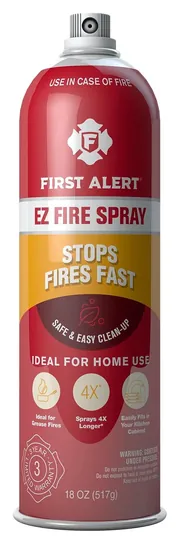
The Kidde FA110 stays, and so does the First Alert AF400, now sold as the First Alert EZ Fire Spray. Eight older picks are out. The Cold Fire All Season, H3R Performance HG100C HalGuard, Amerex 240 and Mini Firefighter All Purpose have disappeared from sale, while the First Alert Pro5 has no stock. The Amerex B260 has become a restaurant fryer unit, the Auto Fire Guard Fireball belongs with car gear, and the Amerex B402 matches the Amerex B500 for more money.
We read each maker's UL ratings, the U.S. Fire Administration's guidance on sizing and labels, two published usability roundups and the 2017 Kidde recall notice. Owner complaints centered on flimsy wall brackets and units that lose pressure, and those shaped the cons.
July 02, 2020:
While most of our previous selections proved to still be relevant through this round of updates, we did decide on removing the Kidde Proline Pro MP — noting that our rankings already included similar options for better prices, and the First Alert 2.5 Pound — which we’d previously listed as a budget-friendly choice, but is now sold in a pack of three. It should be noted that this option’s price per unit is still quite reasonable, but that won’t matter unless you have use for all three extinguishers. Our new selections are the Auto Fire Guard Fireball — which douses a 35-cubic-foot area with a single dose of flame-neutralizing dry chemicals within two to five seconds of coming into physical contact with the fire, and the Cold Fire All Season — which has no expiration date and works in temperatures as cold as -20 Fahrenheit.
A few things to think about for this category:
Compatibility: Not all fires are created equal, and not all extinguishers are suitable for putting out all fires. To help users navigate the purchase process and ensure they’re purchasing a unit that meets their needs, each extinguisher should be clearly labeled, making it easy to identify which classes of fire it can taken on.
In the United States, fire classes are as follows:
Class A: Fires fueled by combustible materials like woods and fabrics
Class B: Fires Fueled by flammable gases and liquids
Class C: Fires fueled by electricity
Class D: Fires fueled by flammable metals
Class K: Fires fueled by cooking oils and fats (grease fires)
While some models – like the Cold Fire All Season, which can take on class A, B, D and K fires – are equipped to take on most types of fires, other models aren’t quite as versatile. The water-based Amerex 240 is only recommended for use on class A fires, but is still favored by some because it won’t leave any sticky residue. Make sure that the unit you select is built to take on any class of fire that might come your way. It’s better to be over-prepared than under-prepared.
Capacity: This isn’t necessarily the be-all-end-all consideration to base your purchase on – as other factors like chemical composition, range and discharge rate will all play a part in determining how well a given option fights flames – but it is one worth considering, as it speaks directly to each selection’s limitations.
Sizes vary tremendously in this category. Some small, aerosol-can options like the Mini Firefighter All Purpose contain just over eight ounces of extinguishant, while large models like the Amerex B260 feature a six-liter reservoir. Our recommendation is that you select the largest model that can reasonably fit in the storage space you have allotted for it. Again, it’s better to be over-prepared than under-prepared.
Longevity: With any luck, you won’t be using this purchase anytime soon. And with that in mind, it makes good sense to select a model that’ll need to be replaced as infrequently as possible.
While models like the H3R Performance HG100C HalGuard, Amerex B260 and Auto Fire Guard Fireball are guaranteed for five years, other options are rated to last considerably longer. The First Alert Pro5 comes with a 12-year warranty, and the Cold Fire All Season purportedly has no expiration date.
Special Honors
StoveTop FireStop StoveTop FireStop makes small pods that hang by magnets under a range hood and drop powder onto the cooktop when a flame reaches them. They work on their own, which helps when a pan is left unattended, but each pod works once and the company does not recommend them for gas cooktops. Think of them as an addition to a kitchen extinguisher, not a replacement. stovetopfirestop.com
What The Letters And Numbers Mean
Every extinguisher worth buying carries a UL listing and a rating such as 1-A:10-B:C.
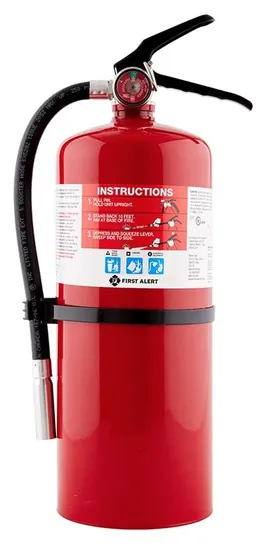
Every extinguisher worth buying carries a UL listing and a rating such as 1-A:10-B:C. The letters are the kinds of fire it can fight: A for wood, paper and cloth, B for flammable liquids such as gasoline, oil and grease, and C for anything plugged in. The U.S. Fire Administration explains the numbers. The figure before the A is a multiple of 1.25 gallons of water, and the figure before the B is roughly the square feet of burning liquid it can handle. So a 1-A:10-B:C bottle suits a pan or a wastebasket, a 2-A:10-B:C unit doubles the punch on ordinary fires, and a 4-A:60-B:C model like the First Alert PRO10 is built for garages and shops.
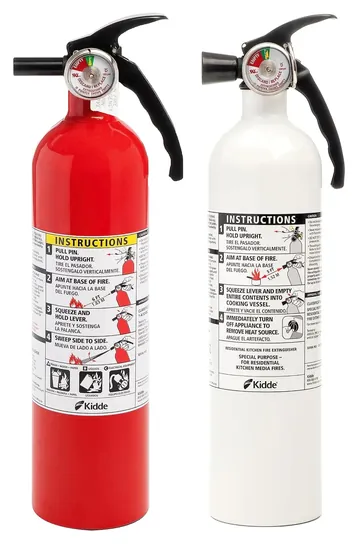
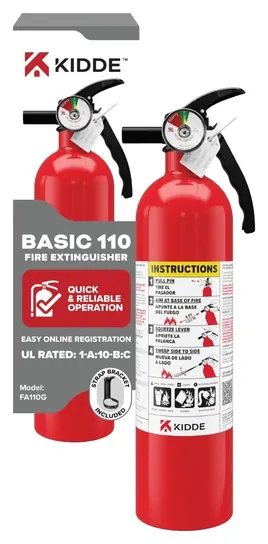
Most homes need multipurpose ABC units filled with monoammonium phosphate powder. It works on all three classes, but it's a fine, yellow dust that gets everywhere and can corrode electronics, so plan on a real cleanup. Kitchen-only units, like the white bottle in the Kidde Kitchen + Home set, use sodium bicarbonate and carry only B and C. Class K wet-chemical units are for restaurant fryers, and Class D units are for burning metals.
Aerosol cans such as the First Alert EZ Fire Spray are tested to a different standard and carry no A:B:C number, so treat them as a backup. None of these is made for a burning lithium-ion battery in an e-bike or scooter, which can flare up again; get out and call 911.
Pick A Size Someone Can Actually Use
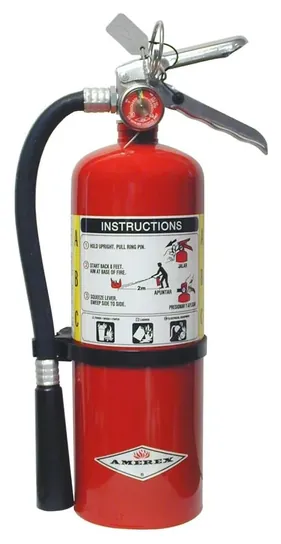
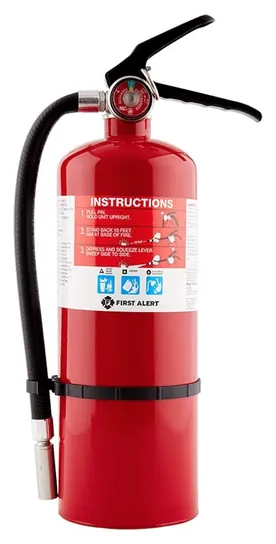
The U.S. Fire Administration's advice is to buy the largest extinguisher the user can safely and comfortably operate. Note that the size on the box is the weight of the powder, not the whole bottle. Bob Vila lists the Kidde FA110 at 3.9 pounds total for 2.5 pounds of powder, and the 5-pound Amerex B500 at over 9 pounds. In Reviewed's trial, the Kidde Pro 210 was about two pounds lighter than the First Alert HOME2PRO and easier for a range of people to lift and aim. A small bottle that runs out in eight seconds is still better than a big one nobody in the house can carry.
Placement matters as much as size. Keep one on every floor, one in the kitchen a few feet from the stove rather than right beside it, and one in the garage, each mounted where you can grab it in seconds on your way out. Garages and workshops with gas cans, solvents or a lot of wood can justify a 10-pound unit.
Hold the extinguisher upright and use the PASS method: pull the pin, aim low at the base of the fire, squeeze the handle, and sweep side to side. Most home units empty in 8 to 15 seconds, so there is no time to read the label during a fire. Read it now, and ask your local fire department about practice sessions.
Refillable Or Disposable, And Keeping It Ready
Disposable units, such as the Kidde FA110 and the Kidde Kitchen + Home set, cost less and get replaced after any use or once the needle leaves the green. Refillable units have a metal valve that a fire-equipment shop can recharge and pressure-test, which suits the Amerex B500, the Kidde Pro 210 and the First Alert PRO10. Find a shop before you count on that, because refilling a small home bottle can cost close to a new one. Bob Vila notes that professionals service commercial extinguishers about every six years.
The U.S. Fire Administration suggests a quick check: make sure nothing blocks the extinguisher, the gauge needle sits in the green, and the can, hose and nozzle aren't dented, cracked or rusted. Some extinguishers need to be shaken monthly, so check the label on yours. Replace any unit that has been used, even briefly, unless a shop recharges it.
Check older Kidde units, too. In 2017 Kidde recalled about 38 million plastic-handle extinguishers made between 1973 and August 15, 2017, because some failed to spray or lost their nozzle, and one death was reported (CPSC). Older FA110 units are on that list. The date code is on the bottle, and Kidde posts its notices at kidde.com.
How we researched this
We compared 19 fire extinguishers, read the makers' UL ratings and documents for the 8 picks, compared two independent usability roundups, analyzed owner feedback for patterns such as weak brackets and lost pressure, and checked every brand against U.S. Consumer Product Safety Commission recalls. Updated November 1, 2026 by Ezvid Wiki Admin.
Sources (8)
Frequently asked questions
What is the best type of fire extinguisher for a home?
A UL-listed multipurpose ABC dry-chemical extinguisher covers the fires most homes face: wood and paper, flammable liquids and grease, and electrical. Buy the largest one the people in your home can lift and aim.
What do the numbers on a fire extinguisher label mean?
The number before the A is a multiple of 1.25 gallons of water, and the number before the B is roughly the square feet of burning liquid it can put out. The C means it is safe on electrical fires.
Should I buy a disposable or rechargeable fire extinguisher?
Disposable units cost less and are replaced after use. Rechargeable units have a metal valve a fire-equipment shop can refill and inspect, which makes sense for larger units and for anyone who already has a shop nearby.
How many fire extinguishers does a house need?
Plan on one per floor, one in the kitchen a few feet from the stove and one in the garage. Mount each where you can reach it quickly on your way out.
When should you not use a fire extinguisher?
Only fight a fire that is small and contained, after others are alerted, with a clear way out behind you. If the fire is spreading, the room fills with smoke or you are unsure, leave and call 911.
Which fire extinguisher brands are best?
Kidde and First Alert make most home units, and Amerex is a common brand at fire-equipment dealers. The UL listing and rating matter more than the brand. For car units, see the automotive fire extinguisher list.