The 10 Best Graph Papers
Updated by · How we research

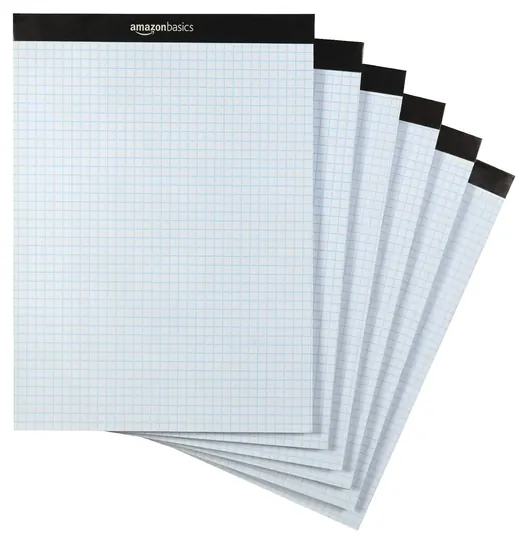
Ten graph paper pads and notebooks compared on grid, paper weight and binding, with the Amazon Basics Quad-Ruled six-pack as the best everyday value. When users buy our independently chosen editorial choices, we may earn commissions to help fund the Wiki.
Most graph paper sold in the U.S. is ruled four squares to the inch, so for pencil or ballpoint work the grid itself rarely changes much from one maker to the next. The paper underneath decides the rest: thin stock lets ink ghost through, and a weak glued top sheds pages in a backpack. This list covers students, engineers, makers and journal keepers.
At a Glance


Editor's Notes
November 1, 2026, by Ezvid Wiki Admin:
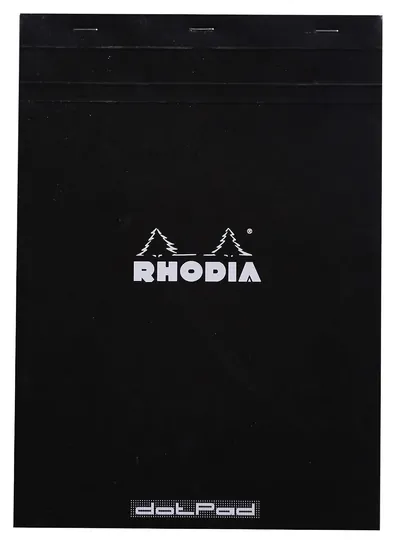
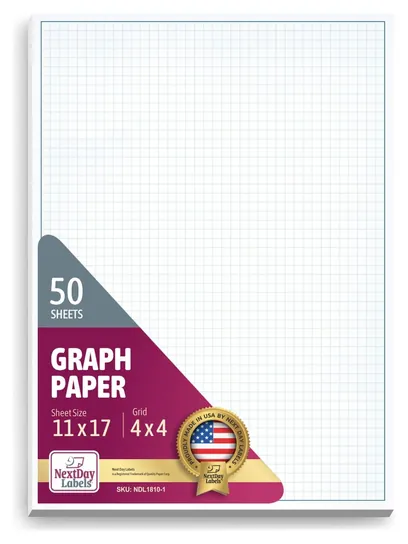
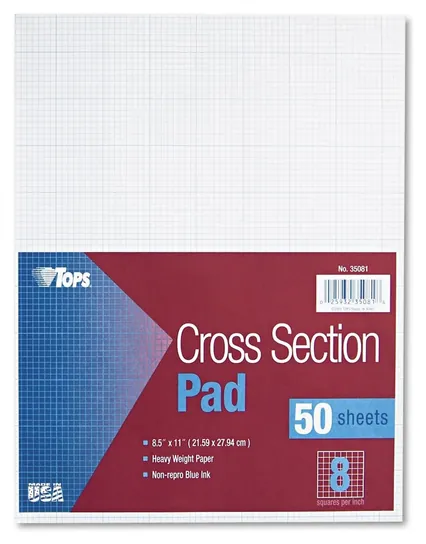
Most people who search for graph paper want a plain quad pad for math or sketching, so this version opens with value pads and then gives each special job its own pick: the TOPS Engineering Computation pad for engineering classes, the TOPS Cross Section Pad for fine detail, the NextDayLabels Blueprint Pad for floor plans and the Rhodia No. 18 Dot Pad for fountain pens. The Midori MD Notebook, Ampad Evidence Dual-Pad and TOPS Engineering Computation pad stay from before.
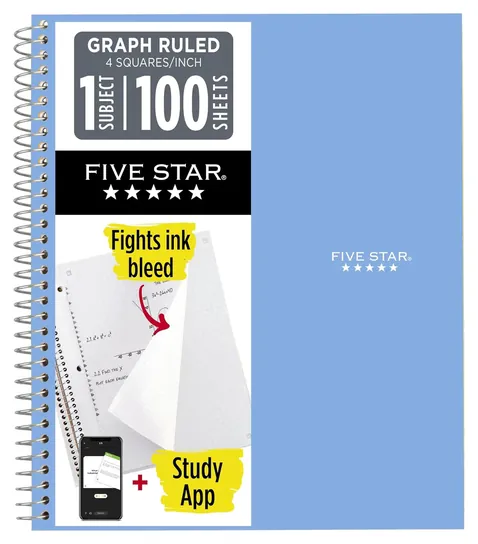
The Moleskine Classic was nearly sold out when we checked, and the Midori MD does the premium job with paper that handles ink better. We couldn't confirm that the Action Publishing, Miquelrius and Joyful Journals books are still sold as they were, and the Five Star Filler gave way to a Five Star spiral that keeps its pages together.
Graph paper doesn't get lab-tested, so we leaned on what makers publish about ruling, paper weight and binding, and on the engineering-paper conventions that many college instructors still ask for.
August 08, 2020:
We've kept a range of loose leaf and notebook choices, so there are designs perfect for everyone: mathematicians, engineers, students, artists, casual doodlers, and more. We've removed the Bazic Graph Reversible, however, over concerns about its binding, which is weaker than some of the competition. And speaking of binding, we kept the Miquelrius Journal, as it's one of the thickest options out there, but its binding is also far from perfect. Consider this one if you need the high page count and don't mind being a little cautious with your supplies.
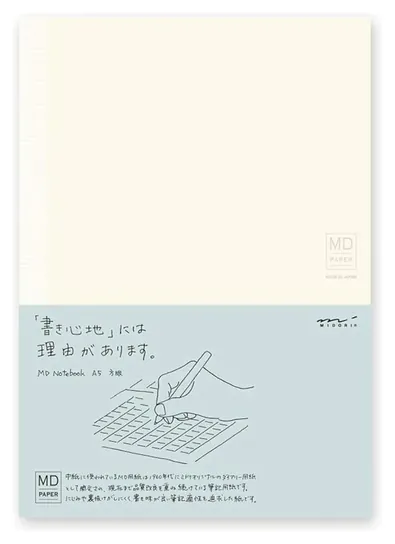
As for new choices, we selected the Midori MD Notebook and the Moleskine Classic, both of which would make fine journals for the supremely neat and organized. The Midori hails from Japan and is without a traditional cover, which is by design. This makes it easy to write in, but if you want greater protection, covers are available for separate purchase.
Finally, it's worth noting that some of our choices have a different grid size on the front than on the back of each sheet, which is helpful for some users but an annoyance to others, depending on why the paper is needed. These choices are the Five Star Filler and the Tops Quadrille Pads. Of the two, the Five Star is arguably made to higher quality standards, and it is punched for three-ring binders — which is, again, a plus or a minus, depending upon your requirements.
August 15, 2019:
In addition to a well-made mechanical pencil, quality graph paper is a requirement for many a student, engineer, architect, or artist. Or, for some, they’re useful for doodling or for making orderly to-do lists. Our selection features both loose leaf designs and tablets to suit different preferences.
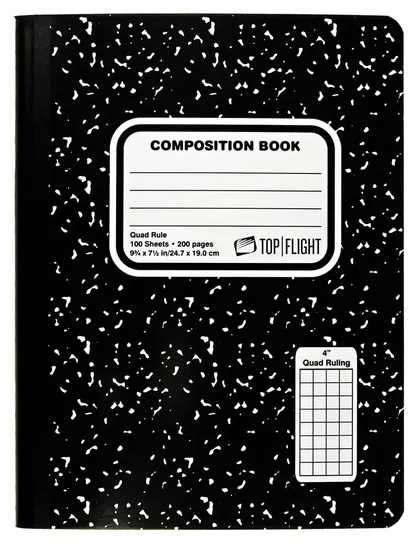
Joining the list in this update is the Joyful Journals Quad Ruled, which comes in a variety of colors and designs for the cover, and, unlike many others, this one features soft, gray grid lines (as opposed to the commonly used blue ones). Unlike many composition books that run smaller, this one is letter-sized (8.5x11 inches), so you’ll have plenty of room to show your work or sizable drawings on each page. (It also does come in smaller sizes for those who prefer them.) Just note that, like with many other composition books, the pages are not perforated, so tearing them out can be a hassle.
If you’re in the market for loose leaf sheets instead, look at the Five Star Filler, the pages of which feature durable, reinforced strips along the left side, so they’ll stay nicely in your binder throughout the school year, if need be, without tearing at the holes. They resist ink bleeding and are certified for meeting sustainable forestry practices when they’re manufactured.
Special Honors
Captain Notepad Graph pads with a company logo aren't a stock item: they're printed to order. Captain Notepad is a U.S. printer that makes custom notepads, including engineering and grid styles, with a logo, address or custom ruling added. Order minimums, sheet counts and pricing depend on the job, so ask for a proof before you commit. captainnotepad.com
Incompetech Graph Paper Generators Kevin MacLeod's free generators build printable PDFs of almost any grid: quad, isometric, hexagonal, polar, logarithmic and more. The files are released to the public domain, and the whole tool can be downloaded to run offline. It's the cheapest answer for a one-off grid you won't find in a store. incompetech.com
Which Grid Fits The Job
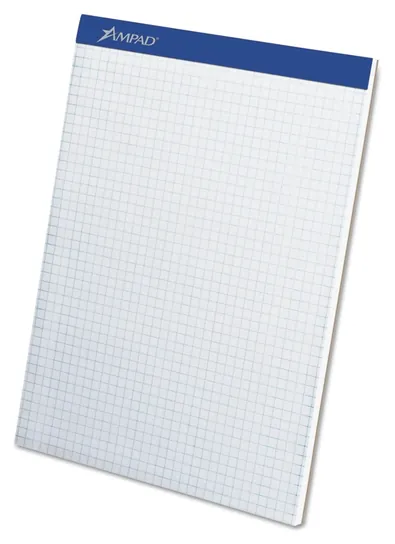
Four to the inch is the everyday school standard: big enough for handwritten numbers, small enough for clean graphs.
In the U.S. and Canada, ordinary quad or quadrille paper usually has two, four or five squares per inch, while European pads use 5-millimeter squares (Wikipedia: Graph paper). Four to the inch is the everyday school standard: big enough for handwritten numbers, small enough for clean graphs. Five to the inch is common on engineering pads.
Finer grids, like the eight-per-inch TOPS Cross Section Pad, suit circuit layouts, knitting or cross-stitch charts and precise plots, but they're tiring for plain note-taking. Dot grid paper prints only the corners of each square, which keeps a guide for sketches and journals without the lines taking over the page.
If you need something unusual, such as isometric paper for 3D sketches, hexagons for game maps, or polar and log grids for science work, it's often easier to print it. The free Incompetech generators make PDFs of dozens of grid styles that you can print at home.
Engineering Paper And Lines That Don't Copy
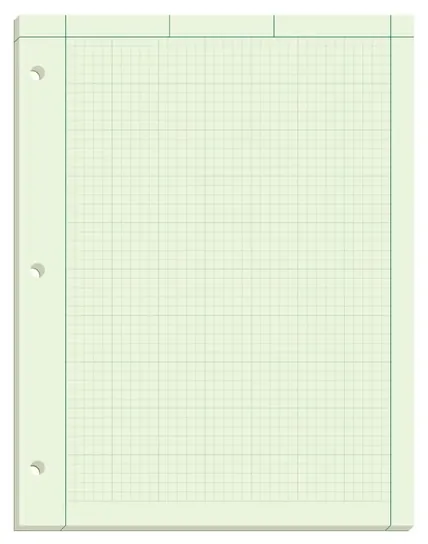
Engineering paper looks odd the first time you see it. It's traditionally light green or tan, the grid is printed on the back of the sheet, and the lines show through faintly to the front, with an unprinted margin around the edge (Wikipedia: Graph paper). Because the grid sits behind your work, erasing doesn't wear away the lines, and the grid usually drops out when the page is copied or scanned, so homework looks clean. Some engineering professors in the U.S. and Canada still require it for problem sets.
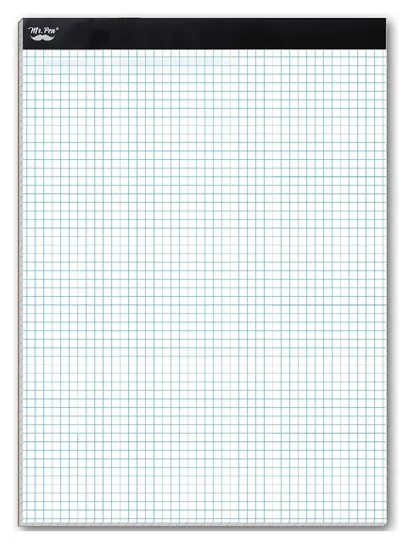
Non-reproducing blue works the same trick on white paper. Pads like the TOPS cross-section line print a light blue grid that most copiers ignore. If you scan pages for class, check your scanner settings first, since some phone apps pick up faint lines anyway.
Paper Weight, Ink And Binding
Paper weight decides whether ink stays on one side. American office paper is sold by basis weight, and 20-pound bond works out to about 75 grams per square meter (Wikipedia: Grammage). That's fine for pencil, ballpoint and most gel pens. Lighter stock, like the 15-pound paper in some legal-style pads, lets markers and heavy pens show through.
Fountain pens need coated paper as well as weight. Rhodia uses 80-gram paper from its sister mill, Clairefontaine (Rhodia), and Midori's MD paper is also 80 grams, in a thread-bound notebook that opens fully flat (Midori).
Binding matters as much as paper. Perforated pads are best when pages get handed in. Spiral notebooks keep a semester in one place, and sewn composition books are the safest choice for lab records, because a page can't slip out unnoticed.
How we researched this
We compared 18 graph paper pads and notebooks, checked the ruling, paper weight, sheet count and binding of the 10 picks against makers' pages and spec sheets, used the published conventions for engineering paper, and searched U.S. Consumer Product Safety Commission records for every brand. We found no independent lab test of graph paper.
Frequently asked questions
What is the most common graph paper grid?
In the U.S., four squares per inch, also called quad or quadrille ruling. Engineering pads often use five per inch, and European paper uses 5-millimeter squares.
What is engineering paper?
It's graph paper with the grid printed on the back of a green or tan sheet, so the lines show through faintly and usually vanish when the page is copied or scanned.
Can I use a fountain pen on graph paper?
Yes, on coated paper of about 80 grams per square meter, such as Rhodia or Midori MD. Ordinary 20-pound pads can feather or bleed with wet ink.
Where can I get graph pads printed with my company logo?
From a custom notepad printer such as Captain Notepad. Logo pads are printed to order, with minimum quantities, rather than sold off the shelf.
Is dot grid the same as graph paper?
Not quite. Dot grid marks only the corners of each square, which gives a lighter guide for journals and sketches. For math and charts, full grid lines are easier to follow.