The 9 Best Digital Oscilloscopes
Updated by · How we research

Bandwidth, channel count, resolution and memory separate these nine bench and handheld oscilloscopes. The Siglent SDS1104X-E still leads for most home labs. When users buy our independently chosen editorial choices, we may earn commissions to help fund the Wiki.
Most bench oscilloscopes tie the probe's ground clip to earth ground, so take care before you probe anything plugged into the wall. A scope samples a voltage millions or billions of times a second and draws it as a waveform, showing glitches, ripple and serial data a multimeter can't. Hobbyists, students, repair techs and engineers rely on them.


From the manual
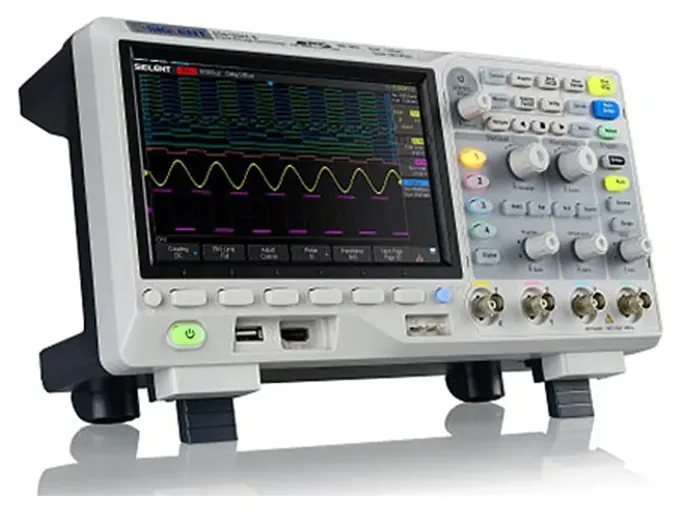
- The 16 logic channels need a paid MSO license plus Siglent's separate SLA1016 probe. p. 169
- The Bode plot tool drives only Siglent's own signal generators, such as the SAG1021I USB module, sold separately. pp. 13, 223
- Run self-calibration only after a 30-minute warm-up, with every input disconnected. p. 180
Why the Siglent SDS1104X-E is our top pick
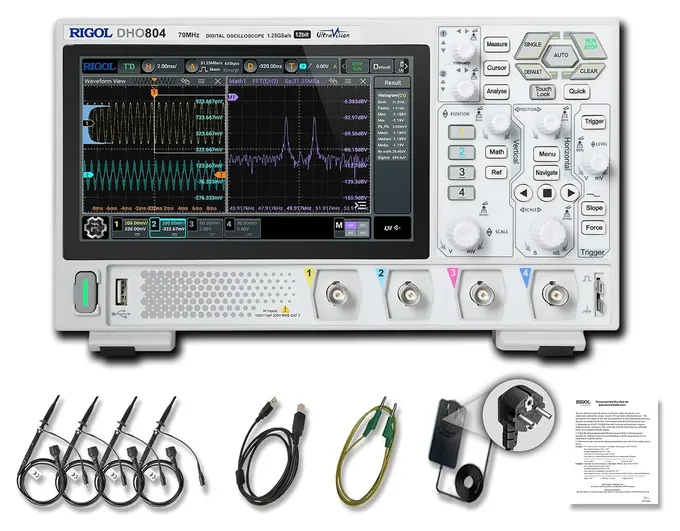
Our pick keeps more of its speed with all four channels working, and that is the job a first serious scope gets. With every channel on, it still samples each at 500 MSa/s and holds 7 Mpts per channel,1 while our runner-up, the Rigol DHO804, drops to 312.5 MSa/s and 5 Mpts.3 It's also rated for 100 MHz against 70, and in normal mode it captures up to 100,000 waveforms a second to the runner-up's 30,000,1,3 which helps a rare glitch show up. The DHO804's faster UltraAcquire mode switches off once cursors or decoding are in use.4
Car and machine work tips it further. Our pick decodes I2C, SPI, UART, CAN and LIN at no charge;1,2 the runner-up's guide lists parallel, RS232/UART, I2C, SPI and CAN, with no LIN.4 Grounding is simpler too: ours is earthed through its power cord,2 while the DHO804 runs from a USB-C adapter and needs a separate ground lead connected before any probe.4
The runner-up wins on detail. Its 12-bit converter resolves steps 16 times finer than our pick's 8-bit one,3,1 and it adds a touch screen and HDMI output.4 If you mostly study power-supply ripple or faint sensor signals on one or two channels, the DHO804 is the better buy.
| Siglent SDS1104X-E | Rigol DHO804 | |
|---|---|---|
| Rated bandwidth | 100 MHz | 70 MHz |
| Sampling, four channels on | 500 MSa/s each | 312.5 MSa/s each |
| Capture rate, normal mode | 100,000 wfm/s | 30,000 wfm/s |
| Car-bus decoding | CAN and LIN | CAN only |
| Vertical resolution | 8-bit | 12-bit |
Sources
- Siglent SDS1104X-E 1SDS1000X-E data sheet, Rev. 04H (PDF), pp. 1, 8 2SDS1000X-E user manual, EN05B (PDF), pp. III, 21
- Rigol DHO804 3DHO800 data sheet (PDF), p. 6 4DHO800 user guide (PDF), pp. 1, 8, 54, 173
From the manual
- The USB-C power cord doesn't ground it: connect the supplied banana-plug ground lead to earth before plugging in any probe. p. 1
- The fast UltraAcquire mode turns off whenever cursors, decoding, zoom or search are in use. p. 54
- Rear screw holes on a 100 mm grid let it mount on a matching bracket or arm. p. 25
Compare the specs
Swipe the table sideways to see every column.
| Product | Bandwidth (MHz) | Channels (analog) | Resolution (bits) | Sample rate, one / all channels (MSa/s) | Memory, one channel (points) | Serial decoding included |
|---|---|---|---|---|---|---|
| 1. Siglent SDS1104X-E | 100 | 4 | 8 | 1,000 / 500 | 14M | I2C, SPI, UART, CAN, LIN |
| 2. Rigol DHO804 | 70 | 4 | 12 | 1,250 / 312.5 | 25M | I2C, SPI, UART, CAN |
| 3. Siglent SDS814X HD | 100 | 4 | 12 | 2,000 / 500 | 50M | I2C, SPI, UART, CAN, LIN |
| 4. Rigol DS1202Z-E | 200 | 2 | 8 | 1,000 / 500 | 24M | I2C, SPI, UART |
| 5. Owon HDS272S | 70 | 2 | — | 250 / 125 | 8K | None listed |
| 6. Siglent SDS1202X-E | 200 | 2 | 8 | 1,000 / 500 | 14M | I2C, SPI, UART, CAN, LIN |
| 7. Rigol DHO924S | 250 | 4 | 12 | 1,250 / 312.5 | 50M | I2C, SPI, UART, CAN, LIN |
| 8. Hantek DSO2D15 | 150 | 2 | 8 | 1,000 / 500 | 8M | I2C, SPI, UART, CAN, LIN |
| 9. FNIRSI 2C53T | 50 | 2 | — | 250 / — | 1K | None listed |
Figures are the makers' own. Memory and the first sample-rate figure are the best case, with one channel on; the second sample-rate figure is what each channel gets with every channel on. The Rigol models also decode parallel buses. A dash means the maker doesn't publish the figure.
Sources
- Siglent SDS1000X-E data sheet, Rev. 04H (SDS1104X-E, SDS1202X-E) SDS800X HD data sheet (SDS814X HD)
- Rigol DHO800 data sheet (DHO804) DHO900 user guide (DHO924S) DS1000Z-E data sheet (DS1202Z-E)
- Owon HDS200 series user manual (HDS272S)
- Hantek DSO2000 series data sheet (DSO2D15)
- FNIRSI 2C53T user manual
From the manual
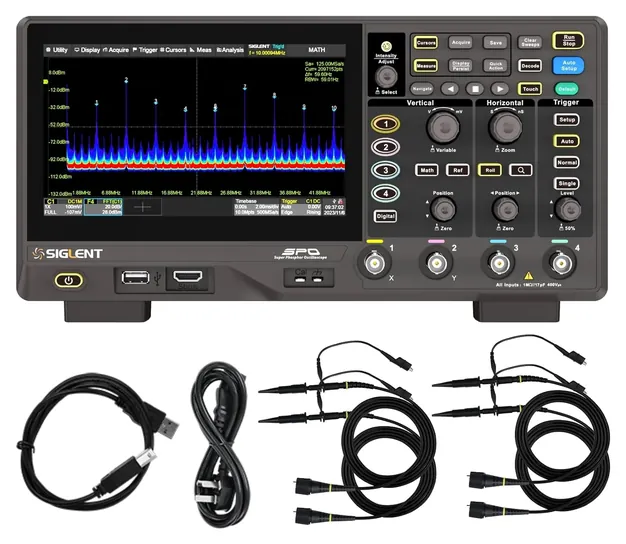
- Sampling falls from 2 GSa/s with one channel to 500 MSa/s with four, and memory from 50 to 10 Mpts per channel. data sheet, pp. 2, 9
- Its fans need the side vents clear, so leave at least 6 inches of space on both sides. p. 6
- Three years of warranty on the scope, one on probes; damage from non-Siglent supplies or modifications isn't covered. p. 16
- The signal generator is an add-on: the SAG1021I USB module plus the SDS800XHD-FG license. p. 203
From the manual
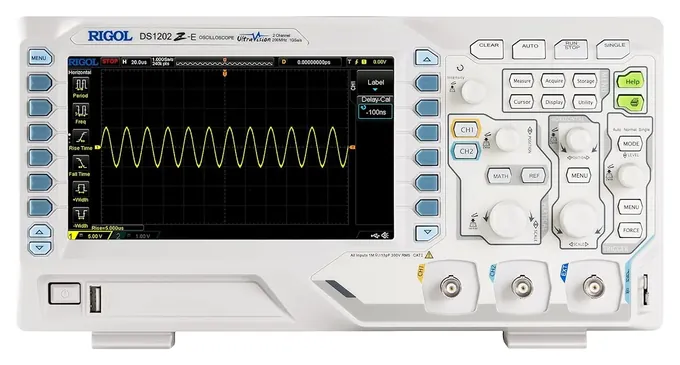
- Sampling and memory halve with both channels on: 500 MSa/s and 12 Mpts instead of 1 GSa/s and 24 Mpts. p. 2
- Decoders cover parallel, RS232/UART, I2C and SPI; there's no CAN or LIN decoding. p. 6
From the manual
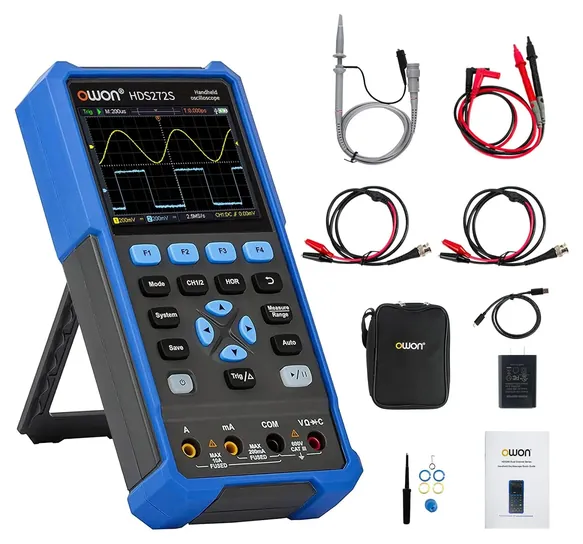
- Only one scope probe ships with this two-channel model, so a second one is an extra purchase. p. 37
- Both channels share one ground, so never clip the two probe grounds to points at different voltages. p. 3
- A fully drained battery won't start it even on the adapter; charge it switched off for about 15 minutes first. p. 30
- The unit has a three-year warranty, but probes and the adapter get only 12 months. warranty page
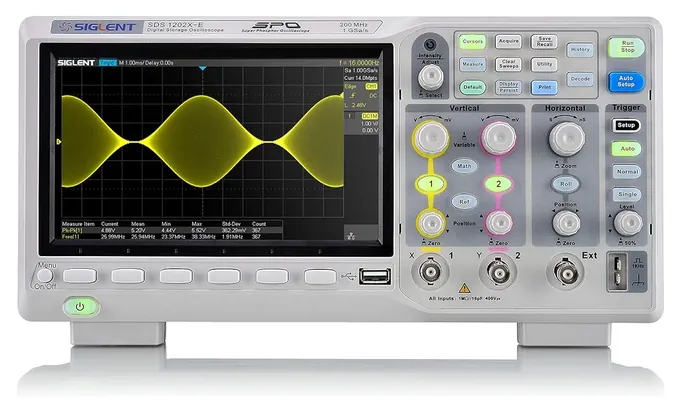
From the manual
- One converter serves both channels: 1 GSa/s and 14 Mpts with one on, 500 MSa/s and 7 Mpts with both. pp. 1-2
- The Bode plot, search and navigate, logic channels and the USB generator module are for the four-channel models only. p. 1
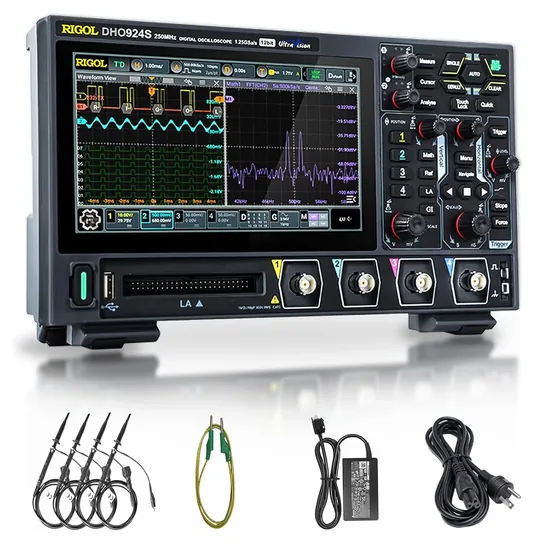
From the manual
- The USB-C power cord doesn't ground it: connect the supplied ground lead to earth before any probe. p. 1
- With three or four channels on, sampling drops to 312.5 MSa/s, thin for 250 MHz signals; one channel gets 1.25 GSa/s. p. 56
- The 16 digital channels are built in, but the PLA2216 logic probe is a separate purchase. pp. 8, 267
- Four 350 MHz probes come in the box, and the built-in generator reaches 25 MHz. pp. 171, 267
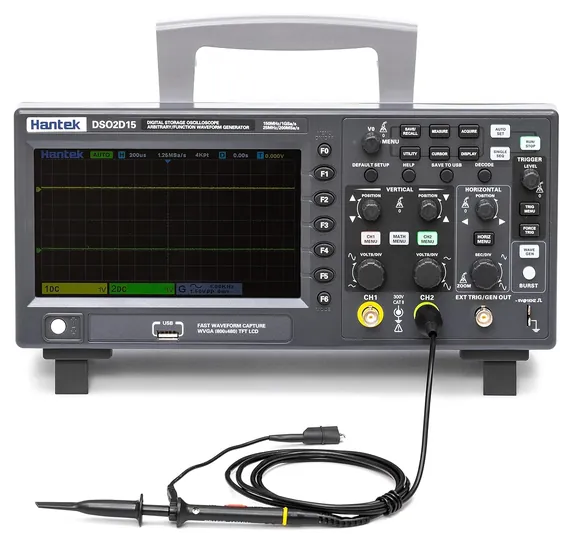
From the manual
- Leave the probe on 10X: Hantek says bandwidth falls to 6 MHz with a 1X probe. p. 3
- Sampling halves to 500 MSa/s and memory to 4M points with both channels on. p. 2
- The generator makes sine waves to 25 MHz but square waves only to 10 MHz. p. 5
- Inputs are rated 300 V CAT II, the category for plug-in equipment, not building wiring. p. 2
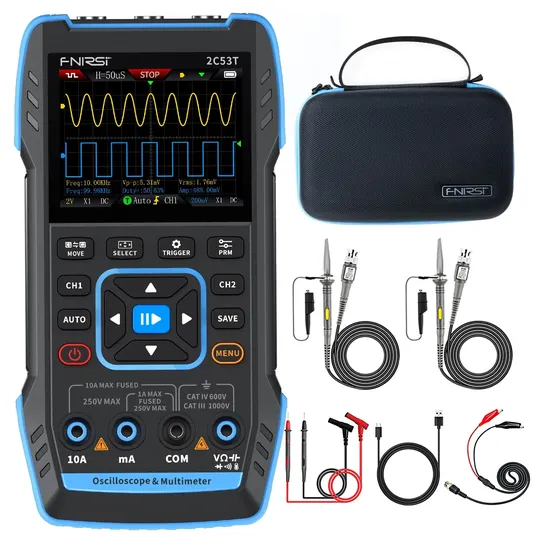
From the manual
- The two probe grounds are joined inside; clipping them to different voltages can burn the main board. p. 50
- Charge it from a separate USB charger, never from the device you're testing, or its ground can short. p. 50
- Memory is 1,000 points, and the trigger offers only rising or falling edges. p. 33
- The signal generator tops out at 50 kHz. p. 26
Editor's Notes
November 5, 2026, by Ezvid Wiki Editors:
We read the manuals and data sheets for all nine picks, then added a spec table, a section on why the Siglent SDS1104X-E stays on top, and manual notes under each pick. We corrected the guide's claim that every bench scope is earthed through its power cord, since Rigol's DHO models use a separate ground lead, and replaced a few owner reports we couldn't confirm with facts from the manuals.
October 17, 2026, by Ezvid Wiki Editors:
The big change since our 2020 list is 12-bit resolution at hobby prices, so the Rigol DHO804 and Siglent SDS814X HD join, along with the Rigol DHO924S for anyone who wants more bandwidth and a built-in generator.
The Siglent SDS1104X-E stays on top. It's old now, but it does the jobs most home labs need, decoding comes free, and its owner community is huge. The Siglent SDS1202X-E stays too.
A lot went. The Rigol DS1102E, Hantek DSO5102P and Signstek DSO213 are aging designs with better successors. We couldn't confirm the Rigol DS1054Z is still sold new, the SainSmart DSO212 Pocket Size is unavailable, and the Owon XDS3204E roughly doubled in price with almost no owner feedback behind it. The GW Instek GDS-2304A is a fine scope, but it costs far more than most readers need to spend. The Hantek 2D72 3-In-1 gives way to the Owon HDS272S, a faster handheld in the same format.
We also added the FNIRSI 2C53T as a cheap starter, the Rigol DS1202Z-E for 200 MHz on a budget and the Hantek DSO2D15 for its built-in generator. Both special honors were replaced with tools a home lab might actually buy.
One warning that matters more than any spec: most bench scopes tie the probe's ground clip to earth ground. Read the guide before you probe anything plugged into the wall.
Earlier notes
September 3, 2020, by Daniel Imperiale:
While the big names in this sector continue to rely on their standard bearers to get the job done, hobbyist electricians, inventors, and DIY enthusiasts are finding that more portable options are better suited to their work. With that in mind, we eliminated the Tektronix TBS1052B from our previous list, which had a nice, big screen, but was a bit lacking in build quality, and replaced it with the extremely portable SainSmart DSO212 Pocket Size. That model relies heavily on a touchscreen for its interface, which makes cursor placement a breeze, but also offers some control wheels so you can navigate and make adjustments without blocking the screen while you do so.
Of course, pro users who need to be sure of a given circuit's integrity are going to want to rely on those more traditional scopes like the Siglent Technologies SDS1104X-E or the GW Instek GDS-2304A. That GW model is one of the most capable you're going to find outside of the massive offering from Keysight in our special honors section, though it is a lot pricier than much of the competition.
Also in our special honors section is a new offering from Liquid Instruments, which comes with a tablet designed to pair with an immensely simplified base featuring two input jacks and two output jacks, allowing it to serve as 12 distinct instruments, from an oscilloscope to an arbitrary waveform generator. [2026 update: the GW Instek and the Keysight are no longer on this page. The Liquid Instruments device described here was the iPad-driven Moku:Lab; today's honor is the Moku:Go, which runs from your own computer or tablet.]
August 7, 2019, by Daniel Imperiale:
In reevaluating the marketplace for this latest ranking, we found some great new additions to the list, including some models by brands that wound up knocking their other creations out of the lineup. For example, the Siglent SDS1104X-E seems at first to be an improvement to the 1102 only in its number of channels, but a closer inspection reveals a better waveform capture rate, as well, all for a minor increase in price. We also brought about a pair of models by Hantek, one of which is probably the best deal you're going to find for a scope in what is considered a standard configuration, while the other is an excellent handheld option. And for professionals looking to invest in something that will see heavy use and need to show them exquisitely precise details in their images, we've included a customizable and extraordinarily expensive option from Keysight in our special honors. [2026 update: the two Hantek models and the Keysight honor mentioned here have since left the list.]
Special Honors
Pico Technology PicoScope 2000 PicoScope 2000 series scopes are small USB boxes that use a laptop as the screen and draw power from the USB port. The range runs from 10 to 100 MHz, with two- and four-channel models and mixed-signal versions that add 16 logic channels. Pico backs its real-time scopes with a five-year warranty, and its PicoScope software is a free download. picotech.com
Liquid Instruments Moku:Go Moku:Go is a compact box that connects to a computer and runs several lab instruments in software, including an oscilloscope, a waveform generator and a spectrum analyzer, with some versions adding a programmable power supply. Liquid Instruments aims it at university teaching labs and engineers who want many instruments in one small device. liquidinstruments.com
Bandwidth, Sample Rate And Memory
Check the fine print, because many scopes split their sample rate and memory when more channels are on.
Bandwidth is the first number on every digital oscilloscope, and it sets the fastest signal you can see accurately. Tektronix's rule of thumb is to buy at least five times the highest frequency you plan to measure, which keeps the amplitude error under about 2 percent (Tektronix). For Arduino and Raspberry Pi projects, audio and most switching power supplies, 70 to 100 MHz is plenty. Fast digital edges and radio work call for 200 MHz or more.
Sample rate and memory decide whether the scope keeps up. Tektronix says a scope that uses sine interpolation needs a sample rate at least 2.5 times the highest frequency in the signal, and because a scope stores a limited number of samples, a faster rate covers a shorter stretch of time (Tektronix). That's why millions of points of memory matter more than they sound: they let you capture a whole serial message or a slow power-up at full speed. Check the fine print, because many scopes split their sample rate and memory when more channels are on. Rigol's four-channel DHO804, for one, drops from 1.25 GSa/s with one channel to 312.5 MSa/s with three or four (Rigol).
Resolution is the newer difference. Most older entry scopes are 8-bit, so they divide the screen's height into 256 steps. The 12-bit models divide it into 4,096, which shows ripple and small signals far more clearly. In an EEVblog forum thread comparing entry 12-bit scopes, one reply summed it up: you can't go wrong with Siglent or Rigol (EEVblog). Finally, count channels. Two cover most work, while four help with buses that use a clock, data and select line, or with several power rails at once.
Bench, Handheld Or PC Scope
Analog scopes draw the signal directly on a tube and can't store it. Digital storage scopes convert the signal to numbers, so they can freeze a waveform, measure it automatically, decode serial data and save screenshots (Wikipedia). Almost every scope sold new today is digital.
A bench scope, with a 7-inch screen, knobs and mains power, is the right tool for a home lab. Siglent and Rigol make the most popular hobby and education models, while Keysight, Tektronix and Rohde & Schwarz focus on professional lab scopes that cost far more. A mixed-signal scope (MSO) adds logic channels for reading many digital lines at once, often through a paid option and probe.
Handheld scope-multimeters run on batteries and add a meter and a signal generator, which suits car diagnostics and field repairs. Their screens are small and their specs are modest. Kerry Wong, an engineer with a master's degree in electrical and computer engineering, wrote in a 2021 teardown on his blog that the Owon HDS272S fuses its 10-amp meter range while the Hantek 2D72 leaves that range unfused (Kerry Wong), so check the meter's fuse and rating, not just the scope specs. Some cheap tablet-style models quote a bandwidth that holds for one channel only: Elektor found the FNIRSI DPOS350P limits each input to 150 MHz once both are on (Elektor). PC scopes are small boxes that use a laptop as the screen. Pico Technology's PicoScope 2000 series spans 10 to 100 MHz and runs on USB power alone (Pico Technology).
Probes, Grounding And Safety
The included 10x passive probes handle most hobby work. Set the scope's channel to match the probe, and use the probe-compensation output on the front panel to adjust each probe until a square wave looks square (Tektronix).
The biggest danger is the ground clip. On most bench scopes, each probe's ground clip connects to earth ground through the power cord. Rigol's USB-C-powered DHO models are earthed by a separate lead instead, and Rigol says to connect it before any probe (Rigol). Clip a probe's ground to the wrong point of a circuit that's tied to the wall, such as a non-isolated power supply, and you create a short circuit through the scope that can destroy the scope or the circuit and cause burns. Tektronix calls the old trick of floating a scope by defeating its ground extremely dangerous. To measure a circuit tied to the mains, use a differential probe, an isolated-input scope or an isolation transformer on the device under test (Tektronix). Also respect the measurement category (CAT) ratings on probes and meters, and keep hobby scopes away from service panels.
How we researched this
We compared 24 bench, handheld and pocket oscilloscopes and screened these nine in depth. We read Siglent's SDS1000X-E and SDS800X HD manuals and data sheets, Rigol's DHO800 and DHO900 user guides and its DHO800 and DS1000Z-E data sheets, Owon's HDS200 manual, Hantek's DSO2000 data sheet and FNIRSI's 2C53T manual, and weighed them against Tektronix's guidance on bandwidth and floating measurements, Elektor's bench reviews, Kerry Wong's Owon teardown and EEVblog forum threads. On November 5, 2026, the CPSC recall database listed no recalls for any of the seven brands on this page, special honors included.
Sources (24)
- Siglent: SDS1104X-E product page
- Siglent: SDS1000X-E user manual (PDF)
- Siglent: SDS1000X-E data sheet (PDF)
- Siglent: SDS800X HD user manual (PDF)
- Siglent: SDS800X HD data sheet (PDF)
- Rigol: DHO800 user guide (PDF)
- Rigol: DHO800 data sheet (PDF)
- Rigol: DHO900 user guide (PDF)
- Rigol: DS1000Z-E data sheet (PDF)
- Owon: HDS200 series user manual (PDF)
- Hantek: DSO2000 series data sheet (PDF)
- FNIRSI: 2C53T user manual (PDF)
- Pico Technology: PicoScope 2000 specifications
- Tektronix: Evaluating oscilloscopes primer
- Tektronix: floating measurements selection guide
- EEVblog forum: choosing between entry-level 12-bit DSOs
- EEVblog forum: Hantek DSO2x1x master thread
- Kerry Wong: Owon HDS272S teardown and Hantek 2D72 comparison
- eleshop: Owon HDS272S review
- Elektor: FNIRSI 2C53T review
- Elektor: FNIRSI DPOS350P review
- Pico Technology: PicoScope 2000 series
- Wikipedia: Oscilloscope
- CPSC recalls
Frequently asked questions
What is the best oscilloscope for beginners and hobbyists?
For most home labs, the Siglent SDS1104X-E. It has four channels, 100 MHz of bandwidth and serial decoding included, and its large owner community makes learning easier. For finer detail on small signals, look at a 12-bit model such as the Rigol DHO804.
What is a digital oscilloscope used for?
It shows how a voltage changes over time. People use one to debug circuits, check power-supply ripple, read serial data such as I2C or CAN, diagnose car sensors and ignition, and study audio signals.
How much bandwidth do I need?
Tektronix suggests at least five times the highest frequency you plan to measure. For microcontroller, audio and most power-supply work, 70 to 100 MHz is enough. Fast digital or radio work needs 200 MHz or more.
Is a digital or an analog oscilloscope better?
Digital, for nearly everyone. A digital scope stores waveforms, measures them automatically, decodes serial data and saves screenshots. Analog scopes are rarely sold new.
Is a 12-bit oscilloscope worth it?
Often, yes. A 12-bit scope divides the screen's height into 4,096 steps instead of 256, so ripple and small signals show more clearly. Entry 12-bit models now cost about the same as 8-bit scopes, but at that price they often give up some bandwidth or sampling speed.
Can I measure mains voltage with an oscilloscope?
Not with a standard bench scope and its bundled probes. The probe ground clip is tied to earth ground, so connecting it to a mains circuit can cause a short. Use a differential probe or an isolated-input scope rated for the job.