The 10 Best Insect Foggers
Updated by · How we research

Indoor bug bombs, yard sprays, propane and backpack foggers compared on coverage, safety and staying power. The Hot Shot No-Mess Fogger leads for single rooms. When users buy our independently chosen editorial selections, we may earn commissions to help fund the Wiki.
A bug bomb fills a room with insecticide, yet North Carolina State researchers saw no drop in roaches, since they hid in cabinets and under surfaces. Foggers work best on insects in the open: fleas in carpet, spiders in a garage, mosquitoes over a lawn. Here are indoor cans for renters and pet owners, plus outdoor sprays and machines for yards up to an acre.


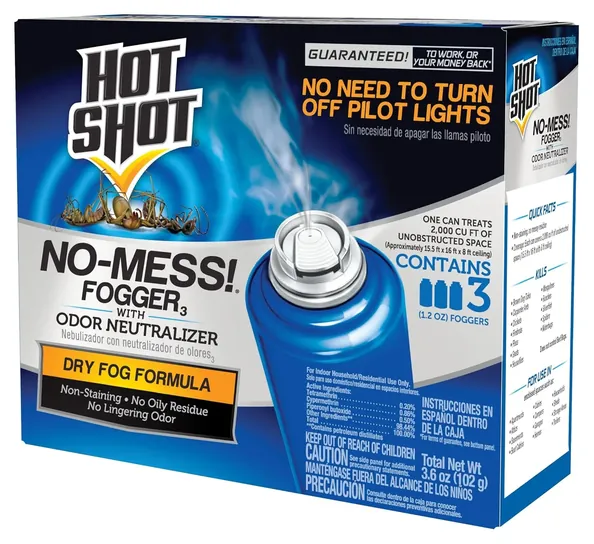
From the manual
- One fogger per room, never in closets, cabinets or under tables; the label warns a can in a tight space can explode. p. 1
- Before starting, shut off fans and air conditioners and disconnect smoke alarms; switch the alarms back on afterward. p. 1
- Stay out at least two hours, then air the room for two more with windows open and fans running. p. 1
- Money-back guarantee: mail a written request with the dated store receipt, and allow six to eight weeks. p. 2
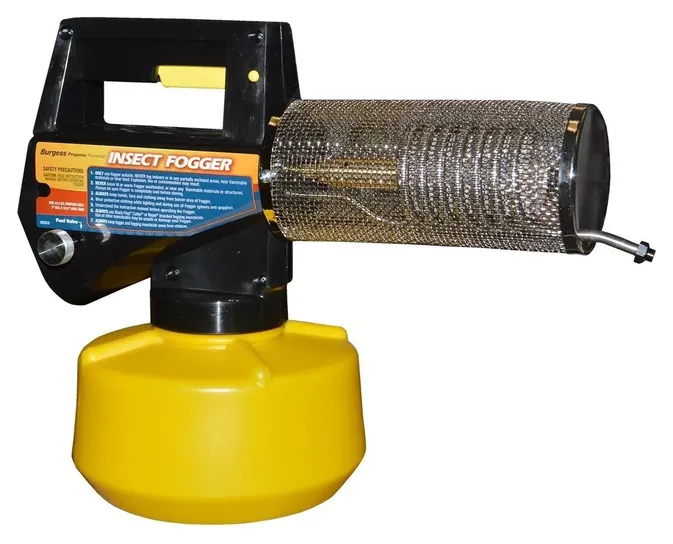
From the manual
- It needs an oil-based fogging insecticide; water-mix concentrates won't fog, and Dibrom or Vapona clog the coil and void the warranty. p. 3
- Use the tall 14.1-ounce propane cylinder; a short 16-ounce lantern cylinder can flare up. One cylinder fogs about two and a half hours. p. 7
- Pump the trigger every three to four seconds; faster pumping makes a wet, oily fog that can harm plants and outdoor carpet. pp. 3, 7
- One-year limited warranty, and the cover says to call the maker rather than return the fogger to the store. cover, p. 1
Compare the specs
Swipe the table sideways to see every column.
| Product | Where to use | Coverage | Re-entry | Maker's lasting claim |
|---|---|---|---|---|
| 1. Hot Shot No-Mess Fogger | Indoors only | 2,000 cu ft a can | 2 h out, 2 h airing | Up to 6 weeks |
| 2. Burgess 1443 | Outdoors only | 5,000 sq ft in 10 min | Once fog clears, ~5 min | Up to 6 hours |
| 3. Cutter Backyard Bug Control | Outdoors only | 1,200 cu ft a can | Once spray dries | None; kills on contact |
| 4. Hot Shot Fogger6 | Indoors only | 2,000 cu ft a can | 2 h out, 2 h airing | Up to 2 months |
| 5. Raid Concentrated Deep Reach | Indoors only | 5,000 cu ft a can | 4 h out, 30 min airing | Up to 2 months |
| 6. Hot Shot Bedbug & Flea | Indoors only | 2,000 cu ft a can | 2 h out, 2 h airing | Flea control up to 7 months |
| 7. OFF! Backyard Pretreat | Outdoors only | 900 sq ft a can | Kids, pets once dry | Repels up to 6 hours |
| 8. Invatech Italia 868 | Outdoor pest control | — | — | — |
| 9. Tomahawk Power 3HP Turbo | Outdoor; not enclosed areas | 1 acre per 1.5 tanks | Per the chemical's label | — |
| 10. Silver Bullet Pro ULV | — | — | — | — |
Coverage and lasting effect are the makers' own claims, not independent tests. The machines take a separate insecticide, and that fluid's label sets the re-entry time and how long it works. The Invatech maker pages and listing disagree on its tank and coverage, and no maker data turned up for the Silver Bullet.
Sources
- Hot Shot No-Mess! Fogger3 label (PDF, Washington State copy) No-Mess six-week claim (Walmart Business listing) Fogger6 label text (retailer copy) Bed Bug & Flea Fogger directions
- Burgess Insect fogger line page Propane fogger use and care manual (PDF)
- Cutter Backyard Bug Control Outdoor Fogger directions
- Raid Concentrated Deep Reach Fogger directions
- OFF! Outdoor Insect Fogger label text (Instacart copy)
- Invatech 868, 870 and 915 comparison page
- Tomahawk TMD14 operation manual (PDF)
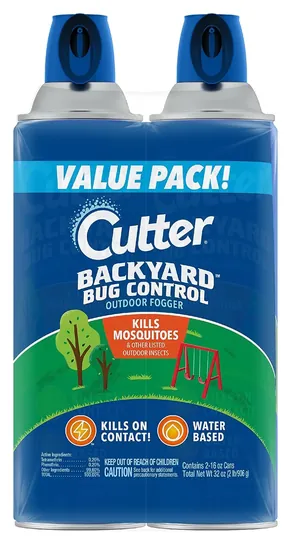
From the manual
- Outdoor use only and never on enclosed porches; on patios, walks and walls the label limits it to spot treatments. label
- Hold the can 5 to 10 feet from shrubs and sweep slowly, about one to three seconds per cubic yard. label
- Highly toxic to bees on blooming plants and to fish, so keep it off flowers and away from ponds. label
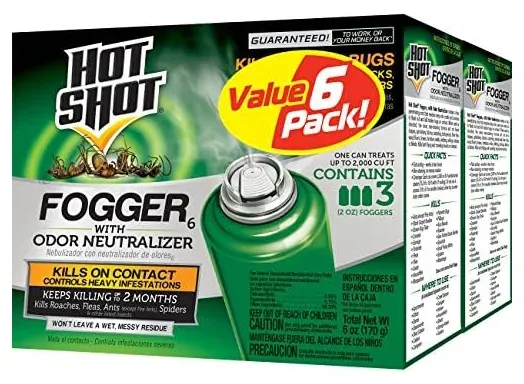
From the manual
- Turn off every pilot light and gas valve, plus appliances that cycle on and off, such as refrigerators and thermostats. label
- Not for rooms 5 by 5 feet or smaller; let fog drift in from the next room instead. label
- Cover waxed wood floors and waxed furniture near the can with newspaper before you start. label
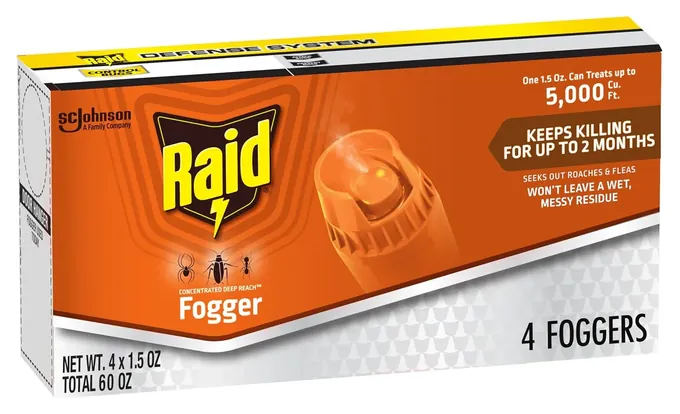
From the manual
- Stay out four hours, then open doors and windows for 30 minutes; fill in the hang tag so no one walks in. label
- Turn off all flames and pilot lights and shut off fans and air conditioners first; the contents are extremely flammable. label
- One can covers up to 5,000 cubic feet, about a 25-by-25-foot room; never use more than one per room. label
- The label says it does not control bed bugs. label
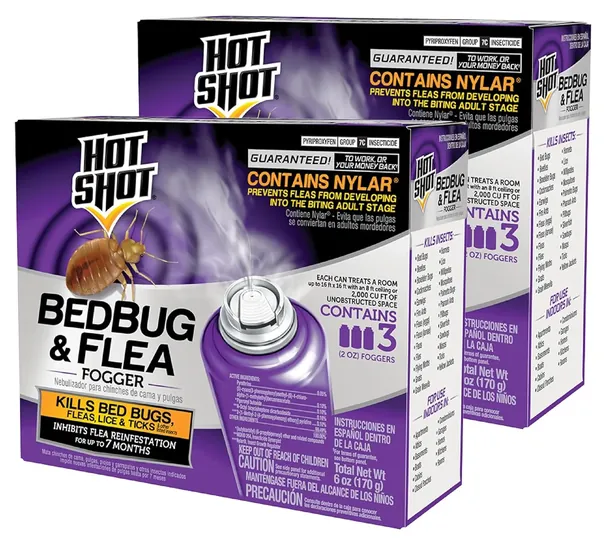
From the manual
- Afterward, vacuum carpets, upholstery and baseboards, put the vacuum bag in outdoor trash and mop hard floors. label
- Turn off every pilot light and cycling appliance, and cover wood doors and furniture near the can. label
- The maker says to use it as one part of a fuller bed bug treatment plan, not as the whole fix. label
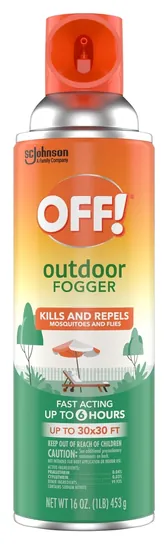
From the manual
- Spray plants, railings, screens and tents from 4 to 6 feet away, but not seats, table tops, food or skin. label
- In a breeze spray with the wind; in still air, spray outward from the center of the area. label
- Outdoor use only, and it is toxic to fish, so keep it off ponds and other water. label
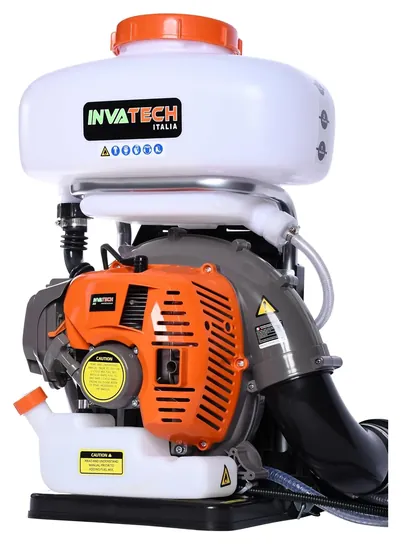
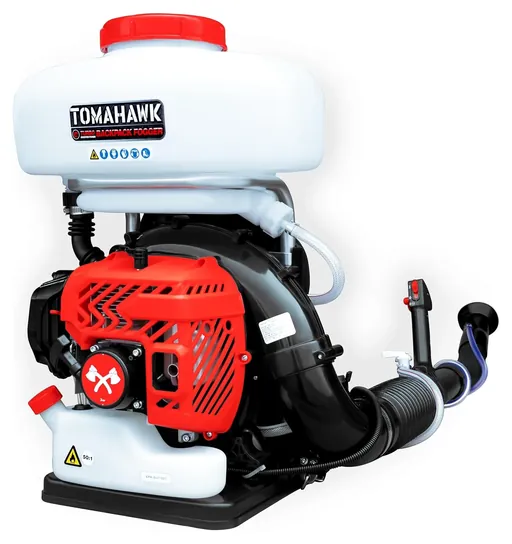
From the manual
- Water-based mixes only; the manual warns that solvent-based or explosive liquids can cause serious harm. p. 7
- It needs 50:1 two-stroke premix, not included, and you fit the tubes, nozzle and throttle handle yourself. pp. 7-10
- Never leave mix in the tank; rinse after every use, and flush the pump and hoses as routine upkeep. pp. 12, 16
- The manual lists a one-year warranty and asks you to register first; Tomahawk's February 2026 warranty page says two years. p. 15, warranty page
Editor's Notes
November 5, 2026, by Ezvid Wiki Editors:
This pass read the can labels, the Burgess and Tomahawk manuals and the makers' directions, then added a spec table and label notes under eight picks. We corrected where the North Carolina State study found roaches hiding, dropped an unconfirmed six-can pack for the Fogger6, the Invatech's large-tank claim and the OFF! scent line, and re-sourced the bed bug advice to the National Pesticide Information Center.
October 23, 2026, by Ezvid Wiki Editors:
The Hot Shot No-Mess Fogger now leads. Its dry fog leaves less mess than a wet bug bomb, and it was the top pick in an independent roundup. The old list was nearly all machines and sprays, while most readers want to clear a room or a yard soon, so we added indoor cans and the Burgess 1443 propane fogger for mosquitoes.
The Petra Electric and the Black Flag 190107 are gone because they're no longer sold. The Hudson 99598 is a garden sprayer, and the EcoSmart Mosquito and Wondercide Natural are plant-oil sprays, so none of them fog. The Tomahawk Power 3HP Turbo, Silver Bullet Pro ULV, Invatech Italia 868 and Cutter Backyard Bug Control stay, and the Hot Shot Fogger6 takes the place of a bulk case of the same cans.
One study shaped the order more than any spec sheet: North Carolina State researchers set off bug bombs in roach-infested apartments and saw almost no drop in roaches. So we point roach problems toward bait and keep foggers for pests in the open. Every can here is a registered pesticide whose label is the rulebook, and the machines may only be filled with insecticides labeled for them.
Earlier notes
July 2, 2020, by Jeff Newburgh:
If you imagine having a party outdoors on your property during the summer, then you know what a pain it can be to deal with pesky biting insects. I distinctly remember visiting my aunt and uncle up in the country as a child and contending with mosquitoes and all those other outdoor pests, especially after dusk. In those days, I didn't really think much about using an insect fogger to temporarily relieve myself of their company. I applied some bug spray and figured I'd be okay. But I doubt I'd want to live in (or walk around) a home like that now without one of these misters to help control the bug population around me. While these foggers are designed for use with other treatments to achieve long-term relief, they're definitely powerful enough to keep those little flying (and jumping) critters at bay for at least a short while.
We've included industrial-grade models and small-scale options no bigger than a spray can to help you get the job done. The Petra Electric, Tomahawk Turbo, and Invatech Italia 868 can all be carried around like a backpack. The large lid opening on the Petra model makes it easy to fill with whatever material is needed, while the Tomahawk offers horsepower sufficient enough to cover an entire acre in less than 30 minutes. Its throttle controls feature start and stop functions and a setting to adjust the desired spray pattern.
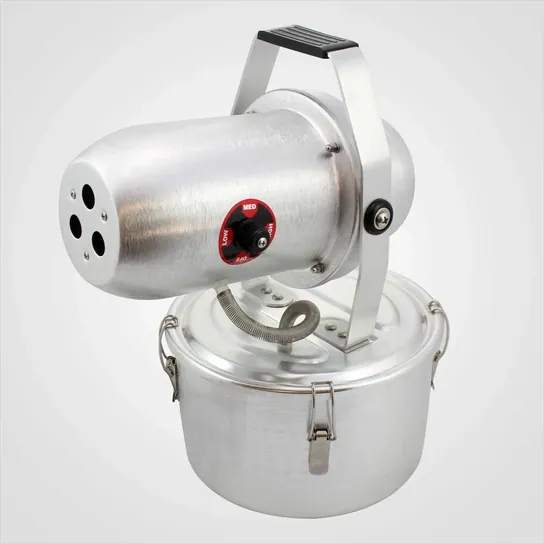
We've also included the durable Silver Bullet ULV, which can accept water and oil-based solutions. Using its vacuum pump motor and three jet nozzles, you can easily access tight spaces as well.
Although the Black Flag 190107 requires a couple minutes of preheating, it can provide coverage for outdoor areas up to 5,000 square feet.
Finally, both the EcoSmart Mosquito and Wondercide Natural are excellent options for controlling outdoor bug populations with kids and pets around, the latter of which is specifically designed to target fleas and ticks in your garden.
Special Honors
American Mosquito Control Association Many towns and counties run public mosquito control districts that survey, treat breeding sites and fog whole neighborhoods. The American Mosquito Control Association represents those agencies, and its site explains how mosquito control works and what homeowners can do, which is worth a look before buying a machine for a large property. mosquito.org
Indoor Can, Yard Spray Or Fogging Machine
Thermal foggers like the Burgess 1443 use a propane flame to heat a fogging insecticide into a thick, visible cloud.
Two very different things share the name. An indoor total-release fogger, often called a bug bomb, is a small aerosol can you set in the middle of a closed room. It empties itself in one go and leaves insecticide, usually a pyrethroid, on every open surface. Cans are sized by cubic feet: multiply length by width by ceiling height, so a 10-by-12-foot bedroom with an 8-foot ceiling is 960 cubic feet. The EPA says to use no more than one fogger per room and to read the label for the right size, since too much fog builds up flammable vapor.
Outdoor foggers come in three kinds. Handheld aerosol yard sprays treat a patio for an evening. Thermal foggers like the Burgess 1443 use a propane flame to heat a fogging insecticide into a thick, visible cloud. Cold, or ULV (ultra-low-volume), foggers break the liquid into a fine, nearly invisible mist without heat, and gas backpack mist blowers push that mist into trees across an acre or more. Burgess says its fog averages about 15 microns, against 50 to 125 for a mist (Burgess manual), and a trade article puts both thermal and cold fog for mosquito work under 50 microns.
Match the tool to the pest. Fleas, spiders, wandering ants and flying insects in an open room are fair targets for a can. Mosquitoes and flies in a yard call for a yard spray or a machine. Roaches, bed bugs and termites usually need something else, covered below.
Using A Fogger Without Hurting Anyone
Foggers send people to the doctor every year. A CDC review counted 3,222 illnesses tied to total-release foggers in 10 states from 2007 to 2015, and the top causes were not leaving in time, going back in too soon and being caught in the room when a can went off. An earlier CDC report traced fires and explosions to the flammable propellant meeting a pilot light or a spark. California's pesticide regulator reviewed newer cases and in 2026 found a likely significant risk to public health (California Department of Pesticide Regulation).
A few habits prevent most of this. Use one can per room, and never in a closet or under a counter. Keep cans at least 6 feet from flames, pilot lights and appliances that switch on by themselves, such as a refrigerator or an air conditioner. Labels differ on pilot lights: the Fogger6, Raid and Bedbug & Flea cans say to turn every one off, so read the box before you start. Put away food, dishes, toys and pet bowls; take out pets, plants and fish tanks; and in an apartment, tell the neighbors. Stay out for the full time on the label, usually 2 to 4 hours, then open the windows and air the room out before wiping surfaces that children and pets touch.
Outdoors, fog on a calm evening when mosquitoes are active and the air won't carry it next door. Keep it off flowers that bees visit and away from ponds. Fill a machine only with insecticides labeled for that kind of fogger, since the label is the law for any pesticide. Thermal barrels get hot enough to burn, and propane and gas engines need the same care as any fuel.
When A Fogger Isn't The Answer
For German cockroaches, a fogger is mostly wasted money. Researchers at North Carolina State University set off bug bombs in infested apartments and saw no drop in roach numbers, because the insecticide settled on open floors and counters while the roaches stayed inside cabinets and under surfaces. "Bug bombs are not killing cockroaches; they're putting pesticides in places where the cockroaches aren't," the study's lead author, NC State postdoctoral researcher Zachary DeVries, said in the university's January 2019 release. Gel baits placed where roaches travel cleared the infestations in the same study, and sealing gaps and cutting off food and water help too.
Bed bugs hide in mattress seams, outlets and furniture joints that fog doesn't reach. The National Pesticide Information Center says bug bombs don't work for them, and the No-Mess, Fogger6 and Raid labels say outright that they don't control bed bugs. Termites live inside wood and soil, so they call for a licensed professional. For fleas, treat the pet with a product your vet recommends and vacuum often; a fogger with a growth regulator helps stop the next generation.
Outside, the step that does the most is getting rid of standing water where mosquitoes breed. The EPA's mosquito guidance puts emptying containers, cleaning gutters and treating water you can't drain ahead of spraying adult mosquitoes. Good window and door screens keep them out of the house, and a patio fan helps only while its breeze blows straight on people (Better Homes & Gardens).
How we researched this
We compared 18 indoor cans, yard sprays and fogging machines. For the ten picks we read the Hot Shot No-Mess Fogger3 label filed with Washington state, the 2013 Burgess propane fogger use and care manual, Tomahawk's TMD14 operation manual, and the label directions Cutter, Raid and Hot Shot post for their foggers, plus retailer copies of the Fogger6 and OFF! labels; no manual turned up for the Invatech 868 or the Silver Bullet. EPA and National Pesticide Information Center guidance, two CDC injury reports, a 2026 California regulator memo and the North Carolina State roach study shaped the advice. Searches of CPSC recall notices and the wider web found no recall for any pick, and the April 2026 California regulator memo calls for a review of all total-release foggers, which is not a recall of any can.
Sources (15)
- Bob Vila: The Best Insect Foggers
- NC State Extension: Bug bombs are ineffective at killing roaches indoors
- EPA: Safety precautions for total release foggers
- EPA: Success in mosquito control, an integrated approach
- CDC MMWR 2018: Illnesses associated with total release foggers
- CDC MMWR 2008: Fires and explosions from total-release foggers
- California DPR: Total release foggers investigation memo (2026)
- International Pest Control: thermal vs cold fogging
- CPSC SaferProducts.gov recall search
- NC State news release (2019): 'Bug bombs' are ineffective killing roaches indoors
- National Pesticide Information Center: Bed bugs
- Better Homes & Gardens: mosquito myths, with Katie Westby of Washington University
- Hot Shot No-Mess! Fogger3 label (Washington State pesticide label database)
- Burgess propane insect fogger use and care manual (Fountainhead Group)
- Tomahawk Power TMD14 operation manual
Frequently asked questions
Do bug bombs work?
Partly. They kill insects that are out in the open, such as fleas, spiders and flying insects, but they don't reach pests hiding in cabinets, wall voids and cracks. North Carolina State researchers found they failed to reduce German cockroach infestations at all.
How many foggers do I need for a room?
One can per room, sized to the room's cubic feet (length times width times ceiling height). The EPA says never to use more than one per room and to check the label for the right size, since too much fog can build up flammable vapor.
How long should I stay out after setting off a fogger?
For the full time on the label, often 2 to 4 hours, and some cans ask for longer. Then open windows, air the room out and wipe surfaces that children and pets touch.
Are foggers safe around pets?
Only if the pets are out of the house while it runs and until the room has aired out. Cover or remove pet bowls and bedding, take fish tanks out or seal them, and wipe floors before pets return.
What's the difference between a thermal and a cold fogger?
A thermal fogger heats the insecticide into a thick, visible fog, usually with propane, so it stays outdoors. A cold, or ULV, fogger breaks the liquid into a fine mist without heat; an electric one can work indoors, but gas backpack models stay outside because of their engine exhaust. Each takes only liquids labeled for it.
How often can I fog my yard?
Follow the label. Cutter's yard spray, for example, allows no more than one use a day. Fogging only hits adult mosquitoes, so draining standing water does more over a season.