The 7 Best Marine Amplifiers With Bluetooth
Updated by · How we research

Seven Bluetooth marine amps compared on continuous power, water rating and channel count; the Rockville RXM8BTW leads for boats running up to eight speakers. When users buy our independently chosen editorial recommendations, we may earn commissions to help fund the Wiki.
The big premium marine amp makers mostly leave Bluetooth streaming out of their amps, so a phone-ready marine amp usually comes from a budget or midrange brand. That trade works on a pontoon, bass boat or golf cart, where convenience beats audiophile sound. Judge them by continuous watts, not peak, and mount any amp lacking a water rating somewhere dry.


Editor's Notes
October 23, 2026, by Ezvid Wiki Editors:
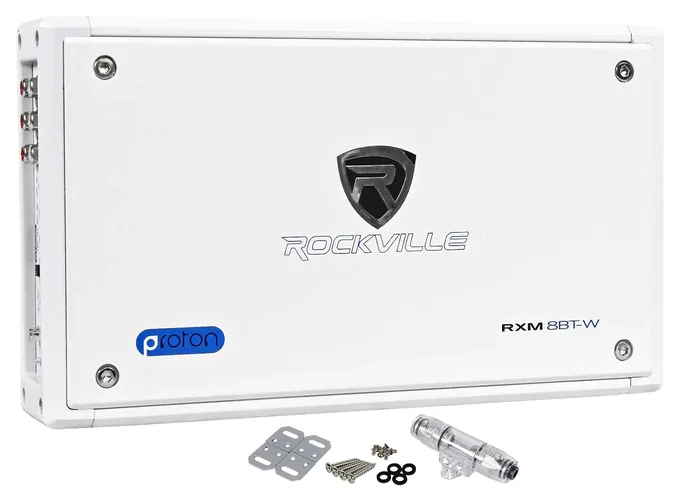
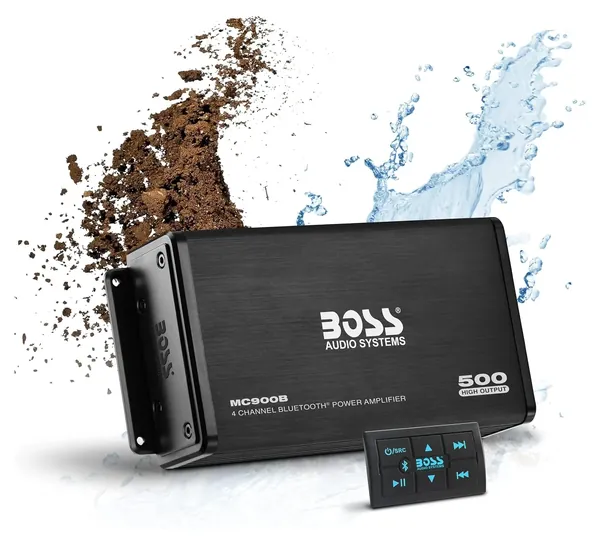
The Rockville RXM8BTW stays on top. It gives its continuous power per channel instead of hiding behind a peak number, it runs up to eight speakers, and the Bluetooth is built into the amp, so a phone can drive a whole boat with no stereo at all. The Boss Audio MC900B also stays, still a tidy pick for four speakers.
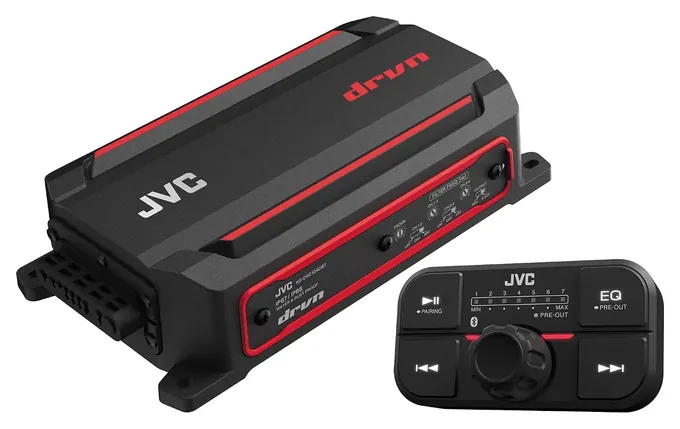
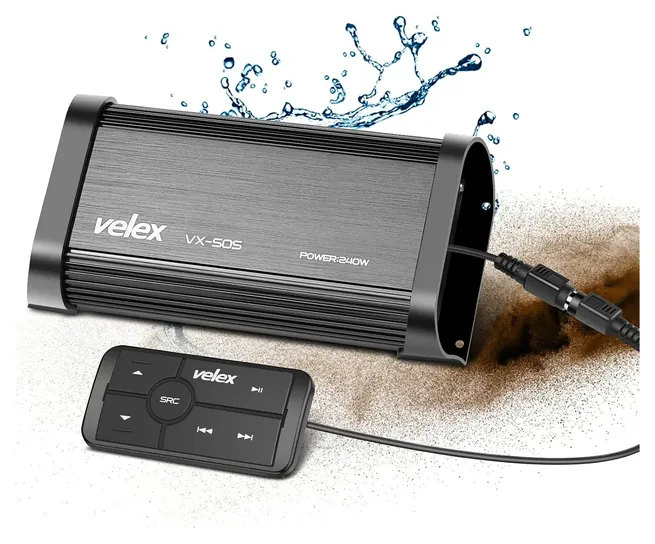
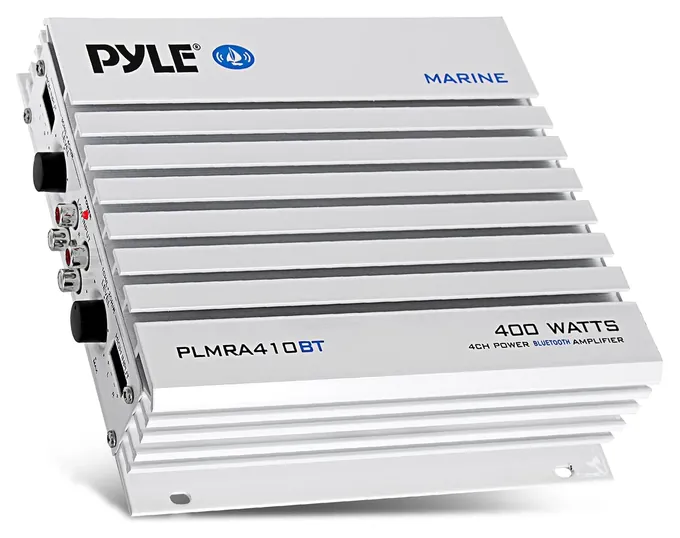
Water ratings decided most of the rest. Only two of the amps here publish one, and the JVC KS-DR2104DBT goes furthest, with immersion and salt-spray claims. The Velex VX505 replaces the older Velex VX-502. We dropped the Pyle Hydra 400 because it has no Bluetooth, which is the whole point of this list, and added the Pyle PLMRA410BT in its place. The Infinity K5 and the Kicker amp are gone, and the Kenwood KAC-M1824BT is out of stock.
The list stops at seven because the field is thin. Top marine amp makers like JL Audio and Wet Sounds put Bluetooth in their stereos, or use it only for tuning, so they don't belong here.
Earlier notes
April 24, 2020, by Brendon Hannaford:
Although Bluetooth has become a standard on nearly all marine receivers, it's still relatively uncommon to find an amplifier with this capability. However, there are several specific cases where investing in a Bluetooth capable amp is preferable.
For instance, those with vintage boats who want to play music from their phone may find that they'd like to keep their original stereo intact, or create an invisible setup if their boat never had a such a thing to begin with. Options like the Velex Water Resistant Amplifier and Kicker Bluetooth Amplifier are great for this application because they are small and easily hidden, and can add modern streaming abilities to your boat without affecting its classic appearance. These options are also great for people who simply want to eliminate the need for purchasing a separate head unit, since they accept RCA, 3.5-millimeter, and USB inputs. This variety of accepted sources and a wired remote allow these units to take over the functions of both a receiver and an amplifier with ease.
Those who are more concerned with quality and volume than price should check out the Infinity K5 and Rockville RXM. Both are well made pieces with adjustable filters, robust enclosures, and good maximum power outputs, although some bridging will be required for the Rockville to reach its true potential. This sacrifices a few of its 8 channels, but allows it to achieve a higher volume on a per-speaker basis or power a large sub more effectively.
If you're looking at amplifiers as a part of a brand new installation, the Boss Audio Systems MC900B is worth looking into since it includes 4 marine speakers in its modestly priced package. They're definitely not the most high-quality marine speakers available, and a dedicated subwoofer is not included, but if you're not an audiophile and just want something affordable that works it might be the perfect option.
Special Honors
JL Audio Marine Amplifiers JL Audio's marine amplifiers, such as the MV700/5i, are built for open boats and wake towers, with corrosion-resistant construction. Bluetooth on them handles app tuning rather than music, so pair one with a marine stereo that streams for the best sound on the water. jlaudio.com
Continuous Watts, Channels And Heat
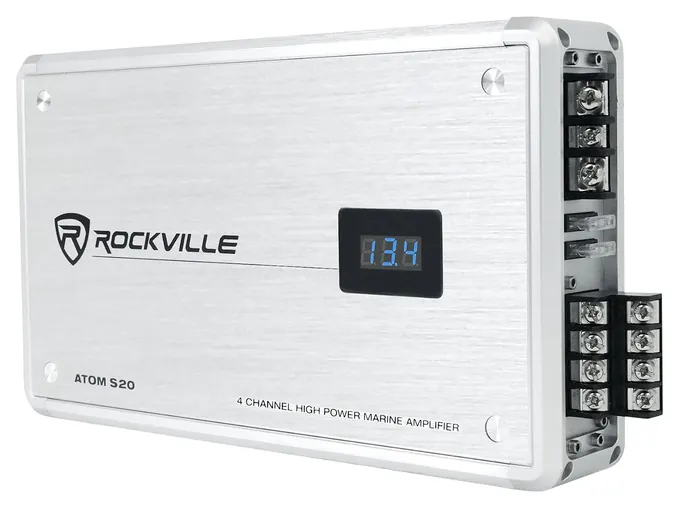
Class A/B amps, such as the Boss Audio MC900B and the Rockville Atom S20, run warmer and need airflow; their heat protection shuts them off when they get too hot.
The number on the box is usually peak power, a burst the amp can hit for a moment. Continuous power, often labeled RMS, is what it delivers through a song, and it's the figure to compare. The Rockville RXM8BTW, for example, is sold as a 1,500-watt amp but is rated at 65 watts per channel continuous into 4-ohm speakers. Pyle quotes only peak figures for the PLMRA410BT, which makes it hard to compare at all. Car Audio Now makes the same point in its marine amp guide.
Match channels to speakers: four speakers need four channels, a subwoofer adds a fifth, and boats wired in zones (bow, cockpit, tower) need six to eight. Many four-channel amps can bridge two channels into one stronger output for a small subwoofer.
Class D amps waste less power as heat, so they run cooler in a closed console and draw less from the battery. Class A/B amps, such as the Boss Audio MC900B and the Rockville Atom S20, run warmer and need airflow; their heat protection shuts them off when they get too hot.
What Weatherproof Really Means On A Boat
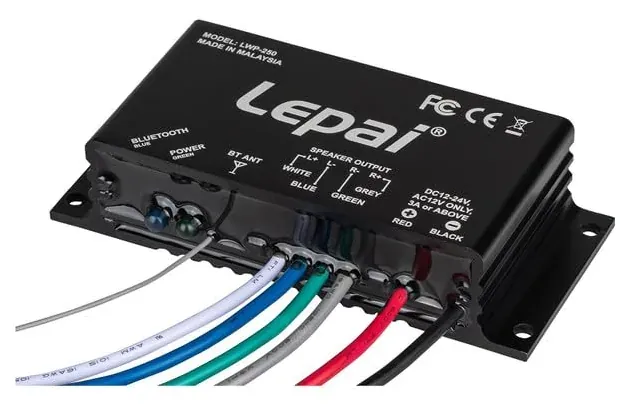
Marine is a loose label. A real water rating is an IP code from the international standard IEC 60529: the second digit covers water, with 5 meaning water jets, 6 powerful jets and 7 a brief dunk to about 3 feet. Of the amps here, only the JVC KS-DR2104DBT (IPX6 and IPX7, plus a salt-spray test) and the Velex VX505 (IPX5) state one. Pyle's IP-01 rating is barely more than drip protection, and Rockville, Boss and Lepai give no number at all.
What makes an amp marine-ready beyond the case is a coated circuit board, stainless or plated hardware and sealed controls. A regular car amp lacks those and corrodes quickly in salt air, as The Marine Mag notes. Even a rated amp lasts longer mounted under a console or in a dry hatch, away from bilge water and direct sun.
Bluetooth, Wiring And A Better-Sounding Option
Bluetooth on these amps is about convenience. Streaming compresses the music, older chips reach roughly 25 feet, and a fiberglass hull, a steel console or engine noise can break the link. BoatSailMag found the same weak signals on cheap marine units. Mount the amp, or its Bluetooth remote, where it has a clear line to the helm.
Wire it like boat gear: tinned marine-grade wire and sealed crimps, an inline fuse close to the battery, and a ground to the battery's negative bus. The American Boat and Yacht Council writes the electrical standards most boat builders follow. Rinse salt off terminals and check them each season.
If sound quality matters most, a premium marine amp paired with a marine stereo that has Bluetooth will sound better than any of these. Our marine amplifiers list covers those amps.
How we researched this
We compared 14 marine amplifiers that claim Bluetooth, checked each maker's stated continuous power, water rating, corrosion measures and warranty, read three marine audio buying guides, and searched the U.S. Consumer Product Safety Commission database for recalls on every brand. We found no independent lab measurements of Bluetooth marine amps. Updated October 23, 2026 by Ezvid Wiki Editors.
Frequently asked questions
Do I need a stereo with a Bluetooth marine amplifier?
No. These amps take music straight from a phone over Bluetooth, and most also accept an aux cable. A stereo adds a radio, a display and easier controls, but it isn't required.
Should I compare peak watts or RMS watts?
Compare RMS, the continuous power an amp can keep up through a song. Peak figures are short bursts and are often several times higher, so they make cheap amps look stronger than they are.
What do IPX5, IPX6 and IPX7 mean?
They come from the IEC 60529 standard. IPX5 resists water jets, IPX6 resists powerful jets, and IPX7 survives a brief dunk to about 3 feet. An amp with no IP number has no tested water rating.
How far does Bluetooth reach on a boat?
Older Bluetooth chips reach about 25 feet in open air, and newer ones a bit farther. Metal consoles, hulls and engine noise shorten that, so keep the phone near the amp or its remote.
Can I use a car amplifier on a boat?
It's not a good idea. Car amps lack coated circuit boards and corrosion-resistant hardware, so damp, salty air can ruin them quickly.