The 10 Best Microeconomics Textbooks
Updated by · How we research

Ten microeconomics textbooks sorted by level and math, from intro principles to PhD theory. Our pick for a first course: Mankiw's Principles of Microeconomics. When users buy our independently chosen editorial selections, we may earn commissions to help fund the Wiki.
Microeconomics textbooks come in four distinct levels, and the jump between them is steep: a first-year principles book needs only algebra and graphs, while graduate texts read like math papers. If your course names an edition, buy that one. Otherwise, this list labels every book by level, for students, self-learners and business readers who want the ideas.
At a Glance
-
1
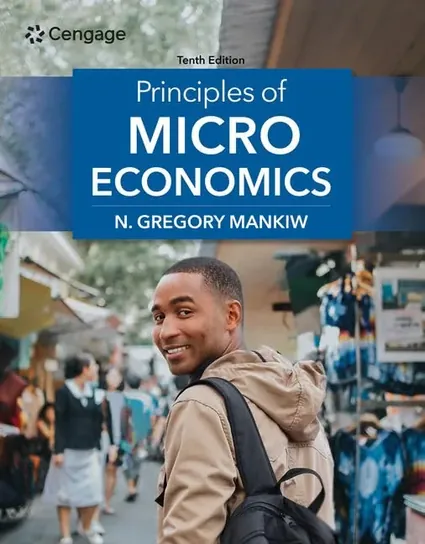
 Mankiw Principles of Microeconomics
$163
-
2
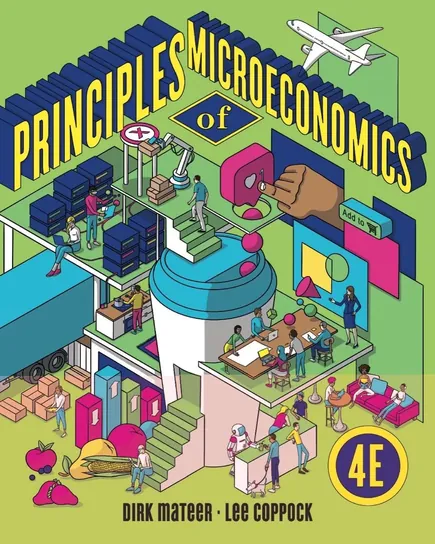
 Mateer and Coppock Principles
$96
-
3
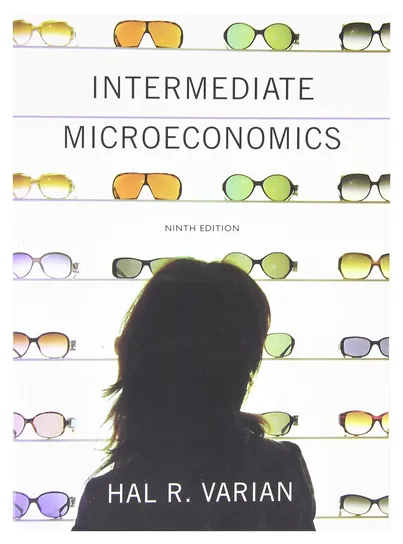
 Varian Intermediate Microeconomics
$164
-
4
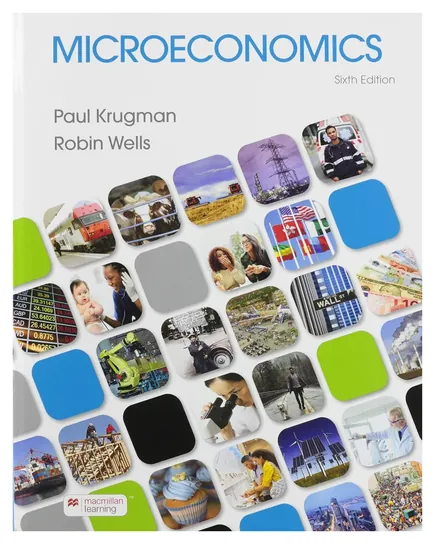
 Krugman and Wells Microeconomics
$286
-
5
 Dixit Very Short Introduction
$12
-
6
 Nicholson and Snyder Microeconomic Theory
$74
-
7
 Mas-Colell, Whinston and Green
$121
-
8
 Jehle and Reny
$59
-
9
 Varian Microeconomic Analysis
$62
-
10
 Kreps Microeconomic Foundations I
$45
Editor's Notes
October 26, 2026, by Ezvid Wiki Admin:
Mankiw Principles of Microeconomics now leads this list. It is still one of the most widely assigned first-year texts, and the 10th edition brings its examples up to date. The old list mixed beginner and PhD books with no labels, so every pick now says which level it suits.
New here: Mateer and Coppock Principles for students who need livelier examples, Varian Intermediate Microeconomics for the second course, Dixit Very Short Introduction for readers outside a classroom, and three graduate texts, Mas-Colell, Whinston and Green, Jehle and Reny, and Varian Microeconomic Analysis. Krugman and Wells Microeconomics moves up to its 6th edition. Perloff's book now sells only as an online access code, Hubbard and O'Brien's 7th edition has been replaced, and the Pindyck and Rubinfeld copy on offer shows a plain cover we couldn't match to an edition. Rubinstein, Steinemann and McConnell gave way to stronger books at their levels.
Textbooks don't get lab tests, so we weighed which books instructors assign at each level, what economists recommend on forums for self-study, and each publisher's edition and format history.
April 02, 2020:
We wanted this list to run the gamut from introductory tomes perfect for beginners and undergrads to more advanced selections for the master's student. That's why you'll find fundamental volumes like Microeconomics, 21st Edition, Principles of Microeconomics, and Microeconomics, 5th Edition alongside the likes of Microeconomic Theory, Microeconomic Foundations I, and Microeconomics: Theory and Applications with Calculus.
And while A Very Short Introduction is still a great resource for curious high school seniors and the layperson who wants to know more about what drives the economy, it's not at all comprehensive. With that in mind, we felt something very practical like Microeconomics for Public Decisions would be a great replacement. This text is geared toward advanced students who are planning on entering the public sector and is written with these careers in mind. Having knowledge of microeconomics and how the discipline's theories translate in the real world is essential for many job fields. It's written without mathematical rigor to make it more accessible to students of all skill sets.
Just like with our list of macroeconomic textbooks, we prioritized authoritative texts that use clear examples, relevant data and case studies, use interesting storytelling where appropriate, and boast a multitude of pedagogical tools to enhance the learning process. We also ensured that every book on this list is up to its most current edition.
Special Honors
OpenStax Principles of Microeconomics OpenStax, a nonprofit based at Rice University, publishes Principles of Microeconomics free online and as a PDF. The third edition, by Steven Greenlaw, David Shapiro and Daniel MacDonald, covers a standard first course, from supply and demand to market failures, and is released under a Creative Commons license for noncommercial use. openstax.org
MIT OpenCourseWare MIT OpenCourseWare puts the materials from thousands of MIT courses online at no cost, including lecture videos, notes, problem sets and exams from its economics department. It pairs well with any principles or intermediate textbook for readers studying on their own. ocw.mit.edu
Pick The Level Before The Book
Intermediate books cover the same ground again with more formal models of consumers and firms, plus game theory and information.
Microeconomics is taught at four levels, and a book from the wrong one is either a slog or a waste. Principles books are for a first college course or a strong high school class. They explain supply and demand, costs, competition and market failures with graphs and simple algebra. Mankiw's Principles of Microeconomics is the best-known example.
Intermediate books cover the same ground again with more formal models of consumers and firms, plus game theory and information. Some use only algebra, and others assume calculus from page one, so check the course description. Hal Varian's book has an algebra version and a separate calculus version co-written with Marc Melitz.
Graduate books are proof-based and assume multivariable calculus and some real analysis. Mas-Colell, Whinston and Green is the standard PhD text, and gentler options exist for master's programs. A fourth group, short books for general readers, skips exercises and math entirely and suits business owners who want the ideas rather than a grade.
Editions, Access Codes And International Copies
Publishers release new editions every few years, mostly with fresh examples and data. The core ideas barely change, so an earlier edition is fine for self-study at a fraction of the price. For a class, follow the syllabus: page numbers, problem sets and online homework are tied to one edition.
Many courses grade through an online platform, such as Cengage MindTap, Macmillan Achieve or Norton Smartwork, and access is usually sold separately from the printed book. Some listings sell only that access code, or a rental, or a loose-leaf copy, so read the format line before buying. Macmillan, for example, now sells Krugman and Wells' seventh edition mainly as an e-book, loose-leaf copy or Achieve package.
International and Global editions are cheaper paperbacks with the same core content, but problem numbering and homework codes may not match a U.S. course. Watch for third-party sellers offering suspiciously cheap new copies, which can be unauthorized printings with poor binding or missing pages.
Free And Low-Cost Ways To Study
A free, well-regarded intro book exists. OpenStax Principles of Microeconomics, now in its third edition, is free to read online or download, and many colleges use it in place of a paid text. It follows the same chapter order as most principles courses, so it also works as a second explanation alongside an assigned book.
Free lectures help too. MIT OpenCourseWare posts lecture videos, notes, problem sets and exams from MIT's economics courses at no cost.
For paid books, used and rental copies cut the price sharply, especially for widely assigned titles with many copies in circulation. Older editions of the big principles texts often sell for a fraction of the new one. Skip PDF sites that offer full textbooks for free: they're usually pirated, and the files can carry malware.
How we researched this
We compared 27 microeconomics books across four levels, from first-year principles texts to PhD theory, checked each publisher's current edition and formats, read instructor and student discussions of which books suit which course, and screened every copy on offer for access-code-only, rental and international printings. Textbooks have no product-safety recalls to check.
Sources (7)
- Cengage: Principles of Microeconomics, 10th edition (Mankiw)
- Macmillan Learning: Krugman and Wells, Microeconomics
- OpenStax: Principles of Microeconomics 3e, preface
- Wikipedia: Microeconomic Theory (textbook)
- MIT OpenCourseWare
- Oxford University Press: Microeconomics: A Very Short Introduction
- Oxford University Press: Microeconomic Theory (Mas-Colell, Whinston, Green)
Frequently asked questions
What is the best microeconomics textbook for beginners?
Mankiw Principles of Microeconomics is a standard choice for a first course. Mateer and Coppock Principles is livelier, and OpenStax Principles of Microeconomics is free online.
Which microeconomics book is best for intermediate students?
Varian Intermediate Microeconomics is the usual second course text and keeps calculus optional. If your course uses calculus, look at Nicholson and Snyder Microeconomic Theory.
What textbook do PhD programs use for microeconomics?
Most build on Mas-Colell, Whinston and Green. Jehle and Reny explains more, Varian Microeconomic Analysis is compact, and Kreps Microeconomic Foundations I goes deepest on choice theory.
Do I need the most recent edition?
Only if your course requires it for page numbers or online homework. For self-study, an older edition covers the same ideas for much less.
Do I need calculus for microeconomics?
Not for a principles course, which uses algebra and graphs. Intermediate courses vary, and graduate courses require multivariable calculus and proofs.
What is a good microeconomics book for business use?
Dixit Very Short Introduction explains incentives, pricing and market failures without math in a short paperback. Managers who want more depth can add a principles text.