The 7 Best Mountain Bike Rear Shocks
Updated by · How we research

Seven rear shocks for trail, enduro and budget bikes, compared by spring type, adjustments and fit. The Fox Float DPS Performance leads for most riders. When users buy our independently chosen editorial recommendations, we may earn commissions to help fund the Wiki.
Before you shop, read the decal on your old shock: the eye-to-eye length and stroke printed there must match the replacement, and only the frame maker can say a longer one is safe. A tired shock often needs just a service, for far less money. This list is for riders replacing a blown shock or upgrading a trail, enduro or budget bike.


Editor's Notes
October 27, 2026, by Ezvid Wiki Admin:
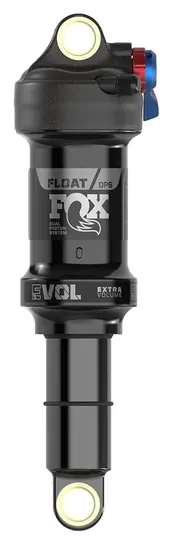
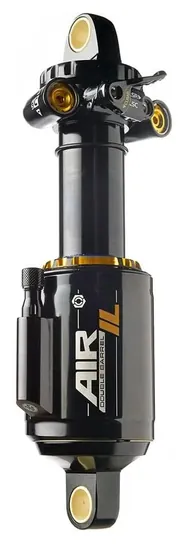
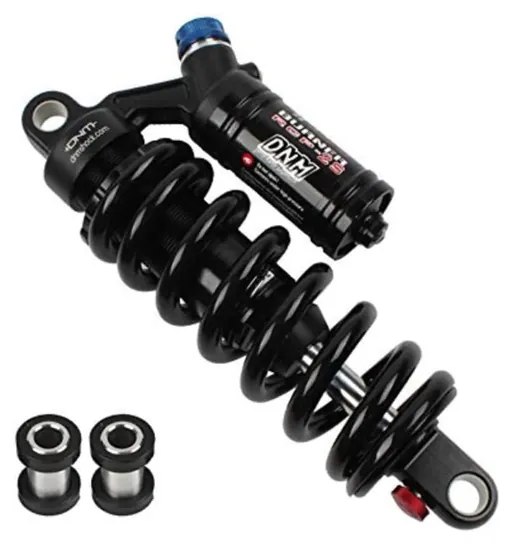
The Fox Float DPS Performance now leads this list. It comes in more lengths and mounts than anything else we could find in stock, and Bike Perfect's riders rated the same shock family the best they rode. The Cane Creek DBair IL and the DNM Burner-RCP 2S stay on in newer listings.
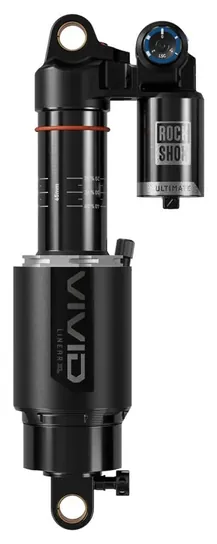
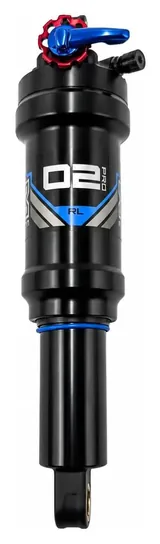
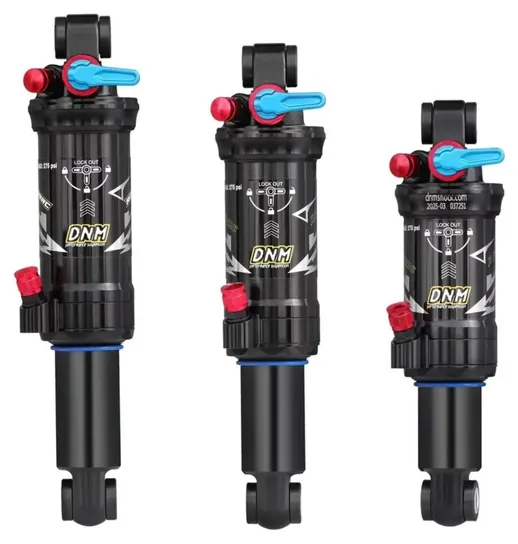
Seven of the ten shocks we ranked before can't be bought new now. The Fox Float X2, RockShox Super Deluxe Ultimate RCT, RockShox Monarch RT3, Kindshock KS 291 and Aztec Stainless Steel have dropped out of stock for good, and DNM replaced the AOY-36RC and DV22AR with the DNM AO-39RC and DNM DV-23AR. We added the RockShox Vivid Ultimate for gravity riders and the X-Fusion O2 Pro RL as a middle ground.
For the premium shocks we leaned on Bike Perfect's ridden comparison and Fox's size chart. The budget DNM shocks rest on the sellers' spec sheets and scattered owner reports, which is thinner ground, and we say so on those picks. We also checked Fox and Cane Creek against federal recall records.
November 11, 2020:
Manufacturers of components for mountain bikes are increasingly catering to riders who want to be able to tackle a wide variety of conditions on a single cycle. This means building shocks with adjustable compression and rebound, since moderate trail riding calls for significantly less rear travel than flying down rocky slopes. Both the Cane Creek DBAir IL and the Fox Float X2, our new #1 and #2 picks, allow for independent adjustment of four different damping parameters, helping you to find the performance that's right for your weight and the terrain you expect to encounter. We ranked the DBAir IL slightly higher since it's quite a bit more affordable, but the Float X2 is easier to tweak on the fly.
Those who enjoy long, punishing downhill races may prefer the hefty coil of the RockShox Super Deluxe Ultimate RCT, which offers some pedal support to make the climb to the top easier. It also features a proprietary low-friction damping fluid which greatly reduces noise from the spring.
We had to remove the SR Suntour Raidon R and the DNM Burner ROP-2 from the list because of possible issues with availability, though we were able to replace the latter with the very similar DNM Burner-RCP 2S. We also replaced the Rock Shox Monarch RL C2 with its close relative, the RockShox Monarch RT3, which offers a third damping setting that provides a middle ground between an open shock and a full lockout. The latter is also quite easy to install and tune, thanks to a user-friendly compression lever and highly visible sag level indicators. The Monarch RT3 and the Fox Shox Float DPS are excellent mid-to-high end options for trail riders, while the DNM AOY-36RC is a more budget-friendly alternative to both.
If you decide on an air spring model, you might need a pump to go with it, and any rider can use a good helmet. For other upgrade options for your bike, you can check out our reviews of the top cranksets, dropper posts, and grips.
January 11, 2019:
Like mountain bikes themselves, rear shocks can come in a range of quality and price values. Higher-end models, such as the Fox Shox Float DPS, feature the latest in high-performance technology but can get quite expensive. Lower-end models, like the Kindshock KS 291, are suitable for most casual applications and represent a significantly smaller hit to your wallet. Which one is right for you will depend largely on your experience and riding level, but we think something like the DNM AOY-36RC is best for most people, as it does a good job balancing price and performance.
Special Honors
DVO Topaz T3 Air DVO's Topaz T3 Air pressurizes its oil reservoir with air instead of a sealed piston, so you can change its feel with the same pump you use for the main spring. Bike Perfect named it a strong value among premium air shocks. It's sold through DVO and bike shops. dvosuspension.com
Measure Before You Buy: Length, Stroke And Mounts
Bushings and mounting hardware are sized to the frame's bolt width, and some shocks ship without them.
A rear shock is sold by two numbers that must match your frame. Eye-to-eye length is the distance between the centers of the two mounting holes with the shock fully extended. Stroke is how far the shaft can travel. Most shocks print both on a decal, often as 210 x 55 (millimeters) or 7.5 x 2 (inches). Measure the old one anyway, since a decal can be worn or wrong.
Next, check the mount. Many newer frames use a trunnion mount, where the top of the shock bolts in by its sides instead of through an eyelet. Fox sells the Float DPS Performance in five imperial sizes and two trunnion sizes, which covers a lot of trail bikes, but a trunnion shock won't fit an eyelet frame or the other way around. Bushings and mounting hardware are sized to the frame's bolt width, and some shocks ship without them.
Don't add length or stroke on your own. Bike Perfect warns that a longer shock can change the bike's geometry or push the tire into the frame at full compression. Ask the frame maker what it allows.
Air Or Coil, Inline Or Piggyback
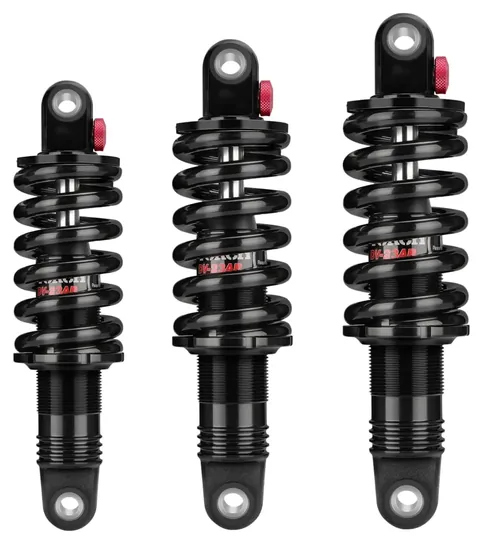
Most trail bikes come with an air shock, and Bike Perfect calls it the usual choice because it is lighter and simple to set up. You set it for your weight with a shock pump, and volume spacers inside the air can change how firmly it ramps up near the end of its travel. A coil shock uses a steel spring, which feels smooth over small bumps once you fit the right spring rate, but it weighs more and a new rate means buying a new spring. Budget coils from DNM ship with a 550-pound spring, which suits some riders and not others.
An inline shock keeps all its oil in the main body. A piggyback adds a separate reservoir, which holds more oil and copes better with the heat of long, rough descents. The RockShox Vivid Ultimate and the DNM Burner-RCP 2S both use one.
Adjustments come in a few types. Rebound sets how fast the shock returns after a hit. Low-speed compression controls bob when pedaling and support in turns. High-speed compression handles big, sharp hits. A climb lever or lockout firms the shock for climbs and pavement.
Service, Tune And Safety
A shock that feels harsh, leaks oil or loses air may only need a service. Seals and oil wear out, and a rebuild costs far less than a new shock. If you do replace it, look up your old shock's tune code. Bike makers order shocks with damping matched to the frame's leverage, and a shock off the shelf with a different tune can ride worse than the one it replaced.
Treat air shocks with respect. They run at high pressure, up to 275 psi on the DNM AO-39RC and 300 psi on the X-Fusion O2 Pro RL, so never open an air can or damper without the maker's service steps. Coil springs store energy, too, so use a spring compressor when you swap one.
Recalls are rare but real. Fox recalled all 2016 and some 2017 Float X2 shocks because the air sleeve could burst (CPSC). Cane Creek recalled DBINLINE shocks in 2014 because the rebound graphics were reversed (CPSC). Neither recall covers the shocks on this list.
How we researched this
We looked at 28 rear shock listings and narrowed them to 11 candidates from Fox, RockShox, Cane Creek, X-Fusion and DNM. We read Fox's product page and size chart, Bike Perfect's ridden roundup of premium shocks, the sellers' spec sheets for the budget models and owner reports on forums, and we checked every brand against U.S. Consumer Product Safety Commission recalls.
Frequently asked questions
Do I need a new rear shock or just a service?
If the shock still holds air and only feels harsh, sticky or bouncy, a service often fixes it for far less than a new one. Replace it when it's damaged, when parts aren't available or when you want different features.
How do I measure my rear shock?
Measure eye-to-eye length between the centers of the mounting holes with the shock fully extended, and read the stroke on the decal. Also note whether the top mounts by an eyelet or a trunnion, and the bolt width.
Can I fit a longer rear shock?
Only if the frame maker says so. A longer shock or stroke changes the geometry and can let the tire hit the frame at full compression.
Air or coil for a recreational rider?
An air shock suits most recreational riders: it's lighter, and you tune it for your weight with a pump. Coil makes sense for rough gravity riding when you can get the right spring rate.
Are DNM rear shocks any good?
They're a fair budget choice for basic full-suspension bikes and e-bikes. Independent tests are scarce, the warranty runs through the seller, and some older DNM air shocks drew complaints about leaking seals.
Is the RockShox Monarch still made?
RockShox has moved its trail shocks to the Deluxe and Super Deluxe lines, and new Monarch shocks are hard to find. A Monarch can still be serviced if it's otherwise sound.